Friday, February 28, 2020

A Physician’s Analysis of the Crucifixion

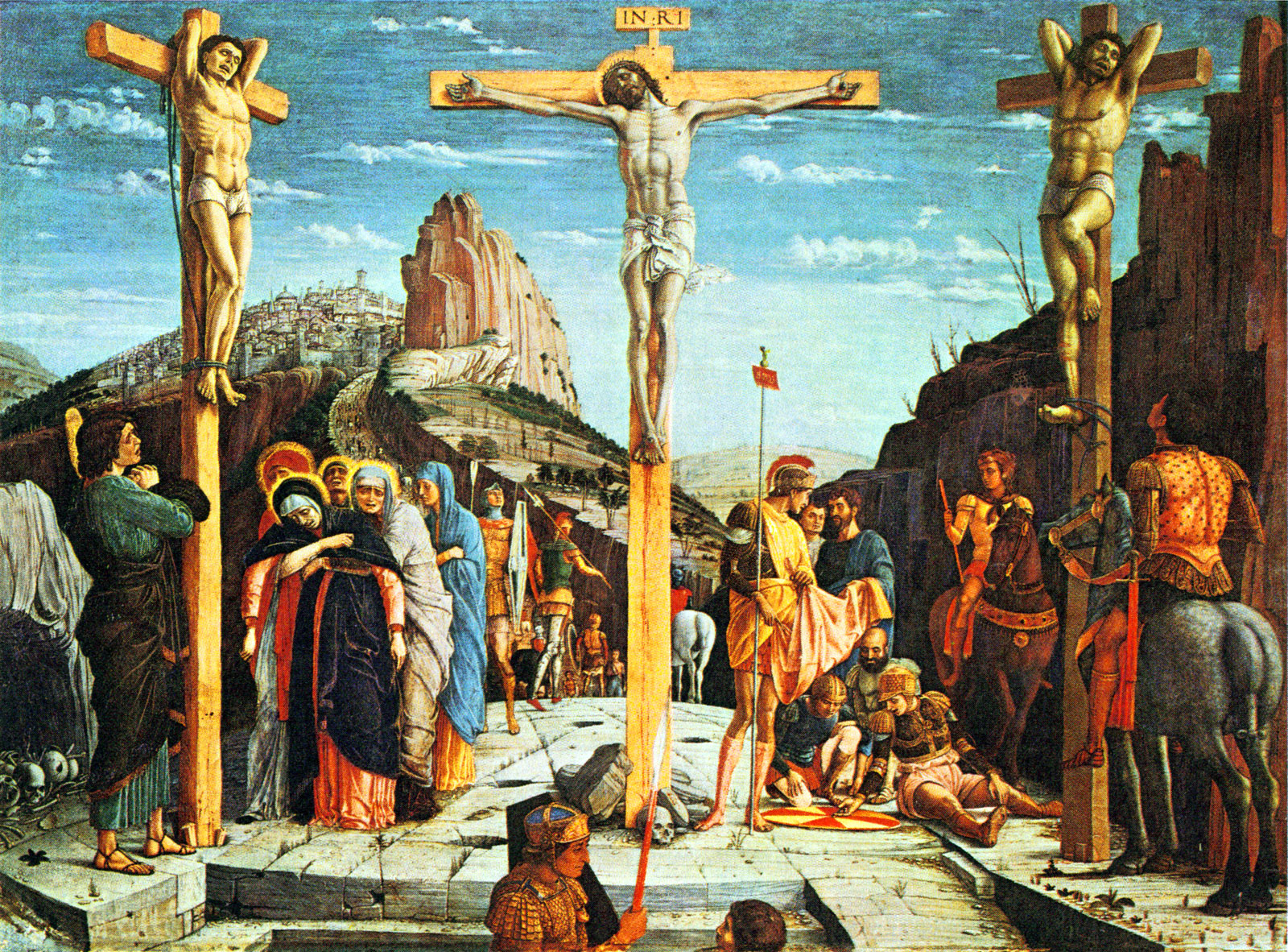
The Crucifixion of Christ by Andrea Mantegna
From YWAM:
Several years ago I became interested in the physical aspects of the passion, or suffering, of Jesus Christ when I read an account of the crucifixion in Jim Bishop’s book, The Day Christ Died. I suddenly realized that I had taken the crucifixion more or less for granted all these years – that I had grown callous to its horror by a too-easy familiarity with the grim details. It finally occurred to me that, as a physician, I did not even know the actual immediate cause of Christ’s death. The gospel writers do not help much on this point.
Since crucifixion and scourging were so common during their lifetimes, they undoubtedly considered a detailed description superfluous. For that reason we have only the concise words of the evangelists: “Pilate, having scourged Jesus, delivered Him to them to be crucified … and they crucified Him.”
Despite the gospel accounts’ silence on the details of Christ’s crucifixion, many have looked into this subject in the past. In my personal study of the event from a medical viewpoint, I am indebted especially to Dr. Pierre Barbet, a French surgeon who did exhaustive historical and experimental research and wrote extensively on the topic.
An attempt to examine the infinite psychic and spiritual suffering of the Incarnate God in atonement for the sins of fallen man is beyond the scope of this article. However, the physiological and anatomical aspects of our Lord’s passion we can examine in some detail. What did the body of Jesus of Nazareth actually endure during those hours of torture? (Read more.)

Monday, February 24, 2020

Preparing for Lent

Adam and Eve by Lucas Cranach the Elder
Here is a meditation by a Carmelite tertiary who shall be known on this blog as Mi Amigo:
Our first parents ate, against the will of our Father, the forbidden fruit. What is the fruit? We might consider, "Is the 'fruit' of the Tree of Knowledge of Good and Evil the birth of “conscience”? Prior to eating the fruit, Adam and Eve did not have any knowledge of evil in their nakedness. Was their realization of “something wrong” in their self-exposure the birth of human conscience?
The Banishment of Adam and Eve by Masaccio 
The Catechism of the Catholic Church, Section 1776, states, "Deep within his conscience man discovers a law which he has not laid upon himself but which he must obey. Its voice ever calling him to love and to do what is good and to avoid evil, sounds in his heart at the right moment….For man has in his heart a law inscribed by God….His conscience is man’s most secret core and his sanctuary. There he is alone with God whose voice echoes in his depths."

In the human heart, God inscribes his Law. In the heart, we are either single-minded toward the will, the law, of God, or we are double-minded, divided in ourselves between God and the world. The season of Lent is upon us, a time of reflection, to turn within to our most secret core and sanctuary, our conscience, and listen to the voice of God echoing in our depths, a time to repent from our double-mindedness and, a time of conversion, to re-commit ourselves with single-mindedness to the will and love of God in those areas of our life to which our conscience directs us.

This Lenten season, let us turn within and from our hearts pray as Thomas a Kempis, "O God my Truth, make me one with you in eternal love. Often I become weary with reading and hearing many things. You are all that I want and desire. Let all teachers be mute and all creation keep silence before you. Speak to me, You and You alone."
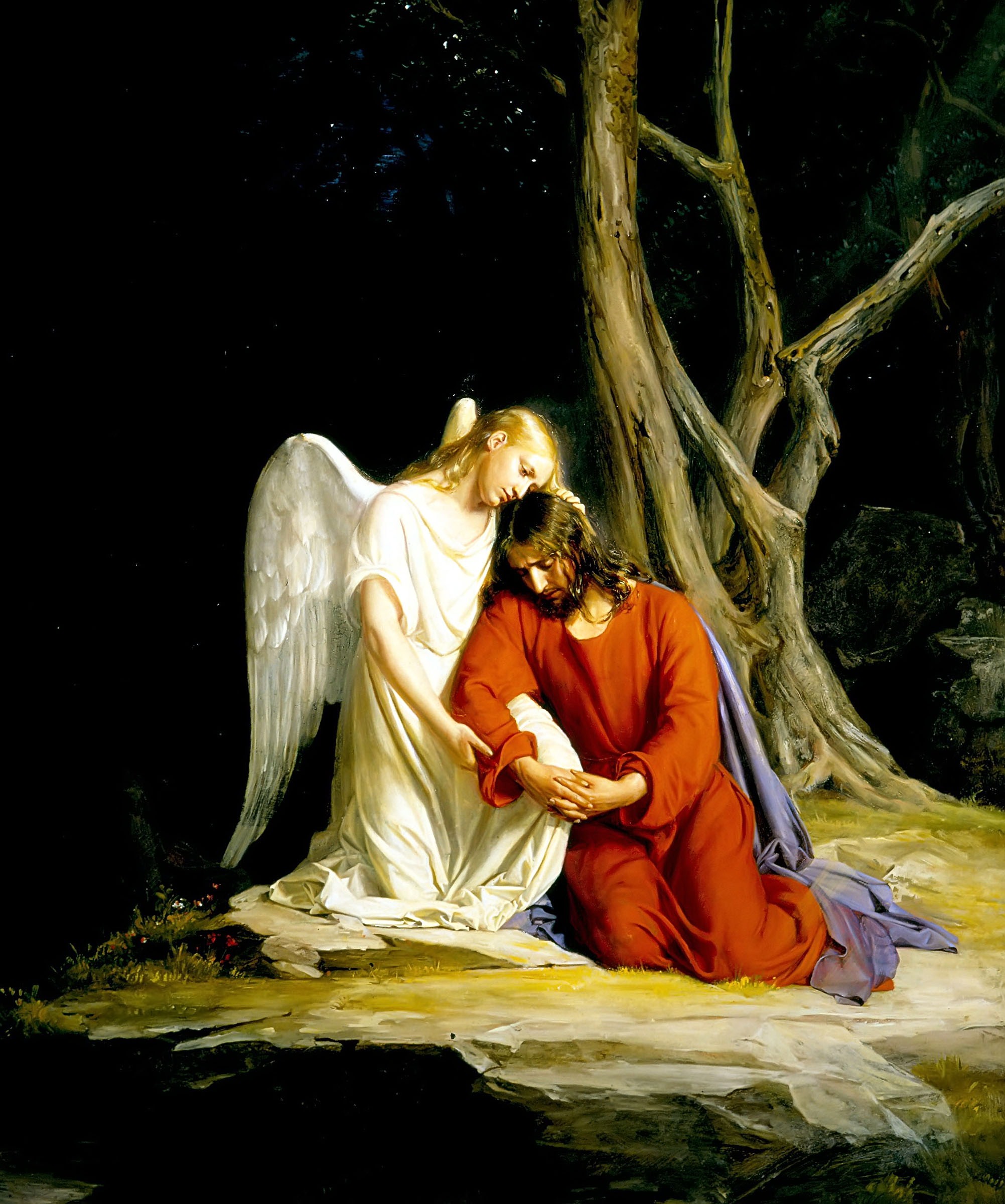
Jesus in Gethsemane by Carl Bloch

Tuesday, February 11, 2020

The Castle at Lourdes


Aside from being the site of the famous apparitions of 1858, Lourdes has an interesting history, surprisingly turbulent at times for a place that is truly in the middle of nowhere. Most of the events were focused on the Château-Fort de Lourdes, the old castle which was at one time a Moorish stronghold, although its origins go back to antiquity. According to a traveler's guide:
The Gauls, Roman, Barbars and Moors successively took turns to strengthen the Lourdes rock on which the castle stands. This antique fortress is clothed in legend. In 778, Charlemagne and his army besieged the castle which was occupied at the time by Mirat, the Saracen, and his Moors. Despite attacks by the Francs and the onslaught of famine, Lourdes castle remained impenetrable.

Suddenly an eagle appeared in the sky. It flew around the fort and dropped an enormous trout from its beak, which landed at Mirat's feet. The clever Moor grabbed the fish and took it to Charlemagne to make him believe that he still had plenty of food reserves.

Charlemagne was just preparing to lift the siege when Turpin, his friend and Bishop of Puy-en-Velay, became inspired and was granted permission to go and talk to the besieged. He suggested that Mirat surrender, not to the sovereign but to the Queen of the skies.

This proposal pleased the Moor leader who promptly set down his weapons at the foot of the Black Virgin of Puy and was baptized. On the day of his baptism, Mirat was given the name "Lorus". This name was transferred to the village, which, in time, became Lourdes.
When I first visited Lourdes in April 1994 the castle intrigued me almost as much as did the shrines. I had never heard of it until arriving there, and when our guide took us up inside, the view of the Pyrenees was breathtaking. There are all kinds of legends and mysteries associated with the castle, including the caves which lie underneath the edifice. I decided to make it the setting for a novel about the Cathars, since for a time it had been a Cathar fortress. In spite of heresy and turmoil, it is a spot favored by the Mother of God.

Tuesday, February 4, 2020

The Veil: A Mystical Symbol

Most people are familiar with the injunction of St. Paul in 1 Corinthians 11: 5,6, 13 for women to wear veils in church. It is interesting, however, to reflect upon other scriptural passages in which persons or things are covered out of reverence for God, beginning in the Old Testament. In ancient times, covering oneself, and especially hiding the face, was a sign of respect and obeisance. In Genesis 24:65 Rebecca covers herself at the approach of her bridegroom. In Exodus 34:33 Moses veils himself after beholding the glory of God. Exodus 36 describes in detail the curtains which were to veil the Holy of Holies. What was sacred was generally veiled. When I was a child, the tabernacles of Catholic churches were always veiled.

In II Kings 15:30 King David ascended the Mount of Olives weeping for his sins, barefoot like one in mourning, with his head covered so that no one could see him. In III Kings 19:13 Elias covers his face with his mantle at the manifestation of the power of God. Isaiah (6:2) describes the seraphim covering their faces with their wings before the Divine Majesty. Ezekiel 16:8 describes the spouse covering the bride with his garment.

The Navarre Bible footnotes present an interesting commentary on 1 Corinthians 11: 5-13. Women were to cover their heads as a sign that they have an important role in the Church, but one distinct from men. "Christian practice and profane custom show women's dress to be not unimportant.... Customs are a way of thinking. External comportment is important because it reflects people's inner dispositions." In our society, what is feminine is replaced by what is immodest and yet modesty and chastity are the greatest ornament of women. Head-coverings for women at Mass are part of an ancient tradition which the Apostle St. Paul insisted upon in the new dispensation as a continuation of a sacred sign of bridal holiness and reverence. All women are to be brides at the marriage supper of the Lamb.

There have been interesting discussions over the years on the topic of head-coverings for women in the National Catholic Register. I believe that if women feel called to wear hats or veils in the house of God then they should do so, without human respect.

More HERE.

Tuesday, January 14, 2020

Why Mass is Cheapened by Socializing

The house of God should be a place of prayer, as Jesus said. When people are chatting then those who seek to pray cannot. In the presence of Our Lord there should be silence and awe, for we participate in a profound mystery. From Life Site:
The liturgy of the Church has for its primary aim to honor and glorify God, and in so doing, to sanctify our souls, leading us to an ever deeper intimacy with Jesus Christ. In accomplishing these aims, the liturgy furthers the brotherhood of man: it enables fellowship to exist, for there is common brotherhood only in the common adoration of the Father through His Son. The problem with the notion of “fraternity” is not that it is completely false, but that it has been sundered from the only context in which it makes any sense, the only source from which it can actually come.
Sometimes people of “liberal” or “progressive” persuasions accuse traditionally-minded Catholics of so overemphasizing the transcendent and divine aspects of worship that we neglect the immanent and human aspects—that God gave liturgy to us for our benefit (“the sabbath was made for man, not man for the sabbath”), and that it is a communal activity that expresses and builds up our social bond with one another.
Now, there is no question that liturgy is a public and communal action, and that it redounds to our benefit; God is already absolutely perfect and unchangeably good in every way and cannot be improved by anything we do for Him. It is good and fitting for us to pray to God as a people and to be conscious of our neighbors as fellow citizens of the household of God. (All the same, the public character of the liturgy consists not in any number of people being present, but because of the action of Christ the High Priest as Head of His Mystical Body that extends through time and space; this is why even a “private Mass” offered by a priest alone is still a public and corporate act.) This being said, we must make sure that our grasp of the meaning of community is sufficiently in tune with the real nature of the Church.

First and foremost, when we worship we are in the presence of God and of His angels and saints. Reverence, solemnity, and majesty belong to worship precisely because it is no mere human gathering, but a momentary opening up of our world to the life and grace of the heavenly Jerusalem. We are joined to all the saved who have worshiped in the past, with all who worship in the present (whether next to us in the pew or anywhere else in the world), and, in a way hidden in God’s foreknowledge and predilection, with all who will worship for ages to come. It is not just “our” worship, the action of this particular local community; it always has a cosmic, universal, transtemporal dimension to it. (Read more.)

 From Virgo Potens:
The central act of Catholic worship is what we’re doing right now. The Mass. Now you know that I'm like a broken record, I don't come up with a lot of original stuff so I’m constantly droning on and on about how the Mass isn't about you, it’s about God. You've heard that from me a million times. What the Mass is, is the self sacrifice of Jesus to His father on Calvary re-presented in ritual form. That ritual form is the perfect act of the virtue of religion, whereby we pay to God the worship that is His due and it is perfect because it is God Himself in the person of the Son, who pays worship to the Father. 
That is why whenever we come to Mass, even if we don't receive Communion, our participation in it is still the perfect act of worship. It is the most pleasing thing we can ever offer to God, because we are offering Him His very own Son. Jesus died on the cross and that sacrifice of propitiation was completed, which is why the priest who stands in the person of Christ at the altar receives the entire contents of the host and the chalice to symbolize the consummation and completion of the sacrifice. You know even if there were a million people at Mass, the priest has to consume the sacrifice, the victim even if not one other person receives. If I drop dead after the consecration, eventually get around to calling the funeral home, but before then another priest has to come in to complete the sacrifice. In that sacrifice the symbolism of its completion is by the consuming of the elements by the priest.
There is a priest who celebrates the Latin Mass somewhere else in the diocese and I won’t say who he is but he got the flu and he was sicker than a dog and he was like, “I have to say Mass. I can’t do this.” So right after the consecration he literally just faints because he was so sick and so of course everyone was all kind of flustered because Father is laying on the ground in front of the altar and he’s grabbing on to the altar saying, “I have to finish the sacrifice! I have to finish it.” So he was like fighting people off of him so that he could finish the Mass and then go home and go to bed for several weeks.  (Read more.)

Friday, January 10, 2020

The Shrine of the Magi

From The Reliquarian:
The relics of the three kings remained in Milan until the twelfth century when the city of Milan rebelled against the Holy Roman Emperor, Frederick I, also known as Frederick Barbarossa. In need of assistance against the Milanese, the emperor appealed to Rainald von Dassel, Archbishop of Cologne, who recaptured Milan and delivered the city to the emperor. In gratitude, and “at the Archbishop’s great entreaty,” the emperor transferred the relics to the Archbishop in 1164. The Archbishop, “with great solemnity and in procession,” carried the bodies of the three kings from Milan to Cologne, where they were placed in the church of Saint Peter. “And all the people of the country roundabout, with all the reverence they might, received these relics, and there in the city of Cologne they are kept and beholden of all manner of nations unto this day.” The Historia concludes, “Thus endeth the legend of these three blessed kings—Melchior, Balthazar, and Jasper.”14 (Read more.)

Wednesday, January 1, 2020

Honoring the Mother of God

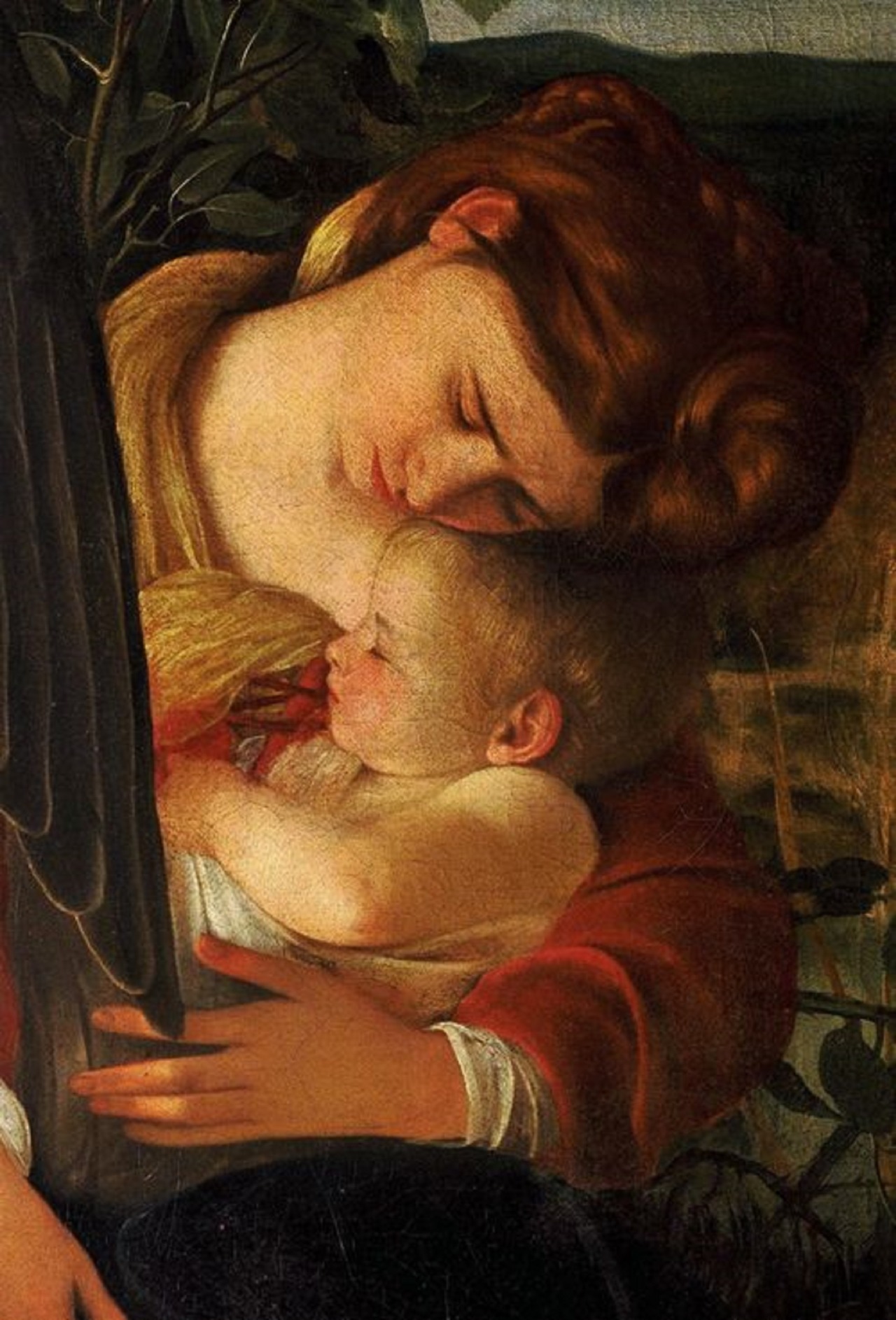
Caravaggio (1571-1610) - Rest on the Flight into Egypt (Detail)
Here is a meditation on Our Lady by a Catholic writer who wishes to be known as Mi Amigo.
All Christians, Protestants and Catholics, as the Christian family seems to be divided, or defined, these days, have one thing in common: all believe in the divinity of Jesus Christ. In the matter of honoring his mother, Mary, with devotion and imitation, however, the commonality dissolves. Why?

All believe that In the beginning was the Word, that the Word is God, that woman and man are creatures made in the image and likeness of the Word, and that the Word incarnated on earth as a man in the fullness of God, as Jesus, born of a virgin known as Mary, to save us by the forgiveness of sins.
Mothers, imagine your child is the incarnation of the Word. An angel appears to you, and tells you that you are favored by God, for He sees that you are full of grace, so that He will overshadow you by His Spirit and bless you with His Presence so that you will bear....wait....Himself?….yes, Him.
Mothers, imagine that your child is born, and you are visited by kings, wise men, who bow down to your child and present Him with gifts representing royalty, prophecy and priesthood.

Mothers, imagine that your child is presented to the High Priest in the temple, and he looks you directly in the eyes with love and compassion, with thankfulness that you have blessed him with the opportunity to hold your child in his arms, and he tells you that your child will be a stumbling block to your nation, even while a Savior of the world, and that you, yourself, will be pierced in the soul.

Mothers, who are you? Who is Mary? You are the bearers, teachers, protectors, nurturers of the bodies of humanity bearing His breath of life, of us bearing his image and likeness, and we are eternally grateful in love to you for you. Mary was also the bearer, the teacher, the protector, the nurturer of a child: He who made you and us, your children, He from whom, in whom, and through whom we were made and now exist, and have the promise of eternal life.

Mothers, your children listen to you, follow you, and obey you (at least ideally, or for the most part hopefully!). Jesus did the same in respect of his mother. How much more proper was it that Mary listened to, followed, chased after even, and obeyed her Lord? Mother, here is your son, and son, here is your mother.

Mothers, imagine knowing, not only because the angel of God told you before your child was born, but because you saw with your own eyes, and touched with your own hands and soul, every day of your child's life, from infancy to young adulthood, the blind given sight, the lame walking, the feeding of thousands with only a few loaves, the dead brought back to life, the condemned forgiven....imagine knowing that your child, yes the child to which you gave birth, is God come to save us.

Mothers, imagine witnessing, before your own eyes, your child condemned by false witness, He who was Truth, whipped, bruised and battered, and then nailed to a cross, hanging in front of you on the trunk of a tree, praying for his persecutors, thirsting, fulfilling His purpose.

Mothers, can you imagine that this child is yours?

Why? Again, I ask, why? It seems to me that only the one of us who stands in Mary’s shoes has any standing to respond with any considerable answer. Anybody? Why?

As brothers and sisters, at least, certainly, we can recognize Mary our common mother, because, if for no other reason, Jesus is our brother.

We honor Mary with singular devotion because no ark has ever borne the Covenant like she did.
Related Posts with Thumbnails