Sunday, March 1, 2026

Second Sunday of Lent

undefined

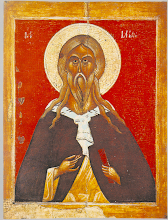
  Moses and Elias witness the Transfiguration.

The Gospel is from St. Matthew 17:1-9. This momentary vision of Christ, in his glory, was given in order to strengthen the three principal Apostles to face the trials to their faith, which the sufferings and crucifixion of their beloved master would bring on them. For the very same reason it is retold to us today, in the early part of Lent, to encourage us to persevere in our Lenten mortification. It reminds us that, very soon, the Easter bells will be ringing out their message of joy once more. If we are sharers with Christ in his sufferings, we shall be sharers with him in his glory as St. Paul reminds us.
This is a truth we all too easily forget, namely, that we cannot and do not get to heaven in a limousine. Our spell on earth is the chance given us by our heavenly Father to earn an eternal reward. This reward surpasses even the wildest imagination of man. We could never earn it, but God accepts the little we can do and provides the balance of his infinite mercy. And yet there are many, far too many, who refuse even that little bit that is asked of them, and are thus running the risk of not partaking in God's scheme for their eternal happiness.
And are they any happier during their few years on this earth by acting thus towards the God of mercy? Can they, by ignoring God and their duties towards him, remove all pain, all sorrow, all sufferings, from their daily lives? Death, which means a total separation from all we possessed and cherished in this world, is waiting around the corner for all of us. Who can face it more calmly and confidently —the man who is firmly convinced that it is the gateway to a new life, and who has done his best to earn admission through that gateway, or the man who has acted all his life as if death did not exist for him, and who has done everything to have the gate to the new life shut forever in his face?
Illnesses and troubles and disappointments are the lot of all men. They respect neither wealth, nor power, nor position. The man who knows his purpose in life, and is ever striving to reach the goal God's goodness has planned for him, can and will see in these trials of life the hand of a kind father who is preparing him for greater things. His sufferings become understandable and more bearable because of his attitude to life and its meaning. The man who ignores God and tries to close the eyes of his mind to the real facts of life has nothing to uphold him or console him in his hours of sorrow and pain. Yet, sorrow and pain will dog his footsteps, strive as he will to avoid them, and he can see no value, no divine purpose in these, for him, misfortunes.
Christ has asked us to follow him, carrying our daily cross, and the end of our journey is not Calvary but resurrection, the entrance to a life of glory with our risen Savior. The Christian who grasps his cross closely and willingly, knowing its value for his real life, will find it becomes lighter and often not a burden but a pleasure. The man who tries to shuffle off his cross, and who curses and rebels against him who sent it, will find it doubles its weight and loses all the value it was intended to have for his true welfare. (Read entire post.)

Sunday, February 22, 2026

First Sunday of Lent

Ary Scheffer's The Temptation of Christ

From Dom Gueranger:

Lent solemnly opens today. We have already noticed that the four preceding days were added since the time of Gregory the Great, in order to make up Forty days of fasting. Neither can we look upon Ash Wednesday as the solemn opening of the Season, for the Faithful are not bound to hear Mass on that day. The Holy Church, seeing her children now assembled together, speaks to them, in her Office of Matins, these eloquent and noble words of St. Leo the Great: “Having to announce to you, dearly beloved, the most sacred and chief Fast, how can I more appropriately begin, than with the words of the Apostle (in whom Christ himself spoke), and by saying to you what has just been read: Behold! now is the acceptable time; behold! now is the day of salvation. For although there be no time which is not replete with divine gifts, and we may always, by God’s grace, have access to his mercy—yet ought we all to redouble our efforts to make spiritual progress and be animated with unusual confidence now that the anniversary of the day of our Redemption is approaching, inviting us to devote ourselves to every good work, that so we may celebrate, with purity of body and mind, the incomparable Mystery of our Lord’s Passion.

“It is true, that our devotion and reverence towards so great a Mystery should be kept up during the whole year, and we ourselves be, at all times, in the eyes of God, the same as we are bound to be at the Easter Solemnity. But this is an effort which only few among us have the courage to sustain. The weakness of the flesh induces us to relent our austerities; the various occupations of every-day life take up our thoughts; and thus, even the virtuous find their hearts clogged by this world’s dust. Hence it is, that our Lord has most providentially given us these Forty Days, whose holy exercises should be to us a remedy, whereby to regain our purity of soul. The good works and the holy fastings of this Season were instituted as an atonement and obliteration of the sins we commit during the rest of the Year.

“Now, therefore, that we are about to enter upon these days, which are so full of mystery, and were instituted for the holy purpose of purifying both our soul and body, let us, dearly beloved, be careful to do as the Apostle bids us, and cleanse ourselves from all defilement of the flesh and the spirit: that thus the combat between the two substances being made less fierce, the soul, which, when she herself is subject to God, ought to be the ruler of the body, will recover her own dignity and position. Let us also avoid giving offence to any man, so that there be none to blame or speak evil things of us. For we deserve the harsh remarks of infidels, and we provoke the tongues of the wicked to blaspheme religion, when we, who fast, lead unholy lives. For our Fast does not consist in the mere abstaining from food; nor is it of much use to deny food to our body, unless we restrain the soul from sin.” [Fourth Sermon for Lent] (Read more.)

Thursday, February 19, 2026

I Love Lent

Lent is one of the best seasons of the year for me. I never look forward to it the way I do to Christmas, but once Lent is underway, it is a happy and peaceful time. Facing reality can be both healing and satisfying. Lent is a public acknowledgment that life is a valley of tears, the world is a dangerous place, and we are all going to die. It is like one big AA meeting where, instead of admitting to alcoholism, everyone confesses to being a sinner, a dysfunctional being who has made a mess of his life and the lives of others. But Lent is here; recovery has begun. It is time to clean up the spilled milk, pick up the pieces, and start all over again. Lent is the hour of truth; staring the truth in the face can be disarming but it can also produce the peace and joy that only penitence in Christ can bring.

Wednesday, February 18, 2026

Ash Wednesday

Remember, man, that you are dust, and unto dust you shall return.
Our forty days of penance commence with the reception of blessed ashes. The words from the book of Genesis (3:19) help us to think of the shortness of life, of our last end, and of that moment when each shall come before God to be judged. "Remember," wrote Saint Teresa of Avila, "that you have only one life, which is short and has to be lived by you alone; that there is only one glory, which is eternal."

Since Old Testament times, ashes have been a symbol of sorrow for sin. "For I did eat ashes like bread, and mingled my drink with weeping." (Psalm 101:10) In the early Church, only "public" sinners, those guilty of murder, adultery, or idolatry, who had formally repented, would receive ashes on Ash Wednesday. During Lent, they would humbly kneel at the doors of the church, not entering until they were given absolution on Holy Thursday. The famous liturgist, Abbot Gueranger, gives a description of the ceremony "of the Wednesday in Quinquagesima:"
Before the Mass of the day began, they [the penitents] presented themselves at the church....The priests received the confession of their sins, and then clothed them in sackcloth, and sprinkled ashes on their heads...the clergy and the faithful prostrated themselves and recited aloud the seven penitential psalms. A procession, in which the penitents walked barefooted, then followed; and on its return, the bishop then addressed these words to the penitents: 'Behold, we drive you from the doors of the church by reason of your sins and crimes, as Adam, the first man, was driven out of paradise....' The clergy then sang several responsories, taken from the book of Genesis....The doors were shut, and the penitents were not to pass the threshold until Maunday Thursday, when they were to come to receive absolution. (The Liturgical Year, Vol IV , p 204-205)
During the Middle Ages, it became the custom for all of the faithful to receive ashes on Ash Wednesday. We are blessed that so many indulgences can now be gained with very little effort on our part. How light are the penances now demanded of us; what little fasting is required of us! Perhaps the best penance is the patient and loving endurance of hardships and sorrows which come our way; those unchosen mortifications can be heavy enough. Interiorly, we can share the contrition of the brave penitents of old by receiving the ashes with great love for Christ and a determination to follow Him, no matter what. It is time for a new beginning, and for trying, again, to be a disciple.

Lent is like a retreat for the entire church in which all Christians strive more vigorously against the world, the flesh, and the devil, our spiritual enemies. The three works which Holy Mother Church exhorts us to perform during Lent in order to overcome those enemies are prayer, fasting, and alms giving. Through prayer, we grow in strength to conquer the evil one. It is important to make more time for prayer during Lent because it arouses compunction, charity, humility, and other dispositions without which the other two practices would be empty of merit.

We fast in order to imitate Our Lord's forty day fast in the desert. Unlike Him, we need to tame the concupiscence of the flesh, acquire self-discipline, and atone for our personal sins. It was by breaking God's commandment to abstain from eating a certain fruit that Adam and Eve lost the earthly paradise. Both Moses and Elias fasted for forty days before encountering the living God. (Exodus 24:18 and 3 Kings 19:8)

In former times, every day of Lent (except for Sundays and first-class feasts) was a fast day. Now, only two fast days remain -- Ash Wednesday and Good Friday. Ash Wednesday and Good Friday are also days of abstinence from meat, as are all Fridays of Lent. Many people think that the Second Vatican Council did away with Friday abstinence, but it did not. Every Friday of the year is a day of abstinence from meat unless the bishops of the country decide to substitute another form of penance. In the United States, it is up to every individual to perform some other Friday penance if they are not able to abstain from meat. However, every Friday of Lent remains a day of strict abstinence.

The third Lenten good work is almsgiving, by which we overcome the "world," that is, the love of riches, luxuries, and honors. Through almsgiving we not only help the poor, the missions, and the temporal needs of the Church, but we mortify any inordinate desires for material things. By having Masses offered, our alms can assist the "Church Suffering" in purgatory. As the aged Tobias said to his son: "Prayer is good with fasting and alms more than more than to lay up treasures of gold. For alms delivereth from death, and...purgeth away sins." (Tobias 12:8-9) As Jesus commands in the Gospel for Ash Wednesday: "Let not your right hand know what your left hand is doing." (Matthew 6:3) It is most important that all our good works are accompanied by charity, humility, and the desire to please God alone.

Tuesday, February 17, 2026

Shrove Tuesday

Shrove Tuesday is the feast of the Holy Face of Jesus. Don Marco has an excellent meditations on this beautiful devotion. To quote:
Face and Person are synonymous, not only by reason of the Greek etymology, but even more because there is nothing more personal, nothing more precious, nothing dearer than the face of a loved one. The psalmist’s cry, “I long to see Thy Face” (Ps 26:8), is the cry of every lover to his beloved, the cry of child to parent, of parent to child, and of friend to friend. The most poignant moment in the rites of death and burial comes when the face of the deceased is covered for the last time. We cherish photographs of those we love, but what is a photograph without a face? The relationships that we call “heart to heart” never tire of the “face to face.”
The Holocaust that took place during the Second World War was, at the deepest level, an attempt to erase the dignity and uniqueness of each person, a sin against the Face of Christ, the Holy Face mirrored in millions of Jewish faces. Every sin against the dignity of the human person is a sin against the Face of Christ. Every act of violence, irreverence, or scorn directed against the human person is a sin against the Face of Christ. The abortion that prevents a child’s face from seeing another human face in the light of day is a sin against the Face of Christ. Torture and cruel ridicule are sins against the Face of Christ. The hard, stony gaze that looks at a person without seeing him is a sin against the Face of Christ. The eyes that judge, the look that condemns, is a sin against the Face of Christ. The refusal to see Christ in the faces of the sick, the stranger, and the immigrant is a sin against his Holy Face.
Reparation is the prayer that seeks to make whole what is fragmented by putting love where there is no love, by gazing with reverence upon what has been disdained, by allowing our eyes to rest on “One from whom men hide their faces” (Is 53:3). The extraordinary thing about the prayer of reparation is that it is healing not only for the one offended but for the offender as well. If by sin we offend the Face of Christ, by reparation to the Holy Face we are healed of our sins. “Thou has set our iniquities before thee,” says the psalmist, “our secret sins in the light of Thy Face” (Ps 89:8).

The prayer of reparation is most at home in the presence of the Most Blessed Sacrament. The light that shines from the Eucharistic Face of Christ heals us sinners, and heals those against whom we have sinned. The love we bring to the Eucharistic Face of Christ reaches every human face. The prayer of reparation is the veil of Veronica lifted to the face of Christ in His Passion; it is the hand that seeks to wipe away every disfiguring stain of filth, of blood, and of tears. (Read more.)
The image to the left is the representation of the imprint of Our Lord's face on the Veronica veil, as it is venerated in the Carmelite Order, and propagated by Sister Marie de Saint Pierre and Venerable Leo Dupont.
 

 Here is the prayer of Saint Thérèse of Lisieux to the Holy Face:
O Jesus, who in Thy bitter Passion didst become "the most abject of men, a man of sorrows," I venerate Thy Sacred Face whereon there once did shine the beauty and sweetness of the Godhead; but now it has become for me as if it were the face of a leper! Nevertheless, under those disfigured features, I recognize Thy infinite Love and I am consumed with the desire to love Thee and make Thee loved by all men. The tears which well up abundantly in Thy sacred eyes appear to me as so many precious pearls that I love to gather up, in order to purchase the souls of poor sinners by means of their infinite value. O Jesus, whose adorable Face ravishes my heart, I implore Thee to fix deep within me Thy divine image and to set me on fire with Thy Love, that I may be found worthy to come to the contemplation of Thy glorious Face in Heaven. Amen.
Another site with everything about the Holy Face devotion is HERE.And more HERE.

Here is a formula from the ancient Ambrosian liturgy, as quoted by Abbot Gueranger in The Liturgical Year for Shrove Tuesday:
Sweet is this present life, but it passes away; terrible, O Christ is thy judgment, and it endures forever. Let us, therefore, cease to love what is unstable, and fix our thought on what is eternal: saying: Christ, have mercy upon us!
Now the time has come to go into the desert, the desert of Lent.

Monday, February 16, 2026

How Bravely Embracing Suffering Can Lead to Joy

From TFP:

Of course, we hate the cross of suffering that will always be placed upon our shoulders. We have an aversion to suffering. However, suffering has its benefits. Through it, we come to see that everything worthwhile takes time and effort. We can learn great lessons from our misfortunes. The satisfaction of a duty well done is the source of happiness. Moreover, God blesses our lives with moments of great joy between the sufferings that visit us.

Our postmodern society needs to learn this lesson if we are to overcome the present crisis. There is no easy way out of this crisis brought upon us by our iniquities. The longer we put off the acceptance of suffering, the greater it will be. Either we embrace the coming suffering with resignation, or we will perish.

The cruel reality of our situation is allowing evil to reach a climax. If we are to survive, we cannot face this danger alone.

We must have recourse to the Church that teaches us how to overcome our fears and embrace suffering. When united with the infinitely precious suffering of Our Lord Jesus Christ, we can share in His redemptive suffering. We can offer up our sufferings for the salvation of souls. Our sufferings then gain meaning and purpose. They impact society and history.

Thus, the Christian perspective on suffering goes far beyond our trials. It puts them in the context of eternity, which should fill us with joy. Then we can truly say, “forsan et haec olim meminisse iuvabit.” However, the joy will not only be an earthly joy but a heavenly one. (Read more.)

Sunday, February 15, 2026

Quinquagesima Sunday

The Caravan of Abraham by James Tissot: "And the Lord said to Abram: Go forth out of thy country, and from thy kindred, and out of they father's house, and come into the land which I shall shew thee." Genesis 12:1

It is Quinquagesima Sunday. According to New Advent:
The period of fifty days before Easter. It begins with the Sunday before Ash Wednesday, called Dominica in Quinquagesima....
For many early Christians it was the beginning of the fast before Easter....For some, Quinquagesima marked the time after which meat was forbidden....In many places this Sunday after and the next two days were used to prepare for Lent by a good confession; hence in England we find the names Shrove Sunday and Shrovetide.
As the days before Lent were frequently spent in merry-making, Benedict XIV by the Constitution "Inter Cetera" (1 Jan., 1748) introduced a kind of Forty Hours' Devotion to keep the faithful from dangerous amusements and to make some reparation for sins committed.

In the words of Dom Gueranger for Quinquagesima Sunday:
We are commanded to use this world as if we used it not; to have an abiding conviction of our not having here a lasting city, and of the misery and danger we incur when we forget that death is one day to separate us from everything we possess in this life.
~from Abbot Gueranger's The Liturgical Year, Vol. IV
More HERE.

Saturday, February 14, 2026

Saint Valentine


How ironic that the patron saint of true love is a martyr. According to the legend:
The first representation of Saint Valentine appeared in a The Nuremberg Chronicle, a great illustrated book printed in 1493. [Additional evidence that Valentine was a real person: archaeologists have unearthed a Roman catacomb and an ancient church dedicated to Saint Valentine.] Alongside a woodcut portrait of him, text states that Valentinus was a Roman priest martyred during the reign of Claudius the Goth [Claudius II]. Since he was caught marrying Christian couples and aiding any Christians who were being persecuted under Emperor Claudius in Rome [when helping them was considered a crime], Valentinus was arrested and imprisoned. Claudius took a liking to this prisoner -- until Valentinus made a strategic error: he tried to convert the Emperor -- whereupon this priest was condemned to death. He was beaten with clubs and stoned; when that didn't do it, he was beheaded outside the Flaminian Gate [circa 269].

Saints are not supposed to rest in peace; they're expected to keep busy: to perform miracles, to intercede. Being in jail or dead is no excuse for non-performance of the supernatural. One legend says, while awaiting his execution, Valentinus restored the sight of his jailer's blind daughter. Another legend says, on the eve of his death, he penned a farewell note to the jailer's daughter, signing it, "From your Valentine."

St. Valentine was a Priest, martyred in 269 at Rome and was buried on the Flaminian Way. He is the Patron Saint of affianced couples, bee keepers, engaged couples, epilepsy, fainting, greetings, happy marriages, love, lovers, plague, travelers, young people. He is represented in pictures with birds and roses. (Read more.)

Wednesday, February 11, 2026

Le Cachot


Today is the feast of Our Lady of Lourdes. Le cachot was the hovel where St. Bernadette and her family were living when she saw Our Lady at the grotto of Massabielle in 1858. I first visited it in April 1994 and it was a moving and grace-filled experience. In St. Bernadette's time it was described thus:

The room was dark ... In the backyard was the privy which overflowed and made the place stink. We kept the dung–heap there ... The Soubirous were destitute: two poor beds, one on the right as you entered, and the other on the same side nearer to the fireplace ... They had only a little trunk to put all their linen in ... My wife lent them some chemises: they were full of vermin ... She often gave them a bit of bread made of millet. Yet the little ones never asked for anything. They would rather have starved. ~André Sajous, owner of Cachot, 1875


Here is an account of the apparitions at Lourdes:

Lourdes in 1858 was an inconspicuous little French town on the Gave de Pau River at the foot of the Pyrenees, with around 4,000 inhabitants. One of them was a former miller named François Soubirous, who had fallen on hard times. He and his wife Louise had six children. The eldest was their daughter Marie-Bernarde, known as Bernadette. Desperately poor, the family lived squashed into one small room. Bernadette spent part of her childhood brought up by an aunt, had little in the way of schooling and was unable to read or write.

Bernadette went back to the grotto seventeen more times and saw the Lady, though no one else ever did. Her story spread round the town like wildfire. The Lady was generally assumed to be the Virgin Mary and more and more townspeople began to go to the grotto with Bernadette, but there was considerable scepticism, from the parish priest among others.

On February 25th the Lady told Bernadette to drink the water of a spring that flowed under her rock. As there seemed to be no spring, Bernadette dug in the ground. Nothing happened, but a day or so afterwards the water started to flow. Bernadette drank it and washed in it and others did the same and the water acquired a reputation for healing properties. The spring is still flowing at the rate of 32,000 gallons a day, but analysis of the water has found nothing remarkable about it.

On February 27th and March 2nd the Lady told Bernadette that the priests should be told to build a chapel at the site and have people come there in processions. Word of what was going on reached the French newspapers and the crowds acompanying Bernadette to the grotto swelled to thousands and had to be controlled by the police.

On the feast of the Annunciation of the Virgin Mary on March 25th, the Lady at last proclaimed her identity. Speaking to Bernadette in the local Lourdes patois, she said ‘I am the Immaculate Conception’. The doctrine of the Immaculate Conception had been proclaimed only a few years before, in 1854. Bernadette saw her last apparition on July 16th, the feast of Our Lady of Mount Carmel. (Read more.)

Tuesday, February 10, 2026

Saint Scholastica on Lent

My venerable brother recommends four Lenten practices: “prayer with tears, reading, compunction of heart, and abstinence” (RB 49:4). The first, prayer with tears, has always come easily to me. God has never refused me anything I asked of him with tears. I have no doubt that he “has set my tears in his sight” (Ps 55:9). Tears in prayer are no cause for alarm. The heart pressed by the hand of God in prayer weeps just as a sponge held tightly in your hand or mine gives forth water.

Sacred reading is my brother’s second Lenten practice. He considers it so important that he completely changes the horarium of his monastery during Lent to make more time for it. Here we do the same. Nothing is done at Monte Cassino that we do not do here at Plombariola. In Lent our hours of reading are “from the morning until the end of the Third Hour” (RB 48:14). This means we do not begin work after Prime, as is the custom at other times, but consecrate to sacred reading the best three hours of the morning. We are alert then, and the early morning light in the cloister is wonderfully clear and bright.

Sunday, February 8, 2026

Sexagesima Sunday

Parable of the Sower

 From Abbot Gueranger:

St. Gregory the Great justly remarks, that this Parable needs no explanation. since Eternal Wisdom himself has told us its meaning. All that we have to do, is to profit by this divine teaching, and become the good soil, wherein the heavenly Seed may yield a rich harvest. How often have we not, hitherto, allowed it to be trampled on by them that passed by, or to be torn up by the birds of the air? How often has it not found our heart like a stone, that could give no moisture, or like a thorn plot, that could but choke? We listened to the Word of God; we took pleasure in hearing it; and from this we argued well for ourselves. Nay, we have often received this Word with joy and eagerness. Sometimes, even, it took root within us. But, alas! something always came to stop its growth. Henceforth, it must both grow and yield fruit. The Seed given to us is of such quality, that the Divine Sower has a right to expect a hundred-fold. If the soil, that is, if our heart, be good;- if we take the trouble to prepare it, by profiting of the means afforded us by the Church;- we shall have an abundant harvest to show our Lord on that grand Day, when, rising triumphant from his Tomb, he shall come to share with his faithful people the glory of  his Resurrection.

Inspirited by this hope, and full of confidence in Him, who has once more thrown his Seed in this long ungrateful soil, let us sing with the Church, in her Offertory, these beautiful words of the Royal Psalmist:- they are a prayer for holy resolution and perseverance. (Read more.)


Thursday, February 5, 2026

Saint Agatha of Sicily


 From My Catholic Life:

It is shocking what people are capable of doing. Some are capable of the most hideous, diabolical, and self-serving acts. Others are capable of enduring those evils for the love of Christ with peace, strength, and joy. Regardless of the historical accuracy of the details of Saint Agatha’s life and death, her story, as it has been handed down, reveals the potential in every human heart. We have the potential to be great sinners, the potential to be great saints, or somewhere in-between. Allow the witness of Quintianus to fill your heart with a holy fear of sin and the witness of Saint Agatha to move you from that “in-between.” Her courage and unwavering fidelity to Christ have shone a light for countless people throughout the centuries. One day, in Heaven, we will meet the true Saint Agatha and rejoice as we gaze upon the beauty and purity of her soul. Seek to make your soul radiate with that same glory by the grace of God and your fidelity to His holy will. (Read more.)

Tuesday, February 3, 2026

St. Blase

"Through the intercession of Saint Blase, bishop and martyr, may God deliver you from ailments of the throat and from every other evil. In the name of the Father, and of the Son and of the Holy Spirit." (Blessing of Saint Blase)
 
St. Blase is one of the Fourteen Holy Helpers. From New Advent:
It can perhaps be assumed that St. Blasius was a bishop and that he suffered martyrdom at the beginning of the fourth century...According to the legend Blasius was a physician at Sebaste before he was raised to the episcopal see. At the time of the persecution under Licinius he was taken prisoner at the command of the governor, Agricolaus. The hunters of the governor found him in the wilderness in a cave to which he had retired and while in prison he performed a wonderful cure of a boy who had a fishbone in his throat and who was in danger of choking to death. After suffering various forms of torture St. Blasius was beheaded; the Acts relate also the martyrdom of seven women. (Read more.)

More HERE.

Monday, February 2, 2026

Lourdes Novena


O ever Immaculate Virgin, Mother of Mercy, Health of the Sick, Refuge of Sinners, Comfort to the Afflicted, you know my wants, my troubles, my sufferings. Deign to cast upon me a look of mercy. By appearing in the Grotto of Lourdes, you were pleased to make it a privileged sanctuary, whence you dispense your favors; and already many sufferers have obtained the cure of their infirmities, both spiritual and corporal. I come, therefore, with the most unbounded confidence to implore your maternal intercession. Obtain, O loving Mother, the granting of my requests. Through gratitude for favors, I will endeavor to imitate your virtues that I may one day share your glory. (Our Father, Hail Mary, Glory Be.)
Our Lady of Lourdes, pray for us!
Saint Bernadette, pray for us!
 Petitions can be sent directly to Lourdes.

Candlemas Day

Adorn thy bridal chamber, O Sion, and receive Christ the King. Salute Mary, the gate of Heaven; for she beareth the King of Glory, Who is the new Light.... —Antiphon for feast of the Presentation of the Lord
On the fortieth day after Christmas we celebrate the Presentation of Our Lord in the Temple, where He is offered by His Mother and St Joseph to the Eternal Father for the sins of the world. Many prophecies were fulfilled that day, unknown at the time except to Mary and Joseph, Simeon and Anna, all persons of prayer and of special consecration to God. In a time of great darkness there was suddenly and quite publicly a great light, to be received only by those whose hearts were open. A small Child is the ultimate sacrifice for the redemption of humanity, but He is not alone; He is with His family. The Holy Family stand between us and utter chaos and despair. Like the Child Jesus, we do not make our offering alone, we make it with Mary and Joseph, we make it in the context of our own families.
Behold this child is set for the fall, and for the resurrection of many in Israel, and for a sign which shall be contradicted; and thy own soul a sword shall pierce, that, out of many hearts, thoughts may be revealed. --St. Luke 2:34-35
 The "Purification of Our Lady" as the feast is traditionally called, is a feast of the Virgin as well as the Virgin's Son. We marvel at the humility of Immaculate Mary who submits to the ritual of purification for all Jewish mothers, although she herself had no need to be purified. It is also known as Candlemas Day because since early times, candles have been blessed and carried in procession in honor of Christ, the Light of the World.

At Christmas, we adored Him with the shepherds at dawn; at Epiphany, we rejoiced in the brightness of His manifestations to the nations; at Candlemas, with the aged Simeon, we take Him into our arms. With the prophetic words of Simeon, the day also becomes a preparation for Lent and the Passion of Our Lord. We must offer ourselves with Jesus to the Father; we must embrace our own purification.
 

This feast day links Christmas with Lent, the joyful mysteries with the sorrowful mysteries. Mary's Heart is pierced as Simeon's prophecy is uttered, for a mother suffers for her child, especially when that Child is God. Fr Gabriel of St. Mary Magdalen, O.C.D. wrote so magnificently of this feast in his book Divine Intimacy:
O Jesus, through the hands of Mary, I wish to offer myself today with You to the eternal Father. But You are a pure, holy, and Immaculate Host, while I am defiled with misery, and sin....O Virgin Most pure, lead me along the way of a serious and thorough purification; accompany me yourself, so that my weakness will not make me faint because of the roughness of the road.

Sunday, February 1, 2026

St. Brigid of Kildare

It is the feast of the great Irish abbess, St. Brigid of Kildare. During the fall of Rome and before the rise of Islam, as Europe descended into chaos, Brigid built a center of learning, contemplation, art, and scholarship that would last a thousand years. To quote:
Born in 451 or 452 of princely ancestors at Faughart, near Dundalk, County Louth; d. 1 February, 525, at Kildare. Refusing many good offers of marriage, she became a nun and received the veil from St. Macaille. With seven other virgins she settled for a time at the foot of Croghan Hill, but removed thence to Druin Criadh, in the plains of Magh Life, where under a large oak tree she erected her subsequently famous Convent of Cill-Dara, that is, "the church of the oak" (now Kildare), in the present county of that name. It is exceedingly difficult to reconcile the statements of St. Brigid's biographers, but the Third, Fourth, and Fifth Lives of the saint are at one in assigning her a slave mother in the court of her father Dubhthach, and Irish chieftain of Leinster. Probably the most ancient life of St. Brigid is that by St. Broccan Cloen, who is said to have died 17 September, 650. It is metrical, as may be seen from the following specimen:
Ni bu Sanct Brigid suanach
Ni bu huarach im sheire Dé,
Sech ni chiuir ni cossens
Ind nóeb dibad bethath che. (Saint Brigid was not given to sleep,
Nor was she intermittent about God's love;
Not merely that she did not buy, she did not seek for
The wealth of this world below, the holy one.)

(Read more.)

More on the abbey she founded here and here.

St. Brigid is the patroness of two characters in my novel The Paradise Tree


Septuagesima Sunday

"Upon the waters of Babylon, there we sat and wept, as we remembered Zion." ~Psalm 136 (Vulgate)   
 
It is Septuagesima Sunday, according to the traditional calendar. The season of Septuagesima is a time to start thinking about Lent; the "seventy" days until Easter are symbolic, among other things, of the seventy years of the Israelites' Babylonian captivity. We have all made mistakes; it is not too late to make amends while there is still time. We are being given a second chance. Redemption is at hand.

According to Dom Gueranger in The Liturgical Year, Vol. IV: "We are sojourners upon this earth: we are exiles and captives in Babylon, that city which plots our ruin. If we love our country, we long to return to it...." To quote from the "Mystery of Septuagesima":

The Church, the interpreter of the Sacred Scriptures, often speaks to us of two places, which correspond with these two times of St. Augustine. These two places are Babylon and Jerusalem. Babylon is the image of this world of sin, in the midst whereof the Christian has to spend his years of probation; Jerusalem is the heavenly country, where he is to repose after all his trials. The people of Israel, whose whole history is but one great type of the human race, was banished from Jerusalem and kept in bondage in Babylon.

Now, this captivity, which kept the Israelites exiles from Sion, lasted seventy years; and it is to express this mystery, as Alcuin, Amalarius, Ivo of Chartres, and all the great Liturgists tell us, that the Church fixed the number of Seventy for the days of expiation. It is true, there are but sixty-three days between Septuagesima and Easter; but the Church, according to the style so continually used in the Sacred Scriptures, uses the round number instead of the literal and precise one.

The duration of the world itself, according to the ancient Christian tradition, is divided into seven ages. The human race must pass through seven Ages before the dawning of the Day of eternal life. The first Age included the time from the creation of Adam to Noah; the second begins with Noah and the renovation of the earth by the Deluge, and ends with the vocation of Abraham; the third opens with this first formation of God’s chosen people, and continues as far as Moses, through whom God gave the Law; the fourth consists of the period between Moses and David, in whom the house of Juda received the kingly power; the fifth is formed of the years, which passed between David’s reign and the captivity of Babylon, inclusively; the sixth dates from the return of the Jews to Jerusalem, and takes us on as far as the Birth of our Saviour. Then, finally, comes the seventh Age; it starts with the rising of this merciful Redeemer, the Sun of Justice, and is to continue till the dread coming of the Judge of the living and the dead. These are the Seven great divisions of Time; after which, Eternity.

In order to console us in the midst of the combats, which so thickly beset our path, the Church, — like a beacon shining amidst the darkness of this our earthly abode, — shows us another Seven, which is to succeed the one we are now preparing to pass through. After the Septuagesima of mourning, we shall have the bright Easter with its Seven weeks of gladness, foreshadowing the happiness and bliss of Heaven. After having fasted with our Jesus, and suffered with him, the day will come when we shall rise together with him, and our hearts shall follow him to the highest heavens, and then after a brief interval, we shall feel descending upon us the Holy Ghost, with his Seven Gifts. The celebration of all these wondrous joys will take us Seven weeks, as the great Liturgists observe in their interpretation of the Rites of the Church: — the seven joyous weeks from Easter to Pentecost will not be too long for the future glad Mysteries, which, after all, will be but figures of a still gladder future, the future of eternity.

Having heard these sweet whisperings of hope, let us now bravely face the realities brought before us by our dear Mother the Church. We are sojourners upon this earth; we are exiles and captives in Babylon, that city which plots our ruin. If we love our country, — if we long to return to it, — we must be proof against the lying allurements of this strange land, and refuse the cup she proffers us, and with which she maddens so many of our fellow captives. She invites us to join in her feasts and her songs; but we must unstring our harps, and hang them on the willows that grow on her river’s bank, till the signal be given for our return to Jerusalem. (Psalm 115) She will ask us to sing’ to her the melodies of our dear Sion: but, how shall we, who are so far from home, have heart to sing the Song of the Lord in a strange Land ? (Psalm 136) No, — there must be no sign that we are content to be in bondage, or we shall deserve to be slaves for ever. (Read more.)

More on Septuagesima Sunday, HERE.

We are far away but drawing ever nearer; let us encourage our fellow travelers, and keep on going. In a little while it will be eternity.
pre-raphaelisme:
“ By the waters of Babylon by Arthur Hacker, 1888
”
By the waters of Babylon by Arthur Hacker, 1888

Upon the rivers of Babylon, there we sat and wept: when we remembered Sion: 2On the willows in the midst thereof we hung up our instruments. 3For there they that led us into captivity required of us the words of songs. And they that carried us away, said: Sing ye to us a hymn of the songs of Sion. 4How shall we sing the song of the Lord in a strange land? 5If I forget thee, O Jerusalem, let my right hand be forgotten. 6Let my tongue cleave to my jaws, if I do not remember thee: If I make not Jerusalem the beginning of my joy. 7Remember, O Lord, the children of Edom, in the day of Jerusalem: Who say: Rase it, rase it, even to the foundation thereof. 8O daughter of Babylon, miserable: blessed shall he be who shall repay thee thy payment which thou hast paid us. 9Blessed be he that shall take and dash thy little ones against the rock. —Psalm 136 (Douai version) 

 A Meditation on Psalm 136: "Super flumina Babylonis." 

The leaves have fallen. 
The flowers have withered. 
 The rain comes down. 
The year dies In this garden of exile 
Where we have hung up our hearts. 
The clamor of Babylon roars 
 Beyond the wall; 
I listen For another sound. 
I wait For another song.
 I watch 
The horizon glow 
Beneath clouds of lead 
In a moment of yearning 
For Paradise. 
O Jerusalem unseen! 
 Our eyes are blind to your Glories 
 Which all around us shine. 
And yet The voices of the saints 
Seem to pierce 
The curtain of rain.
 I listen. I wait. 
I watch for dawn. 
For that morning of mornings 
 The morning 
Of going home. 
 O City of God! 
Compared to the possession of thee 
There is no happiness! 

 —Mary Magdalen of the Sacred Hearts of Jesus and Mary, OCDS

Saturday, January 31, 2026

St. John Bosco’s Prophetic Vision of the Church During Times of Trial

From Aleteia:
 Very grave trials await the Church. What we have suffered so far is almost nothing compared to what is going to happen. The enemies of the Church are symbolised by the ships which strive their utmost to sink the flagship. Only two things can save us in such a grave hour: devotion to Mary and frequent Communion. Let us do our very best to use these two means and have others use them everywhere. (Read more.)


Wednesday, January 28, 2026

Praying with St. Thomas Aquinas

Fr. Mark on praying with St. Thomas.
The Lord addresses his invitation to the thirsty and the poor. The great accomplishment of Thomas Aquinas was that he saw himself as one thirsty and poor. “Blessed are the poor in spirit, for theirs is the kingdom of heaven. . . . Blessed are those who hunger and thirst for holiness, for they shall be satisfied” (Mt 5:3.6). Every official edition of the Roman Missal contains the prayers of Saint Thomas Aquinas to be recited by the priest before and after Mass. These prayers are, I think, a distillation of all that the Angelic Doctor lived and taught. One has only to pray Saint Thomas’ Prayer Before Mass to understand how he saw himself:
I come sick to the physician of life; unclean, to the fountain of mercy; blind, to the light of eternal brightness; poor and needy, to the Lord of heaven and earth. Therefore I ask for the fullness of your infinite bounty, that you would graciously heal my sickness, wash away my uncleanness, enlighten my blindness, enrich my poverty, and clothe my nakedness; so that I may receive the Bread of Angels, the King of kings and Lord of lords, with such reverence and humility, such sorrow and love, such purity and faith, such purpose and intent as shall further my soul’s salvation.


Biography of Saint Thomas, HERE.

Saturday, January 24, 2026

St. Francis de Sales

Today is the feast of Saint Francis de Sales. He is a saint very close to my heart. Here is one of his best-known sayings:
Do not look forward to the mishaps of this life with anxiety, but await them with perfect confidence so that when they do occur, God, to whom you belong, will deliver you from them. He has kept you up to the present; remain securely in the hand of his providence, and he will help you in all situations. When you cannot walk, he will carry you. Do not think about what will happen tomorrow, for the same eternal Father who takes care of you today will look out for you tomorrow and always. Either he will keep you from evil or he will give you invincible courage to endure it. Remain in peace; rid your imagination of whatever troubles you.
Fr. Mark writes on confidence and peace according to St. Francis de Sales.
Once we have accepted that all things are in the hand of God, and that the great events of history, like the smallest details of our own lives, are willed or permitted by Him, we begin to experience an unassailable peace of heart. “In everything, says Saint Paul, God works for good with those who love Him” (Rom 8:28). Worry has never advanced the kingdom of heaven. Worry has never made anyone holy. Panic, fretting, and anxiety are not fruits of the Holy Ghost. The Holy Ghost produces confidence in God, trust in His mercy, abandonment to His designs, surrender to His will and, always, peace.
Again, Saint Francis de Sales has a word for people who have the need always to be in control:
When we let go of everything, our Lord takes care of all and manages all. If we hold back anything — this shows a lack of trust in Him — He lets us keep it. It is as if he said, “You think yourself wise enough to handle this matter without me; I allow you to do so; you will see how you come out in the end.”
It is a sound observation of human psychology that the more one feels that the big things in one’s life are spinning out of control, the more one grasps at the little things, trying desperately to control what one can.


On false devotion. From Aleteia:

Someone attached to fasting will consider himself devout because he doesn’t eat, even though his heart is filled with bitterness; and while, out of love for sobriety, he will not let a drop of wine, or even water, touch his tongue, he will not scruple to drench it in the blood of his neighbor through gossip and slander. Another will consider himself devout because all day long he mumbles a string of prayers, yet remains heedless of the evil, arrogant and hurtful words that his tongue hurls at his servants and neighbors. Yet another will readily open his purse to give alms to the poor, but cannot wring an ounce of mercy from his heart in order to forgive his enemies. Another still will pardon his enemies, yet never even think of paying his debts; it will take a lawsuit to make him do so.” All these, of course, are perennial vices and struggles, and they lead the saint to conclude that “all these fine people, commonly considered devout, most surely are not.” (Read more.

Friday, January 23, 2026

The Espousals


On the traditional Carmelite calendar, today is celebrated the Espousals of Mary and Joseph. According to Archbishop Sheen:
Mary and Joseph brought to their espousals not only their vows of virginity but also two hearts with greater torrents of love than had ever before coursed through human breasts. No husband and wife ever loved one another so much as Joseph and Mary. Their marriage was not like that of others, because the right to the body was surrendered; in normal marriages, unity in the flesh is the symbol of its consummation, and the ecstasy that accompanies a consummation is only a foretaste of the joy that comes to the soul when it attains union with God through grace. If there are satiety and fed-up-ness in marriage, it is because it falls short of what it was meant to reveal, or because the inner Divine Mystery was not seen in the act. But in the case of Mary and Joseph, there was no need of the symbol of the unity of flesh, since they already possessed the Divinity. Why pursue the shadow when they had the substance? Mary and Joseph needed no consummation in the flesh, for, in the beautiful language of Leo XIII: "The consummation of their love was in Jesus." Why bother with the flickering candles of the flesh, when the Light of the World is their love? Truly He is Jesu, voluptas cordium. When He is the sweet voluptuousness of hearts, there is not even a thought of the flesh. As husband and wife standing over the cradle of their newborn life forget, for the moment, the need of one another, so Mary and Joseph, in their possession of God in their family, hardly knew that they had bodies. Love usually makes husband and wife one; in the case of Mary and Joseph, it was not their combined loves but Jesus Who made them one. No deeper love ever beat under the roof of the world since the beginning, nor will it ever beat, even unto the end. They did not go to God through love of one another; rather, because they went first to God, they had a deep and pure love, one for another. To those who ridicule such holiness, Chesterton wrote:
That Christ from this creative purity
Came forth your sterile appetites to scorn.
Lo! in her house Life without Lust was born
So in your house Lust without Life shall die
. (Read more.)

Wednesday, January 21, 2026

St. Agnes, Virgin and Martyr


Today is the birthday of a virgin; let us imitate her purity. It is the birthday of a martyr; let us offer ourselves in sacrifice. It is the birthday of Saint Agnes, who is said to have suffered martyrdom at the age of twelve. The cruelty that did not spare her youth shows all the more clearly the power of faith in finding one so young to bear it witness.
~from a treatise "On Virgins" by Saint Ambrose, bishop, in the Roman breviary.
More HERE:
Of all the virgin martyrs of Rome none was held in such high honour by the primitive church, since the fourth century, as St. Agnes. In the ancient Roman calendar of the feasts of the martyrs (Depositio Martyrum), incorporated into the collection of Furius Dionysius Philocalus, dating from 354 and often reprinted, e.g. in Ruinart [Acta Sincera Martyrum (ed. Ratisbon, 1859), 63 sqq.], her feast is assigned to 21 January, to which is added a detail as to the name of the road (Via Nomentana) near which her grave was located. The earliest sacramentaries give the same date for her feast, and it is on this day that the Latin Church even now keeps her memory sacred.
Since the close of the fourth century the Fathers of the Church and Christian poets have sung her praises and extolled her virginity and heroism under torture. It is clear, however, from the diversity in the earliest accounts that there was extant at the end of the fourth century no accurate and reliable narrative, at least in writing, concerning the details of her martyrdom. On one point only is there mutual agreement, viz., the youth of the Christian heroine. St. Ambrose gives her age as twelve (De Virginibus, I, 2; P.L., XVI, 200-202: Haec duodecim annorum martyrium fecisse traditur), St. Augustine as thirteen (Agnes puella tredecim annorum; Sermo cclxxiii, 6, P.L., XXXVIII, 1251), which harmonizes well with the words of Prudentius: Aiunt jugali vix habilem toro (Peristephanon, Hymn xiv, 10 in Ruinart, Act. Sinc., ed cit. 486). Damasus depicts her as hastening to martyrdom from the lap of her mother or nurse (Nutricis gremium subito liquisse puella; in St. Agneten, 3, ed. Ihm, Damasi epigrammata, Leipzig, 1895, 43, n. 40). We have no reason whatever for doubting this tradition. It indeed explains very well the renown of the youthful martyr.
The Amo Christum is an ancient Responsory for the feast of Saint Agnes, also used at religious professions:
I love Christ, into whose chamber I shall enter, whose Mother is a virgin, whose Father knows not woman, whose music and melody are sweet to my ears. When I love Him, I remain chaste; when I touch Him, I remain pure; when I possess Him, I remain a virgin. With His ring my Lord Jesus Christ has betrothed me and He has adorned me with the bridal crown.

Tuesday, January 20, 2026

Saint Sebastian

From SQPN:
Son of a wealthy Roman family. Educated in Milan. Officer of the Imperial Roman army, and captain of the guard. Favorite of Diocletian. During Diocletian’s persecution of the Christians, Sebastian visited them in prison, bringing supplies and comfort. Reported to have healed the wife of a brother soldier by making the Sign of the Cross over her. Converted soldiers and a governor to Christianity.
Charged as a Christian, Sebastian was tied to a tree, shot with arrows, and left for dead. He survived, and with the help of Saint Irene, recovered, and returned to preach to Diocletian. The emperor then had him beaten to death.
During the 14th century, the random nature of infection with the Black Death caused people to liken the plague to their villages being shot by an army of nature’s archers. In desperation, they prayed for the intercession of a saint associated with archers, and Saint Sebastian became associated with the plague. (Read more.)

Saturday, January 17, 2026

Our Lady of Hope


On this day in 1871 the heavens opened at Pontmain in France. Once again, the Blessed Mother gave hope to her children. According to Fr. Mark:
Before the beautiful Lady appeared a blood red crucifix. At the top of the cross, on a white crosspiece, the Name of Jesus Christ was written in red letters. The beautiful Lady grasped the crucifix in both hands and showed it to the children while a small star lit the four candles in the blue oval. Everyone prayed in silence. They sang the Ave Maris Stella. The red crucifix disappeared. The beautiful Lady extended her hands in a gesture of welcome. A small white cross appeared on each shoulder. Everyone knelt down in the snow. A white veil, like a great sheet, covered the beautiful Lady from foot to head. “It’s finished,” said the children. Eleven days later the armistice was signed. The Prussians never entered Laval.

Our hope is in God. There is really no one else to whom we can turn. Father Mark writes beautifully of the virtue of hope, saying:

The world judges harshly those who go forward in life, leaving behind them a trail of wrecked hopes and failures. I am learning, after so many years, to give thanks for every wrecked hope and to bless God for every failure. It is altogether too easy to glory in vain hopes and to boast of one's achievements (be they spiritual, academic, or material), and to forfeit the one hope held out by God, the hope that promises and delivers the only happiness that leaves no aftertaste of bitterness: hope in God for God. The value of achievements and possessions must be measured against "the One Thing Necessary . . . the Best Part." (Luke 10:42). Is not this why Our Lord says, "Blessed are the poor in spirit: for theirs is the kingdom of heaven"? (Matthew 5:3)

The Name of Jesus is enshrined, like a jewel set in a precious setting, at the very heart of today's Gospel. Even as I look at the layout of the Gospel -- it is but a single verse -- on the page of the Evangeliary, I see that the Name of Jesus occurs precisely in the middle of text. One who receives the Name of Jesus from the Gospel, and holds it in his heart, will find that it becomes there an unfailing wellspring of hope. The Name of Jesus is an anchor of hope in the soul's secret depths, a reason -- no, the only reason -- for hoping against hope when the forces of despair marshaled by the world, the flesh, and the devil, threaten to pull one into the outer darkness of complete despondency.

Our Blessed Lady and Saint Joseph
Our Blessed Lady and in Saint Joseph demonstrate and illustrate the virtue of hope, especially in the Infancy narratives of the Gospels of Saint Matthew and Saint Luke. Both of them received in secret, as it were, the adorable Name of Jesus; Our Lady from the Archangel Gabriel (Luke 1:31), even before she uttered her Fiat(Luke 1:38), and Saint Joseph from the Angel who came to him in a dream by night (Matthew 1:21). The Most Holy Name of Jesus held in their hearts and endlessly repeated became for both of them the fountain of hope that neither deceives nor confounds those who stake their very lives upon it.

Not only do Our Blessed Lady and Saint Joseph demonstrate and illustrate the virtue of hope; they also dispense it, in abundance, to the souls who seek their intercession. Our Lady, being the Mediatrix of All Graces is Spes Nostra, Our Hope. Where Mary is, there is hope. It is enough for a soul to seek the presence of Mary, and to pronounce her sweet name for hope to fill the terrible void of despair.

As for Saint Joseph, he graciously imparts the grace of hope to those who ask for his paternal help. Saint Joseph, having held fast to hope amidst darkness and trials, is now charged with helping, from his place in heaven, those who are tempted against this virtue that the powers of darkness so hate. With good reason does the Church invoke Saint Joseph as the "Terror of Demons," for when Saint Joseph enters a crisis to bring souls heavenly aid, he foils every diabolical plot to cast them into despair. (Read more.)


From First Things:

Concern for the world is a function of love. Clark finds inspiration in Franciscan spirituality, which “is founded . . . on a strong awareness of the inwardness of things.” Franciscans aren’t practical in that they don’t look for ways to bend the world to their own purposes. Their delight in creation is like falling in love. “The love experienced for all created things,” Clark suggests, “even in their weak and fallen state, even when the broken reflections of the glory cannot now be pieced together, is the only sure basis from which to care for the world.”

Like faith, hope is an essential epistemological virtue. In the words of C. S. Peirce, “the only assumption on which (the scientist) can act rationally is the hope of success” in his explorations of the logos of things. Scientists and mathematicians often follow the lure of beauty, motivated by a Keatsian expectation that beauty is truth, and truth beauty. Scientific progress hinges on hope that creation will be found to reflect the convergence of transcendentals found in the Creator.

We need hope to seek the full truth of things. As J. C. Powys said, our world resounds with “the scream of the victim in the hands of the police . . . the starvation-groan of the famished . . . the weeping of the lynched . . . the howl of the executed . . . the inert despair of the jobless.” We flinch and look away. We anesthetize ourselves with 24/7 diversions. We embrace the comforting evasions of Panglossian philosophers like Spinoza or Marcus Aurelius.

We can’t know the truth if we’re deaf to the world’s anguished shrieks, if we avert our gaze from the charnel house. But can we bear so much reality? Not, Clark argues, without hope that evils will be repaired or redeemed. Given our own capacity for evil, moreover, our hope must be directed outside ourselves. We must, Clark says, “devise some story which will make it possible to believe in a God both almighty and well-meaning, because our faith is vain if He does not play fair.” We’re on the road to saintliness when we’re gripped by “hope that the evils of the world can be, will be, remedied.” The force of Clark’s argument is more general: We embark on the road of sanity only when we walk in hope. Hope is the source of natural virtue. (Read more.)

Related Posts with Thumbnails