Showing posts with label Angels. Show all posts

Tuesday, April 28, 2026

Mary, the Earthly Paradise

From Rorate Caeli:
Mary alone found grace before God without the help of any other creature. All those who have since found grace before God have found it only through her. She was full of grace when she was greeted by the Archangel Gabriel and was filled with grace to overflowing by the Holy Spirit when he so mysteriously overshadowed her. From day to day, from moment to moment, she increased so much this twofold plenitude that she attained an immense and inconceivable degree of grace. So much so, that the Almighty made her the sole custodian of his treasures and the sole dispenser of his graces. She can now ennoble, exalt and enrich all she chooses. She can lead them along the narrow path to heaven and guide them through the narrow gate to life. She can give a royal throne, sceptre and crown to whom she wishes. Jesus is always and everywhere the fruit and Son of Mary and Mary is everywhere the genuine tree that bears that Fruit of life, the true Mother who bears that Son. ~ Saint Louis de Montfort (Read entire article.)

Tuesday, April 7, 2026

Mystery of Faith

Fr. Angelo explores the mystery at hand.
Indeed, the New Garden of Paradise is the Heart of Mary and it is like the enclosed space of the Cenacle where the first Mass was celebrated. It is like Garden of the Agony of Jesus where He resigned Himself to the Chalice of Suffering. And it is like the Garden of the Passion and Resurrection, where the New Tree of Life grows and bears fruit. Her virginal womb is truly the Virgin Earth from which grows forth the Tree of Life, and, one way or another, it is the exemplar for the enclosed space in which the Victim and Victor is laid and from which He rises. It is the true Grail of the Blood of Christ where we enter into The Mystery of Faith. St. Louis de Montfort writes that devotion to Mary is the secret that the Holy Spirit unseals for us (The Secret of Mary, 20). We are invited to enter this Enclosed Garden and Fountain Sealed, if we are willing to be humble in the face of the mysterium fidei.
The Easter mystery is all about sacrificial love, Christ’s, first of all, then ours in the Heart of the Immaculate Coredemptrix, the one in whom the mysteries we celebrate are fully realized. The Great Sacrifice makes Jesus present as our food, and in Him, in our participation in that Sacrifice through Holy Communion, we are incorporated into the mystery, mysticism and transformation in preparation for our own resurrection. This is what we celebrate as we witness the Bride of Christ decked out in all Her liturgical glory. This is the real secret of liturgical reform and its only real object.
May the Peace of Easter be yours. (Read more.)

Sunday, April 5, 2026

The Eighth Day

From Abbot Gueranger:
Let, then, the week with its Sabbath pass by; what we Christians want is the eighth day, the day that is beyond the measure of time, the day of eternity, the day whose light is not intermittent or partial, but endless and unlimited. Thus speak the holy Fathers, when explaining the substitution of the Sunday for the Saturday. It was, indeed, right that man should keep, as the day of his weekly and spiritual repose, that on which the Creator of the visible world had taken his divine rest; but it was a commemoration of the material creation only. The Eternal Word comes down in the world that he has created; he comes with the rays of his divinity clouded beneath the humble veil of our flesh; he comes to fulfil the figures of the first Covenant. Before abrogating the Sabbath, he would observe it as he did every tittle of the Law; he would spend it as the day of rest, after the work of his Passion, in the silence of the sepulchre: but, early on the eighth day, he rises to life, and the life is one of glory.
'Let us,' says the learned and pious Abbot Rupert, 'leave the Jews to enjoy the ancient Sabbath, which is a memorial of the visible creation.... But our Sabbath has been transferred from the seventh to the eighth day, and the eighth is the first. And rightly was the seventh changed into the eighth, because we Christians put our joy in a better work than the creation of the world.... Let the lovers of the world keep a Sabbath for its creation: but our joy is in the salvation of the world, for our life, yea and our rest, is hidden with Christ in God.'

The mystery of the seventh followed by an eighth day, as the holy one, is again brought before us by the number of weeks which form Eastertide. These weeks are seven; they form a week of weeks, and their morrow is again a Sunday, the glorious feast of Pentecost. These mysterious numbers-which God himself fixed when he instituted the first Pentecost after the first Pasch-were adopted by the Apostles when they regulated the Christian Easter, as we learn from St. Hilary of Poitiers, St. Isidore, Amalarius, Rabanus Maurus and from all the ancient interpreters of the mysteries of the holy Liturgy. 'If we multiply seven by seven' says St. Hilary, 'we shall find that this holy season is truly the Sabbath of sabbaths, but what completes it and raises it to the plenitude of the Gospel, is the eighth day which follows, eighth and first both together in itself. The Apostles have given so sacred an institution to these seven weeks that, during them, no one should kneel, or mar by fasting the spiritual joy of this long feast. The same institution has been extended to each Sunday; for this day which follows the Saturday has become, by the application of the progress of the Gospel the completion of the Saturday, and the day of feast and joy.'
 
From the Easter Sermon by Saint John Chrysotom:
 Is there anyone who is a devout lover of God? Let them enjoy this beautiful bright festival! Is there anyone who is a grateful servant? Let them rejoice and enter into the joy of their Lord!
Are there any weary with fasting? Let them now receive their wages! If any have toiled from the first hour, let them receive their due reward; If any have come after the third hour, let him with gratitude join in the Feast! And he that arrived after the sixth hour, let him not doubt; for he too shall sustain no loss. And if any delayed until the ninth hour, let him not hesitate; but let him come too. And he who arrived only at the eleventh hour, let him not be afraid by reason of his delay.
For the Lord is gracious and receives the last even as the first. He gives rest to him that comes at the eleventh hour, as well as to him that toiled from the first. To this one He gives, and upon another He bestows. He accepts the works as He greets the endeavor. The deed He honors and the intention He commends.
  Let us all enter into the joy of the Lord! First and last alike receive your reward; rich and poor, rejoice together! Sober and slothful, celebrate the day!
You that have kept the fast, and you that have not, rejoice today for the Table is richly laden! Feast royally on it, the calf is a fatted one. Let no one go away hungry. Partake, all, of the cup of faith. Enjoy all the riches of His goodness!
Let no one grieve at his poverty, for the universal kingdom has been revealed. Let no one mourn that he has fallen again and again; for forgiveness has risen from the grave. Let no one fear death, for the Death of our Savior has set us free. He has destroyed it by enduring it.
He destroyed Hades when He descended into it. He put it into an uproar even as it tasted of His flesh. Isaias foretold this when he said, "You, O Hell, have been troubled by encountering Him below."
Hell was in an uproar because it was done away with. It was in an uproar because it is mocked. It was in an uproar, for it is destroyed. It is in an uproar, for it is annihilated. It is in an uproar, for it is now made captive. Hell took a body, and discovered God. It took earth, and encountered Heaven. It took what it saw, and was overcome by what it did not see. O death, where is thy sting? O Hades, where is thy victory?  Christ is Risen, and you, O death, are annihilated! Christ is Risen, and the evil ones are cast down! Christ is Risen, and the angels rejoice! Christ is Risen, and life is liberated! Christ is Risen, and the tomb is emptied of its dead; for Christ having risen from the dead, is become the first-fruits of those who have fallen asleep. To Him be Glory and Power forever and ever. Amen!

The Easter Sequence

Here is the Easter Sequence, to be sung before the Gospel during the Easter Octave:
Victimae Paschali laudes immolent Christiani.
Agnus redemit oves: Christus innocens Patri reconciliavit peccatores.
Mors et vita duello conflixere mirando: dux vitae mortuus, regnat vivus.
Dic nobis Maria, Quid vidisti in via?
Sepulcrum Christi viventis, et gloriam vidi resurgentis.
Angelicos testes, sudarium et vestes.
Surrexit Christus spes mea: praecedet suos in Galilaeam.
Scimus Christum surrexisse a mortuis vere: Tu nobis, victor Rex miserere.
Amen. Alleluia.

++++++++++

Christians, to the Paschal victim offer sacrifice and praise.
The sheep are ransomed by the Lamb; and Christ, the undefiled,
hath sinners to his Father reconciled.
Death with life contended: combat strangely ended!
Life's own Champion, slain, yet lives to reign.
Tell us, Mary: say what thou didst see upon the way.
The tomb the Living did enclose; I saw Christ's glory as He rose!
The angels there attesting; shroud with grave-clothes resting.
Christ, my hope, has risen: He goes before you into Galilee.
That Christ is truly risen from the dead we know.
Victorious King, Thy mercy show!
Amen. Alleluia

Saturday, April 4, 2026

The Exultet

The Easter Proclamation or Exultet from the Holy Saturday liturgy is one of the most sublime chants in the Roman rite, although it has gone through some changes over the years. Here is the authorized English translation from the 1970 Missale Romanum:


Rejoice, heavenly powers! Sing, choirs of angels!
Exult, all creation around God's throne!
Jesus Christ, our King, is risen!
Sound the trumpet of salvation!

Rejoice, O earth, in shining splendor,
radiant in the brightness of your King!
Christ has conquered! Glory fills you!
Darkness vanishes for ever!

Rejoice, O Mother Church! Exult in glory!
The risen Savior shines upon you!
Let this place resound with joy,
echoing the mighty song of all God's people!

My dearest friends,
standing with me in this holy light,
join me in asking God for mercy,

that he may give his unworthy minister
grace to sing his Easter praises.

Deacon: The Lord be with you.
People: And also with you.
Deacon: Lift up your hearts.
People: We lift them up to the Lord.
Deacon: Let us give thanks to the Lord our God.
People: It is right to give him thanks and praise.

It is truly right
that with full hearts and minds and voices
we should praise the unseen God, the all-powerful Father,
and his only Son, our Lord Jesus Christ.

For Christ has ransomed us with his blood,
and paid for us the price of Adam's sin to our eternal Father!

This is our passover feast,
when Christ, the true Lamb, is slain,
whose blood consecrates the homes of all believers.

This is the night
when first you saved our fathers:
you freed the people of Israel from their slavery
and led them dry-shod through the sea.

This is the night
when the pillar of fire destroyed the darkness of sin!

This is the night
when Christians everywhere,
washed clean of sin and freed from all defilement,
are restored to grace and grow together in holiness.

This is the night
when Jesus Christ broke the chains of death
and rose triumphant from the grave.

What good would life have been to us,
had Christ not come as our Redeemer?
Father, how wonderful your care for us!
How boundless your merciful love!
To ransom a slave you gave away your Son.

O happy fault,
O necessary sin of Adam,
which gained for us so great a Redeemer!

Most blessed of all nights,
chosen by God to see Christ rising from the dead!

Of this night scripture says:
"The night will be as clear as day:
it will become my light, my joy."

The power of this holy night dispels all evil,
washes guilt away, restores lost innocence,
brings mourners joy;
it casts out hatred, brings us peace,
and humbles earthly pride.

Night truly blessed when heaven is wedded to earth
and man is reconciled with God!

Therefore, heavenly Father,
in the joy of this night,
receive our evening sacrifice of praise,
your Church's solemn offering.

Accept this Easter candle,
a flame divided but undimmed,
a pillar of fire that glows to the honor of God.

(For it is fed by the melting wax,
which the mother bee brought forth
to make this precious candle.)

Let it mingle with the lights of heaven
and continue bravely burning
to dispel the darkness of this night!

May the Morning Star which never sets
find this flame still burning:
Christ, that Morning Star,
who came back from the dead,
and shed his peaceful light on all mankind,
your Son, who lives and reigns for ever and ever.
Amen.

Holy Saturday

From Fish Eaters:
It was to the Limbo of the Fathers that Christ descended, a place of the dead that was emptied through His Passion, Resurrection and Ascension, and no longer exists. By this "Harrowing of Hell," as His Descent is sometimes called, the doors to Heaven were swung open so that those who die in a state of grace may enter in, alleluia! Adam, Eve, Noe, Abraham, Moses, the good thief on the cross -- all the righteous were illuminated by the Presence of Christ in the place of death, making Sheol itself a paradise. They remained there with Him until His Bodily Resurrection when the the "bars of Hell" were broken down and they were later able to enter into Heaven itself with His glorious Ascension.

Today a great silence reigns on earth, a great silence and a great stillness. A great silence because the King is asleep. The earth trembled and is still because God has fallen asleep in the flesh and he has raised up all who have slept ever since the world began....He has gone to search for Adam, our first father, as for a lost sheep. Greatly desiring to visit those who live in darkness and in the shadow of death, he has gone to free from sorrow Adam in his bonds and Eve, captive with him -- He who is both their God and the son of Eve.. "I am your God, who for your sake have become your son....I order you, O sleeper, to awake. I did not create you to be a prisoner in hell. Rise from the dead, for I am the life of the dead." [Ancient Homily for Holy Saturday: PG 43, 440A, 452C; LH, Holy Saturday, OR]
Because of this great silence, today there will be no Mass (until the Vigil Mass tonight, which technically is Easter); instead, there is a solemn service. Today is traditionally a day of abstinence in addition to being a day of fasting, until the Vigil Mass, when the Lenten Fast ends. Though this fasting requirement was abolished in the new Code of Canon Law, traditional Catholics follow the traditional practice. In some churches today, priests will bless Easter baskets containing the foods eaten tomorrow (in other places, the baskets will be blessed after the liturgy tomorrow). Baskets bearing Easter bread, Easter eggs, meats, butter, horseradish, and salt are brought to church, blessed, and taken home to await the great feast tomorrow.

Wednesday, April 1, 2026

Into the Harbor of the Sacred Passion

From Vultus Christi:
Most of us are repulsed by the Cross. We live in fear of suffering. We are willing to contemplate the Cross from a distance, willing to place it on our walls or to wear it on a chain over our hearts. It is quite another thing to be lifted up in its arms, to surrender to its embrace and to remain there naked, exposed and vulnerable. And yet, the saints are unanimous in testifying that for those who surrender to the embrace of the Cross and remain there, it becomes the Tree of Life, the Marriage Bed, and the Altar of Sacrifice.

My Yoke is Sweet
An ancient liturgical text describes the beginning of Holy Week as a ship coming into harbour. The Cross of Christ is our haven and our rest. Our Lord speaks to us and says: “Come to me, all you that labour, and are burdened, and I will refresh you. Take up my yoke upon you, and learn of me, because I am meek, and humble of heart: and you shall find rest to your souls. For my yoke is sweet and my burden light.” (Matthew 11:28-29).

The Will of the Father is Always Love
The sweet yoke of Jesus is fashioned from the wood of the Cross. Those whom He draws to Himself find rest with Him in the arms of the Cross. When we struggle and strain against the Cross, we condemn ourselves to a long and restless agony, saying with Job: “My heart is in turmoil and is never still” (Job 30:27). When we surrender to the embrace of the Cross, we rest with Jesus in the will of the Father. We discover that the will of the Father is always love, and so begin to pray: “Father, not my will, but Thine, be done” (Lk 22:42).

Tree of Life, Marriage Bed, and Altar
The Cross is the “tree that is planted beside flowing waters, that yields its fruit in due season and whose leaves never fade” (Psalm 1:3). Incandescent with the fire of the Holy Spirit, the Cross is the bush that Moses saw “burning and yet not consumed” (Exodus 3:2). The Cross is the marriage bed upon which Christ the Bridegroom and His Bride, the Church consummate their love. The Cross is the altar from which ascends a fragrant sacrifice: the immolation of the Lamb who takes away the sins of the world.

The Mass
How do we pass over from struggle to rest, from the tempest to the harbour? How do we pass over from the barren desert to the Tree of Life, from isolation to communion? How do we pass over from the threshold to the altar, and from the altar to God? By the Cross. Holy Week is the time of our great passover: from darkness to light, from sadness to joy, from time to eternity, from death to life. If you would leave behind the rot of your sins, and the darkness of untruth, and the horror of all that attacks innocence and outrages the Face of Love, then let yourself be drawn to the Cross. To each of us, and in every Mass, Our Lord offers the healing wood of the Cross. The Holy Sacrifice of the Mass is the place, and the means, and the price of our Passover; the Mass is the Church held in the embrace of the Cross. (Read more.)

Sunday, March 29, 2026

Palm Sunday


After this, I saw a great multitude, which no man could number, of all nations and tribes and peoples and tongues, standing before the throne and in sight of the Lamb, clothed with white robes, and palms in their hands. And they cried with a loud voice, saying: Salvation to our God, who sitteth upon the throne and to the Lamb. Apocalypse 7:9-10
It is the triumphant entry of Our Lord into Jerusalem as He comes there to die. Let us grasp the palms which celebrate His martyrdom and our own. I have always loved Palm Sunday, since I was a small child. There is a sense during this week of weeks of being transported beyond time and space into the Jerusalem of old. All Christians become citizens of Jerusalem during Holy Week as we watch the greatest drama in the history of the world unfold. The Passion of Our Savior is the source and center of all tragedy, of all poetry, of all great art, of all the love, hope, and tears that ever were and that ever will be. We are confronted with our own weakness and sin as we see ourselves not only as helpless but as guilty. It is only in immersing ourselves in the bitter suffering and abandonment of Our Lord Jesus Christ that the chaos, turmoil and useless agony of life and the world make any sense at all.

Wednesday, March 25, 2026

The Annunciation

The solemnity of the Annunciation is today. Here is a reflection from Divine Intimacy by Father Gabriel of Saint Mary Magdalen, OCD:
The Angel's explanation does not prevent future events and circumstances from remaining hidden and obscure to Mary. She finds herself face to face with a mystery, a mystery which she knows intuitively to be rich in suffering; for she has learned from the Sacred Scriptures that the Redeemer will be a man of sorrows, sacrificed for the salvation of mankind. Therefore, the ineffable joy of the divine maternity is presented to her wrapped in a mystery of sorrow: to be willing to be the Mother of the Son of God means consenting to be the Mother of one condemned to death. Yet Mary accepts everything in her fiat: in the joy as well as in the sorrow of the mystery, she has but one simple answer: "Behold the handmaid of the Lord."


Of His Kingdom There Shall Be No End

A meditation on the Annunciation by Father Thomas de Saint-Laurent:
God chose the Archangel Gabriel from among the princes of the celestial court who remained constantly before the throne of the Almighty. He entrusted to him the most important and glorious assignment ever confided to a creature, the mission of announcing to the Virgin the awesome mystery of the Incarnation. All Heaven now looked upon that simple house of Nazareth, where a profound peace reigned. Joseph probably rested from his hard labor. In the adjoining room, his virgin spouse was praying. The angel appeared and respectfully bowed before his Queen. His countenance resplendent with supernatural joy, he said to her, “Hail, Mary, full of grace, the Lord is with thee: blessed art thou among women.”18 Saint Gabriel uttered but the strictest truth. At the moment of Mary’s conception, divine grace flooded her magnificent soul. Ever since then, this grace had grown ceaselessly in proportions far surpassing our feeble understanding. Now, at this moment, the adorable Trinity wanted this already extraordinary holiness to shine with even greater brilliance: Our Lady would shelter in her womb the very Author of grace.

Yet, the Archangel’s salutation troubled the Immaculate Virgin. By divine enlightenment she had long understood the immensity of God and the nothingness of creatures. In her prodigious humility, she considered herself the lowliest of creatures and thus wondered at receiving such praise. She pondered what hidden meaning could be shrouded in such words.

Seeing this most incomparably perfect of all creatures with such a humble opinion of herself, the celestial ambassador exulted with admiration. “Mary,” he said to the trembling Virgin, “fear not, for thou hast found grace with God.”19

Then slowly, majestically, in the name of the Eternal God, he communicated his sublime message: “Behold, thou shalt conceive in thy womb and shalt bring forth a son, and thou shalt call His name Jesus. He shall be great and shall be called the Son of the Most High, and the Lord God shall give unto Him the throne of David His father, and He shall reign in the house of Jacob forever, and of His kingdom there shall be no end.”20
These words were far too clear to Our Lady for any hesitation in grasping them. She immediately understood the incomparable honor reserved for her. It seems that she experienced no hesitation on account of her virginity. Indeed, it would be a gratuitous insult to her intelligence to suspect her of such ignorance. She was aware of the prophecy of Isaias that the Emmanuel would be born of a virgin. Rather, she simply sought to know how God, so rich in miracles, would accomplish such a marvel. “How shall this be done,” she asked the angel, “for I know not man?”21 “The Holy Ghost shall come upon thee, and the power of the Most High shall overshadow thee. Therefore, the child which shall be born of thee shall be called holy, the Son of God. And behold, thy cousin Elizabeth, she also hath conceived a son in her old age; and this is the sixth month with her who is called barren; for nothing shall be impossible with God.”22 Profound silence filled that small room in Nazareth, one of those dramatic silences wherein the world’s destiny hangs in the balance.

The angel had ceased speaking and Mary was quiet. How many thoughts crowded in upon her! In her mind’s eye, she saw the resplendent crown divine motherhood would place on her head, yet she remained too profoundly humble for any complacency about this singular grandeur. She saw the indescribable joys that would surely fill her heart when holding her dear treasure against her bosom, her Jesus, both God and infant. Yet again, her self-mortification would not allow that she be guided by the allure of joy alone, even the most holy of joys.

She also saw the awful martyrdom that would rend her soul. Through Holy Scripture she knew that the Messias would be delivered to His death like a tender lamb to the slaughter. She foresaw and heard the mournful cry: “I am a worm, and no man; the reproach of men, and the outcast of the people.”23 Yet, such was her fortitude that she would not allow future sorrow to dishearten her. Above everything, she saw the extremely lofty, fatherly, and holy will of God. She owed obedience to Him; she did not hesitate.
The Immaculate Virgin at last broke the solemn silence. The angel waited to receive her consent in the name of the Holy Ghost. In accepting, she pronounced one of those sublime expressions that only the genius of humility can find. It was the most simple and modest formula of a soul completely submissive to the will of God: “Behold the handmaid of the Lord; be it done unto me according to thy word.”24 At that, the grandest of all miracles took place. From the very flesh of the Immaculate Virgin, the Holy Ghost formed a small human body. To this body He joined a human soul; to this body and soul He united the Second Person of the Most Holy Trinity, the Word of God. (Read entire post.)

Thursday, March 19, 2026

St. Joseph's Life of Faith

The following is an excerpt from Divine Intimacy by Father Gabriel of Saint Mary Magdalen, O.C.D: 
St. Joseph's whole life may be summed up as a continual adherence to the Divine plan, even in situations which were very obscure and mysterious to him. In our life, too, there is always some mystery, either because God is pleased to work in a hidden, secret manner or because His action is always incomprehensible to our poor human intelligence. Therefore, we need that glance of faith, that complete confidence which, relying on the infinite goodness of God, convinces us that He always and in all circumstances wills our good and disposes everything to that end. Only this loving trust will permit us, like Joseph, always to say yes to every manifestation of the divine will, a humble, prompt, trustful yes, in spite of the obscurities, the difficulties, the mystery.... (p. 1131)

Tuesday, March 17, 2026

Visions of St. Patrick

Saint Patrick had many visions during his life. He once spent forty days and forty nights in deep prayer on a mountain, in imitation of Moses. According to New Advent:
His only shelter from the fury of the elements, the wind and rain, the hail and snow, was a cave, or recess, in the solid rock; and the flagstone on which he rested his weary limbs at night is still pointed out. The whole purpose of his prayer was to obtain special blessings and mercy for the Irish race, whom he evangelized. The demons that made Ireland their battlefield mustered all their strength to tempt the saint and disturb him in his solitude, and turn him away, if possible, from his pious purpose. They gathered around the hill in the form of vast flocks of hideous birds of prey. So dense were their ranks that they seemed to cover the whole mountain, like a cloud, and they so filled the air that Patrick could see neither sky nor earth nor ocean. St. Patrick besought God to scatter the demons, but for a time it would seem as if his prayers and tears were in vain. At length he rang his sweet-sounding bell, symbol of his preaching of the Divine truths. Its sound was heard all over the valleys and hills of Erin, everywhere bringing peace and joy. The flocks of demons began to scatter, He flung his bell among them; they took to precipitate flight, and cast themselves into the ocean. So complete was the saint's victory over them that, as the ancient narrative adds, "for seven years no evil thing was to be found in Ireland." The saint, however, would not, as yet, descend from the mountain. He had vanquished the demons, but he would now wrestle with God Himself, like Jacob of old, to secure the spiritual interests of his people. The angel had announced to him that, to reward his fidelity in prayer and penance, as many of his people would be gathered into heaven as would cover the land and sea as far as his vision could reach. Far more ample, however, were the aspirations of the saint, and he resolved to persevere in fasting and prayer until the fullest measure of his petition was granted. Again and again the angel came to comfort him, announcing new concessions; but all these would not suffice. He would not relinquish his post on the mountain, or relax his penance, until all were granted. At length the message came that his prayers were heard:
  • many souls would be free from the pains of purgatory through his intercession;
  • whoever in the spirit of penance would recite his hymn before death would attain the heavenly reward;
  • barbarian hordes would never obtain sway in his Church;
  • seven years before the Judgment Day, the sea would spread over Ireland to save its people from the temptations and terrors of the Antichrist; and
  • greatest blessing of all, Patrick himself should be deputed to judge the whole Irish race on the last day.
Such were the extraordinary favors which St. Patrick, with his wrestling with the Most High, his unceasing prayers, his unconquerable love of heavenly things, and his unremitting penitential deeds, obtained for the people whom he evangelized.
Saint Patrick, although he did not die for the faith, came very close to red martyrdom.
He tells us in his "Confessio" that no fewer than twelve times he and his companions were seized and carried off as captives, and on one occasion in particular he was loaded with chains, and his death was decreed. But from all these trials and sufferings he was liberated by a benign Providence. It is on account of the many hardships which he endured for the Faith that, in some of the ancient Martyrologies, he is honoured as a martyr.
The reward of his sufferings was an extraordinary vision that was granted him before he died.
He saw the whole of Ireland lit up with the brightest rays of Divine Faith. This continued for centuries, and then clouds gathered around the devoted island, and, little by little, the religious glory faded away, until, in the course of centuries, it was only in the remotest valleys that some glimmer of its light remained. St. Patrick prayed that the light would never be extinguished, and, as he prayed, the angel came to him and said: "Fear not: your apostolate shall never cease." As he thus prayed, the glimmering light grew in brightness, and ceased not until once more all the hills and valleys of Ireland were lit up in their pristine splendour, and then the angel announced to St. Patrick: "Such shall be the abiding splendour of Divine truth in Ireland."
Many in Ireland said, after Saint Patrick passed from this world, that the night was no longer as dark as it had been before.

Tuesday, January 13, 2026

We Have Seen the True Light

Baptism of Christ by Grigory Gaagarin
The Baptism of the Lord. From Vultus Christi:
Very few Catholics grasp the reality of their divine sonship by adoption. For too many, the great baptismal grace that is divine adoption remains something notional. something vague and, as it were, something obscure in the back of one’s mind. This is why, in every age, God raises up saints, and doctors, and mystics to call us back to what makes Christianity different from every other religion, philosophy, ethical system, and mystical meandering on the planet: divine sonship by adoption. We are, by grace, what Jesus is by nature. All the Fathers taught this. The Doctors scrutinised it and marveled at the divine condescension. Mother Mectilde seized upon this in the 17th century and wrote about it in her letters. Saint Thérèse, Blessed Abbot Marmion, Blessed Elisabeth of the Trinity, and the Venerable Itala Mela, all of these were raised up in modern times to say to souls: You are not mere seekers after wisdom, you are not slaves in submission to a remote divinity, you are not keepers of a moral order; you are sons in the Son. This is so stupendous a mystery that many put it aside and prefer to concentrate on things less unsettling.

We bring Thee offerings, O Lord, for the appearing of Thy new born Son, humbly beseeching Thee that, as He is the author of our gifts, so also He may mercifully receive them. (Secret of the Mass) (Read more.)
(Image source.)

Monday, January 12, 2026

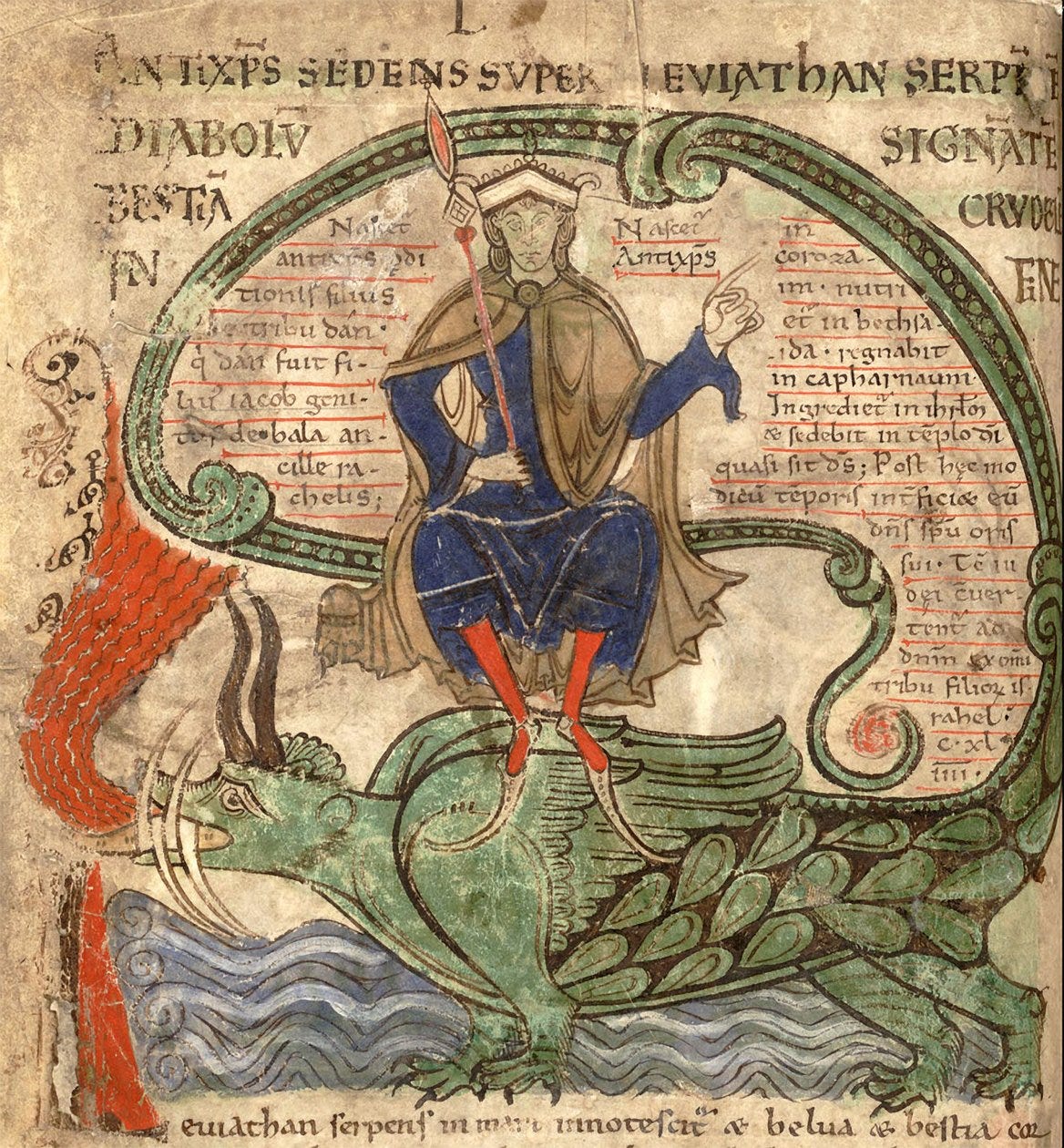
The Mystical Body of Antichrist According to Pope Gregory

Anti Christ Seated on a Leviathan from Liber Floridus by Lambert de Saint-Omer by Flemish School
Anti Christ Seated on a Leviathan from Liber Floridus by Lambert de Saint-Omer (1120)

 Part I. From Stranger in a Strange Land:

On account of Christ Her Head1, the Catholic Church suffers many scourges of wickedness from both within and without Her walls. Sin, confusion, heresy, and persecution have abounded everywhere, afflicting the faithful in the Church—the Mystical Body of Christ who has already appeared2. Even those professing to be of this Holy Body might really be of the Body of the Antichrist yet to appear. Pope St. Gregory the Great perceived this mystery with sober clarity.

Our modern understandings of such evil in the world, within the Church, and its role in the end times are often colored by conspiracy theories or, inversely, a denial of the coordination and presence of evil. One can fall into the folly that all of the world’s evil is due to a hidden elite. Perhaps one accounts for our ecclesial woes by an infiltrative ‘Deep Church’, just as some speak of a ‘Deep State’ corrupting secular politics, buried in the labyrinth of bureaucracy. Meanwhile, we assure ourselves that we are safe from the stain of their sins. On the other hand, there is the error that there is no primordial direction and unity among the unjust.

St. Gregory’s golden insights into this topic steer us away from hysteria and complacency. (Read more.)


Part II. From Stranger in a Strange Land:

St. Gregory, in his commentary on Leviathan, expounds on this union thus.

[Job 41:23]. The members of his flesh cling to each other.

8. The ‘flesh’ of this Leviathan are all the reprobate, who rise not in their longing to a knowledge of their spiritual country [heaven]. But the ‘members of his flesh’ are those, who are united to these very persons, when acting wickedly, and preceding them in the way to iniquity. As is said on the other hand by Paul to the Lord’s body; Ye are the body of Christ, and members of a member. [1 Cor. 12:27] For a member of a body is one thing, a member of a member is another. For a member of the body is a part referred to a whole, but a member of a member is a particle to a part. For a member of a member is a finger to the hand, the hand to the arm, but a member of the body, is the whole of this together to the body at large. As therefore in the spiritual body of the Lord we term ‘members of a member’ those who in His Church are governed by others; so, in that reprobate congregation of this Leviathan, those are the ‘members of his flesh,’ who by their wicked deeds are joined to some more wicked than themselves.

Devious discipleship advances from an admiring imitation of evil examples, at a distance, to actual obedience of leaders. In this arrangement, an agreement of conspiracy coalesces. Continuing.

But because the malignant enemy agrees with himself in his perverse doings from first to last, the Divine discourse speaks of the members of his flesh clinging to each other in him. For they so agree in their wicked opinions, as not to be divided by any mutual disputations with each other. No quarrel of disagreement then divides them, and they therefore prevail mightily against the good, because they keep themselves together with close agreement in evil. For as we have already said above, that it is fatal if unity is wanting to the good, so it is more fatal if it is not wanting to the evil. For the unity of the reprobate obstructs more firmly the path of the good, the more firmly it opposes itself to it by being collected together.

Not always does the Lord allow for such unity, as it is deeply dangerous to the faithful. But, He might permit them to have power. Gregory further glosses.

9… If the unity of the wicked had not been hurtful, Divine Providence would never have divided the tongues of the proud with such great diversity. [See Tower of Babel, Gen. 11:9] […] Because then this Leviathan is then let loose in his might against the Elect of God, to increase his power of hurting, he is permitted also to have unity among the reprobate, in order that he may put forth his might more powerfully against us, the more he assaults us not merely with the blow of strength, but also with the weight of unity. But who can be sufficient against these things? What mind must not tremble at the weight of such pride and compactness, from the very bottom of his thought?3

Of course, the united force of evil does not last forever, as we shall see in a future article. Yet, we must discern the malicious method while they are in power. (Read more.)

Wednesday, January 7, 2026

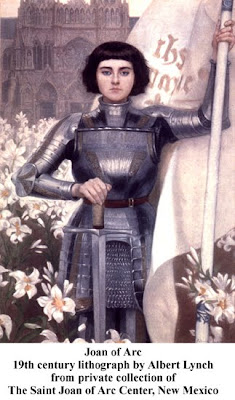
Birthday of La Pucelle

The great feast of Epiphany coincides with the birthday of Saint Joan of Arc, who called herself La Pucelle, "The Maid." Here is a link to some of her most famous quotations, in addition to those included below.
Je me attens a Dieu, mon createur, de tout; je layme (l'ayme) de tout mon cuer.
"I place trust in God, my creator, in all things; I love Him with all my heart."

Je suis cy envoiée de par Dieu, le roy du ciel.
"I am sent here by God, the King of Heaven".

Je me attens a mon juge, cest (c'est) le roy du ciel et de la terre.
"I trust in my Judge, who is the King of Heaven and Earth".

Tuesday, January 6, 2026

Epiphany: the Festival of Adoration

From Fr. Mark:
When a soul perceives the light of Christ, that soul is compelled to adore. Thus do we hear in the Holy Gospel: “And entering into the house, they found the child with Mary his mother, and falling down they adored him.” (Matthew 2:11).

There are, if you will, three moments in the grace of adoration. The first of these is the perception of the light. To see the light of Christ one must enter into the house that is the Church; from the outside, it appears, to some, small and, perhaps, confining. But when one enters the house of the Church, one discovers, from within, that it is immensely spacious. The Church is the place of the Divine Hospitality on earth. Not only is their room in the house of the Church for all; there is also pure water for cleansing; oil for the healing of every infirmity; and a banquet made ready with the living Bread come down from heaven, and with the joy-giving chalice of Christ’s Precious Blood.

The house of the Church is Mary’s house. Therein she is Mother: Mother, not only of Christ the Head, the Infant nourished at her breast, but also of the members of the Body of Christ, from the least to the greatest, all of whom she draws to her Immaculate Heart. Mary’s Virgin Body is the radiant monstrance of the Body of Christ; she holds Him in such a way as to show Him to us. She says to every soul who enters the house of the Church, “Arise, be enlightened, for thy light has come, and the glory of the Lord has risen upon thee.” (Isaiah 60:1).

The light that illumines Mary’s house, the house of the Church, shines from the adorable Body of Christ in the Most Holy Sacrament of the Altar. How can one open one’s eyes to the radiant Body of Christ, exposed in what Mother Mectilde de Bar called the soleil (sun) of the monstrance, and not see the fufilment of the words of the prophet Malachy? “The Sun of justice shall arise, and health — meaning healing and wholeness — in his wings” (Malachy 4:2)

The second moment in the grace of adoration is to fall down as it is written in the Gospel: “and falling down they adored him” (Matthew 2:11). What is this mysterious falling down? It is a response to the brightness of the Light; it is the first movement of one who would adore. To fall down is to attempt to become level with the ground. It is the expression of a profound desire to become very little, very lowly. It is an attempt to say with one’s whole body, that one would wish to be able to pour oneself out, to break oneself open, to allow one’s essence to be spent to the last molecule, like the precious perfume that flowed from the vase of alabaster, filling the whole house with its fragrance (John 12:3). This is what Mother Mectilde of the Holy Sacrament means when she speaks of anéantissement, and when she makes it the very condition of adoration in spirit and in truth. (Read more.)

Tuesday, December 30, 2025

What Child is This?

From the late Father Angelus Shaughnessy:
This child is God.

Our Heavenly Father knows how hard it is for us to love somebody we cannot get our arms around. We are supremely happy because our God did become a little bundle of 7 or 8 pounds, so we could get our arms around His Divine Son, to hold Him tight and love Him right.

God is Love! Jesus is Love wrapped in flesh for keeps, forever, for all eternity...to teach us how to love. He came with the irresistible charm of a snuggling infant. His argument still challenges: I loved you first, love me back! He would do anything to get our love, to steal our hearts, even to sneak out of heaven to do so. The only thing this Baby-God would have done more to show His love happened 33 years later: those limbs now fully grown, pinned back to the wood of the cross. You see: He came into this world not to live (He already had life from all eternity) but to die -- for each one of us. He is Jesus, our Saviour.

For us who really believe this Christmas message, every other story about Him is almost easy to believe. Just think what Christmas means: God to become man, Heaven to come down to earth, eternity to invade time, God to take on the human condition (a human soul and a human body) and to keep it even after returning to heaven at His Ascension, in a glorified yet human state. (Read more.)

Thursday, December 25, 2025

Merry Christmas!

Scrolling through Facebook on Christmas is incredibly inspiring as I see people all over the world celebrating the birthday of the Child born in Bethlehem 2000 years ago. No king or queen who ever lived ever had their birthday celebrated for so long and by so many. And in spite of every evil hell could invent, this Day is still celebrated with so much joy, especially by the children and by the young at heart. Merry Christmas and a Happy New Year!

Welcome, all wonders in one sight!

       Eternity shut in a span;

Summer in winter; day in night;

       Heaven in earth, and God in man.

Great little one, whose all-embracing birth

Lifts earth to heaven, stoops heav’n to earth.

 ~  from "In the Holy Nativity of Our Lord" by Richard Crashaw

Wednesday, December 24, 2025

The Three Masses of Christmas

When speaking of Holy Communion in the Way of Perfection (Ch. 34), St. Teresa of Avila said: "This is something that is happening now." In the Christmas liturgy, the Church teaches us that the birth of Jesus is not just something that happened two thousand years ago in Bethlehem. Our Lord's nativity is something that is happening now, especially through participation in the Mass, and in the liturgy of the hours which radiate from it. In The Church's Year of Grace, Fr. Pius Parsch explains that this is why the word hodie or "today" is repeated again and again in the Christmas Masses and offices. The Invitatory for December 24 proclaims: "Today you will know the Lord is coming, and in the morning you will see His glory." We are called to Midnight Mass with this antiphon: "The Lord said to me: You are my Son. Today I have begotten you." At Morning Prayer (Lauds) we say: "Today the Savior of the world is born for you." The antiphon for the Canticle of Mary closes the most joyful of feasts with the words: "Christ the Lord is born today; today the Savior has appeared...."

Dom Gueranger comments: "...This today is the Day of eternity, a Day which has neither morning nor evening, neither rising nor setting." (The Liturgical Year, Vol. II) Through the sacraments, especially through the Eucharistic sacrifice, we already belong to that Day of eternity. At Christmas Mass, we truly and mystically assist at His birth.

Christmas is celebrated with three Masses. At Midnight Mass, the angels marvel at the Word made flesh, born of the Virgin Mary. The Dawn Mass sees the shepherds hurrying to the stable to adore the newborn King. The third Mass celebrates the Eternal Word, Who is the Son begotten of the Father from all eternity.
Jesus, Who is born tonight, is born thrice. He is born of the Blessed Virgin, in the stable of Bethlehem; he is born by grace, in the hearts of the shepherds, who are the first fruits of the Christian Church; and He is born from all eternity in the bosom of the Father, in the brightness of the saints: to this triple birth, therefore, let there be the homage of a triple Sacrifice! (Dom Gueranger, The Liturgical Year, Vol. II)
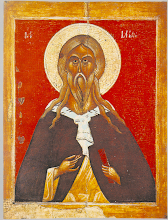
Christmas Eve


Today you will know the Lord is coming, and in the morning you will see His glory. ~Invitatory Antiphon for December 24. (Thanks to Karen for the picture.)

The Christmas Martyrology.
In the five thousand one hundred and ninety-ninth year of the creation of the world from the time when God in the beginning created the heavens and the earth;
the two thousand nine hundred and fifty-seventh year after the flood;

the two thousand and fifteenth year from the birth of Abraham;
the one thousand five hundred and tenth year from Moses and the going forth of the people of Israel from Egypt;
the one thousand and thirty-second year from David's being anointed king; in the sixty-fifth week according to the prophecy of Daniel;
in the one hundred and ninety-fourth Olympiad;
the seven hundred and fifty-second year from the foundation of the city of Rome;
the forty second year of the reign of Octavian Augustus;
the whole world being at peace,
in the sixth age of the world, Jesus Christ the eternal God and Son of the eternal Father, desiring to sanctify the world by his most merciful coming, being conceived by the Holy Spirit, and nine months having passed since his conception, was born in Bethlehem of Judea of the Virgin Mary, being made flesh.
Listen to the Christmas martyrology chanted by the Benedictines of Mary.
Related Posts with Thumbnails