
Showing posts with label St. John of the Cross. Show all posts

Sunday, December 14, 2025

The Mystical Doctor

A few years ago our late great Pope Benedict XVI offered a beautiful meditation on Our Holy Father Saint John of the Cross.
John is considered one of the most important lyric poets of Spanish literature. His most important works are four: "Ascent of Mount Carmel," "Dark Night of the Soul," "Spiritual Canticle," "Living Flame of Love."

In the "Spiritual Canticle," St. John presents the path of purification of the soul, that is, the progressive joyful possession of God until the soul feels that it loves God with the same love that it is loved by him.

The "Living Flame of Love" continues in this perspective, describing in greater detail the transforming union with God. The example used by John is always that of fire: as the fire burns and consumes the wood, it becomes incandescent flame, so also the Holy Spirit, who during the dark night purifies and "cleanses" the soul, then in time illumines and warms it as if it were a flame. The life of the soul is a continuous celebration of the Holy Spirit, that enables one to perceive the glory of the union with God in eternity.

The "Ascent of Mount Carmel" presents the spiritual itinerary from the point of view of the progressive purification of the soul, necessary to ascend to the summit of Christian perfection, symbolized by the summit of Mount Carmel. This purification is proposed as a journey that man undertakes, collaborating with divine action to free the soul from all attachment or affection contrary to the will of God. The purification, which to arrive at union of love with God must be total, begins with the way of the senses and continues with the one obtained through the three theological virtues -- faith, hope and charity -- the purification of intention, memory and will.

The "Dark Night" describes the "passive" aspect, that is, God's intervention in the process of "purification" of the soul. On its own, in fact, human effort is incapable of getting to the profound roots of the person's bad inclinations and habits: It can restrain them, but not uproot them totally. To do so, the special action of God is necessary, which purifies the spirit radically and disposes it to the union of love with him. St. John describes this purification as "passive" precisely because, though accepted by the soul, it is realized by the mysterious action of the Holy Spirit who, as a flame of fire, consumes every impurity. In this state, the soul is subjected to all types of trials, as if it were in a dark night.

These indications on the saint's principal works help us to approach the outstanding points of his vast and profound mystical doctrine, whose objective is to describe a sure way to arrive at sanctity, the state of perfection to which God calls us all. According to John of the Cross, everything that exists, created by God, is good. Through creatures, we can come to the discovery of the One who has left his imprint on them. Faith, however, is the only source given to man to know God exactly as he is in himself, as God One and Triune. All that God willed to communicate to man he said in Jesus Christ, his Word made flesh. He, Jesus Christ, is the only and definitive way to the Father (cf. John 14:6). Anything created is nothing compared with God, and nothing is true outside of him. Consequently, to come to perfect love of God, every other love must be conformed in Christ to divine love.

This is where John of the Cross derives his insistence on the need for purification and interior emptying in order to be transformed in God, which is the sole end of perfection. This "purification" does not consist in the simple physical lack of things or of their use. What the pure and free soul does, instead, is to eliminate every disordered dependence on things. Everything must be placed in God as center and end of life. The long and difficult process of purification exacts personal effort, but the true protagonist is God: all that man can do is to "dispose" himself, to be open to the divine action and not place obstacles in its way.

Living the theological virtues, man is elevated and gives value to his own effort. The rhythm of growth of faith, hope and charity goes in step with the work of purification and with progressive union with God until one is transformed in him. When one arrives at this end, the soul is submerged in the very Trinitarian life, such that St. John affirms that the soul is able to love God with the same love with which he loves it, because he loves it in the Holy Spirit. This is why the Mystical Doctor holds that there is no true union of love with God if it does not culminate in the Trinitarian union. In this supreme state the holy soul knows everything in God and no longer has to go through creatures to come to him. The soul now feels inundated by divine love and is completely joyful in it. (Read more.)

Friday, November 14, 2025

All Carmelite Saints

"With zeal have I been zealous for the Lord God of Hosts." ~3 Kings 19:10

Today the Carmelite Order commemorates the members of our Order who have ascended the mountain of perfection to their heavenly home. They sought God alone, conversing with Him in the depths of their hearts. Our Lord once said to the Holy Mother St. Teresa: "I desire that you no longer hold conversation with men, but with angels," and in many ways those words can be applied to all who follow the Carmelite way. The habits of the interior life, of recollection and mortification, must be cultivated amid our daily duties in order to create an atmosphere conducive to contemplation. In the Rule of St. Albert, the medieval hermits were told: "In silence and hope shall your strength be." (Isaias 30:15) During the theophany on Mt. Horeb, Elias the prophet experienced the Lord God, not in the earthquake, or in the fire, but in a "whistling of gentle air." (3 Kings 19:12) It is in silence and solitude that generations of Carmelites have sought to live in imitation of Elias, "meditating day and night on the law of the Lord and watching in prayer." (Rule of St. Albert)

The primary example of the saints and blessed of the Order has been Our Lady, the Queen and Beauty of Carmel, both in her hidden life at Nazareth and in her anguish at the foot of the Cross. St. Teresa enjoined her nuns to meditate on the lives of Christ's Mother, and His saints. "We need to cultivate and think upon and seek the companionship of those who, though living on earth like ourselves, have accomplished such great deeds for God." (The Interior Castle, p.172)

Speaking particularly of the hermits of old, the Holy Mother exhorts her daughters in The Way of Perfection:
Let us remember our holy fathers of the past, those hermits whose lives we aim to imitate. What sufferings they endured! What solitude, cold, hunger, and what sun and heat, without anyone to complain to but God! Do you think that they were made of steel? Well, they were as delicate as we. (The Way of Perfection, p.81)

Monday, September 29, 2025

Who is like God?

It is the feast of St. Michael the Archangel. The name "Michael" means "Who is like God?" It is a name which contains in itself the simplicity of the angelic being, for in those words the ineffable supremacy of God is magnified. It is a name which signifies the dark night of the soul in its ascent to God, for as St. John of the Cross says: "All the beauty of creatures compared to the infinite beauty of God is the height of ugliness." (The Ascent of Mount Carmel) In the eternal question "Who is like God?" many truths can be boiled into one: there is no one like God; He is our end, He is our ultimate and only goal, there is nothing else worth striving for if it is outside of Himself. While in our human nature it is impossible to obtain anything resembling the unwavering angelic attention and single-mindedness, it is possible in Christ to strive to model the dedication of St. Michael to the cause of God.

The Archangel Gabriel said to the Prophet Daniel: "And, behold Michael, one of the chief princes, came to help me . . . and none is my helper in all these things, but Michael your prince."(Daniel 10:13) In the midst of the present battle, may St. Michael be our champion, our brother, our protector, not only of individual souls but of the whole Church, the people of God.

Friday, July 11, 2025

Mt. Carmel Novena, Day 5-- "The Morning Star"

"For I make doctrine to shine forth as the morning light, and I will declare it afar off." Ecclesiaticus 24:44

"And he that shall overcome, and keep my works unto the end, I will give him power over the nations....and I will give him the morning star." Apocalypse 2: 26,28

Our Lady has long been hailed as Stella Matutina, "the Morning Star," for she heralded the end to the long darkness of original sin which preceded the coming of the Savior. In our world and in our lives, there is still darkness, there are nights which seem implacable and never-ending, but the length and darkness of the night only makes the Star shine brighter. We are daily confronted with the night of unbelief and the darkness of paganism which exist in the world; no material darkness can equal the spiritual night of faithlessness. Then there is the darkness of sin, the darkness of slavery to sin, which creates such a blindness that reason and logic are rendered futile. The Mother of God never ceases her intercession, and is the Advocate of Sinners.

As for those who have been freed from the bonds of mortal sin through repentance and confession, the struggle against the world, the flesh and the devil continues to rage, often creating a sort of darkness. This can be part of the "dark night" of which St John of the Cross wrote so eloquently, which is the purification of those souls who have given themselves to God, who are striving to love and serve Him. The night can include the abandonment and betrayal by friends and family, the loss of loved ones, the continuation of impossible and annoying situations, the sense of being forsaken even by God, the feeling that one's prayers are not being answered, dryness and lack of devotion when one does pray. All one can do is keep praying and persevering in the practice of the Catholic faith, looking to Our Lady who tells us that the night will not last forever.

St John of the Cross insists that it is only in such darkness that we truly become united with God. In The Ascent of Mount Carmel, the saint writes:

O guiding night!
O night more lovely than the dawn!
O night that has united
The Lover with His beloved,
Transforming the beloved in her Lover.

Star of the Morning, pray for us!

Novena Prayer to Our Lady of Mt. Carmel:

O most beautiful Flower of Mt Carmel, fruitful vine, splendor of Heaven, Blessed Mother of the Son of God, Immaculate Virgin, assist me in this my necessity. O Star of the Sea, help me and show me herein you are my Mother.

O Holy Mary, Mother of God, Queen of Heaven and earth, I humbly beseech you from the bottom of my heart, to succor me in this my necessity, there are none that can withstand your power.

O show me herein you are my Mother.

Mary, conceived without sin, pray for us that have recourse to thee. (3 times)

Sweet Mother, I place this cause in your hands. (3 times) AMEN.

Tuesday, July 1, 2025

Fr. Hardon on the Precious Blood

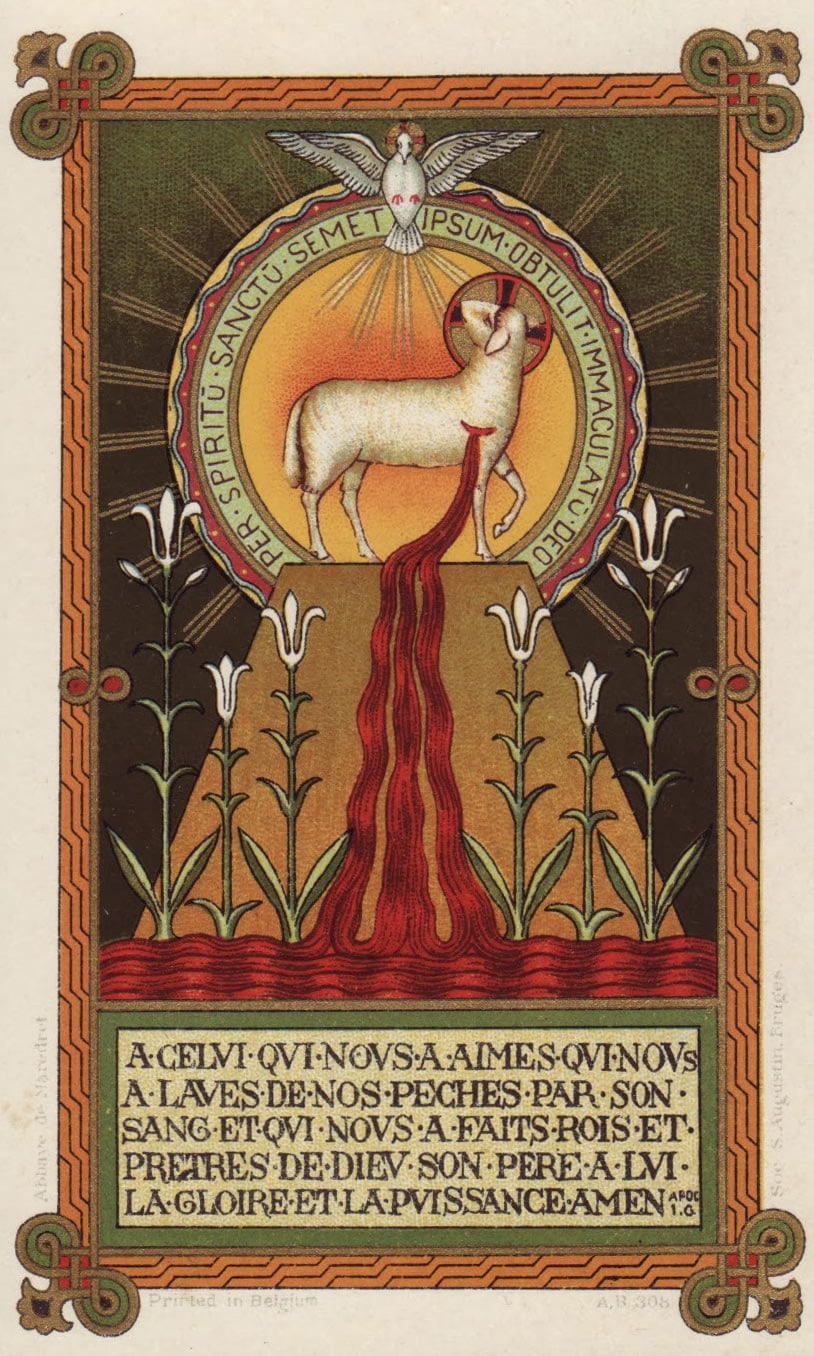
The Most Precious Blood Of Our Lord Jesus Christ
From The Real Presence Association:
There are certain words and phrases in the revealed statement that we have just read that we should begin to unravel in order to understand something of the depth of meaning behind those two simple words, Precious Blood. Peter begins by reminding the faithful to remember the hardest thing in this life for us is to remain mindful of the truths of faith. Because what we believe on God's revealed Word is twice removed from the common experience that we have in this world. What we believe is first of all not immediately perceptible to the senses. Moreover, what we believe is not even penetrable to the naked reason. The word, remember, is an imperative: keep in mind. Arouse your faith in what and how you were redeemed. And it is the how we were redeemed that is the foundation stone of the mystery of the Precious Blood. God took on a human nature so that in that human nature He could die. In order to die, the soul had to separate from the body. But for the Body to have the soul separate, the body itself had to be deprived of His Blood. Theologically speaking and physiologically speaking, the All-Holy Son of God who became Man to redeem us could only have died by being drained of His Blood. Christ, listen, could not have died of some disease. Christ could not have died because of some mortal illness. All illness, disease, the natural debilitating of the body is the result of sin. Let me emphasize this. All our illness, our disease, our sickness, our wasting away of our body for all of us this is our faith - is the result of our sinful nature. Not so with Christ. That draining of the human body of His Blood was the one way that Christ, Sinless Son of God and Son of Mary that He was, the one way that He could die.

Why does Peter identify the Blood of the Lamb of God as “Precious?” Well, it is surely Precious because it is the Blood of no human being. It is the Blood of the living God who took on human nature, capable of shedding His Blood. Why was the Blood of Christ Precious? Because it is the Blood of God who took on human nature in order to be able to suffer and to bleed and, let us add, in order to bleed to death. Why Precious? Because it is the Blood of the living God.

Devotion to the Precious Blood is not a spiritual option, it is a spiritual obligation, and that not only for priests, but for every follower of Christ. I really believe, and I hesitate even saying this, but I really believe that one of the symptoms of modern society (and I would even include, sadly, modern Catholic society) one of the symptoms of a growing, gnawing secularism is the lessening and the weakening of devotion to the Precious Blood. Devotion, as we know, is a composite of three elements: It is first- veneration, it is secondly- invocation, and it is thirdly- imitation. In other words, devotion to the Precious Blood of Christ, the Lamb of God who was slain, is first of all to be veneration on our part, which is a composite of knowledge, love and adoration. We are to study to come to a deeper understanding of what those two - I am afraid for many people - casual words, Precious Blood, really mean.

To understand the meaning of the Precious Blood we must (otherwise the mystery will be lost on us), we must get some comprehension of the gravity of sin, of the awfulness of offending God, because it required the Blood of the Son of God to forgive that sin. We are living in an age in which to sin has become fashionable. But we believe that we are here for only a very short time. We further believe that Christ when He told us the way that leads to damnation is broad and many there are who walk that way, that the way that leads to eternal life is narrow and there are few who walk that way. I am watching every syllable I am saying. The Church has never pronounced infallibly on the number lost and the number saved, but she has canonized St. John of the Cross and made him a Doctor of the Church. Says John of the Cross: "I believe that the majority of the human race will be lost." - from "Devotion to the Precious Blood"

Sunday, June 8, 2025

Pentecost

"For our God is a consuming fire." Hebrews 12:29

The fiftieth day after the Pasch is Pentecost. In the old dispensation Pentecost commemorated the fiery theophany on Mt. Sinai when God gave Moses the Ten Commandments, establishing the Law for the Chosen People. (Exodus 19, 20) For Christians, the solemnity celebrates the birth of the New Israel, the Church, on the day when the Holy Spirit descended in the form of a dove, accompanied by tongues of flame, upon the Apostles. The frightened, ordinary men were given the fortitude and courage to preach the Gospel in unknown tongues and to endure suffering and death for the name of Jesus. (Acts 2) "The Holy Spirit appeared under the form of fire because He consumes the dross of our sins, drives the darkness of ignorance out of our souls, melts the icy coldness of our hearts, and inflames us with the love of God and love of our neighbor...." (Fr. Spirago The Catechism Explained, p.220) The Third Person of the Blessed Trinity has never ceased to be poured out upon the Church; He is the soul of the Church, guiding her throughout the ages.

The Holy Spirit comes to each of us at our baptism and later at our Confirmation, which is our own personal Pentecost. There is much discussion today of the charismatic gifts of the Holy Spirit, such as the gift of tongues, of prophecy, of discernment of spirits, of visions, etc. but they are extraordinary gifts given in special circumstances to benefit the Church and souls. The "ordinary" gifts of the Holy Spirit are given to each of us through the sacraments and it is for us to use and develop them. The seven gifts are wisdom, understanding, knowledge, counsel, fortitude, piety, and fear of the Lord; it is these gifts which will make us into saints. They increase in proportion to the three theological virtues of faith, hope, and charity. In the words of St. John of the Cross: "For the purer and the more refined in faith is the soul, the more it has of the infused charity of God; and the more charity it has, the more it is illumined and the more gifts of the Holy Spirit are communicated to it, for charity is the cause and means whereby they are communicated to it." (Ascent of Mt. Carmel, Book II, Ch. 29)

It is through prayer, the sacraments, and good works that we nourish the precious gifts of the Holy Spirit, invoking the Divine Paraclete Himself to inflame us with the fire of perfect charity. "If we do not become saints, it is not because the Holy Spirit does not will it-- He was sent to us and comes to us for this very purpose-- but it is because we do not give full liberty to His action." ( Fr Gabriel of St. Mary Magdalen, OCD, Divine Intimacy, p.563) The Holy Spirit will Himself remove all obstacles to His work from our souls if we ask Him with perseverance and confidence. "Thus you, O Holy Spirit, when You come down from Heaven with the fiery dart of your divine love, You do not repose in proud hearts or in arrogant spirits, but You make Your abode in souls that are humble...in their own eyes." (St. Mary Magdalen dei Pazzi, quoted in Divine Intimacy, p.559)

O Lux beatissima Reple cordis intima! "O Most Blessed Light, fill the inmost hearts of Thy faithful!" (The Golden Sequence, Veni Sancte Spiritus)

Saturday, December 14, 2019

Our Holy Father St. John of the Cross

The feast of Our Holy Father St. John of the Cross is today. Here are some of his Counsels:

"Anyone who complains or grumbles is not perfect, nor is he even a good Christian."

"Anyone who trusts in himself is worse than the devil."

"Anyone who does not love his neighbor abhors God."

"Whoever flees prayer flees all that is good."

"Conquering the tongue is better than fasting on bread and water."

"Suffering for God is better than working miracles."


More HERE.

Friday, June 1, 2018

The Roots Of Carmel

A beautiful new Carmelite monastery in Fairfield, PA. More HERE.

Monday, May 14, 2012

Roy Campbell and St. John of the Cross

How the South African poet saved the letters of Our Holy Father St. John from being destroyed in the Spanish Civil War.
It was March 1936. A series of anti-clerical riots swept through Toledo. Churches were burned and priests and monks were attacked in the streets. During these disturbances several Carmelite monks, disguised in lay clothes, sought shelter in the home of the South African poet, Roy Campbell, who had moved to the city with his wife, Mary, and their two young daughters in the previous year. Four months later, on July 21, republican forces advanced on the city. Under cover of darkness, the Carmelite monks once again called on the Campbells. This time, however, they were not seeking refuge for themselves but for their priceless archives, which included the personal papers of St John of the Cross. Campbell agreed to take possession of these precious archives and that night a heavy trunk of ancient documents was delivered secretly from the Carmelite library to the hallway of the Campbells’ house.

During the following day republican forces advanced through the city, forcing the defenders to fall back towards the Alcazar. Without the soldiers of the garrison to defend them, the priests, monks and nuns fell prey to the republican militiamen. The 17 monks from the Carmelite monastery were rounded up, herded into the street and shot. In the square outside Toledo’s town hall the Madrid militia lit huge bonfires which were fueled with crucifixes, vestments, missals and any other religious items discovered in looted churches and houses. From their home, the South African poet and his family watched in horror as they saw the Carmelite library set ablaze.

Several days later the Campbells were visited by a search party of militiamen. Expecting such an intrusion, Roy and Mary had already taken the precaution of removing all crucifixes and religious pictures from the walls. Their main fear was that the trunk containing the Carmelite archives, including the personal letters of St John of the Cross, would be discovered. The search, however, was not particularly thorough. At one stage some of the militiamen even leaned their rifles on the trunk without thinking of opening it. (Read entire post.)

Friday, May 20, 2011

On Carmel and Spiritual Direction

Our Holy Father recently addressed members of the Pontifical Theological Faculty Teresianum, saying:
Three quarters of a century have passed since that July 16, 1935, liturgical memorial of the Blessed Virgin of Mount Carmel, in which the then International College of the Order of Discalced Carmelites in the city was promoted to the status of Theological Faculty. From the beginning it was oriented to deepening spiritual theology in the framework of the anthropological question. Over the course of the years, an Institute of Spirituality was established, which together with the Theological Faculty, makes up the academic group that has the name of Teresianum.

Taking a retrospective glance over the history of this institution, we want to praise the Lord for the wonders he has accomplished in and through it, in the many students that have attended it -- first of all, because to be part of such an academic community constitutes a unique ecclesial experience, strengthened by all the richness of a great spiritual family such as the Order of Discalced Carmelites. We think of the vast renewal movement began in the Church by the testimony of Sts. Teresa of Jesus and John of the Cross. It aroused a rekindling of the ideals and fervor of contemplative life, which in the 16th century set afire, so to speak, Europe and the whole world....

As she has never failed to do, again today the Church continues to recommend the practice of spiritual direction, not only to all those who wish to follow the Lord up close, but to every Christian who wishes to live responsibly his baptism, that is, the new life in Christ. Everyone, in fact, and in a particular way all those who have received the divine call to a closer following, needs to be supported personally by a sure guide in doctrine and expert in the things of God. A guide can help defend oneself from facile subjectivist interpretations, making available his own supply of knowledge and experiences in following Jesus. [Spiritual direction] is a matter of establishing that same personal relationship that the Lord had with his disciples, that special bond with which he led them, following him, to embrace the will of the Father (cf. Luke 22:42), that is, to embrace the cross.

More HERE.

Tuesday, January 4, 2011

Darkness and Light

A homily on St. John of the Cross by Father General.

Monday, May 17, 2010

The Village (2004)

Oh, if we could but fully understand how a soul cannot reach...the wisdom of the riches of God...without entering the thicket of many kinds of suffering, finding in this her delight and consolation; and how a soul with an authentic desire for divine wisdom wants suffering first in order to enter this wisdom by the thicket of the cross. ~ St. John of the Crosss, The Spiritual Canticle
 The M. Night Shyamalan film The Village (2004) is like a mystical parable. St John of the Cross, in his poems and commentaries The Dark Night and The Ascent of Mt Carmel and even in the Living Flame of Love speaks of darkness and blindness as states in which one proves the love for the Beloved. In the film, the blind young girl is the only one able to save her beloved, wounded for love of her. The Spiritual Canticle emphasizes the "wound of love." "Why, since you wounded this heart, don't you heal it?" The soul must not fear the "wild beasts" while going through the "woods and thickets" to find healing for the Beloved, just like the girl trying to avoid the "monsters" in the woods.

In the film, the lovers pledged themselves "in the serene night," "the tranquil night." In The Village the maidens must "stay away" from the "outskirts." The emphasis on solitude in the poems of St John, especially in The Dark Night where it says "in a place where no one else appeared" was similar to the scene in the film where the young maiden realizes she must make the journey alone. Only pure love and self-sacrifice in the blindness of faith can save the one she loves.

On another level, I find The Village interesting for the portrayal of flight from the world. It has long been a Christian practice to withdraw into the desert to find God and peace. However, as the Desert Fathers discovered, we can never escape the our own human nature and the wounds of original sin. In the pristine refuge of Covington Wood, people fall in love with the wrong people, there is jealousy, and even hatred. The elders must keep the youngsters in line through the terrifying story of monsters in the woods, so that even in the safety of the wilderness the children are afraid. While we are in the flesh, there is no escape and the only true refuge is the Lord.

Tuesday, April 13, 2010

Free to Love

Negation in the doctrine of St. John of the Cross.
To begin with, the starting point for approaching John's negation spirituality is the experience of being loved by a God who desires to enter into a personal relationship of love with human beings and our response to that love. Any notion of self-denial, detach ment, renunciation, or emptiness that is not born of an experience of God's personal love makes no sense to John of the Cross. God always takes the initiative. "We love because he first loved us" (1 Jn 4:19). In the beginning of the Spiritual Canticle , which sings of and recounts the Christian journey toward union with God in terms of love, John writes that the soul is only able to begin the journey of love in search for union with God because she first had an experience of God's love, and as a fruit of that experience, came to an aware ness that love is the purpose of existence (C, 1, 1). It is this experience of God's love that ignites the fire of love within a person so that one can begin the journey towards union with God through love.
       Where have you hidden,
       Beloved, and left me moaning?
       You fled like the stag
       after wounding me;
       I went out calling you, but you were gone. (C, 1)
       For John, this experience of the transcendent but intimate loving nature of God, who takes the initiative and touches us with love, has a profound effect upon us; it begins a trans formation process that frees us to love God, ourselves, creation, and all of life in the way God created us to.
This experience of God's love is pivotal for understanding some of the radical statements John makes about the "nothingness" of creation and all things in comparison to God who is All. For instance:
       All the creatures of heaven and earth are nothing when compared to God. All the beauty of creatures compared with the infinite beauty of God is supreme ugliness. All the grace and elegance of creatures compared with God's grace is utter coarseness and crudity. (A, 1, 4, 3-7)
       To possess God in all, you should not possess anything in all. For how can the heart that belongs to one belong completely to the other? (Letter 17 to Magdalena del Espiritu Santo, July 28, 1589)
Related Posts with Thumbnails