Prayer, above all prayer, is the effective weapon to use in the fight for the liberty and happiness of souls. Why?More HERE about the saint of Auschwitz. And HERE.
Because only supernatural means lead to a supernatural end. Heaven—if one may say—is the divinization of the soul, a supernatural reality in the full sense of the term. Consequently, it cannot be attained by merely natural power. It is also indispensable to have a supernatural means, that is, divine grace. And this is obtained by humble and confident prayer. Grace, and only grace, which enlightens the intellect and strengthens the will, is the cause of conversion or the liberation of the soul from the bonds of evil.
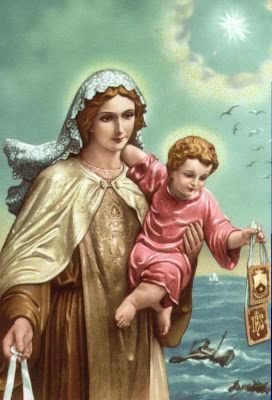
But a prayer lifted up to God through the hands of the Immaculate cannot remain without effect, as it is said in the invocation of St. Bernard: "Remember, O most gracious Virgin Mary, that never was it known that anyone who fled to thy protection was ever abandoned by You." So before all else there must be humble, confident and unfailing prayer. (Read more.)
Friday, August 14, 2026
Prayer, Mortification and Fraternal Charity
Monday, August 10, 2026
Saint Lawrence, Deacon and Martyr
St. Lawrence was also a powerful exorcist. From My Catholic Life:
The Church’s liturgy, like all public rituals whether sacred or secular, is inherently conservative. Its form is not easily altered. Its content shapes, more than is shaped by, the Church and the wider culture. The liturgy moves through time like a great river moves through the land. It plows its own path, carving the terrain, gradually and incontrovertibly forming a new landscape. One generation is too few to notice, but a few generations pass and, suddenly, a river separates two families, a valley turns into a lake, a dam submerges a city, water destroys what once had been, and the world is different. Feast days and solemnities, most notably Christmas and Easter, shape entire cultures too: their calendars, music, food, festivals, dress, dance, language, art, architecture, and on and on. There is almost nothing that the liturgy and its calendar do not touch. Liturgy creates worlds.
Besides being culture creators, liturgical Feast Days also preserve the past for the present and the future. A Feast Day freezes time and preserves the memory of the world’s oldest mind—that of the Catholic Church. The Church does not suffer from Alzheimer’s disease. She is rejuvenated with every baptism and so is perpetually young, impervious to the dementia typical of great age. Today’s saint, the Deacon Lawrence, is celebrated with a Feast on the Church’s calendar, not just a memorial or an optional memorial. This liturgical fact is revelatory and beautiful. He was martyred so long, long ago. He is not Christ, Mary, or a pope. Yet he has a Feast Day! What is the past telling us by this? What is the Church’s perennial calendar communicating to the faithful by this interesting fact?
This Feast draws open the curtains on the events of August 258 as if they were as fresh as buns right out of the oven. Look and see the cast of characters. Emperor Valerian is to the side, sitting on his marble throne. An official reads the Emperor’s decree aloud: “All bishops, priests, and deacons are to be summarily executed.” Pope Sixtus II is roughly taken away by Valerian’s soldiers during Mass in the candle light of a catacomb on August 6. Six of Rome’s seven deacons are killed with Sixtus. In accord with the Church’s theology, they were closer to their bishop than to any priest, so they die with him. The Church has been almost decapitated. There is only one deacon left. The hunt is on for Lawrence, the ranking head of the Church. He is found. He is martyred. It is August 10. The curtain closes.
In a tradition already ancient by the third century, Rome had seven deacons to minister to the material needs of the impoverished, widows, and orphans of Rome. Lawrence excelled at this task, which he operated out of a house-church in central Rome. When the popular and well-loved Lawrence died, he was venerated with a fervor unlike almost any other early martyr. His cult spread like the fire that tradition says roasted him alive. Devotion to him spread as far north as Scandinavia, England, and Germany. Traditions large and small abounded. (Read more.)
Monday, July 27, 2026
Saint Titus Brandsma
Here he is in his prison uniform. Saint Titus was a towering intellect as well as a man of humor, wit and sanctity. He stood up to the Nazis; they put him in Dachau and performed experiments upon him. Before he died, he handed his rosary to the prison nurse and she was converted. He is a saint for our time.Although neo-paganism no longer wants love, history teaches us that, in spite of everything, we will conquer this neo-paganism with love. We shall not give up on love. Love will gain back for us the hearts of these pagans.
~ Bl. Titus Brandsma, from the Carmelite Proper of the Liturgy of the Hours
Saturday, July 25, 2026
St. James the Greater
This is the day to make a mystical pilgrimage to Compostela, to kneel at the tomb of the son of Zebedee, the tomb of Santiago, whose name was the battle cry of Spain. Here is an article from a few years ago by Mary Jo Anderson:Today is the feast day of Saint James the Greater. Millions of pilgrims have trekked across four ancient pilgrim paths that thread through Europe, converging in the Pyrenees, then across northwestern Spain to the tomb of St. James at his shrine in Santiago de Compostela (St. James of the Starry Field).Modern pilgrims walk the Camino, “The Way of St. James,” in the footsteps of great pilgrims of the past, including St. Godric of Norfolk, El Cid, St. Francis of Assisi, John of Gaunt, and Lorenzo de Medici. Henry II, father of Richard the Lionhearted, offered to make the pilgrimage in expiation for the murder of St. Thomas Becket. Historians credit the forging of a common European identity to the Camino de Santiago. Through the centuries Christian pilgrims have built great monasteries, abbeys, and hospitals along these roads, along with a shared culture—art, architecture, fashion, literature, and faith.Pilgrimage fervor suffered when the Reformation split Europe, dividing European identities and loyalties. Interest surged again in the 1980s; today more than a quarter million pilgrims a year set off for Santiago where archeologists have found inscriptions for the Apostle’s two disciples, and where Christians believe the Son of Zebedee himself lies in a silver casket.The apostle James, along with his brother John, and Simon Peter were Jesus’ confidantes. They alone among the apostles were present at the Transfiguration and in the Garden of Gethsemane. James preached in Spain after the disciples went forth following the Resurrection. He was beheaded by Herod Agrippa in 42 A.D., the first apostle to die, the first apostle martyred. His followers returned James’ body to Spain, burying his remains in Galicia in the northwestern corner of the peninsula. And there the apostle lay forgotten until 813, when most of Spain groaned under the Saracen boot.
A Muslim storm burst from North Africa over most of Iberia in 711 A.D. taking Christians captive, pillaging towns and swarming north over the Pyrenees into France. By 800, Christians had been backed into the northernmost region and a humiliating tribute of a 100 virgins per year was demanded of local governors.
The twelfth-century collection of history, verse, liturgy, and travelogue about the Camino, known as Codex Calixtinus, records a legend that Charlemagne himself had a vision of a knightly protector who identified himself as St. James (Sant Iago, Santiago), the apostle of Jesus Christ:Look you, my body is in Galicia, but no man knoweth where and the Saracens oppress the land…the starry sky signifies you shall go to Galicia at the head of a great host and after you all peoples shall come in pilgrimage even till the end of time…and your name shall abide in the memory of man until the Day of Judgment.The warrior emperor was to liberate the roadway that ran to the tomb. In Galicia, James’ burial crypt had been rediscovered in 813 and a small chapel was built (by Bishop Teodomir) to protect it. Myth or miracle, a rout now known as the Battle of Clavijo was fought in the year 844 by desperate Christians with their backs against the mountains, led by Ramiro 1 of Asturias. Suddenly, there appeared a heavenly horseman, sword aloft, who slew every Muslim in his path: Santiago Matamoros. Inspired by their champion, the faithful began the reconquest of Spain.Seven hundred years later Queen Isabella finally recovered all of Spain from Muslim rule. She immediately pawned her jewels to finance Christopher Columbus. Isabella, who built hospitals for pilgrims along the Camino, knew that Christianity must evangelize any lands beyond the horizon, lest Mohammed’s forces dominate the world. Today’s politically correct agenda overlooks Isabella’s urgent hope. But there is confirmation of her intent in a letter from Columbus to an official “Treat the Natives with the utmost kindness. Protect them from all wrong and insult…and ever bear in mind that their majesties are more desirous of the conversion of natives than any riches to be derived from them.” (Read more.)
Friday, July 24, 2026
The Blessed Martyrs of Guadalajara
There were many atrocities perpetrated upon priests and religious in Spain during the bloody Civil War of the 1930's. In 1936, three Carmelite nuns were shot. Today is their feast, and here is their story:Sr Maria Pilar of St Francis Borgia, the eldest of the martyrs at 58, was born Jacoba Martinez García in 1877. Her elder sister was a Carmelite nun but as a teenager, Jacoba said she didn’t believe it was possible that God might also want her to be a nun, since she herself did not want it! It seems she changed her mind when she attended the Profession of her sister and she entered the monastery of St Joseph in Guadalajara at the age of 20. She had a great devotion to the Eucharist and referred to the Blessed Sacrament as “El Vivo”, the Living One. When war broke out, she was aware of the danger to which the community was exposed and was heard to say “If they martyr us, we will go singing, like the Compiègne martyrs.”
Sr Maria Angeles of St Joseph was born Marciana Valtierra Tordesillas in 1905 and was aware of a religious vocation from childhood. Her entry into the convent was delayed until she was 24, as she had to care for her widowed father and an aunt. When her aunt died, her father gave her permission to enter Carmel. In the process for beatification, the sisters testifying agreed that they could not remember Sr Maria Angeles committing a single fault in her Carmelite life. She was devoted to being faithful in small things and once said “We must see if we can be faithful enough for God to grant us the grace of martyrdom.” Again, she once said, “How marvellous to be martyrs but I am not worthy of that grace.” There are two prayers written by Sr Maria Angeles which express her desire for martyrdom.
The youngest of the martyrs, Sr Teresa of the Child Jesus and of St John of the Cross was born Eusebia García in 1909. Like Maria Angeles, she was devoted to God from a very young age. She was influenced by reading the autobiography of St Thérèse of Lisieux, whose name she would adopt in Carmel, and like Thérèse she wanted to enter Carmel from the age of 14. She was granted permission to enter at 16. Also like Thérèse, she had to overcome a difficult temperament. Her sisters in Carmel testified that she tried hard to correct her faults and to be charitable. Like Sr Maria Pilar, she had a great devotion to praying before the Blessed Sacrament, which she fondly called ‘sunbathing’. She also made known her desire for martyrdom.
From the outbreak of the civil war, the Carmelite nuns of Guadalajara suffered from disturbances, with children throwing stones at the monastery and passers-by shouting insults. The sisters had not been politically involved in events in any way; they did not even vote in the elections of 1936. They suffered solely because they were nuns. On July 22nd1936, militia arrived in Guadalajara. The Carmelite sisters feared that their monastery might be set on fire and so decided to leave it, going out two by two in modest secular clothes to find various safe houses. The next day, some of the community who had taken refuge in a hotel, left it to join some of their other sisters in a boarding house. The landlady was frightened as she now had 12 religious sheltering there, and told them only three could stay. Sr Teresa suggested that three of them could go to the house of a lady she knew nearby.
Sr Maria Pilar, Maria Angeles and Teresa left the house together and ran down the street. This, in addition to their modest dress, attracted attention and a woman standing with a group of militia was heard to say, “Go on, they are nuns!” When the sisters arrived at the house, they found no one at home and so stayed in the doorway. The militia had followed them and opened fire. Sr Maria Angeles died instantly, while Sr Maria Pilar was badly wounded. She was taken to a Red Cross hospital where she died some hours later, repeating “Father, forgive them, they do not know what they are doing.” Sr Teresa escaped the first hail of bullets but was apprehended by militia soon afterwards. They pretended to look after her but led her to a cemetery where they demanded that she shout “Long live Communism! Long live Russia!” Instead, she shouted “Viva Christo Rey!”(Long live Christ the King!) and was shot. (Read more.)
(More HERE, via The Inn at the End of the World)
"Soeur Espagne, sainte Espagne... tu as choisi!
Onze évêques, seize-mille prêtres massacrés... et pas une apostasie!"
~ Paul Claudel, "Aux martyrs espagnols"
Monday, July 20, 2026
St. Elias the Prophet, Leader and Father of Carmelites
"Elias the prophet stood up, as a fire, and his word burnt like a torch....Blessed are they that saw thee, and were honored with thy friendship." (Ecclesiasticus 48: 1, 11)
"Elias indeed shall come, and restore all things." (Matthew 17:11)The greatest of the Old Testament prophets is Elias (Elijah.) The life of St. Elias can best be described by two phrases which he often used: "As the Lord liveth, in Whose sight I stand" (3 Kings 17:1), and "With zeal have I been zealous for the Lord God of Hosts." (3 Kings 19:10) Whatever his exterior activities, the prophet remained aware of the constant presence of God. He possessed an unflagging desire to serve his Lord, even in moments of darkness and discouragement. (3 Kings 19: 4, 14)
Elias, called "the Thesbite," first manifested himself during the three year drought and famine by which the God of Israel punished His erring people, who had been led into
idolatry by King Ahab and Queen Jezebel. (3 Kings 17:1) Described as "a hairy man" (4 Kings 1:8), he usually could be found praying in remote desert and mountain retreats. It was in the solitude of Mt. Horeb that he experienced the majesty of God, not in fire or earthquake, but in the serenity of a "whistling of gentle air." (3 Kings 19:12) His usual haunt seems to have been Mt. Carmel, where he had the famous contest with the 450 prophets of Baal. (3 Kings 18:19) He defeated them by calling down fire from Heaven (3 Kings 18:38), setting the precedent for those who wish to follow in his footsteps as "Carmelites," whose role is to pray for the fire of graces, especially in times of crisis for the Church.It was also on Mt. Carmel that Elias, deep in prayer, sent his servant to scan the horizon for rain. Finally, after looking seven times, the servant reported "a little cloud...like a man's foot arising out of the sea." (3 Kings 18: 43-44) Tradition holds that Elias knew the cloud to be a sign of the coming of the Immaculate Virgin Mary, Mother of the Redeemer. "Henceforward, Carmel was sacred in the eyes of all who looked beyond this world." (Dom Gueranger's The Liturgical Year, Vol. XIII)
St Elias came to have many disciples called the "sons of the prophets." (4 Kings 2:5) This group was seen as being the origin of the Carmelite order, since for generations to come, holy men and hermits would seek to live a life of solitude and prayer in imitation of Elias and the "sons of the prophets." Elias chose Eliseus (Elisha) to be his successor. (3 Kings 19:19) In a remarkable and moving scene, Elias is mysteriously assumed into heaven, riding in a fiery chariot. Before the dramatic departure, Eliseus begged Elias for a double portion of his spirit (4 Kings 2:9)
As Elias is carried away in the whirlwind, he bequeaths to Eliseus his mantle, along with his "double spirit." (4 Kings 2:13) Eliseus continued the work of fighting idolatry, working many miracles which surpassed those of his master. Can the mantle of Elias be seen as prefiguring the brown scapular, which symbolizes the spirit of prayer and penance, the spirit not only of Elias, but of Mary?
The history of Elias the prophet does not end with his assumption, for he makes an appearance in the New Testament as well. He and Moses converse with Jesus at His Transfiguration on Mt. Tabor (Matthew 17:3), as witnesses of the divinity of the Son of God. Afterwards, the Apostles question Our Lord about Elias. "Why then do the scribes say that Elias must come first?" (Matthew 17:10) They refer to the prophecy of Malachias: "Behold, I will send you Elias the prophet before the coming of the great and dreadful day of the Lord." (Malachias 4:5) Jesus assures them that Elias has preceded him in person of the John the Baptist (Matthew 17:12), who had the "spirit and power of Elias." (Luke 1:17)
However, Our Lord makes it clear that "Elias indeed shall come and restore all things." (Matthew 17:11) According to the scripture scholar Fr. Herman Kramer: "'John the Baptist did not usher in the great and dreadful day of the Lord,' as was foretold of Elias. That day will be the destruction of Antichrist...." (Fr Herman Kramer, The Book of Destiny, 1975)
Most of the early fathers of the Church identify Elias as one of the "two witnesses" in Chapter 11 of the Apocalypse, who do battle with the Antichrist. The two witnesses are martyred by the son of perdition, but their resurrection and ascension into Heaven ushers in the final defeat of "the beast." (see Apocalypse 11) The exact manner in which such cryptic prophecies will be fulfilled remains to be seen. It is interesting, however, that Carmelites have always used red vestments on July 20 in honor of the martyrdom of Elias that is to come.
Our Lady of Mount Carmel and the Holy Prophet Elias
God choose in his providence that the Queen of Heaven and Earth was to make her last apparition at Lourdes on the feast of Our Lady of Mount Carmel, July 16th 1858, and in the last public vision of Fatima, Our Lady also appeared as Our Lady of Mt Carmel on October 13, 1917. At Fatima she was holding the Rosary and the scapular out to a subdued and frightened crowd as they beheld the Miracle of the Sun. Many in the crowd were terrified because they thought during the time it was the end of the world.
Lourdes and Fatima belong to a long line of Approved Marian Apparitions leading back to the founding of the Carmelite Order on Mt Carmel by the Prophet Elijah. Here Elijah battled 450 priests of Baal in a public spiritual contest which led to their defeat and ruin. He challenged the people to stop hobbling first on one foot and then on the other but to choose who is God in Israel Yahweh or Baal. According to the story, which can be found in the First Book of Kings, chapter 18, Elijah’s sacrifice was consumed by fire from heaven and proved to the people that Yahweh was the true God. Is it possible God is sending his Mother the Queen of prophets to help us defeat the prophets of Baal resurrected in our own time.
In the book of Malachi Elijah's return is prophesied to take place "before the coming of the great and terrible day of the Lord." He is a forerunner in both advents of the Messiah. It seems that Heaven has confirmed Our Lady at Fatima in the same mission of the prophet Elijah. Our Lady at Fatima appearing in her Carmelite habit with a similar fire from Heaven during the miracle of the sun. The stupendous Fatima Miracle is the Greatest Supernatural Event of the 20th Century and does not belong [just] to faith or science; it is an Historical Event!
The Miracle of the Sun authenticated Fatima as supernatural in origin and also is a prefigurement or warning of a future catastrophe if the simple requests made at Fatima by our Lady are not heeded. (Read more.)
Saturday, July 18, 2026
The Death of Grand Duchess Elizabeth Feodorovna
Awhile ago I read The Lives and Deaths of the Princesses of Hesse by Frances Welch. It clarified for me many things of which I had not been fully aware. The case of Mrs. Manahan aka "Anna Anderson" is described inaccurately but otherwise the historical research is superb. The deaths of two of the sisters in Russia is the central moment to which everything leads. After that the world is changed forever. Many details about Ella's final days I found deeply moving and so had to look for pictures. Ella or Elizabeth of Hesse, after becoming a widow when her husband Grand Duke Serge was blown up, established an active congregation of sisters to care for the poor and sick in Moscow, the first ever in Russia. On July18, 1918 she was murdered by the Bolsheviks.
From Nicholas II:
The fact that Elizabeth Feodorovna was already dead when she fell into the mine is indicated by the position in which her body was found. Her body lay vertical, her arms folded over her body. If a living person falls down a depth of 15 metres (50 ft.), it would be impossible to fold ones arms so evenly.
It should also be noted that both hands of Elizabeth Feodorovna were tightly clenched, fingers bent, her nails sunk into the skin – this happens when a person is in severe pain.
In one hand, she clutched two laced bags containing some small items. Her head, eyes and nose were tied with a handkerchief folded in four layers. So, even if she remained alive in the mine, her position and the scarf on her face and head, from which she did not free herself, do not correspond to the version about bandaging the wounded grand duke.
All this speculation came about because Lubov Miller, who lived in Australia, came to Russia to work in the archives, but many archives were still closed at that time. The first edition of her book was published in 1988, therefore, she had no way of checking all the facts. (Read more.)
![]() |
| St Elizabeth and Companions |
Friday, July 17, 2026
Gertrud von le Fort and the Martyrs of Compiègne

I have long been an admirer of Gertrud von le Fort and her novel Song at the Scaffold, about the Blessed Martyrs of Compiègne. Baroness von le Fort's short but powerful depiction of the sixteen Carmelite nuns guillotined in 1795 during the Reign of Terror was the inspiration for the play by Bernanos and the opera by Poulenc, Dialogues des Carmelites. To Quell the Terror by William Bush is an excellent historical treatise on the martyrdom of the Carmelites. It is not widely known that Queen Marie-Antoinette provided a dowry for a poor, pious girl named Mademoiselle Lidoine, so that she could enter the Carmel of Compiègne. Mademoiselle Lidoine became the Mother Prioress of the heroic Martyrs of Compiègne, who like Marie-Antoinette, died on the guillotine during the French Revolution.
There is more HERE from The Inn At The End of the World.
Here is the final scene from Poulenc's opera:
Tuesday, July 14, 2026
Mt. Carmel Novena, Day 8 -- "Mother of Mercy"
"Let us go therefore with confidence to the throne of grace: that we may obtain mercy, and find grace in seasonable aid." Hebrews 4:16
"I will penetrate to all the lower parts of the earth, and will behold all that sleep, and will enlighten all that hope in the Lord." Ecclesiasticus 24: 45
According to legend, in the early 14th century, Pope John XXII published the Sabbatine Bull, based upon an apparition of the Blessed Virgin Mary which he had allegedly received in 1316, before his elevation to the papacy. As the story goes, the pope quoted the words of Our Lady to her children who die wearing the brown scapular of Mt Carmel and go to Purgatory: "I, their Mother, will graciously go down to them on the Saturday after their death, and all whom I find in Purgatory I will deliver and will bring to the mountain of life eternal." While the original documentation is lost and disputed, the Sabbatine privilege was confirmed by later pontiffs. According to The Catholic Encyclopedia:
We reproduce here the whole passage dealing with the Sabbatine privilege, as it appears in the summary approved by the Congregation of Indulgences on 4 July, 1908. It is noteworthy that the Bull of John XXII, which was still mentioned in the previous summary approved on 1 December, 1866, is no longer referred to (cf. "Rescript. authent. S.C. Indulg.", Ratisbon, 1885, p. 475). Among the privileges, which are mentioned after the indulgences, the following occurs in the first place: "The privilege of Pope John XXII, commonly [vulgo] known as the Sabbatine, which was approved and confirmed by Clement VII ("Ex clementi", 12 August 1530), St. Pius V ("Superna dispositione", 18 Feb., 1566), Gregory XIII ("Ut laudes", 18 Sept., 1577), and others, and also by the Holy Roman General Inquisition under Paul V on 20 January, 1613, in a Decree to the following effect:What a consolation that Our Lady's help and mediation extends to us beyond the grave, especially when we wear the badge which St Simon Stock in the 13th century is said to have called a privilegium. By wearing the scapular, we mark ourselves as "vassals" of Our Queen, and she binds herself to protect us always.
It is permitted to the Carmelite Fathers to preach that the Christian people may piously believe in the help which the souls of brothers and members, who have departed this life in charity, have worn in life the scapular, have ever observed chastity, have recited the Little Hours [of the Blessed Virgin], or, if they cannot read, have observed the fast days of the Church, and have abstained from flesh meat on Wednesdays and Saturdays (except when Christmas falls on such days), may derive after death -- especially on Saturdays, the day consecrated by the Church to the Blessed Virgin -- through the unceasing intercession of Mary, her pious petitions, her merits, and her special protection.With this explanation and interpretation, the Sabbatine privilege no longer presents any difficulties, and Benedict XIV adds his desire that the faithful should rely on it (Opera omnia, IX, Venice, 1767, pp. 197 sqq.). Even apart from the Bull and the tradition or legend concerning the apparition and promise of the Mother of God the interpretation of the Decree cannot be contested.
From the ancient Carmelite hymn, Salve, Mater Misericordiae: "Hail, happy Mother...He Who sits at the right hand of the Father, and rules Heaven and earth forever, came in thy womb to dwell."
Mother of Mercy, pray for us!
Novena Prayer to Our Lady of Mt. Carmel:
O most beautiful Flower of Mt Carmel, fruitful vine, splendor of Heaven, Blessed Mother of the Son of God, Immaculate Virgin, assist me in this my necessity. O Star of the Sea, help me and show me herein you are my Mother.
O Holy Mary, Mother of God, Queen of Heaven and earth, I humbly beseech you from the bottom of my heart, to succor me in this my necessity, there are none that can withstand your power.
O show me herein you are my Mother.
Mary, conceived without sin, pray for us that have recourse to thee. (3 times)
Sweet Mother, I place this cause in your hands. (3 times) AMEN.
Friday, July 3, 2026
St. Thomas the Apostle
There is very little about the apostle Thomas in the Gospels; one text calls him the "twin." Rarely during Jesus' lifetime does he stand out among his colleagues. There is the instance before the raising of Lazarus, when Jesus was still in Perea and Thomas exclaimed: "Let us also go and die with Him." Best-known is his expression of unbelief after the Savior's death, giving rise to the phrase "doubting Thomas." Nevertheless, the passage describing the incident, had as today's Gospel, must be numbered among the most touching in Sacred Scripture.In the Breviary lessons Pope St. Gregory the Great makes the following reflections: "Thomas' unbelief has benefited our faith more than the belief of the other disciples; it is because he attained faith through physical touch that we are confirmed in the faith beyond all doubt. Indeed, the Lord permitted the apostle to doubt after the resurrection; but He did not abandon him in doubt. By his doubt and by his touching the sacred wounds the apostle became a witness to the truth of the resurrection. Thomas touched and cried out: My Lord and my God! And Jesus said to him: Because you have seen Me, Thomas, you have believed. Now if Thomas saw and touched the Savior, why did Jesus say: Because you have seen Me, Thomas, you have believed? Because he saw something other than what he believed. For no mortal man can see divinity. Thomas saw the Man Christ and acknowledged His divinity with the words: My Lord and my God. Faith therefore followed upon seeing."
Concerning later events in the apostle's life very meager information exists. The Martyrology has this: "At Calamina (near Madras in India) the martyrdom of the apostle Thomas - he announced the Gospel to the Parthians, and finally came to India. After he had converted numerous tribes to Christianity, he was pierced with lances at the king's command."
Excerpted from The Church's Year of Grace, Pius Parsch
Patron: Against doubt; architects; blind people; builders; construction workers; Ceylon East Indies; geometricians; India; masons; Pakistan; people in doubt; Sri Lanka; stone masons; stonecutters; surveyors; theologians. (Read more.)
Thursday, July 2, 2026
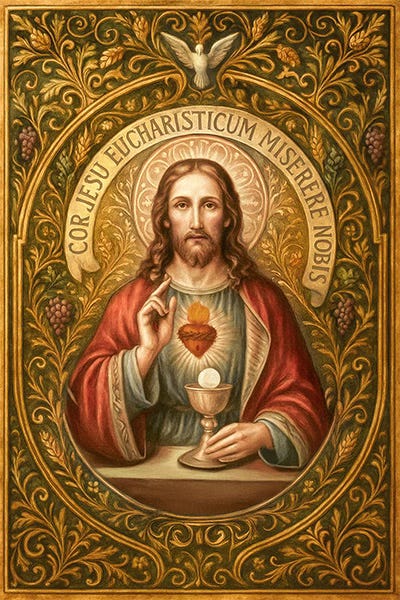
The Challenge of the Eucharistic Heart of Jesus
From 1P5:
Starting in the 12th century, there began what I like to call the Eucharistic Revolution. It began with Hildebert of Lavardin coining the word “Transubstantiation.” Then began the penning of stories about the Holy Grail; not very reliable as a source of history, they nevertheless incorporate stories of Eucharistic Miracles that would repeatedly occur in real life down to – especially in – our time. During the period they grew in popularity in the 13th century, Transubstantiation was defined as the best way to describe what happens at the Mass, and St. Juliana of Cornillon had her visions which led to the great feast of Corpus Christi. This turn led to the growth of Eucharistic processions, adoration, and much more. But in 1199, Christ appeared to St. Lutgarde of Saint-Trond. This is the first medieval apparition of the Sacred Heart passed down to us through Tradition.
At the same time, devotion grew to Our Lord’s Five Wounds, and their connection to the Eucharist was not unnoticed – after all, it was the same blood that came down daily upon each Altar, was reappearing in miracles (sometimes bleeding from hosts and at others from images of Our Lord), and relics of which were being brought back along a great many others from the Holy Land and Constantinople, thanks to the Crusades. Ss. Gertrude the Great and Mechtilde – both in the Abbey of Helfta, received visions of the Sacred Heart, and St. Bonaventure, and a great many other preached about this Heart and the Blood that flowed from it.
When the Protestant Revolt broke out, the Pilgrims of Grace in England marched against the King’s men under the banner of the Five Wounds. St. Ignatius of Loyola in his Anima Christi Prayer united all elements of devotion to Christ – and St. Peter Canisius spoke frequently of Christ’s Heart and Blood in defence of His Real Presence in the Eucharist; a theme taken up by many Catholic preachers fighting the new heresies.
[...]
When the French Revolution broke out in 1789, and drowned that word in fire and blood, the imprisoned Louis XVI privately consecrated the country to the Sacred Heart and vowed to do so publicly if restored to power. This did not happen, as we know. But from the Vendée to Spain to Tyrol, the Sacred Heart became the symbol of Catholic resistance to the revolution. Afterwards, it was a big part of the Catholic Restoration. (Read more.)
Tuesday, June 30, 2026
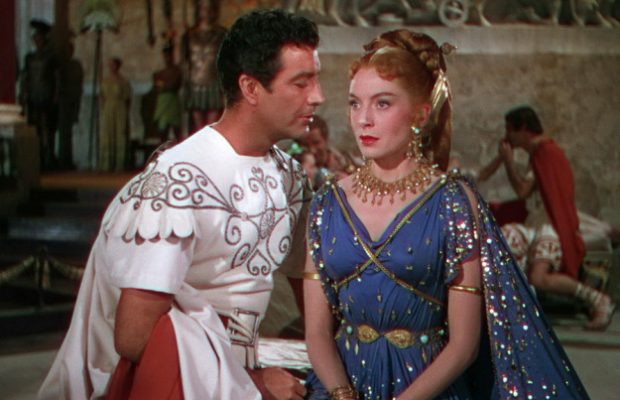
Quo Vadis
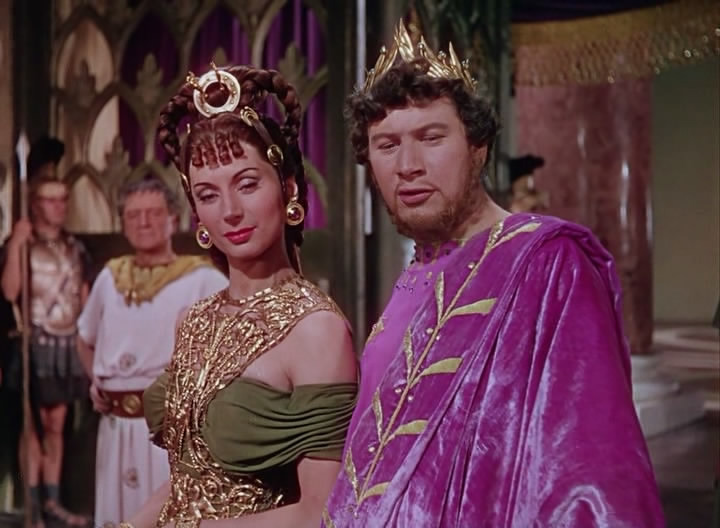
Quo Vadis by the Polish author Henryk Sienkiewicz is a jewel of historical fiction. While the 1951 film is excellent, it is dated; the novel, however, transcends time. The heartrending and vivid portrait of Roman life in the days of Nero combines a romance with the acta sanctorum amid breathtaking historical accuracy. The feelings of the young tribune Marcus Vinicius for the Christian maiden Ligia Callina are transformed by sacrifice and suffering from mere lust into profound love and devotion. In the meantime the early Church prepares to face a grueling ordeal at the hands of Nero. The brutality and decadence of Imperial Rome stand in glaring contrast to the indefatigable new sect, guided and instructed by Peter and Paul. The Christians must deal not only with the violence of the pagans but with some of their own members who betray and deceive. Indeed, part of the impact of the novel is the way it conveys continuity of the past with the present. Followers of Christ must struggle with their own sins and weaknesses as much as with the outside world which seeks to destroy them. It was not easy then; it is not easy now.
Henryk Sienkiewicz (1846-1916) received the Nobel Prize for Quo Vadis. He was writing to encourage his Polish countrymen in their many difficulties, and combined superb story-telling with painstaking historical research. Although I prefer the book to the movie, I do not hesitate to recommend the latter. Among 1950's Biblical epics, Quo Vadis is outstanding. Peter Ustinov's performance as Nero is truly something worth watching; few actors could capture the same balance of comedy, pathos and unmitigated depravity. The sets are magnificent as well, and the flow of drama, quite piercing. It is a good way to glean both history and inspiration while being entertained.
Monday, June 29, 2026
What Fairer Light?
For the last few days I have been thinking on and off of the Holy Apostles Peter and Paul, whose martyrdom is celebrated today in the universal church, and of how two men with such different personalities would come to share a similar fate. St. Peter was a robust and practical fisherman from a small town. St. Paul was more cosmopolitan, a scholar, a pharisee, and a Roman citizen. They were both killed in a public and grisly manner far, far from their homeland. One was crucified, the other was beheaded.How easy it would have been to have retired to some safe corner somewhere where they would not have bothered anyone! To just give up preaching, and writing all those letters, and generally harassing the pagans and correcting lax Christians...surely they had already done and suffered enough! Didn't they have a right to live their own life, and find some peace and quiet? After all, they had given up all for God, and now they were old...why couldn't they obscurely die in bed?
Ask St Peter, as he was fleeing from Rome, where Nero was burning Christians at his garden parties, and suddenly he ran into Our Lord, Who was walking along the Appian Way in the opposite direction.
Quo vadis, Domine? "Where are you going, Lord?" asked St Peter.
"To Rome, to be crucified again," Jesus replied. And St. Peter knew what he had to do...he had to go back. He was arrested and crucified, upside down, at his own request, for he felt unworthy to die in the same manner as his Master. He was always deeply humbled by the memory of his past denial.
Here are some words from the ancient and beautiful hymn for this feast, "What fairer light?"
Rejoice, O Rome, this day; thy walls they once did sign
With princely blood, who now their glory share with thee.
What city's vesture glows with crimson deep as thine?
What beauty else has earth that may compare with thee?
Wednesday, June 24, 2026
Carmel and St. John the Baptist
The date of the foundation of the Order of Our Lady of Mount Carmel has been under discussion from the fourteenth century to the present day, the order claiming for its founders the prophets Elias and Eliseus, whereas modern historians, beginning with Baronius, deny its existence previous to the second half of the twelfth century. As early as the times of the Prophet Samuel there existed in the Holy Land a body of men called Sons of the Prophets, who in many respects resembled religious institutes of later times. They led a kind of community life, and, though not belonging to the Tribe of Levi, dedicated themselves to the service of God; above all they owed obedience to certain superiors, the most famous of whom were Elias and his successor Eliseus, both connected with Carmel, the former by his encounter with the prophets of Baal, the latter by prolonged residence on the holy mountain. With the downfall of the Kingdom of Israel the Sons of the Prophets disappear from history. In the third or fourth century of the Christian Era Carmel was a place of pilgrimage, as is proved by numerous Greek inscriptions on the walls of the School of the Prophets: "Remember Julianus, remember Germanicus", etc. Several of the Fathers, notably John Chrystostom, Basil, Gregory Nazianzen, and Jerome, represent Elias and Eliseus as the models of religious perfection and the patrons of hermits and monks. These undeniable facts have opened the way to certain conjectures. As St. John the Baptist spent nearly the whole of his life in the desert, where he gathered around him a number of disciples, and as Christ said he was endowed with the spirit and virtue of Elias, some authors think that he revived the institute of the Sons of the Prophets. (Read more.)
Monday, June 22, 2026
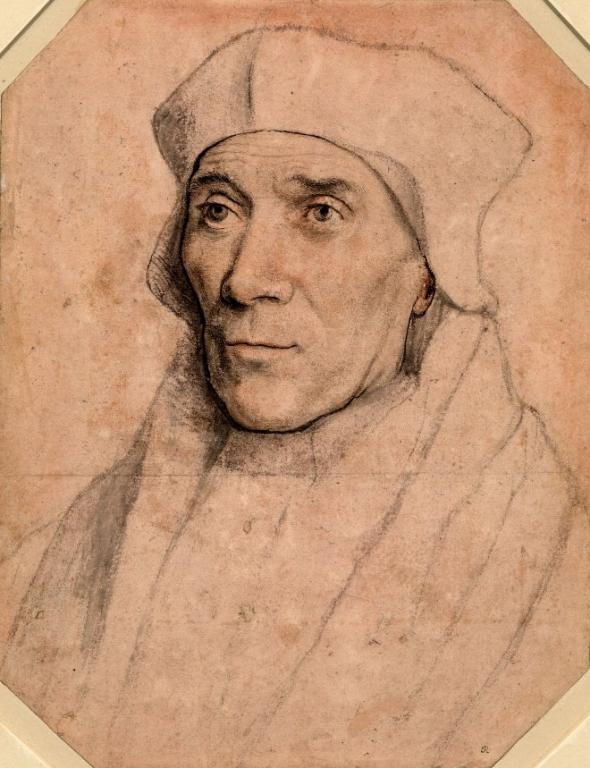
Two English Martyrs
Father Mark's post on St. Thomas More and St. John Fisher is so beautiful, anything I could say would be redundant. To quote:
Men of Fire and of Light
We remember today two martyrs, one a bishop and the other a husband, father, lawyer, statesman, and philosopher: Saints John Fisher and Thomas More. Both were men of fire and of light. Both fought manfully and suffered the martyrdom of John the Baptist, the Friend of the Bridegroom of whom Our Lord said, “He was a burning and shining lamp, and you were willing to rejoice for a while in his light” (Jn 5:35).
The Sun Snatched from the Universe
Saint John Fisher was alone among all the bishops of the realm to stand against Henry VIII in the “great affair” of his divorce and against the Act of Supremacy by which the King repudiated the jurisdiction of the Pope over the Church in England. The Church in England was to become the Church of England. Protestantization would follow and, above all, the suppression of the Holy Sacrifice of the Mass offered according to the rite of the Church of Rome. Concerning Holy Mass, Bishop John Fisher had written: “He who goes about to take the Holy Sacrifice of the Mass from the Church, plots no less a calamity than if he tried to snatch the sun from the universe.”
The following excerpts are from St. Thomas More's A Dialogue of Comfort Against Tribulation:
If we reflect on these things and remember them well, we shall not murmur or complain in time of tribulation. Instead, we shall first take our pain patiently and see it as something of worth. Then we shall grow in goodness and see ourselves as quite worthy of tribulation. And then we shall realize that God has sent it for our own good, and so be moved to thank God for it....
Let us, then, never hope for our life to be long. We should keep it while we can, because God has so commanded, but if God so arranges that in his good graces we may go, let us be glad of it, and long to go to him. And then shall the hope of heaven comfort our heavy hearts, and out of our transitory tribulation shall we go to everlasting glory....
Friday, June 19, 2026
Sacred Heart Badge

"We rose hastily," says Madame Royale . . . "My poor brother was asleep; they pulled him roughly from his bed to search it . . . They took from my mother the address of a shop, from my Aunt Élisabeth a stick of sealing-wax, and from me a Sacred Heart of Jesus and a Prayer for France."
That Sacred Heart of Jesus and that Prayer for France were closer bound together than would seem at first; and perhaps she needed all her faith in the one to be able at that moment to pray for the other.
~from The Duchesse d'Angoulême by C-A Sainte-Beuve
Accompanying devotion to the Sacred Heart of Jesus are the little badges which over the years have had great significance on many levels. Here is a brief history:
Our Lord revealed to St. Margaret Mary Alacoque "His wish for her to order a picture of the image of that Sacred Heart for people specifically to venerate and have in their homes and also small pictures to carry with them." She wrote this to her Superior, Mother Saumaise, on March 2, 1686. Thus was born the devotion of wearing the little Badges.
St. Margaret Mary Alacoque always kept a badge with her and inspired her novices to do the same. She made many badges and often said this practice was very pleasing to the Sacred Heart. In the beginning, only nuns of the Visitation were allowed to wear the Badge. It was later spread by Venerable Ana Magdalena Rémuzat, a religious of the Visitation who died in the odor of sanctity (1696-1730). Our Lord told this nun that a serious epidemic would afflict the French city of Marseilles in 1720, and that its inhabitants would receive a marvelous help through this devotion to His Sacred Heart. Mother Rémuzat, helped by her sister in the convent, made thousands to Sacred Heart Badges and distributed them throughout the city where the plague was rampant.
Soon afterward, the epidemic stopped as if by a miracle. Many Badge wearers were not infected and even people who got sick experienced extraordinary help through the Badge. Analogous events happened elsewhere. From then on, use of the badge spread to other cities and countries.
The news of the graces obtained through the Badges reached the Court. Maria Lesczynska, wife of King Louis XV became devoted to the Badge. In 1748 she received several Badges from Pope Benedict XIV as a wedding gift. Among the various presents sent by the Pontiff were "many Badges of the Sacred Heart made of red taffeta and embroidered in gold," the records say.
Special emblem of counter-revolutionariesThe unfortunate French Revolution erupted in France in 1789, a worse punishment than any plague, causing tragic consequences for the whole world. True Catholics found protection in the Most Sacred Heart of Jesus during that period. Many priests, nobles, and commoners who resisted the bloody anti-Catholic revolution wore the Badge. Even ladies of the Court, like the Princess of Lamballe, wore the Badge embroidered with precious materials over fabric. The simple fact of wearing it became a distinctive sign of those who opposed the French Revolution.
Among the belongings of Queen Marie Antoinette, guillotined out of revolutionary hatred, was found a drawing of the Sacred Heart, with the wound, the cross, and crown of thorns, and the inscription: "Sacred Heart of Jesus, have mercy on us!"In 1793, when the peasants of the Vendée revolted against the anti-Christian character of the French Revolution, they wore the Sacred Heart Badge into battle, with cries of "Rembarre!" The gallant revolt was viciously put down by the Revolutionary government; in the name of liberty, many men, women and children were tortured and massacred. To don the emblem of the Sacred Heart was to be an enemy of the new world order.
Wednesday, June 17, 2026
Vow of Louis XVI to the Sacred Heart

There is a great deal of misunderstanding on the internet concerning the Consecration of France to the Sacred Heart by Louis XVI. It is not true that the king made the Vow/Consecration in the Temple prison while awaiting execution. He made it while still living at the Tuileries palace. In the spring of 1791, after signing the Civil Constitution of the Clergy a few months earlier, King Louis XVI fell ill at the Tuileries, where the royal family were living under house arrest. His illness was undoubtedly the result of the stress of the upheavals which he had tried to prevent, as well as the fact that his conscience was troubling him about signing the Catholic Church in France over to the revolutionary government, severing the ties with Rome. Louis had signed it under duress but deeply regretted his decision immediately.
According to biographer Bernard Fay, Louis made the Vow under the guidance of his non-juring confessor, a Eudist priest Fr. Hebert. In the 1600's a Visitation nun, Saint Margaret Mary, had claimed that Jesus had requested that the King of France consecrate France to His Sacred Heart. The consecration had never been performed. So, with the help of Fr. Hebert, Louis drafted the following Vow, which he sealed in the walls of his apartments.
The Vow was not found until the palace had been partially burned by the Commune and was being torn down in 1871. It was discovered still sealed in the wall of the king's room. Louis was a locksmith and was fascinated with construction, so building a hiding place for his papers would not have been beyond him. He was known for his penchant for secrecy and his hiding of private papers from prying eyes. The fact that the Vow was not discovered until the 1870's demolishes the claim of some that it was merely a product of pious forgery during the 1814-1830 Restoration. The methodical legality of the document is typical of Louis XVI, who as an amateur cartographer was characterized by his precision and attention to detail. The translation is a bit rough because it is mine, with some help from Google.
Dedication of France to the Sacred Heart of Jesus by King Louis XVI
You see, ô my God! all the wounds which tear my heart, and depth of the abyss into which I have fallen. Evils without number surround me on all sides. My personal misfortunes and those of my family, which are dreadful, overwhelm my heart, as well as those which cover the face of the kingdom. The cries of all the unfortunate ones, the moaning of oppressed religion resounds in my ears, and an interior voice still informs me that perhaps Your justice reproaches me with all these calamities, because, in the days of my power, I did not repress the license of the people and the irreligion, which are the principal sources; because I served the weapons of heresy which triumphed, by supporting it by laws which doubled its forces and gave it the audacity to dare all.
I will not have temerity, ô my God! to justify to myself before You; but You know that my heart was always subject to faith and morals; my faults are the fruit of my weakness and seem worthy of Your great mercy. You forgave King David, who caused your enemies to blaspheme You and King Manassès, who had involved his people in the idolatry. Disarmed by their penitence, you restored them one and the other on the throne of Juda; you made them reign with peace and glory. Would You be inexorable today towards a son of Saint Louis, who takes these penitent kings for models, and which, with their example, wishes to repair his faults and to become a King according to Your Heart?
O Jesus-Christ! divine Redeemer of all our iniquities, it is in Your Adorable Heart that I want to deposit the overflowing of my afflicted heart. I call upon the help of the tender Heart of Mary, my majestic protector and my mother, and the assistance of Saint Louis, my most famous patron and of my ancestor. O adorable Heart, by the so pure hands of my powerful intercessors, receive with kindness the wishes that confidence inspires in me and that I offer to You like the humble expression of my feelings. If, by an effect of the infinite kindness of God, I recover my freedom, my crown and my royal power, I promise solemnly:
1. To revoke as soon as possible all the laws which will be indicated to me, either by the Pope, or by a Council, or by the four Bishops chosen among most enlightened and most virtuous of my kingdom, with the purity and the integrity of the faith, the discipline and the spiritual jurisdiction of Holy Catholic, Apostolic Church, Roman, and in particular to revoke the Civil Constitution of the Clergy.
2. To take, in a one year interval, in union with the Pope and the Bishops of my kingdom, all measurements necessary to establish, according to the canonical forms, a solemn festival in honor of the Sacred Heart of Jesus, which will be celebrated in perpetuity in all France, on the first Friday after the octave of the Blessed Sacrament, and always followed by a general procession, in repair of the insults and profanations made in the time of the disorders, by the schismatics, the heretics and the bad Christians.
3. To go myself in person, within three months from the day of my delivery, to the church of Notre-Dame of Paris, or in any other principal church of the place where I will be, and to pronounce, one day of Sunday or festival, at the foot of the high altar, after the offertory of the Mass, and between the hands of the celebrant, a solemn act of dedication of my person, my family and my kingdom to the Sacred Heart of Jesus, promising to give to all my subjects, the example of the worship and the devotion which are due to this adorable Heart.
4. To set up and to decorate at my own expense, in the church which I will choose for it, within one year from the day of my delivery, an altar which will be dedicated to the Sacred Heart of Jesus, and which will be used as an eternal monument of my recognition and my confidence without end in the infinite merits and in the inexhaustible treasures of grace which are contained in this Crowned Heart.
5. Finally, to renew every year, in the place where I will be, on the Feast of the Sacred Heart, the act of dedication expressed in the third article, and to attend the general procession which will follow the Mass of this day. Today I pronounce only in secrecy this promise, but I would sign it my blood if it were needed; and the most beautiful day of my life will be that where I will be able to aloud publish it in the temple. O Adorable Heart of my Savior! Let my right hand be forgotten and let me curse myself, if I forget Your blessings and my promises, if I cease to love You, finding my confidence in You and all of my consolation. Amen.
Here is the original French:
Consécration de la France au sacré-Coeur de Jésus
Vous voyez, ô mon Dieu ! toutes les plaies qui déchirent mon coeur, et la profondeur de l'abîme dans lequel je suis tombé. Des maux sans nombre m'environnent de toutes parts. A mes malheurs personnels et à ceux de ma famille, qui sont affreux, se joignent pour accabler mon âme, ceux qui couvrent la face du royaume. Les cris de tous les infortunés, les gémissements de la religion opprimée retentissent à mes oreilles, et une voix intérieure m'avertit encore que peut-être votre justice me reproche toutes ces calamités, parce que, dans les jours de ma puissance, je n'ai pas réprimé la licence du peuple et l'irréligion, qui en sont les principales sources ; parce que j'ai fourni moi-même des armes à l'hérésie qui triomphe, en la favorisant par des lois qui ont doublé ses forces et lui ont donné l'audace de tout oser.
Je n'aurai pas la témérité, ô mon Dieu ! de me justifier devant vous ; mais vous savez que mon coeur a toujours été soumis à la foi et aux règles des moeurs ; mes fautes sont le fruit de ma faiblesse et semblent dignes de votre grande miséricorde. Vous avez pardonné au roi David, qui avait été cause que vos ennemis avaient blasphémé contre vous ; au roi Manassès, qui avait entraîné son peuple dans l'idolâtrie. Désarmé par leur pénitence, vous les avez rétabli l'un et l'autre sur le trône de Juda ; vous les avez fait régner avec paix et gloire. Seriez-vous inexorable aujourd'hui pour un fils de saint Louis, qui prend ces rois pénitents pour modèles, et qui, à leur exemple, désire réparer ses fautes et devenir un Roi selon votre coeur ?O Jésus-Christ ! divin Rédempteur de toutes nos iniquités, c'est dans votre Coeur adorable que je veux déposer les effusions de mon âme affligée. J'appelle à mon secours le tendre Coeur de Marie, mon auguste protectrice et ma mère, et l'assistance de saint Louis, mon patron et le plus illustre de mes aïeux.Ouvrez-vous, Coeur adorable, et par les mains si pures de mes puissants intercesseurs, recevez avec bonté les voeux satisfactoires que la confiance m'inspire et que je vous offre comme l'expression naïve de mes sentiments.Si, par un effet de la bonté infinie de Dieu, je recouvre ma liberté, ma couronne et ma puissance royale, je promets solennellement :1_ De révoquer le plus tôt possible toutes les lois qui me seront indiquées, soit par le Pape, soit par un Concile, soit par quatre Evêques choisis parmi les plus éclairés et les plus vertueux de mon royaume, comme contraires à la pureté et à l'intégrité de la foi, à la discipline et à la juridiction spirituelle de la sainte Eglise catholique, apostolique, romaine, et notamment la Constitution civile du clergé ;2_De prendre, dans l'intervalle d'une année, tant auprès du Pape qu'auprès des Evêques de mon royaume, toutes les mesures nécessaires pour établir, suivant les formes canoniques, une fête solennelle en l'honneur du Sacré-Coeur de Jésus, laquelle sera célébrée à perpétuité dans toute la France, le premier vendredi après l'octave du Saint-Sacrement, et toujours suivie d'une procession générale, en réparation des outrages et des profanations commises dans le temps des troubles, par les schismatiques, les hérétiques et les mauvais chrétiens.3_D'aller moi-même en personne, sous trois mois, à compter du jour de ma délivrance, dans l'église Notre-Dame de Paris, ou dans toute autre église principale du lieu où je me trouverai, et de prononcer, un jour de dimanche ou de fête, au pied du maître-autel, après l'offertoire de la messe, et entre les mains du célébrant, un acte solennel de consécration de ma personne, de ma famille et de mon royaume au Sacré-Coeur de Jésus, avec promesse de donner à tous mes sujets, l'exemple du culte et de la dévotion qui sont dus à ce Coeur adorable.4_D'ériger et de décorer à mes frais, dans l'église que je choisirai pour cela, dans le cours d'une année à compter du jour de ma délivrance, une chapelle ou un autel qui sera dédié au Sacré-Coeur de Jésus, et qui servira de monument éternel de ma reconnaissance et de ma confiance sans bornes dans les mérites infinis et dans les trésors inépuisables de grâce qui sont renfermés dans ce Coeur Sacré.5_Enfin de renouveler tous les ans, au lieu où je me trouverai, le jour qu'on célébrera la fête du Sacré-Coeur, l'acte de consécration exprimé dans l'article troisième, et d'assister à la procession générale qui suivra la messe de ce jour.Je ne puis aujourd'hui prononcer qu'en secret cet engagement, mais je le signerais de mon sang s'il le fallait ; et le plus beau jour de ma vie sera celui où je pourrai le publier à haute voix dans le temple.O Coeur adorable de mon Sauveur ! Que j'oublie ma main droite et que je m'oublie moi-même, si jamais j'oublie vos bienfaits et mes promesses, si je cesse de vous aimer et de mettre en vous ma confiance et toute ma consolation. Ainsi soit-il.
Thursday, May 28, 2026
Blessed Margaret Pole, the Last Plantagenet
As the heir to the throne, Mary enjoyed a separate household, and in 1525 she was sent to Ludlow to hold court. The countess was to look after the little girl’s health and diet, ensure that she did not wear herself out in learning French and Latin, and see that her immediate environment was kept spotless, ‘so that everything about her be pure, sweet, clean and wholesome, as to so great a princess doth appertain’. Mary’s food, Henry ordered, was to be served with ‘joyous and merry communication’. Whether the countess was up to this is hard to say, but later the Imperial ambassador was to declare that Mary regarded her as ‘a second mother’. When Henry began proceedings to annul his first marriage, when Catherine was discarded and the Princess Mary downgraded to ‘Lady Mary, the king’s daughter’, Margaret proved fiercely loyal and protective. In an effort to force their co-operation, Henry separated his wife and child, and Margaret – who was Mary’s godmother – offered to serve the young girl at her own expense. She was no longer, though, the sort of influence Henry wished for his daughter. After his marriage to Anne Boleyn and the birth of their daughter, Elizabeth, Mary was sent to join the household of the infant princess. There, she was surrounded by connections of the Boleyn queen. Margaret was superfluous; curtly, Henry wrote her off as a fool. If he had trusted her once, he no longer did so. The prestige of her ancient family, her traditionalist stance in religion, and her status as a peer in her own right – all these defined a woman who might wish to resist the new order. And her gender did not necessarily disqualify her from becoming leader of the opposition – if that was what she chose. (Read more.)More HERE.