Showing posts with label St Joseph. Show all posts

Monday, July 20, 2026

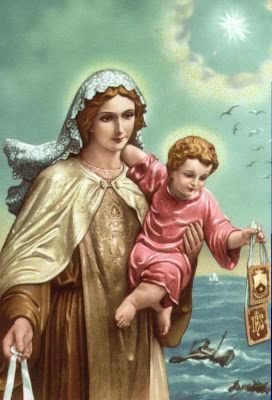
Our Lady of Mount Carmel and the Holy Prophet Elias

From Speramus:
God choose in his providence that the Queen of Heaven and Earth was to make her last apparition at Lourdes on the feast of Our Lady of Mount Carmel, July 16th 1858, and in the last public vision of Fatima, Our Lady also appeared as Our Lady of Mt Carmel on October 13, 1917.  At Fatima she  was holding the Rosary and the scapular out to a subdued and frightened crowd as they beheld  the Miracle of the Sun. Many in the crowd were terrified because they thought during the time it was the end of the world. 

Lourdes and Fatima belong to a long line of Approved Marian Apparitions leading back to the founding of the Carmelite Order on Mt Carmel by the Prophet Elijah. Here  Elijah battled 450 priests of Baal in a public spiritual contest which led to their defeat and ruin. He challenged the people to stop hobbling first on one foot and then on the other but to choose who is God in Israel Yahweh or Baal. According to the story, which can be found in the First Book of Kings, chapter 18, Elijah’s sacrifice was consumed by fire from heaven and proved to the people that Yahweh was the true God. Is it possible God is sending his Mother the Queen of prophets to help us defeat the prophets of Baal resurrected in our own time.                                                        
In the book of Malachi Elijah's return is prophesied to take place "before the coming of the great and terrible day of the Lord." He is  a forerunner in both advents of the Messiah. It seems that  Heaven has confirmed Our Lady at Fatima in the same mission of the prophet Elijah. Our Lady at Fatima appearing  in her Carmelite habit with a similar fire from Heaven during the miracle of the sun. The stupendous Fatima Miracle is the Greatest Supernatural Event of the 20th Century and does not belong [just] to faith or science; it is an Historical Event!

The Miracle of the Sun authenticated Fatima as supernatural in origin and also is a prefigurement or warning of a future catastrophe if the simple requests made at Fatima by our Lady are not heeded. (Read more.)

Saturday, June 13, 2026

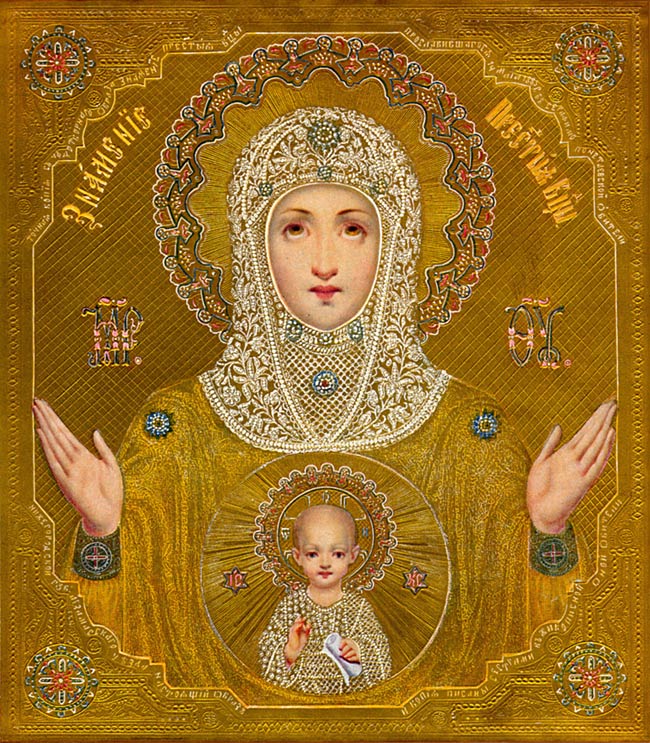
The Immaculate Heart of Mary


"My heart and my flesh have rejoiced in the living God." (Psalm 83:4)

Devotion to the Immaculate Heart of Mary has grown along side of the devotion to the Sacred Heart, for the heart of the Mother can never be separated from that of her Son. According to the visionary St. Bridget of Sweden (14th century), Our Lady said: "As Adam and Eve sold the world for one apple, so my son and I redeemed the world, as it were, with one Heart." (Sign of Her Heart by John Haffert)

St. John Eudes, who in the 17th century promoted devotion to the Two Hearts, reported to have heard Our Lord saying: "I have given you this admirable heart of My dearest Mother which is but one with Mine, to be truly your heart also, in order that the children may have but one heart with their Mother...." (Ibid.)

The Belgian mystic Berthe Petit (1870-1943) experienced several revelations concerning the "Sorrowful and Immaculate Heart of Mary." She recorded Jesus as saying:
This devotion to the Sorrowful and Immaculate Heart of My Mother will restore faith and hope to broken hearts and to ruined families...it will sweeten sorrow. It will be a new strength for My Church, bringing souls not only to confidence in My Heart, but also to abandonment to the Sorrowful Heart of my Mother. (Prayers and Heavenly Promises by Joan Carroll Cruz)
The 1917 apparitions of Our Lady in Fatima, Portugal led to Pope Pius XII instituting the feast of the Immaculate Heart of Mary. Originally kept on August 22, the memorial of the Immaculate Heart is presently kept on the day after the Solemnity of the Sacred Heart.

The mystery of the Immaculate Heart is the mystery of the Mercy of God; the mercy He showed to Mary by preserving her from all stain of original sin; the mercy He bestows on us through the prayers of the Mother of Mercy, the Mediatrix of all Graces, on our behalf. It is a mystery of compassion, for Mary's heart was pierced with sorrow at the foot of the cross. The brown scapular of Carmel is a sign of one's personal consecration to Our Lady, as well as of the compassionate intercession we hope to receive from her at the hour of death.

Sr. Lucy of Fatima said: "Our Lady wants all to wear the scapular." (Haffert) The scapular is an exterior sign of interior abandonment to the Heart of Mary. The Carmelite Venerable Michael of St. Augustine wrote:
We can live in Mary if we strive, in all our deeds and omissions, in our penances and trials and afflictions, to preserve and promote within ourselves a filial, tender inclination of soul towards Mary....Our love will then flow, as it were, from God to Mary and from Mary back to God. (Life with Mary by Ven. Michael of St. Augustine)

Friday, May 1, 2026

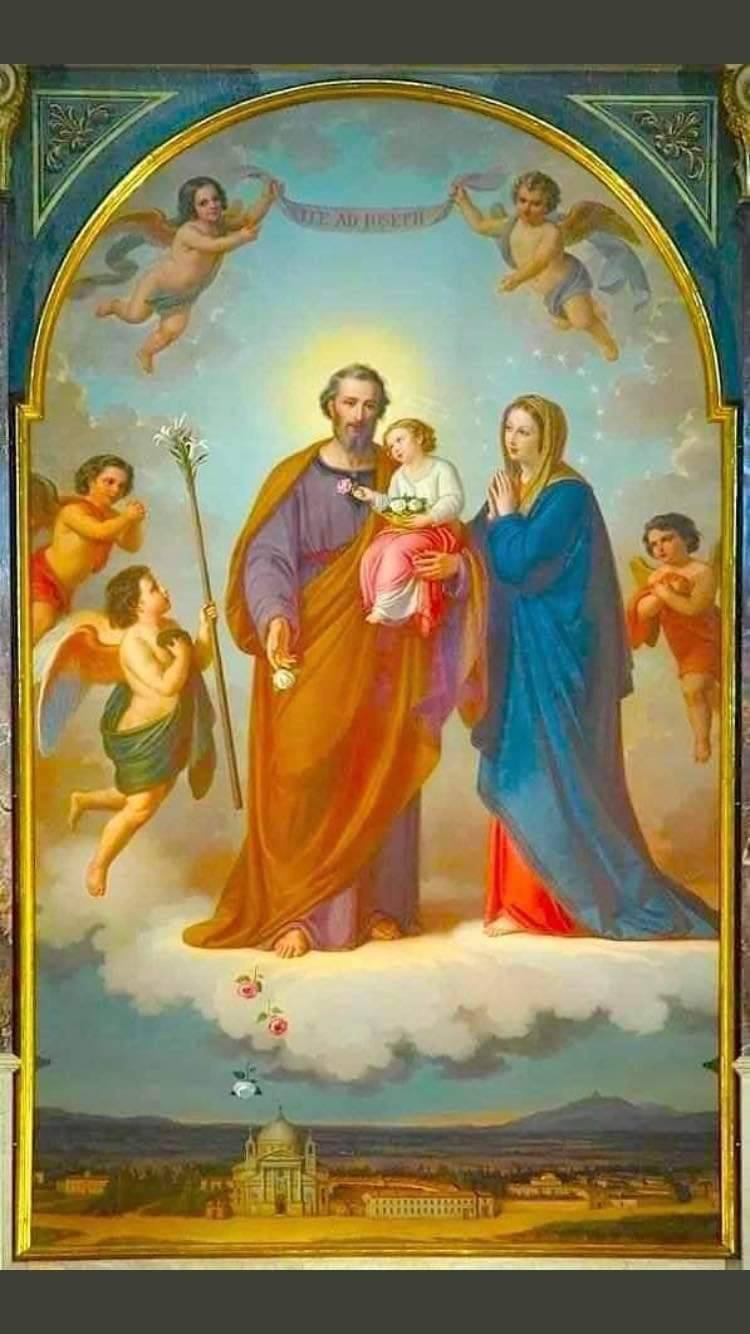
St. Joseph the Worker

Abbot Gueranger, O.S.B. says in The Liturgical Year that devotion to St. Joseph was reserved for "these latter times." He quotes the 1645 book La gloire de Saint-Joseph by Father Jean Jacquinot, S.J.:
O thou bright sun, thou father of our days! speed thy onward course, and give us that happy day whereon are to be fulfilled the prophecies of the saints. They have said that in the latter ages of the world, the glories of Saint Joseph will be brought to light; that God will draw aside the veil, which has hitherto prevented us from seeing the wonderful sanctuary of Joseph's soul....
 Here is a quote from the encyclical Quamquam Pluries by Pope Leo XIII from Louange de sa gloire:
Thus in giving Joseph the Blessed Virgin as spouse, God appointed him to be not only her life's companion, the witness of her maidenhood, the protector of her honour, but also, by virtue of the conjugal tie, a participator in her sublime dignity. And Joseph shines among all mankind by the most august dignity, since by divine will, he was the guardian of the Son of God and reputed as His father among men. Hence it came about that the Word of God was humbly subject to Joseph, that He obeyed him, and that He rendered to him all those offices that children are bound to render to their parents. From this two-fold dignity flowed the obligation which nature lays upon the head of families, so that Joseph became the guardian, the administrator, and the legal defender of the divine house whose chief he was. And during the whole course of his life he fulfilled those charges and those duties. (Read more.)

 Father Mark urges us to "go to Joseph," saying:
The month of May begins with a feast of Saint Joseph. It is significant that the commemoration of Saint Joseph both precedes and follows the heart of the whole liturgical year: the glorious Pasch of the Lord. We celebrated Saint Joseph on March 19th; he returns to us again today. 

Saint Joseph is never far from the Blessed Virgin Mary, his immaculate spouse and, yes, his best friend, the friend of his heart, the love of his life, the unfailing cause of his joy in the midst of anxieties, hardship, and sorrow. Saint Joseph participated intimately in all those sorrows of hers that announced and prefigured the mysteries of Christ's passion, death, and burial: the prophecy of Simeon, the flight into Egypt, the disappearance of the boy Jesus in Jerusalem. If you would empathize with the Heart of Mary, go to Joseph....
Saint Joseph and Immigrants   
We recommend immigrants to Saint Joseph. He knows their struggles. He knows their anxieties, their hardships, and the fears. Saint Joseph was, after all, an immigrant in Egypt. He arrived there, in a strange land, with his Virgin Spouse and her Infant Son. He had to find housing, to look for work, to endure the suspicion, the prejudice, and the slights that are the lot of immigrants in every time and place.

Saint Joseph and Priests
And we recommend priests to Saint Joseph. The Church, in her wisdom, proposes to her priests two prayers in honour of Saint Joseph each day, one before Holy Mass, and one after. Every priest can find in Saint Joseph a friend, a model, a protector. Saint Joseph stands ready at every moment to introduce priests into a deeper intimacy with his Spouse, the Virgin Mary.
If you want to help priests, entrust them to Saint Joseph. All priests, especially parish priests, are exposed to being criticized and judged. It is a particular form of suffering that accompanies every priest from the day of his first Mass until the day of his last. I believe it was Archbishop Fulton Sheen who said that all priests are lacerated by the tongues of the pious! He knew of what he spoke; his own biography was entitled The Passion of Fulton Sheen. An effective way of countering the sins against charity that wound and discourage all priests is to entrust them to Saint Joseph.

Saint Joseph and Work
We recommend workers and those without work to Saint Joseph. People without meaningful work — be it manual or intellectual — fall more easily into depression. They have no self-esteem. They go from one thing to the next never finding the satisfaction and fulfillment that come from having a responsibility and from a job well done. Today let us not forget those suffering from idleness and unemployment. There is nothing more degrading to a human person. Even the sick and the very old find joy in work, in rendering the little service, in having others count on them for something.


Saint Joseph and the Dying
Finally, we recommend the dying to Saint Joseph. We will all want Saint Joseph near us at the hour of our death. Saint Joseph visits the dying because they are so much like little infants. They are vulnerable, weak, and subject to the attacks of evil spirits. Saint Joseph, exquisitely tender for souls redeemed by the Blood of Christ, is the “terror of demons.” He is the defense of those in the throes of the final combat. If you want to die in the company of Saint Joseph, live in the company of Saint Joseph. Pray to him, seek his company every day. (Read more.)

Thursday, March 19, 2026

The Glory of St. Joseph

Here is a beautiful meditation given by Prof. Plinio Corrêa de Oliveira:
Saint Joseph—prince of the House of David, prince of a royal family that, although dethroned and decadent, was at its apogee because from it was born the Hope of the Nations—knocks at the door and is rejected! But in this rejection is his first glory....He took the first step of his martyrdom: he led Our Lady to a cave suitable only for animals, where the Child Jesus was born.

To this glory—which was certainly a negative one—were added many others: the glory of being considered a person of no consequence although all public honors were due him; the glory of taking upon himself all the humiliation, all the ignominy and all the weight of the opprobrium that was to fall upon Our Lord. From the very beginning, he had the special bliss of being refused for his love of justice and his grandeur of soul. (Read more.)

St. Joseph's Life of Faith

The following is an excerpt from Divine Intimacy by Father Gabriel of Saint Mary Magdalen, O.C.D: 
St. Joseph's whole life may be summed up as a continual adherence to the Divine plan, even in situations which were very obscure and mysterious to him. In our life, too, there is always some mystery, either because God is pleased to work in a hidden, secret manner or because His action is always incomprehensible to our poor human intelligence. Therefore, we need that glance of faith, that complete confidence which, relying on the infinite goodness of God, convinces us that He always and in all circumstances wills our good and disposes everything to that end. Only this loving trust will permit us, like Joseph, always to say yes to every manifestation of the divine will, a humble, prompt, trustful yes, in spite of the obscurities, the difficulties, the mystery.... (p. 1131)

Tuesday, March 10, 2026

Novena to St. Joseph

Today begins the nine-days of intensive prayer to Saint Joseph, the foster-father of Our Lord Jesus Christ. He is the patron and protector of fathers and of families, and of the dying. The month of March is dedicated to Saint Joseph. Let us beg his direct intercession. His intercession is powerful; all those who have experienced his intervention know what I am talking about. Really, he will help in any dire situation. I love Saint Joseph. Here is the Fr. Lallemant Novena:
This novena has proven to be highly efficacious. It seems to be pleasing to St. Joseph and helpful to souls. No particular prayers need to be said for this Novena. Every day for nine days turn to St. Joseph in spirit four times (called a visit). during the day and honour Him in the following four points:
 
1. During the first visit, consider ST. JOSEPH'S FIDELITY TO GRACE.Reflect upon the action of the Holy Ghost in his soul. At the conclusion of this brief meditation, thank God for so honoring St. Joseph,and ask, through his intercession for a similar grace.
 
2. Later in the day, consider ST. JOSEPH'S FIDELITY TO THE INTERIOR LIFE.Study his spirit of recollection. Think, thank God, and ask.
 
3. Later still, consider ST. JOSEPH'S LOVE FOR OUR LADY.Think, thank God, and ask.
 
4. Finally, in a fourth visit, reflect upon ST. JOSEPH'S LOVE FOR THE DIVINE CHILD.Think, thank God, and ask.
 

Here is another novena prayer:
Oh, St. Joseph, whose protection is so great, so strong, so prompt before the throne of God. I place in you all my interests and desires. Oh, St. Joseph, do assist me by your powerful intercession, and obtain for me from your Divine Son all spiritual blessings, through Jesus Christ, our Lord. So that, having engaged here below your heavenly power, I may offer my thanksgiving and homage to the most loving of Fathers.

Oh, St. Joseph, I never weary of contemplating you, and Jesus asleep in your arms; I dare not approach while He reposes near your heart. Press Him in my name and kiss His fine head for me and ask him to return the Kiss when I draw my dying breath. St. Joseph, Patron of departing souls - Pray for Me.
 

Here is another little prayer as well:
Dear Saint Joseph, you who have the power to render possible that which seems impossible, come to our aid in our present trouble and distress. Take this important and difficult affair under your particular protection that it may end happily.
Dear Saint Joseph, all our confidence is in you. Let it not be said we have invoked you in vain. Since you are so powerful with Jesus and Mary, show that your goodness equals your power.
Divine Providence did provide. Divine Providence can provide. Divine Providence will provide. Amen.


Monday, February 2, 2026

Candlemas Day

Adorn thy bridal chamber, O Sion, and receive Christ the King. Salute Mary, the gate of Heaven; for she beareth the King of Glory, Who is the new Light.... —Antiphon for feast of the Presentation of the Lord
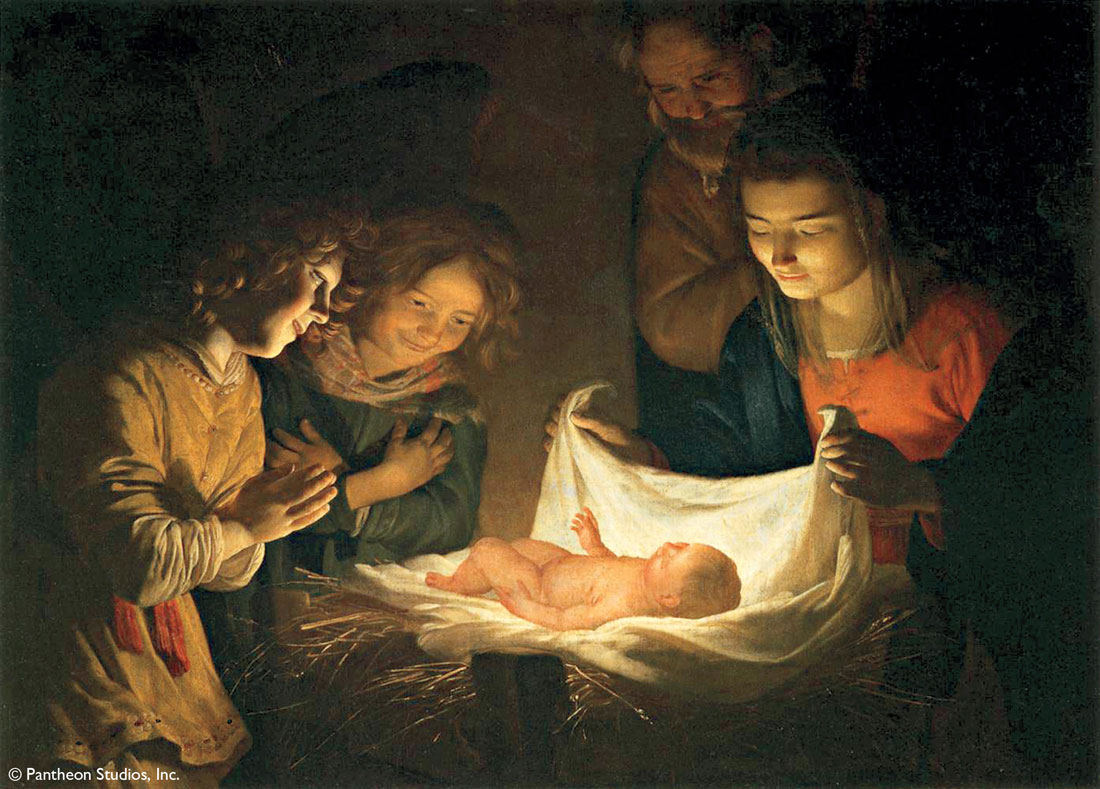
On the fortieth day after Christmas we celebrate the Presentation of Our Lord in the Temple, where He is offered by His Mother and St Joseph to the Eternal Father for the sins of the world. Many prophecies were fulfilled that day, unknown at the time except to Mary and Joseph, Simeon and Anna, all persons of prayer and of special consecration to God. In a time of great darkness there was suddenly and quite publicly a great light, to be received only by those whose hearts were open. A small Child is the ultimate sacrifice for the redemption of humanity, but He is not alone; He is with His family. The Holy Family stand between us and utter chaos and despair. Like the Child Jesus, we do not make our offering alone, we make it with Mary and Joseph, we make it in the context of our own families.
Behold this child is set for the fall, and for the resurrection of many in Israel, and for a sign which shall be contradicted; and thy own soul a sword shall pierce, that, out of many hearts, thoughts may be revealed. --St. Luke 2:34-35
 The "Purification of Our Lady" as the feast is traditionally called, is a feast of the Virgin as well as the Virgin's Son. We marvel at the humility of Immaculate Mary who submits to the ritual of purification for all Jewish mothers, although she herself had no need to be purified. It is also known as Candlemas Day because since early times, candles have been blessed and carried in procession in honor of Christ, the Light of the World.

At Christmas, we adored Him with the shepherds at dawn; at Epiphany, we rejoiced in the brightness of His manifestations to the nations; at Candlemas, with the aged Simeon, we take Him into our arms. With the prophetic words of Simeon, the day also becomes a preparation for Lent and the Passion of Our Lord. We must offer ourselves with Jesus to the Father; we must embrace our own purification.
 

This feast day links Christmas with Lent, the joyful mysteries with the sorrowful mysteries. Mary's Heart is pierced as Simeon's prophecy is uttered, for a mother suffers for her child, especially when that Child is God. Fr Gabriel of St. Mary Magdalen, O.C.D. wrote so magnificently of this feast in his book Divine Intimacy:
O Jesus, through the hands of Mary, I wish to offer myself today with You to the eternal Father. But You are a pure, holy, and Immaculate Host, while I am defiled with misery, and sin....O Virgin Most pure, lead me along the way of a serious and thorough purification; accompany me yourself, so that my weakness will not make me faint because of the roughness of the road.

Friday, January 23, 2026

The Espousals


On the traditional Carmelite calendar, today is celebrated the Espousals of Mary and Joseph. According to Archbishop Sheen:
Mary and Joseph brought to their espousals not only their vows of virginity but also two hearts with greater torrents of love than had ever before coursed through human breasts. No husband and wife ever loved one another so much as Joseph and Mary. Their marriage was not like that of others, because the right to the body was surrendered; in normal marriages, unity in the flesh is the symbol of its consummation, and the ecstasy that accompanies a consummation is only a foretaste of the joy that comes to the soul when it attains union with God through grace. If there are satiety and fed-up-ness in marriage, it is because it falls short of what it was meant to reveal, or because the inner Divine Mystery was not seen in the act. But in the case of Mary and Joseph, there was no need of the symbol of the unity of flesh, since they already possessed the Divinity. Why pursue the shadow when they had the substance? Mary and Joseph needed no consummation in the flesh, for, in the beautiful language of Leo XIII: "The consummation of their love was in Jesus." Why bother with the flickering candles of the flesh, when the Light of the World is their love? Truly He is Jesu, voluptas cordium. When He is the sweet voluptuousness of hearts, there is not even a thought of the flesh. As husband and wife standing over the cradle of their newborn life forget, for the moment, the need of one another, so Mary and Joseph, in their possession of God in their family, hardly knew that they had bodies. Love usually makes husband and wife one; in the case of Mary and Joseph, it was not their combined loves but Jesus Who made them one. No deeper love ever beat under the roof of the world since the beginning, nor will it ever beat, even unto the end. They did not go to God through love of one another; rather, because they went first to God, they had a deep and pure love, one for another. To those who ridicule such holiness, Chesterton wrote:
That Christ from this creative purity
Came forth your sterile appetites to scorn.
Lo! in her house Life without Lust was born
So in your house Lust without Life shall die
. (Read more.)

Tuesday, January 6, 2026

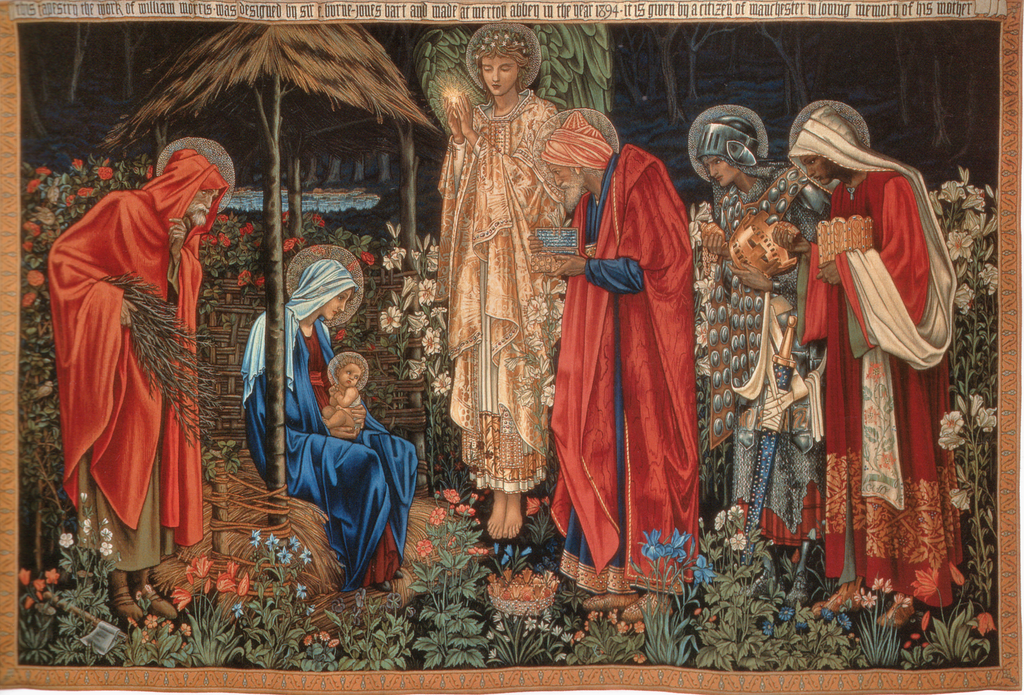
Epiphany of the Lord

 Arise, be enlightened, O Jerusalem: for thy light us come....And the gentiles shall walk in thy light, and kings in the brightness of thy rising....All they from Saba shall come, bringing gold and frankincense, and showing forth praise to the Lord. (Isaias 60, 1-6)
Here is a quote on the Epiphany from Fr. Gabriel of St. Mary Magdalen's Divine Intimacy:
A star often appears in the heaven of our souls; it is the inspiration from God, clear and intimate, urging us to greater generosity and calling us to a life of closer union with Him. Like the Magi, we too must always follow our star with faith, promptness and selfless generosity. If we allow it to guide us, it will certainly lead us to God; it will bring us to the One whom we are seeking.
The Magi did not give up their quest, although the star- at one point- disappeared from their sight. We should follow their example and their perseverance, even when we are in interior darkness. This is a trial of faith which is overcome only by the exercise of pure, naked faith. I know that He wills it, I know that God is calling, and this suffices for me: Scio cui credidi et certus sum (2 Timothy 1:12); I know whom I have believed. No matter what happens, I shall trust Him. (Divine Intimacy, pp. 122-123)

Abbot Gueranger discusses the mystery of the Magi, HERE
.


(Artwork:
Journey of the Magi, 1902 by James Tissot)

Epiphany: the Festival of Adoration

From Fr. Mark:
When a soul perceives the light of Christ, that soul is compelled to adore. Thus do we hear in the Holy Gospel: “And entering into the house, they found the child with Mary his mother, and falling down they adored him.” (Matthew 2:11).

There are, if you will, three moments in the grace of adoration. The first of these is the perception of the light. To see the light of Christ one must enter into the house that is the Church; from the outside, it appears, to some, small and, perhaps, confining. But when one enters the house of the Church, one discovers, from within, that it is immensely spacious. The Church is the place of the Divine Hospitality on earth. Not only is their room in the house of the Church for all; there is also pure water for cleansing; oil for the healing of every infirmity; and a banquet made ready with the living Bread come down from heaven, and with the joy-giving chalice of Christ’s Precious Blood.

The house of the Church is Mary’s house. Therein she is Mother: Mother, not only of Christ the Head, the Infant nourished at her breast, but also of the members of the Body of Christ, from the least to the greatest, all of whom she draws to her Immaculate Heart. Mary’s Virgin Body is the radiant monstrance of the Body of Christ; she holds Him in such a way as to show Him to us. She says to every soul who enters the house of the Church, “Arise, be enlightened, for thy light has come, and the glory of the Lord has risen upon thee.” (Isaiah 60:1).

The light that illumines Mary’s house, the house of the Church, shines from the adorable Body of Christ in the Most Holy Sacrament of the Altar. How can one open one’s eyes to the radiant Body of Christ, exposed in what Mother Mectilde de Bar called the soleil (sun) of the monstrance, and not see the fufilment of the words of the prophet Malachy? “The Sun of justice shall arise, and health — meaning healing and wholeness — in his wings” (Malachy 4:2)

The second moment in the grace of adoration is to fall down as it is written in the Gospel: “and falling down they adored him” (Matthew 2:11). What is this mysterious falling down? It is a response to the brightness of the Light; it is the first movement of one who would adore. To fall down is to attempt to become level with the ground. It is the expression of a profound desire to become very little, very lowly. It is an attempt to say with one’s whole body, that one would wish to be able to pour oneself out, to break oneself open, to allow one’s essence to be spent to the last molecule, like the precious perfume that flowed from the vase of alabaster, filling the whole house with its fragrance (John 12:3). This is what Mother Mectilde of the Holy Sacrament means when she speaks of anéantissement, and when she makes it the very condition of adoration in spirit and in truth. (Read more.)

Monday, January 5, 2026

Epiphany Eve

It is the Twelfth Night. Tomorrow in Rome the Holy Father will be celebrating the Solemnity of the Epiphany of the Lord. In the U.S.A. we celebrated the great manifestation of Our Lord to the nations yesterday. In the meantime, Fish Eaters has a splendid article about Epiphany Eve.
 The Eve of the Feast of the Epiphany is the twelfth day of Christmas, and tonight is known as"Twelfth Night" (or "Twelfthnight"). It begins the celebration of Christ's revealing His Divinity in three ways, which is formally celebrated tomorrow:
  • to the Magi who, guided by the great and mysterious Star of Bethlehem, came to visit Him when He was a Baby (Matthew 2:1-19)
     
  • through His Baptism by St. John, when "the Spirit of God descending as a dove" came upon Him and there was heard a voice from Heaven saying, "This is my beloved Son, in whom I am well pleased" (Matthew 3, Mark 1, Luke 3, John 1), and all Three Persons of the Most Holy Trinity were manifest (Note: the Baptism of Our Lord is also commemorated on the 13th of January)
     
  • through His first public miracle -- that of the wedding at Cana when Our Lord turned water into wine at the request of His Mother (John 2). Just as God's first miracle before the Egyptian pharaoh, through Moses, was turning the waters of the Nile into blood, Our Lord's first miracle was turning water into wine.

In many Catholic homes (especially Italian ones), it's not Christmas Day that is for giving presents to children, but the Feast of Epiphany, when the gifts are given in a way related to the Magi. So today will have a "feel" of Christmas Eve, and because of the Epiphany's association with the Magis' gift-giving, tomorrow is often referred to colloquially as the "Little Christmas."

It is today that the Three Kings should reach the creche (heretofore, they should be kept away from it) and that Baby Jesus should be adorned with signs of royalty, such as a crown, ermine, and gold or purple cloth. Set up golden candlesticks around the manger where He lies.

Sunday, January 4, 2026

The Invisible Star of Grace

From Mother Mectilde de Bar:
...The feast of the Epiphany...signifies the manifestation of Jesus to the holy Magi Kings, who sought Him in the manger of Bethlehem to offer Him their respect and their adoration. This feast must bring us a special devotion because it corresponds more than any other to the spirit of our vocation which deputes us to adore the same Christ Jesus, whom the Magi adored, in the august Sacrament of the Altar, the mystery that contains within itself all the other mysteries of His holy life. For this reason, you can adore there [in the Most Holy Sacrament] the little Child of the manger; you can adore Him together with the Holy Kings and you can say even as they did, “We have seen his star in the east, and are come to adore him” (Matthew 2:2). The call to to the Institute [of Perpetual Adoration of the Most Holy Sacrament of the Altar] was your star, and even though you did not see a visible star, as the Magi did, you have had nonetheless the interior inspiration of grace, which is by far more secure than outward signs.

You have, then, seen His star, and you have come to adore Him. But what duration and extent must such adoration have? Every instant of our life, and with all our being. We are called  . . . [to] Perpetual Adoration. Oh, let us not bear so beautiful a name in vain; let us not be illusory adorers, let us correspond with all our capacity to this calling and to God’s choice of us to adore Him continually. Has He need of us for this, poor and miserable creatures [that we are] who can do nothing good of ourselves unless we be moved by His grace? Has He not millions of angels and heavenly spirits who ceaselessly render Him perfect adoration even in our churches, which are altogether full of them? Although we do not see them, this is the truth. All the same, He has chosen us and wants us to have the privilege of adoring Him as they do, and of being His perpetual adorers. We must, in a holy manner, glory in so lofty a vocation! But to carry out such a vocation, it is not enough to spend an hour or some in His presence in choir.

Our adoration must be perpetual because the same God whom we adore in the Most Holy Sacrament is always present to us in every place.  We must adore Him in spirit and in truth. In spirit, by means of a holy interior recollection; in truth, by acting in such wise that all our observances become a continual adoration, and this by giving ourselves faithfully to God in all that He asks of us, because as soon as we fail in fidelity, we stop adoring.
Our Institute was created uniquely to make perpetual adorers of us. You have been called to this; it is, therefore, up to you to realise its grace and holiness by becoming authentic adorers who adore in spirit and in truth. Yes, such must be your care and diligence in adoring this God of majesty in spirit and in truth, so as to correspond to His choice of you. In spirit, by the certainty of your faith, believing all that He is in Himself, even without understanding it. His divine greatnesses and perfections deserve your homage, your respect, your adoration. In truth, by adoring Him with your whole being, in such wise that there be nothing in you that you do not wish to hand over and sacrifice to Him in order to adore Him as perfectly as possible according to your capacity and with all your heart. (Read more.)

Friday, January 2, 2026

The Holy Name of Jesus

From New Advent:
We give honour to the Name of Jesus, not because we believe that there is any intrinsic power hidden in the letters composing it, but because the Name of Jesus reminds us of all the blessings we receive through our Holy Redeemer. To give thanks for these blessings we revere the Holy Name, as we honour the Passion of Christ by honouring His Cross (Colvenerius, "De festo SS. Nominis", ix). At the Holy Name of Jesus we uncover our heads, and we bend our knees; it is at the head of all our undertakings, as the Emperor Justinian says in his law-book: "In the Name of Our Lord Jesus we begin all our consultations". The Name of Jesus invoked with confidence
  • brings help in bodily needs, according to the promise of Christ: "In my name They shall take up serpents; and if they shall drink any deadly thing, it shall not hurt them: they shall lay their hands upon the sick, and they shall recover". (Mark 16:17-18) In the Name of Jesus the Apostles gave strength to the lame (Acts 3:6; 9:34) and life to the dead (Acts 9:40).
  • It gives consolation in spiritual trials. The Name of Jesus reminds the sinner of the prodigal son's father and of the Good Samaritan; it recalls to the just the suffering and death of the innocent Lamb of God.
  • It protects us against Satan and his wiles, for the Devil fears the Name of Jesus, who has conquered him on the Cross.
  • In the Name of Jesus we obtain every blessing and grace for time and eternity, for Christ has said: "If you ask the Father anything in my name he will give it you." (John 16:23) Therefore the Church concludes all her prayers by the words: "Through Our Lord Jesus Christ", etc.
So the word of St. Paul is fulfilled: "That in the name of Jesus every knee should bow, of those that are in heaven, on earth, and under the earth" (Philippians 2:10).

The devotion to the Holy Name of Jesus is linked to the Holy Face devotion, HERE.

Thursday, January 1, 2026

Octave-day of Christmas

It is the Solemnity of Mary, the Mother of God.
Your blessed and fruitful virginity is like the bush, flaming yet unburned, which Moses saw on Sinai. Pray for us, Mother of God. (Antiphon for Vespers of January 1)
We recall that on the eighth day after His birth, Our Lord shed His first drops of blood for the redemption of the world. 

Tuesday, December 30, 2025

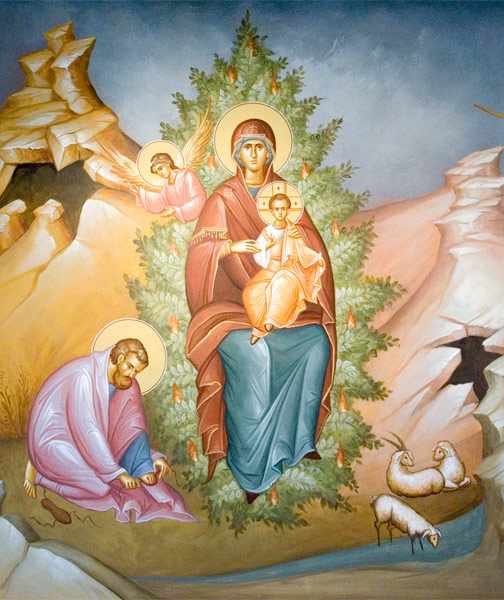
What Child is This?

From the late Father Angelus Shaughnessy:
This child is God.

Our Heavenly Father knows how hard it is for us to love somebody we cannot get our arms around. We are supremely happy because our God did become a little bundle of 7 or 8 pounds, so we could get our arms around His Divine Son, to hold Him tight and love Him right.

God is Love! Jesus is Love wrapped in flesh for keeps, forever, for all eternity...to teach us how to love. He came with the irresistible charm of a snuggling infant. His argument still challenges: I loved you first, love me back! He would do anything to get our love, to steal our hearts, even to sneak out of heaven to do so. The only thing this Baby-God would have done more to show His love happened 33 years later: those limbs now fully grown, pinned back to the wood of the cross. You see: He came into this world not to live (He already had life from all eternity) but to die -- for each one of us. He is Jesus, our Saviour.

For us who really believe this Christmas message, every other story about Him is almost easy to believe. Just think what Christmas means: God to become man, Heaven to come down to earth, eternity to invade time, God to take on the human condition (a human soul and a human body) and to keep it even after returning to heaven at His Ascension, in a glorified yet human state. (Read more.)

Sunday, December 28, 2025

Feast of the Holy Family

St. Joseph most obedient. To quote:
Look closely at the obedience of Saint Joseph, his obedience in the dark night of faith. Joseph’s obedience allows the whole mystery of Israel — the going down into Egypt and the back up — to be revealed and completed in Christ. In some way the “Do this in memory of me” (Lk 22:19) of the Last Supper is made possible by Joseph’s obedience to the commandments delivered to him in the night.
Twice Saint Joseph obeys the word of the angel who visits him by night. Twice Saint Matthew uses the very same formula to evoke the obedience of Saint Joseph: “And Joseph rose and too the child and his mother by night, and departed to Egypt” (Mt 2:14); and again, “And he rose and took the child and his mother and went into the land of Israel” (Mt 2:21).
 Where is the source of Saint Joseph’s obedience? Is it in the word of the Angel? The Angel appears in a dream. Is anything more fleeting than a dream? If we remember our dreams at all in the morning, we do so in a vague and hazy way. Rarely do we find in our dreams the strength to make great changes in our lives. Dreams may sow suggestions in the imagination; rarely do we translate them into action, especially when they ask of us what Saint Benedict calls “things that are hard and repugnant to nature in the way to God” (RB 58:8).

Holy Innocents (Childermas)


Hail, martyr flowers!
On the very threshold of your life
Christ's persecutor destroyed you,
As a whirlwind does the budding roses.
~
Salvete flores martyrum
According to Butler's Lives:
Our Divine Redeemer was persecuted by the world as soon as he made his appearance in it. For he was no sooner born than it declared war against him. Herod, in persecuting Christ, was an emblem of Satan and of the world. That ambitious and jealous prince had already sacrificed to his fears and suspicions the most illustrious part of his council, his virtuous wife Mariamne, with her mother Alexandra, the two sons he had by her, and the heirs to his crown, and all his best friends. Hearing from the magians who were come from distant countries to find and adore Christ that the Messias, or spiritual king of the Jews, foretold by the prophets, was born among them, he trembled lest he was come to take his temporal kingdom from him. So far are the thoughts of carnal and worldly men from the ways of God, and so strangely do violent passions blind and alarm them. The tyrant was disturbed beyond measure and resolved to take away the life of this child, as if he could have defeated the decrees of heaven. He had recourse to his usual arts of policy and dissimulation, and hoped to receive intelligence of the child by feigning a desire himself to adore him. But God laughed at the folly of his short-sighted prudence, and admonished the magians not to return to him. St. Joseph was likewise ordered by an angel to take the child and his mother, and to fly into Egypt. Is our Blessed Redeemer, the Lord of the universe, to be banished as soon as born....(Read more.)
Fr. Mark writes of the Passion of the Infant Christ, HERE. To quote:
I can never celebrate this feast of the Holy Innocents without returning to a book written many years ago by Caryll Houselander: The Passion of the Infant Christ. Writing in London during the Second World War — literally “under the bombs” — she was inspired to speak of the Passion of the Infant Christ. Seeing the sufferings of her own life and of those she loved with the pure vision of one become a child in Christ, she recognized in both cradle and cross wood hewn from the same tree.
The way to begin the healing of the wounds of the world is to treasure the Infant Christ in us; to be not the castle but the cradle of Christ, and in rocking that cradle to the rhythm of love, to swing the whole world back into the beat of the Music of Eternal Life. It is true that the span of an Infant’s arms is absurdly short; but if they are the arms of the Divine Child, they are as wide as the reach of the arms on the cross; they embrace and support the whole world; their shadow is the noonday shade for its suffering people; they are the spread wings under which the whole world shall find shelter and rest (Caryll Houselander, The Passion of the Infant Christ).
Houselander understood that nothing of the paschal mystery of Christ is locked in an irretrievable past. The liturgy is the passion of the Infant Christ made present to us and for us, here and now, in all its fullness. Are you in Egypt, “groaning under bondage” (Ex 2:23), learning to pray in suffering? Are you wandering in a desert waste, tortured by hunger and thirst, a prey to temptations and terrors of the night? Have you crossed over into that good and broad land where milk and honey flow? Through the Holy Sacrifice of the Mass the Infant Christ is with you, his prayer in yours, and yours in his: a prayer that says “Yes” to the wood of the cradle, to the wood of the Cross, and to everything that lies in between. (Read more.)
On Childermas. From Dr. Eleanor Parker at A Clerk of Oxford:
Medieval writers were honest and clear-eyed about such uncomfortable truths. The idea that thoughts like these are incongruous with the Christmas season (as you often hear people say about the Holy Innocents) is largely a modern scruple, encouraged by the comparatively recent idea that Christmas is primarily a cheery festival for happy children and families. Our images of Christmas joy, both secular and sacred, are all childlike wonder and picture-perfect families gathered round the tree. And this is nice, of course, for those who have children or happy families, but for those who don't - those who have lost children or parents or others dear to them, those who face loneliness or exclusion, those who want but don't have children, family, or home - it can be intensely painful. Not everyone can choose not to think about grief at Christmas; many people will find it intrudes upon them, whether they wish it to or not. 'In sorrow endeth every love but thine, at the last'. The modern version of Christmas tends to sideline and ignore that pain, asking it to at least keep quiet so as not to spoil the 'magic'. But that's not the case with medieval writing about Christmas and the Christ-child. There are, of course, many merry and joyful medieval carols, and the season was celebrated in the Middle Ages with great enthusiasm; but there are also many carols like this which are serious, melancholy, and sad, which acknowledge the fact that the child whose birth is celebrated came to earth to die. Older writings on Christmas, like this lullaby, do not exclude but encompass human pain - it's that pain, they say, which Christ has come to earth to share. The idea is well expressed by John Donne, writing a little later than the medieval period (though only a few decades after the Coventry mystery plays were abolished), in a sermon he preached on Christmas Day 1626:
The whole life of Christ was a continual passion; others die martyrs, but Christ was born a martyr. He found a Golgotha, where he was crucified, even in Bethlehem, where he was born; for, to his tenderness then, the straws were almost as sharp as the thorns after; and the manger as uneasy at first, as his cross at last. His birth and his death were but one continual act, and his Christmas Day and his Good Friday are but the evening and morning of one and the same day.
(Read more.)

Thursday, December 25, 2025

Merry Christmas!

Scrolling through Facebook on Christmas is incredibly inspiring as I see people all over the world celebrating the birthday of the Child born in Bethlehem 2000 years ago. No king or queen who ever lived ever had their birthday celebrated for so long and by so many. And in spite of every evil hell could invent, this Day is still celebrated with so much joy, especially by the children and by the young at heart. Merry Christmas and a Happy New Year!

Welcome, all wonders in one sight!

       Eternity shut in a span;

Summer in winter; day in night;

       Heaven in earth, and God in man.

Great little one, whose all-embracing birth

Lifts earth to heaven, stoops heav’n to earth.

 ~  from "In the Holy Nativity of Our Lord" by Richard Crashaw

Wednesday, December 24, 2025

The Three Masses of Christmas

When speaking of Holy Communion in the Way of Perfection (Ch. 34), St. Teresa of Avila said: "This is something that is happening now." In the Christmas liturgy, the Church teaches us that the birth of Jesus is not just something that happened two thousand years ago in Bethlehem. Our Lord's nativity is something that is happening now, especially through participation in the Mass, and in the liturgy of the hours which radiate from it. In The Church's Year of Grace, Fr. Pius Parsch explains that this is why the word hodie or "today" is repeated again and again in the Christmas Masses and offices. The Invitatory for December 24 proclaims: "Today you will know the Lord is coming, and in the morning you will see His glory." We are called to Midnight Mass with this antiphon: "The Lord said to me: You are my Son. Today I have begotten you." At Morning Prayer (Lauds) we say: "Today the Savior of the world is born for you." The antiphon for the Canticle of Mary closes the most joyful of feasts with the words: "Christ the Lord is born today; today the Savior has appeared...."

Dom Gueranger comments: "...This today is the Day of eternity, a Day which has neither morning nor evening, neither rising nor setting." (The Liturgical Year, Vol. II) Through the sacraments, especially through the Eucharistic sacrifice, we already belong to that Day of eternity. At Christmas Mass, we truly and mystically assist at His birth.

Christmas is celebrated with three Masses. At Midnight Mass, the angels marvel at the Word made flesh, born of the Virgin Mary. The Dawn Mass sees the shepherds hurrying to the stable to adore the newborn King. The third Mass celebrates the Eternal Word, Who is the Son begotten of the Father from all eternity.
Jesus, Who is born tonight, is born thrice. He is born of the Blessed Virgin, in the stable of Bethlehem; he is born by grace, in the hearts of the shepherds, who are the first fruits of the Christian Church; and He is born from all eternity in the bosom of the Father, in the brightness of the saints: to this triple birth, therefore, let there be the homage of a triple Sacrifice! (Dom Gueranger, The Liturgical Year, Vol. II)
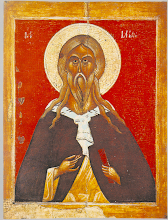
Christmas Eve


Today you will know the Lord is coming, and in the morning you will see His glory. ~Invitatory Antiphon for December 24. (Thanks to Karen for the picture.)

The Christmas Martyrology.
In the five thousand one hundred and ninety-ninth year of the creation of the world from the time when God in the beginning created the heavens and the earth;
the two thousand nine hundred and fifty-seventh year after the flood;

the two thousand and fifteenth year from the birth of Abraham;
the one thousand five hundred and tenth year from Moses and the going forth of the people of Israel from Egypt;
the one thousand and thirty-second year from David's being anointed king; in the sixty-fifth week according to the prophecy of Daniel;
in the one hundred and ninety-fourth Olympiad;
the seven hundred and fifty-second year from the foundation of the city of Rome;
the forty second year of the reign of Octavian Augustus;
the whole world being at peace,
in the sixth age of the world, Jesus Christ the eternal God and Son of the eternal Father, desiring to sanctify the world by his most merciful coming, being conceived by the Holy Spirit, and nine months having passed since his conception, was born in Bethlehem of Judea of the Virgin Mary, being made flesh.
Listen to the Christmas martyrology chanted by the Benedictines of Mary.
Related Posts with Thumbnails