Showing posts with label Mysteries of Faith. Show all posts

Tuesday, August 11, 2026

Saint Clare, Virgin

 From EWTN:

The Lady Clare, "shining in name, more shining in life," was born in the town of Assisi about the year 1193. Her mother was to become Blessed Ortolana di Fiumi. Her father is said to have been Favorino Scifi, Count of Sasso-Rosso, though whether he came of that noble branch of the Scifi family is not certain. Concerning Clare's childhood we have no reliable information. She was eighteen years old when St. Francis, preaching the Lenten sermons at the church of St. George in Assisi, influenced her to change the whole course of her life. It is likely that a marriage not to her liking had been proposed; at any rate, she went secretly to see Friar Francis and asked him to help her to live "after the manner of the Holy Gospel." Talking with him strengthened her desire to leave all worldly things behind and live for Christ. On Palm Sunday of that year, 1212, she came to the cathedral of Assisi for the blessing of palms, but when the others went up to the altar-rails to receive their branch of green, a sudden shyness kept Clare back. The bishop saw it and came down from the altar and gave her a branch.

The following evening she slipped away from her home and hurried through the woods to the chapel of the Portiuncula, where Francis was then living with his small community. He and his brethren had been at prayers before the altar and met her at the door with lighted tapers in their hands. Before the Blessed Virgin's altar Clare laid off her fine cloak, Francis sheared her hair, and gave her his own penitential habit, a tunic of coarse cloth tied with a cord. Then, since as yet he had no nunnery, he took her at once for safety to the Benedictine convent of St. Paul, where she was affectionately welcomed.

When it was known at home what Clare had done, relatives and friends came to rescue her. She resisted valiantly when they tried to drag her away, clinging to the convent altar so firmly as to pull the cloths half off. Baring her shorn head, she declared that Christ had called her to His service, she would have no other spouse, and the more they continued their persecutions the more steadfast she would become. Francis had her removed to the nunnery of Sant' Angelo di Panzo, where her sister Agnes, a child of fourteen, joined her. This meant more difficulty for them both, but Agnes' constancy too was victorious, and in spite of her youth Francis gave her the habit. Later he placed them in a small and humble house, adjacent to his beloved church of St. Damian, on the outskirts of Assisi, and in 1215, when Clare was about twenty-two, he appointed her superior and gave her his rule to live by. She was soon joined by her mother and several other women, to the number of sixteen. They had all felt the strong appeal of poverty and sackcloth, and without regret gave up their titles and estates to become Clare's humble disciples. Within a few years similar convents were founded in the Italian cities of Perugia, Padua, Rome, Venice, Mantua, Bologna, Milan, Siena, and Pisa, and also in various parts of France and Germany. Agnes, daughter of the King of Bohemia, established a nunnery of this order in Prague, and took the habit herself.

The "Poor Clares," as they came to be known, practiced austerities which until then were unusual among women. They went barefoot, slept on the ground, observed a perpetual abstinence from meat, and spoke only when obliged to do so by necessity or charity. Clare herself considered this silence desirable as a means of avoiding the innumerable sins of the tongue, and for keeping the mind steadily fixed on God. Not content with the fasts and other mortifications required by the rule, she wore next her skin a rough shirt of hair, fasted on vigils and every day in Lent on bread and water, and on some days ate nothing. Francis or the bishop of Assisi sometimes had to command her to lie on a mattress and to take a little nourishment every day.

Discretion, came with years, and much later Clare wrote this sound advice to Agnes of Bohemia: "Since our bodies are not of brass and our strength is not the strength of stone, but instead we are weak and subject to corporal infirmities, I implore you vehemently in the Lord to refrain from the exceeding rigor of abstinence which I know you practice, so that living and hoping in the Lord you may offer Him a reasonable service and a sacrifice seasoned with the salt of prudence."

Francis, as we know, had forbidden his order ever to possess revenues or lands or other property, even when held in common. The brothers were to subsist on daily contributions from the people about them. Clare also followed this way of life. When she left home she had given what she had to the poor, retaining nothing for her own needs or those of the convent. Pope Gregory IX proposed to mitigate the requirement of absolute poverty and offered to settle a yearly income on the Poor Ladies of St. Damien. Clare, eloquent in her determination never to break her vows to Christ and Francis, got permission to continue as they had begun. "I need," she said, "to be absolved from my sins, but I do not wish to be absolved from my obligation to follow Jesus Christ." In 1228, therefore, two years after Francis' death, the Pope granted the Assisi sisterhood a Privilegium paupertatis, or Privilege of Poverty, that they might not be constrained by anyone to accept possessions. "He who feeds the birds of the air and gives raiment and nourishment to the lilies of the field will not leave you in want of clothing or of food until He come Himself to minister to you for eternity." The convents in Perugia and Florence asked for and received this privilege; other convents thought it more prudent to moderate their poverty. Thus began the two observances which have ever since been perpetuated among the Poor Clares, as they later came to be called. The houses of the mitigated rule are called Urbanist, from the concession granted them in 1263 by Pope Urban IV. But as early as 1247 Pope Innocent IV had published a revised form of the rule, providing for the holding of community property. Clare, the very embodiment of the spirit and tradition of Francis, drew up another rule stating that the sisters should possess no property, whether as individuals or as a community. Two days before she died this was approved by Pope Innocent for the convent of St. Damian.

Clare governed the convent continuously from the day when Francis appointed her abbess until her death, a period of nearly forty years. Yet it was her desire always to be beneath all the rest, serving at table, tending the sick, washing and kissing the feet of the lay sisters when they returned footsore from begging. Her modesty and humility were such that after caring for the sick and praying for them, she often had other sisters give them further care, that their recovery might not be imputed to any prayers or merits of hers. Clare's hands were forever willing to do whatever there was of woman's work that could help Francis and his friars. "Dispose of me as you please," she would say. "I am yours, since I have given my will to God. It is no longer my own." She would be the first to rise, ring the bell in the choir, and light the candles; she would come away from prayer with radiant face.

The power and efficacy of her prayers are illustrated by a story told by Thomas of Celano, a contemporary. In 1244, Emperor Frederick II, then at war with the Pope, was ravaging the valley of Spoleto, which was part of the patrimony of the Holy See. He employed many Saracens in his army, and a troop of these infidels came in a body to plunder Assisi. St. Damien's church, standing outside the city walls, was one of the first objectives. While the marauders were scaling the convent walls, Clare, ill as she was, had herself carried out to the gate and there the Sacrament was set up in sight of the enemy. Prostrating herself before it, she prayed aloud: "Does it please Thee, O God, to deliver into the hands of these beasts the defenseless children whom I have nourished with Thy love? I beseech Thee, good Lord, protect these whom now I am not able to protect." Whereupon she heard a voice like the voice of a little child saying, "I will have them always in My care." She prayed again, for the city, and again the voice came, reassuring her. She then turned to the trembling nuns and said, "Have no fear, little daughters; trust in Jesus." At this, a sudden terror seized their assailants and they fled in haste. Shortly afterward one of Frederick's generals laid siege to Assisi itself for many days. Clare told her nuns that they, who had received their bodily necessities from the city, now owed it all the assistance in their power. She bade them cover their heads with ashes and beseech Christ as suppliants for its deliverance. For a whole day and night they prayed with all their might- and with many tears, and then "God in his mercy so made issue with temptation that the besiegers melted away and their proud leader with them, for all he had sworn an oath to take the city." (Read more.)

Thursday, August 6, 2026

Assumption Novena

I am praying my novena for some private intentions as well as for my country and for President Donald Trump. Those who hate Trump, I pray for you, too. And those who hate Trump should especially pray for him, since Our Lord bids us to pray for our enemies.

Mary, Queen Assumed into Heaven, I rejoice that after years of heroic martyrdom on earth, you have at last been taken to the throne prepared for you in heaven by the Holy Trinity.
Lift my heart with you in the glory of your Assumption above the dreadful touch of sin and impurity. Teach me how small earth becomes when viewed from heaven. Make me realize that death is the triumphant gate through which I shall pass to your Son, and that someday my body shall rejoin my soul in the unending bliss of heaven.
From this earth, over which I tread as a pilgrim, I look to you for help. I ask for this favor: (Mention your request).
When my hour of death has come, lead me safely to the presence of Jesus to enjoy the vision of my God for all eternity together with you.

For those who like to pray Scripture as part of a novena, here are some favorite passages:
And the temple of God was opened in heaven: and the ark of his testament was seen in his temple, and there were lightnings, and voices, and an earthquake, and great hail. And a great sign appeared in heaven: A woman clothed with the sun, and the moon under her feet, and on her head a crown of twelve stars....(Apocalypse 11:19-12:1)
  But as the same Lord liveth, his angel hath been my keeper both going hence, and abiding there, and returning from thence hither: and the Lord hath not suffered me his handmaid to be defiled, but hath brought me back to you without pollution of sin, rejoicing for his victory, for my escape, and for your deliverance. Give all of you glory to him, because he is good, because his mercy endureth for ever. And they all adored the Lord, and said to her: The Lord hath blessed thee by his power, because by thee he hath brought our enemies to nought....Blessed art thou, O daughter, by the Lord the most high God, above all women upon the earth. Blessed be the Lord who made heaven and earth, who hath directed thee to the cutting off the head of the prince of our enemies. Because he hath so magnified thy name this day, that thy praise shall not depart out of the mouth of men who shall be mindful of the power of the Lord for ever, for that thou hast not spared thy life, by reason of the distress and tribulation of thy people, but hast prevented our ruin in the presence of our God....Blessed art thou by thy God in every tabernacle of Jacob, for in every nation which shall hear thy name, the God of Israel shall be magnified on occasion of thee....And when she was come out to him, they all blessed her with one voice, saying: Thou art the glory of Jerusalem, thou art the joy of Israel, thou art the honour of our people....(Judith 13:20-2, 23-25, 31,15:10 )

Tuesday, August 4, 2026

St. John Vianney

He is the patron saint of parish priests. I will never forget our brief visit to Ars in September 1999, when my husband and I decided to rent a car in Toulouse and drive up the east side of France to Paris. We motored along winding and precipitous roads through the mountains of Auvergne to Le Puy-en-Velay, the site of the shrine of Our Lady of France, popular in the Middle Ages. I could not imagine the rigors of reaching the shrine via horse or mule when it was difficult enough to reach it by car.

The next morning we drove up to Lyon and then made our way on the back roads to Ars. It was noon; most of the pilgrims were at dinner so we had the church pretty much to ourselves. They were repairing the roof but other than that it was a stunningly beautiful church. I wandered around, lighting candles for those with grave needs. I turned a corner and almost jumped, because there he was-- the Curé d'Ars in his glass coffin, incorrupt, looking as if he were asleep. It was like being at a wake rather than visiting the tomb of someone long dead. His expression was so peaceful and serene, communicating both the shortness of life and the joy of final victory. Even in death, the holy Curé preaches to us.

Sunday, August 2, 2026

Our Lady of the Angels

Today we mystically kneel at the Portiuncula, to gain the triple indulgence of Rome, Compostela, and Jerusalem. To quote:
According to a legend, the existence of which can be traced back with certainty only to 1645, the little chapel of Portiuncula was erected under Pope Liberius (352-66) by hermits from the Valley of Josaphat, who had brought thither relics from the grave of the Blessed Virgin. The same legend relates that the chapel passed into the possession of St. Benedict in 516. It was known as Our Lady of the Valley of Josaphat or of the Angels — the latter title referring, according to some, to Our Lady's ascent into heaven accompanied by angels (Assumption B.M.V.); a better founded opinion attributes the name to the singing of angels which had been frequently heard there. However this may be, here or in this neighbourhood was the cradle of the Franciscan Order, and on his death-bed St. Francis recommended the chapel to the faithful protection and care of his brethren. Concerning the form and plan of the first monastery built near the chapel we have no information, nor is the exact form of the loggia or platforms built round the chapel itself, or of the choir for the brothers built behind it, known. Shortly after 1290, the chapel, which measured only about twenty-two feet by thirteen and a half, became entirely inadequate to accommodate the throngs of pilgrims. The altar piece, an Annunciation, was painted by the priest, Hilarius of Viterbo, in 1393. The monastery was at most the residence, only for a short time, of the ministers-general of the order after St. Francis. In 1415 it first became associated with the Regular Observance, in the care of which it remains to the present day. The buildings, which had been gradually added to, around the shrine were taken down by order of Pius V (1566-72), except the cell in which St. Francis had died, and were replaced by a large basilica in contemporary style. (Read more.)


 Marian devotion according to the Franciscan tradition. From The Marian Room:

The Franciscan Mariologist, Fr. Peter Damian Fehlner, was not only an expert on the writings and teachings of St. Francis and St. Bonaventure, but those of St. Maximilian Kolbe, as well; thus he was proficient in tracing the golden thread of “Mary’s presence and continuing influence” at the outset of the Franciscan order to the present day, as seen in the following:
In the early 1980s….Fr. Peter Damian undertook a study of the writings of the newly canonized Conventual Franciscan martyr of Auschwitz, Saint Maximilian Kolbe. The impact of this Kolbean study proved incalculable. For Fr. Peter Damian, St. Maximilian’s writings demonstrated the “golden thread” of Mary’s coherent presence and continuing influence in the Franciscan tradition. St. Maximilian asserted that in the earliest days of the Order’s foundation, in the intentions of St. Francis of Assisi himself, God was putting Mary Immaculate to work. Fr. Peter Damian grasped with a new clarity the coherent, consistent, unbroken line of Marian ideal inherent in the Franciscan tradition, beginning with Francis and continuing through Bonaventure, Scotus, the Franciscan School, all the way through Kolbe. The key to this new synthesis of insight for Fr. Peter Damian was the Divine Will and Plan that Mary qua Immaculate – and thereby “spouse” of the Holy Spirit and thereby “Virgin made Church” – would be God’s chosen instrument for gathering the Friars and their flock to implement God’s Plan for the Kingdom, building a Divine civilization of love
St. Francis, and the long line of his spiritual descendants, loved, and do love, the Virgin Mary, who is the “Virgin made Church.” Fr. Fehlner writes:
According to both Thomas of Celano and St. Bonaventure (11), St. Francis could not exalt Mary in praise or serve her too much, because it was she who brought our Lord and Savior into our midst and made possible for us direct access to Him. De Maria numquam satis (12). St. Francis is clearly a Marian maximalist, a position clearly bearing on his way of thinking about Mary. If we understand who Mary is, what she has done and continues to do, then we can never exalt her too much, because we cannot come close to matching, let alone exceeding, what the Blessed Trinity has done for her. Of course St. Bonaventure warns against attempting to maximize our Marian prayer and doctrine with stupidities which in fact do not exalt but demean the Virgin Mother of God. But the more we grasp of the mystery objectively, e.g., the Immaculate Conception, the greater must be our praise, devotion and service objectively. For St. Francis, just as the absolute primacy of Christ appears after the triumph of the Cross as Christ’s Kingship over all creation, so the mystery of the Spouse of the Holy Spirit or Immaculate Conception appears as the Queenship of Mary gloriously crowned as Mistress of heaven and earth. In the practical order this constitutes the doctrinal foundation for her universal mediation of grace in the Church and among the Angels, the indispensable basis for realizing the purpose of the Franciscan Order, the rebuilding of the Church: to be without stain or spot, viz., immaculate (13).
These themes converge on the sacrifice of Calvary, hence the importance of perfect conformity to the Crucified through the maternal mediation of Mary in order to accomplish the glorification of the Church. This consists precisely in the completion of the Body of Christ, formed by Mary, so that in and through Christ the Father sees in us what he sees in his Only-begotten Son. This entails on the part of Mary a dual relation: one to Christ as His Mother and so on Calvary Mother of the Church (Virgo Ecclesia facta) and to the Holy Spirit as his instrument in realizing the Incarnation and animating the Church as Body of Christ. Once we see this, we see why Mary is first born daughter of the Father, and how St. Francis’ Marian thought rests profoundly on Trinitarian insights, which underlie the Franciscan thesis on the absolute predestination of Christ and Mary. This Marianized Christology (in St. Maximilian M. Kolbe) will ultimately yield a key to a pneumatology-ecclesiology in the mystery of Mary’s person as Virgin Mother: in relation to the Holy Spirit and in relation to the Church as Virgin-Mother of the faithful (14).
Careful examination of the St. Francis’ Salute to the Virgin (15), whence comes the title Virgo Ecclesia facta, and whose composition is to be related not only to the Portiuncula, St. Mary of the Angels, effectively celebrating Mary’s Assumption and mediation of all graces in the Church, but also to Francis’ conversion experience under the tutelage of the Immaculate Co-redemptrix, particularly reveals how it stresses the joint centrality of the divine Maternity and Incarnation. Thus it reveals how thoroughly the Marian thought of St. Francis was permeated precisely by those three notes stressed by Paul VI in Marialis cultus: the Trinitarian, Christological-pneumatological, and ecclesial (16).
Similarly, the antiphon for the Office of the Passion (17), whence comes the title Sponsa Spiritus Sancti, or Immaculate Conception, whose composition was profoundly linked to the Poverello’s (St. Francis, added by SCF) conversation with the Crucified in San Damiano, the moment when Francis was stigmatized interiorly, reveals the same. This time, however, it does so in relation to the consummation of Christ’s mission on the Cross. The mystery of what is today called the coredemption, based on the “Franciscan thesis,” stands at the very center of this Office and unique antiphon. The identification and labeling of this mystery will be a contribution of the Franciscan Mariological school.
Two doctrinal themes, anchored in the conversion experience of the Poverello (again, St. Francis, added by SCF) in the Church of San Damiano as well demonstrated by Fr. Schneider (18): themes to become central to the Franciscan Mariological School, emerge from this unlimited devotion to Mary as Mother of God: a sense of her unique mediation, first as an active co-cause of the Incarnation and then as spiritual Mother of the Church and its members; and then, as a consequence, a sense of her person as one capable of being the Mother of God and our Mother. For she is Spouse of the Holy Spirit and the Virgin made Church, who is able to bring into this world the Son of God and Savior by the operation of the Holy Spirit, and by the operation of the same Spirit make of the Church virginal Mother of Christ in the minds and hearts of the faithful. Thus, in chapter 10 of his Regula bullata, St. Francis insists that all the friars are obliged to have in themselves “the Spirit of the Lord and his holy operation,” no where so fully realized as in the Mother of God and our Mother.
This sense of Marian mediation of all grace will be a prominent feature of the Christology and Mariology of St. Bonaventure. This sense of her person in St. Francis will later emerge in Duns Scotus’ formulation of the theology of the Immaculate Conception, metaphysical ground of Mary’s universal mediation, as the Incarnation is the ground of Christ’s.
We are not dealing here with two partial aspects of a single mediation, but with a single mediation entire in Christ, but with a Marian mode, for the same reason the mission of the Son involves the mission of the Spirit and divine Maternity. Or mediation in the supernatural order entails a divine and maternal aspect, prefigured in the formation of man as male and female (Gen 2: 18-25) (19): in Bonaventure a dual dimension to a single mediation consummated on Calvary, but ultimately grounded in the dual complementary missions of Word and Spirit (20); and in Scotus founded respectively in the Incarnation and Immaculate Conception. This noted, it is easy to see how the profound insight of St. Maximilian ascribing the same name to the Spirit and Mary (21) is a kind of synthesis of these two great Marian Doctors.
In the Franciscan school, and first of all in St. Francis himself, Christ and Mary are involved, apart from any consideration of sin, in a work of mediation for the rest of the elect. Although from the gnoseological point of view of our theology here and now, demonstration of the Immaculate Conception rests on the prior recognition of our redemption as perfect, ontologically a parte rei the perfection of that redemption derives in fact from the mediation of Christ and Mary: real, even had Adam not sinned (22).
Evidently, the Marian thought of St. Francis, like his profound theology in general, fountainhead of the famed Franciscan school of theology and philosophy (and some would add science), when described in terms of the three possible modes of “our theology” in a time of pilgrimage (23) , is contemplative. For St. Bonaventure, without this form of theology, it would be impossible to perfect or develop the other two, viz., symbolic and academic (or proper). On the other hand without a sound symbolic and academic presentation it would be impossible for the vast majority to grasp the mind of St. Francis and similar saints on the mysteries of faith. 
That quote was a bit long, but I think it is instructive as it details how St. Francis viewed Our Lady, the Immaculate Conception, the Virgin made Church, and how the golden thread of her presence and influence are weaved within (and the thread remains unbroken!) the very foundations of the Franciscan Order. (Read more.)

Saturday, August 1, 2026

St. Alphonsus Liguori


Today is his feast. Here is an excerpt from his book The Glories of Mary:
And here we say, that although Mary, now in heaven, can no longer command her Son, nevertheless her prayers are always the prayers of a Mother, and consequently most powerful to obtain whatever she asks. "Mary," says Saint Bonaventure, "has this great privilege, that with her Son she above all the Saints is most powerful to obtain whatever she wills." And why? Precisely for the reason on which we have already touched, and which we shall later on again examine at greater length, because they are the prayers of a mother. And therefore, says Saint Peter Damian, the Blessed Virgin can do whatever she pleases both in heaven and on earth. She is able to raise even those who are in despair to confidence; and he addresses her in these words: "All power is given to thee in heaven and on earth, and nothing is impossible to thee, who canst raise those who are in despair to the hope of salvation."
And then he adds that "when the Mother goes to seek a favor for us from Jesus Christ" (whom the Saint calls the golden altar of mercy, at which sinners obtain pardon), "her Son esteems her prayers so greatly, and is so desirous to satisfy her, that when she prays, it seems as if she rather commanded than prayed, and was rather a queen than a handmaid. Jesus is pleased thus to honor His beloved Mother, who honored Him so much during her life, by immediately granting all that she asks or desires. This is beautifully confirmed by Saint Germanus, who addressing our Blessed Lady says: "Thou art the Mother of God, and all powerful to save sinners, and with God thou needest no other recommendation; for thou art the Mother of true life." — From Glories of Mary, Chapter VI


Friday, July 31, 2026

St. Ignatius Loyola


 From Jesuits in Ireland:
The Society of Jesus was founded in 1540 by St. Ignatius Loyola and since then has grown from the original seven to 24, 400 members today who work out of 1,825 houses in 112 countries. In the intervening 455 years many Jesuits became renowned for their sanctity (41 Saints and 285 Blesseds), for their scholarship in every conceivable field, for their explorations and discoveries, but especially for their schools. The Society is governed by General Congregations, the supreme legislative authority which meets occasionally. The present Superior General is Father Arturo Sosa. Ignatius Loyola was a Spanish Basque soldier who underwent an extraordinary conversion while recuperating from a leg broken by a cannon ball in battle (see picture). He wrote down his experiences which he called his Spiritual Exercises and later he founded the Society of Jesus with the approval of Pope Paul III in 1540.

From the very beginning, the Society served the Church with outstanding men: Doctors of the Church in Europe as well as missionaries in Asia, India, Africa and the Americas. Men like Robert Bellarmine and Peter Canisius spearheaded the Counter Reformation in Europe, courageous men like Edmund Campion assisted the Catholics in England suffering under the terrible Elizabethan persecutions and missionaries like deNobili Claver, González, deBrito, Brebeuf, and Kino brought the Gospel to the ends of the earth. No other order has more martyrs for the Faith.

Ignatius Loyola had gathered around him an energetic band of well-educated men who desired nothing more than to help others find God in their lives. It was Ignatius’ original plan that they be roving missionaries such as Francis Xavier, who would preach and administer the sacraments wherever there was the hope of accomplishing the greater good. It soon became clear to Ignatius that colleges offered the greatest possible service to the church, by moral and religious instruction, by making devotional life accessible to the young and by teaching the Gospel message of service to others. From the very beginning these Jesuit schools became such an influential part of Catholic reform that this novel Jesuit enterprise was later called “a rebirth of the infant church”. The genius and innovation Ignatius brought to education came from his Spiritual Exercises whose object is to free a person from predispositions and biases, thus enabling free choices leading to happy, fulfilled lives.

Jesuits were always deeply involved in scholarship, in science and in exploration. By 1750, 30 of the world’s 130 astronomical observatories were run by Jesuit astronomers and 35 lunar craters have been named to honor Jesuit scientists. The so-called “Gregorian” Calendar was the work of the Jesuit Christopher Clavius, the “most influential teacher of the Renaissance”. Another Jesuit, Ferdinand Verbiest, determined the elusive Russo-Chinese border and until recent times no foreign name was as well known in China as the Jesuit Matteo Ricci, “Li-ma-teu”, whose story is told by Jonathan Spence in his 1984 best seller. China has recently erected a monument to the Jesuit scientists of the 17th century – in spite of the fact that since 1948 120 Jesuits languished in Chinese prisons. By the way, no other religious order has spent as many man-years in jail as the Jesuit order. (Read more.)

Monday, July 27, 2026

Saint Titus Brandsma

Here he is in his prison uniform. Saint Titus was a towering intellect as well as a man of humor, wit and sanctity. He stood up to the Nazis; they put him in Dachau and performed experiments upon him. Before he died, he handed his rosary to the prison nurse and she was converted. He is a saint for our time.
Although neo-paganism no longer wants love, history teaches us that, in spite of everything, we will conquer this neo-paganism with love. We shall not give up on love. Love will gain back for us the hearts of these pagans.
~ Bl. Titus Brandsma, from the Carmelite Proper of the Liturgy of the Hours

Saturday, July 25, 2026

St. James the Greater

This is the day to make a mystical pilgrimage to Compostela, to kneel at the tomb of the son of Zebedee, the tomb of Santiago, whose name was the battle cry of Spain. Here is an article from a few years ago by Mary Jo Anderson:
Today is the feast day of Saint James the Greater. Millions of pilgrims have trekked across four ancient pilgrim paths that thread through Europe, converging in  the Pyrenees, then across northwestern Spain to the tomb of  St. James at his shrine in Santiago de Compostela (St. James of the Starry Field). 

Modern pilgrims walk the Camino, “The Way of St. James,” in the footsteps of great pilgrims of the past, including St. Godric of Norfolk, El Cid, St. Francis of Assisi, John of Gaunt, and Lorenzo de Medici. Henry II, father of Richard the Lionhearted, offered to make the pilgrimage in expiation for the murder of St. Thomas Becket. Historians credit the forging of a common European identity to  the Camino de Santiago. Through the centuries Christian pilgrims have built great monasteries, abbeys, and hospitals along these roads, along with a shared culture—art, architecture, fashion, literature, and faith. 

Pilgrimage fervor suffered when the Reformation split Europe, dividing European identities and loyalties. Interest surged again in the 1980s; today more than a quarter million pilgrims a year set off for Santiago where archeologists have found inscriptions for the Apostle’s two disciples, and where Christians believe the Son of Zebedee himself lies in a silver casket.

The apostle James, along with his brother John, and Simon Peter were Jesus’ confidantes. They alone among the apostles were present at the Transfiguration and in the Garden of Gethsemane. James preached in Spain after the disciples went forth following the Resurrection. He was beheaded by Herod Agrippa in 42 A.D., the first apostle to die, the first apostle martyred. His followers returned James’ body to Spain, burying his remains in Galicia in the northwestern corner of the peninsula. And there the apostle lay forgotten until 813, when most of Spain groaned under the Saracen boot. 
A Muslim storm burst from North Africa over most of Iberia in 711 A.D. taking Christians captive, pillaging towns and swarming north over the Pyrenees into France. By 800, Christians had been backed into the northernmost region and a humiliating tribute of a 100 virgins per year was demanded of local governors. 

The twelfth-century collection of history, verse, liturgy, and travelogue about the Camino, known as Codex Calixtinus, records a legend that Charlemagne himself had a vision of a knightly protector who identified himself as St. James (Sant Iago, Santiago), the apostle of Jesus Christ:
Look you, my body is in Galicia, but no man knoweth where and the Saracens oppress the land…the starry sky signifies you shall go to Galicia at the head of a great host and after you all peoples shall come in pilgrimage even till the end of time…and your name shall abide in the memory of man until the Day of Judgment. 
The warrior emperor was to liberate the roadway that ran to the tomb. In Galicia, James’ burial crypt had been rediscovered in 813 and a small chapel was built (by Bishop Teodomir) to protect it. Myth or miracle, a rout now known as the Battle of Clavijo was fought in the year 844  by desperate Christians with their backs against the mountains, led by Ramiro 1 of Asturias. Suddenly, there appeared a heavenly horseman, sword aloft, who slew every Muslim in his path: Santiago Matamoros. Inspired by their champion, the faithful began the reconquest of Spain. 

Seven hundred years later Queen Isabella finally recovered all of Spain from Muslim rule. She immediately pawned her jewels to finance Christopher Columbus. Isabella, who built hospitals for pilgrims along the Camino, knew that Christianity must evangelize any lands beyond the horizon, lest Mohammed’s forces dominate the world.  Today’s politically correct agenda overlooks Isabella’s urgent hope. But there is confirmation of her intent in a letter from Columbus to an official “Treat the Natives with the utmost kindness. Protect them from all wrong and insult…and ever bear in mind that their majesties are more desirous of the conversion of natives than any riches to be derived from them.” (Read more.)

Thursday, July 23, 2026

Mater Gratiae

It is the octave day of the feast of Our Lady of Mount Carmel. On this day Carmelites have traditionally celebrated the memorial of Our Lady, Mother of Divine Grace or "Mater Gratiae." Here is an article about the mysterious and miraculous Austrian painting called "Our Lady of the Bowed Head" which has become associated with this day.
Since the time of St. Luke, thousands of pictures and statues of the Blessed Virgin Mary have been carved, painted, or fashioned in some way, by all kinds of different people from around the world. Some of these pictures become famous, usually due to some form of miraculous intervention. One such picture is Our Lady of the Bowed Head, from Vienna, Austria. 

A Carmelite Monk, Venerable Dominic of Jesus and Mary, found one in 1610. He was looking over an old broken down house which he wanted to convert into a Carmelite Monastery. Fr. Dominic walked around the outside of the house and passed by a pile of garbage, but paid no attention to it. But as he entered the house and started looking over the rooms, suddenly he felt the urge to go back to the pile of garbage. Lighting his lantern, the good priest took a closer look at the heap of garbage. Suddenly his eyes fell upon an old oil painting of the Blessed Virgin Mary..."Who would throw a beautiful picture of Our Lady in the garbage," he wondered. Then Fr. Dominic apologized to Mary, "I am sorry, dear Mother, that someone has treated thy image in such a terrible manner. I will take it back to the monastery with me and fix it up, and I will give thee the homage which thou so rightly deserve." After returning to the monastery, Dominic cleaned the picture and repainted the damaged parts. Now he could hang the picture up in his cell and give Mary the devotion and attention which she deserved. He prayed to the Madonna with great confidence, asking her for many graces and blessings.

One evening when he had just finished sweeping his cell, Fr. Dominic noticed that the picture of Our Lady had some dust on it. He was crushed, "Oh, I’m terribly sorry my dearest Mother!" He exclaimed. "I humbly beg thy pardon for forgetting to dust thy picture." Then taking out his handkerchief he began to dust the picture saying, "O purest and holiest of Virgins, nothing in the whole world is worthy to touch thy holy face. Dear Mother, I only have this coarse, old handkerchief and I beg of thee to please accept my good will in dusting thy image." Fr. Dominic continued dusting the picture of Mary, when suddenly the face of Our Lady came to life! She smiled at the holy priest and nodded her head as a sign of thanksgiving. Dominic was afraid that what he was seeing was a trick of the devil. But Our Lady cleared up his doubts saying, "Fear not, my son, for your request is granted! (Dominic had earlier requested a favor of her.) Your prayer will be answered and will be part of the reward, which you will receive for the love that you have for my Son Jesus and myself. Now Dominic I want you to ask me with all confidence, what favor you would like me to give you." The holy monk then fell upon his knees. "O my dear Mother, I offer myself entirely to thee and to thy dear Son Jesus, and I desire to do anything that thou and Jesus will ask of me. O my Lady, I know that the soul of a benefactor is suffering in Purgatory. Wouldst thou please be so kind as to deliver this soul from the fires of Purgatory?"

"Dominic, my son," Our Lady encouraged, "I will deliver this soul from Purgatory, if you will make many sacrifices and will have many Masses offered for this soul." Then the apparition of Mary faded away. 

The good monk hurried to do as Our Lady had asked. Some time later, when all had been completed, he again knelt before the miraculous painting of Our Lady. Suddenly Mary appeared to him again, but this time she appeared with the soul of the special benefactor, whom she had delivered from Purgatory. The benefactor was grateful, "Thank you, Fr. Dominic, for helping to release my soul from the fires of Purgatory with your prayers and sacrifices."

"Dominic," Our Lady encouraged, "I would like you to ask me for more favors and blessings. I am the Mother of God and I delight in helping my children to obtain graces for their salvation." Fr. Dominic thought for a moment and then spoke, "Dear Mother, wouldst thou please be so kind as to listen mercifully to the prayers of all those who will honor thy image and ask for thy help." Our Lady replied, "All those who ask for my protection and honor this picture with devotion will obtain an answer to their prayers and will receive many graces. Moreover, I will pay special attention to the prayers which are offered to me, for the relief of the souls in Purgatory."

The vision of Our Lady soon disappeared and Fr. Dominic thought about what he should do: "Our Lady made her promises to all who would honor and pray to her, before this miraculous image. Therefore, I can no longer keep this holy picture in my cell, I must have it put in a church, where the people can honor it."

He then took the picture and had it placed in the Oratory of St. Charles, which was attached to the Church of Santa Maria de la Scale. Many people came to pray before the picture of Our Lady and it became a source of many graces and blessings. The holy image remained at the Oratory until Fr. Dominic’s death, which occurred in Vienna, on February 16, 1630. Some copies of the miraculous picture were painted and soon they were honored in many places. (Read entire article.)
Monday, July 20, 2026

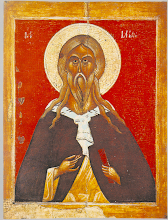
Our Lady of Mount Carmel and the Holy Prophet Elias

From Speramus:
God choose in his providence that the Queen of Heaven and Earth was to make her last apparition at Lourdes on the feast of Our Lady of Mount Carmel, July 16th 1858, and in the last public vision of Fatima, Our Lady also appeared as Our Lady of Mt Carmel on October 13, 1917.  At Fatima she  was holding the Rosary and the scapular out to a subdued and frightened crowd as they beheld  the Miracle of the Sun. Many in the crowd were terrified because they thought during the time it was the end of the world. 

Lourdes and Fatima belong to a long line of Approved Marian Apparitions leading back to the founding of the Carmelite Order on Mt Carmel by the Prophet Elijah. Here  Elijah battled 450 priests of Baal in a public spiritual contest which led to their defeat and ruin. He challenged the people to stop hobbling first on one foot and then on the other but to choose who is God in Israel Yahweh or Baal. According to the story, which can be found in the First Book of Kings, chapter 18, Elijah’s sacrifice was consumed by fire from heaven and proved to the people that Yahweh was the true God. Is it possible God is sending his Mother the Queen of prophets to help us defeat the prophets of Baal resurrected in our own time.                                                        
In the book of Malachi Elijah's return is prophesied to take place "before the coming of the great and terrible day of the Lord." He is  a forerunner in both advents of the Messiah. It seems that  Heaven has confirmed Our Lady at Fatima in the same mission of the prophet Elijah. Our Lady at Fatima appearing  in her Carmelite habit with a similar fire from Heaven during the miracle of the sun. The stupendous Fatima Miracle is the Greatest Supernatural Event of the 20th Century and does not belong [just] to faith or science; it is an Historical Event!

The Miracle of the Sun authenticated Fatima as supernatural in origin and also is a prefigurement or warning of a future catastrophe if the simple requests made at Fatima by our Lady are not heeded. (Read more.)

Thursday, July 16, 2026

Our Lady's Scapular

In the last forty years many of the sacramentals of the Church, such as the scapular, have been either forgotten or misinterpreted. I have seen some very sophisticated Catholics on the internet mock the scapular as being superstitious. It requires a certain child-like piety to understand such things; an understanding of the history of the devotion does not hurt either. Here is an explanation of the origins of the scapular:
This monastic scapular, like the whole monastic habit and indeed the liturgical vestments of the priest, developed from the ordinary clothing of the laity. And, just as the stole is the special sign of the priestly dignity and power, the scapular is now the sign of the monk. In the West, in the case of St. Benedict, the scapular was at first nothing else than a working garment or apron such as was then worn by agricultural labourers. Thus, in the Rule of St. Benedict, it was expressly termed "scapulare propter opera" (c. xxv in P.L. LXXVI, 771). From this developed the special monastic garment, to which a hood could be fastened at the back. In fact, the original scapular of the Dominican Order was so made that it acted also as a covering for the head, and thus as a hood. The scapular of the West corresponded to the analabus of the East.
Since many of the religious orders had a version of the monastic scapular, lay people who were affiliated with those orders wished to a tangible sign of their dedication. In the beginning, tertiaries were permitted to don the habit of the order with which they were affiliated. Later, since a religious habit was not always conducive to the duties of secular life the small scapulars were worn instead, as the following relates:
Like the large scapulars the first and oldest small scapulars originated to a certain extent in the real monastic scapular. Pious lay persons of either sex attached themselves to the Servites for instance; many of those who were in a position to do so attached themselves to the third order with vows, but in the case of many others either this was impossible or the idea of doing so had as yet not occurred to them. In this manner developed, shortly after the foundation of the Servite Order, the Confraternity of the Servi B. Mariae Virginis. Similarly originated the Confraternity of Our Lady of Mount Carmel; that this existed in 1280 is proved by the still extant "Libro degli ordinamenti de la compagnia di Santa Maria del Carmine scritto nel 1280" (edited by Giulio Piccini at Bologna, 1867, in "Scelta di Curiosità letterarie"). The members of these confraternities were called the confratres and consores of the respective orders; they had special rules and participated in the spiritual goods of the order to which then belonged. It is probable also that many of those who could not be promoted to the third order or who were special benefactors of the first order received the habit of the order or a large scapular similar to that of the oblates, which they might wear when dying and in which they might be buried. It was only later and gradually that the idea developed of giving to everyone connected with the order the real scapular of the order in miniature as their badge to be always worn day and night over or under their ordinary clothing.
The scapulars, especially the brown scapular of the Carmelites, became so popular among the Christian people that even those who did belong to a religious order began to wear them. The brown scapular became the most highly indulgenced so that children were enrolled in the scapular confraternity around the time they made their first Holy Communion. Fr. Kieran Kavanaugh, OCD, discusses the facts surrounding the Carmelite scapular:
If we look for the earliest references to the scapular, we find them in the Carmelite constitutions of 1281 in which it was prescribed that all Carmelite friars should wear their tunics and scapulars to bed under penalty of a serious fault. It was also prescribed that the white mantle be made in such a way that the scapular would not be hidden. But the reason for these prescriptions was not a Marian one. At the time, the scapular was seen as signifying the "yoke of Christ." This yoke of Christ in turn pointed to obedience. And that explains the strictness of the legislation. Taking off the scapular was like taking off the yoke of Christ, or rebelling against authority. Only gradually did the scapular take on a Marian tone and grow until it reached such a point that it became identified with Carmelite piety toward Our Lady. In fact the feast of Our Lady of Mount Carmel began to be called the scapular feast. Devotion to Mary expressed by wearing the brown scapular seems to be resilient and resists the attempts made in various periods of history to diminish its value. The faithful keep coming back to it. From the official teaching of the Church, we can gather that the scapular of Carmel is one of the most highly recommended Marian devotions. This is true through the centuries, and into our own times with popes Paul VI and John Paul II.
Fr. Kieran goes on to explore how sacramental aspects of the brown scapular developed:
One of the early Carmelites in his enthusiasm went so far as to call the scapular a "sacrament." Actually the category into which the scapular fits is that of a sacramental. Sacramentals are sacred signs. The scapular is not a natural sign in the sense that smoke is the sign of fire. Smoke is intrinsically connected with fire. Where there's smoke there's fire, the saying goes.
The scapular is what is called a conventional sign. In the case of a conventional sign, the meaning is assigned to the object from outside. Thus a wedding ring is a sign or pledge of mutual love and enduring fidelity between two spouses. In this kind of sign, which is a conventional sign, there has to be an intervention from outside that establishes the connection between the object and what it represents. In the case of sacramentals, it is the Church that determines the connection.
Sacramentals also signify effects obtained through the intercession of the Church, especially spiritual graces. The sacramentals -- as holy pictures or icons, statues, medals, holy water, blessed palm and the scapular -- are means that dispose one to receive the chief effect of the sacraments themselves, and this is closer union with Jesus.
St. Teresa of Avila for example speaks in her life about holy water and the power she experienced that this sacramental has against the devil. She mentions as well how this power comes not through the object in itself but through the prayer through the prayer of the Church. Along with the sacraments, sacramentals sanctify almost every aspect of human life with divine grace. The passion, death, and resurrection of Christ is the source of the power of the sacramentals as it is of the sacraments themselves.
Such everyday things as water and words, oil and anointing, cloth and beeswax, paintings and songs are ingredients of the sacraments and sacramentals. The Son of God became the Son of Mary. What could be more down-to-earth, more human, indeed more unpretentious, plain, and simple? (Read more.)
 
Pope John Paul II, who was a Carmelite tertiary, wrote profoundly of the brown scapular in March 2001:
Over time this rich Marian heritage of Carmel has become, through the spread of the Holy Scapular devotion, a treasure for the whole Church. By its simplicity, its anthropological value and its relationship to Mary's role in regard to the Church and humanity, this devotion was so deeply and widely accepted by the People of God that it came to be expressed in the memorial of 16 July on the liturgical calendar of the universal Church....
The sign of the Scapular points to an effective synthesis of Marian spirituality, which nourishes the devotion of believers and makes them sensitive to the Virgin Mother's loving presence in their lives. The Scapular is essentially a "habit". Those who receive it are associated more or less closely with the Order of Carmel and dedicate themselves to the service of Our Lady for the good of the whole Church.... Those who wear the Scapular are thus brought into the land of Carmel, so that they may "eat its fruits and its good things" (cf. Jer 2: 7), and experience the loving and motherly presence of Mary in their daily commitment to be clothed in Jesus Christ and to manifest him in their life for the good of the Church and the whole of humanity....
Therefore two truths are evoked by the sign of the Scapular: on the one hand, the constant protection of the Blessed Virgin, not only on life's journey, but also at the moment of passing into the fullness of eternal glory; on the other, the awareness that devotion to her cannot be limited to prayers and tributes in her honour on certain occasions, but must become a "habit", that is, a permanent orientation of one's own Christian conduct, woven of prayer and interior life, through frequent reception of the sacraments and the concrete practice of the spiritual and corporal works of mercy. In this way the Scapular becomes a sign of the "covenant" and reciprocal communion between Mary and the faithful: indeed, it concretely translates the gift of his Mother, which Jesus gave on the Cross to John and, through him, to all of us, and the entrustment of the beloved Apostle and of us to her, who became our spiritual Mother.
...A splendid example of this Marian spirituality, which inwardly moulds individuals and conforms them to Christ, the firstborn of many brethren, is the witness to holiness and wisdom given by so many Carmelite saints, all of whom grew up in the shadow and under the protection of their Mother.
I too have worn the Scapular of Carmel over my heart for a long time!

Tuesday, July 14, 2026

Mt. Carmel Novena, Day 8 -- "Mother of Mercy"


"Let us go therefore with confidence to the throne of grace: that we may obtain mercy, and find grace in seasonable aid." Hebrews 4:16
"I will penetrate to all the lower parts of the earth, and will behold all that sleep, and will enlighten all that hope in the Lord." Ecclesiasticus 24: 45
In the Carmelite church in Vilnius in Lithuania is a magnificent and miraculous painting of Our Lady hailed as Mater Misericordiae, or "Mother of Mercy." The church is built into the wall near the old eastern gate of the city; therefore the image is also known as Our Lady of "Ostrabrama," of "the Dawn Gate." She is covered with votive offerings left by grateful clients over the centuries, for to her both the Slavic and Baltic peoples have turned in times of war, sickness, oppression, and indeed, every and any calamity. Many saints have knelt before her, including the Carmelite St Raphael Kalinowski, and St Faustina of the Divine Mercy revelations. Through the means of sacred art, Our Mother has manifested herself to her needy children of all times and places.

According to legend, in the early 14th century, Pope John XXII published the Sabbatine Bull, based upon an apparition of the Blessed Virgin Mary which he had allegedly received in 1316, before his elevation to the papacy. As the story goes, the pope quoted the words of Our Lady to her children who die wearing the brown scapular of Mt Carmel and go to Purgatory: "I, their Mother, will graciously go down to them on the Saturday after their death, and all whom I find in Purgatory I will deliver and will bring to the mountain of life eternal." While the original documentation is lost and disputed, the Sabbatine privilege was confirmed by later pontiffs. According to The Catholic Encyclopedia:

We reproduce here the whole passage dealing with the Sabbatine privilege, as it appears in the summary approved by the Congregation of Indulgences on 4 July, 1908. It is noteworthy that the Bull of John XXII, which was still mentioned in the previous summary approved on 1 December, 1866, is no longer referred to (cf. "Rescript. authent. S.C. Indulg.", Ratisbon, 1885, p. 475). Among the privileges, which are mentioned after the indulgences, the following occurs in the first place: "The privilege of Pope John XXII, commonly [vulgo] known as the Sabbatine, which was approved and confirmed by Clement VII ("Ex clementi", 12 August 1530), St. Pius V ("Superna dispositione", 18 Feb., 1566), Gregory XIII ("Ut laudes", 18 Sept., 1577), and others, and also by the Holy Roman General Inquisition under Paul V on 20 January, 1613, in a Decree to the following effect:
It is permitted to the Carmelite Fathers to preach that the Christian people may piously believe in the help which the souls of brothers and members, who have departed this life in charity, have worn in life the scapular, have ever observed chastity, have recited the Little Hours [of the Blessed Virgin], or, if they cannot read, have observed the fast days of the Church, and have abstained from flesh meat on Wednesdays and Saturdays (except when Christmas falls on such days), may derive after death -- especially on Saturdays, the day consecrated by the Church to the Blessed Virgin -- through the unceasing intercession of Mary, her pious petitions, her merits, and her special protection.
With this explanation and interpretation, the Sabbatine privilege no longer presents any difficulties, and Benedict XIV adds his desire that the faithful should rely on it (Opera omnia, IX, Venice, 1767, pp. 197 sqq.). Even apart from the Bull and the tradition or legend concerning the apparition and promise of the Mother of God the interpretation of the Decree cannot be contested.
What a consolation that Our Lady's help and mediation extends to us beyond the grave, especially when we wear the badge which St Simon Stock in the 13th century is said to have called a privilegium. By wearing the scapular, we mark ourselves as "vassals" of Our Queen, and she binds herself to protect us always.

From the ancient Carmelite hymn, Salve, Mater Misericordiae: "Hail, happy Mother...He Who sits at the right hand of the Father, and rules Heaven and earth forever, came in thy womb to dwell."

Mother of Mercy, pray for us!

Novena Prayer to Our Lady of Mt. Carmel:

O most beautiful Flower of Mt Carmel, fruitful vine, splendor of Heaven, Blessed Mother of the Son of God, Immaculate Virgin, assist me in this my necessity. O Star of the Sea, help me and show me herein you are my Mother.

O Holy Mary, Mother of God, Queen of Heaven and earth, I humbly beseech you from the bottom of my heart, to succor me in this my necessity, there are none that can withstand your power.

O show me herein you are my Mother.

Mary, conceived without sin, pray for us that have recourse to thee. (3 times)

Sweet Mother, I place this cause in your hands. (3 times) AMEN.

Monday, July 13, 2026

Novena to Saint Mary Magdalen

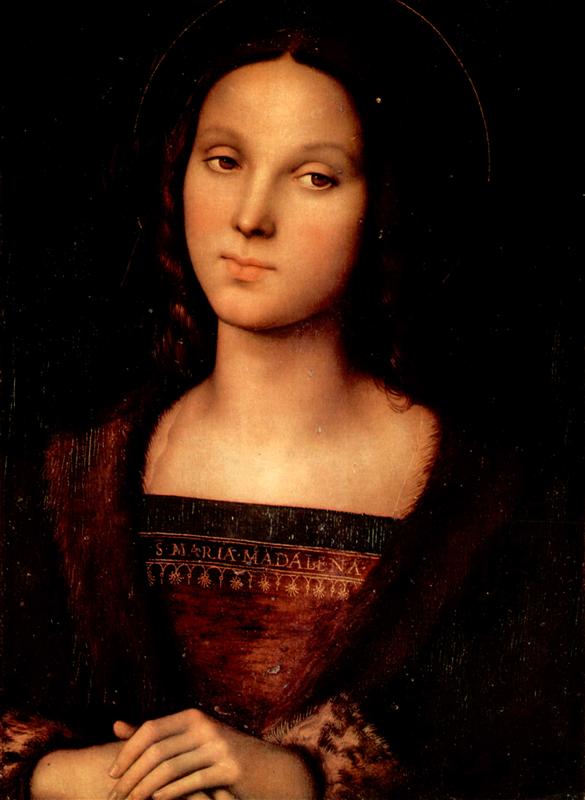
St. Mary Magdalene (1500), by Pietro Perugino (source) 

 “And behold a woman that was in the city, a sinner… brought an alabaster box of ointment; and standing behind at his feet, she began to wash his feet with tears.” Luke 7:37–38

It begins today. Please join me in praying for a special intention. From Mystical Theology:

Saint Mary Magdalen, beloved disciple of the Lord, who wast forgiven much and didst love much in return, lead us in the way of conversion, purity of heart, and steadfast devotion to Christ. Teach us to serve God and our neighbor with generous hearts, offering ourselves freely unto Him who hath given us all things.

Thou, who didst remain faithful at the foot of the Cross beside the Blessed Virgin Mary and Saint John, obtain for us the grace to persevere in faith, to remain steadfast in hope amid trials, and to unite our sufferings with those of Christ.

At the dawn of Easter, seeking the Lord with tears beside the empty tomb, thou didst encounter the Risen Christ and wast chosen to proclaim His victory over death. Help us to believe that life is stronger than death, mercy greater than sin, and divine love triumphant over every darkness.

Faithful witness of the Resurrection and herald of hope, intercede for us before the throne of God, especially for the intention we now place in thy care (mention your intention).

Through thy prayers, may we persevere in the friendship of Christ and one day rejoice with thee in the glory of His heavenly kingdom. Through Christ our Lord. Amen.

The Litany of St. Mary Magdalene

On the conclusion of the novena, the Litany may be offered.

For Private Use Only.

Lord, have mercy on us,

Christ, have mercy on us.

Lord, have mercy on us.

Christ, hear us,

Christ, graciously hear us.

Holy Mary, Mother of God, pray for us.

St. Mary Magdalen, pray for us.

Sister of Martha and Lazarus, pray for us.

Thou who didst enter the Pharisee's house to anoint the feet of Jesus, pray for us.

Who didst wash His feet with thy tears, pray for us.

Who didst dry them with thy hair, pray for us.

Who didst cover them with kisses, pray for us.

Who wast vindicated by Jesus before the proud Pharisee, pray for us.

Who from Jesus received the pardon of thy sins, pray for us.

Who before darkness wast restored to light, pray for us.

Mirror of penance, pray for us.

Disciple of Our Lord, pray for us.

Wounded with the love of Christ, pray for us.

Most dear to the Heart of Jesus, pray for us.

Constant woman, pray for us.

Last at the Cross of Jesus, first at His tomb, pray for us.

Thou who wast the first to see Jesus risen, pray for us.

Whose forehead was sanctified by the touch of thy risen Master, pray for us.

Apostle of apostles, pray for us.

Who didst choose the “better part,” pray for us.

Who lived for many years in solitude being miraculously fed, pray for us.

Who wast visited by Angels seven times a day, pray for us.

Sweet advocate of sinners, pray for us.

Spouse of the King of Glory, pray for us.

V. Saint Mary Magdalen, earnestly intercede for us with thy Divine Master,

R. That we may share thy happiness in Heaven.

Let us pray.

May the glorious merits of blessed Mary Magdalene, we beseech Thee, O Lord, make our offerings acceptable to Thee, for Thine only begotten Son vouchsafed graciously to accept the humble service she rendered. We ask this through Him Who liveth and reigneth with Thee and the Holy Ghost, God forever and ever. R. Amen.

May the prayers of blessed Mary Magdalen help us, O Lord, for it was in answer to them that Thou didst call her brother Lazarus, four days after death, back from the grave to life, Who livest and reignest with the Father and the Holy Ghost, Unity in Trinity, world without end. R. Amen.

(More here and here.)

Related Posts with Thumbnails