Showing posts with label Precious Blood. Show all posts

Monday, June 15, 2026

Of Fatima, the King of France, and the Consecrations

Let us revisit a post by Fr. Richard Heilman on Roman Catholic Man:
On Sunday May 13th, 1917, the children were pasturing their flock as usual at the Cova da Iria, which was about a mile from their homes. They were playing when suddenly a bright shaft of light pierced the air. The lady spoke to them and said: “Fear not! I will not harm you.” “Where are you from?” the children asked. “I am from heaven” the beautiful lady replied, gently raising her hand towards the distant horizon. “What do you want of me?”, Lucia asked. ” I came to ask you to come here for six consecutive months, on the thirteenth day, at this same hour. I will tell you later who I am and what I want.”

It was Mary’s final appearance, on Oct. 13, 1917 (exactly 33 years, to the day, after Pope Leo XIII’s vision), that became the most famous. An estimated 70,000 people were in attendance at the site, anticipating the Virgin’s final visit and with many fully expecting that she would work a great miracle. As everyone gazed upward, and saw that a silvery disc had emerged from behind clouds, they experienced what is known [as] a ‘sun miracle.’ Not everyone reported the same thing; some present claimed they saw the sun dance around the heavens; others said the sun zoomed toward Earth in a zigzag motion that caused them to fear that it might collide with our planet (or, more likely, burn it up). Some people reported seeing brilliant colors spin out of the sun in a psychedelic, pinwheel pattern. The whole event took about 10 minutes.

With these apparitions at Fatima, God asked for the Consecration of Russia to the Immaculate Heart of Mary by the Pope in union with all of the bishops of the world. Our Lady of Fatima said that if the Consecration of Russia was done, Russia would be converted and there would be peace. However, if the Pope and the bishops did not obey the request, Our Lady said that Russia would spread her errors throughout the world, causing wars and persecutions of the Church and of Holy Father, the martyrdom of the good and the annihilation of nations. I find it interesting that Our Lady appeared in Fatima with these warnings exactly 100 years before the 500th anniversary of the Protestant revolt (1517-2017).

[...]

At Rianjo, Spain in August 1931, Our Lord communicated to Sister Lucy His dissatisfaction with the Pope’s and the Catholic bishops’ failure to obey His command to consecrate Russia. He said:
Make it known to My ministers, given that they follow the example of the King of France in delaying the execution of My requests, they will follow him into misfortune. It is never too late to have recourse to Jesus and Mary.
In another text Lucy wrote that Our Lord complained to her:
They did not wish to heed My request! Like the King of France they will repent of it, and they will do it, but it will be late. Russia will have already spread its errors in the world, provoking wars and persecutions against the Church. The Holy Father will have much to suffer.
 The reference by Jesus to the King of France’’s disobedience and punishment is as follows:
On June 17, 1689 the Sacred Heart of Jesus manifested to Saint Margaret Mary Alacoque His command to the King of France that the King was to consecrate France to the Sacred Heart. For 100 years to the day the Kings of France delayed, and did not obey. So on June 17, 1789 the King of France was stripped of his legislative authority by the upstart Third Estate, and four years later the soldiers of the French Revolution executed the King of France as if he were a criminal. In 1793 France sent its King, Louis XVI, to the guillotine. He and his predecessors had failed to obey Our Lord’s request that France be consecrated to the Sacred Heart of Jesus, and thus misfortune had befallen both the King and his country. (Read more.)
Now it must be noted that Louis XVI, with the consent and guidance of his confessor, the Eudist priest Fr. Hebert, made a Vow to the Sacred Heart in the spring of 1791 when he and his family were under house arrest at the Tuileries Palace in Paris. To quote from the Vow:
O Jesus-Christ! divine Redeemer of all our iniquities, it is in Your Adorable Heart that I want to deposit the overflowing of my afflicted heart. I call upon the help of the tender Heart of Mary, my majestic protector and my mother, and the assistance of Saint Louis, my most famous patron and of my ancestor. O adorable Heart, by the so pure hands of my powerful intercessors, receive with kindness the wishes that confidence inspires in me and that I offer to You like the humble expression of my feelings. If, by an effect of the infinite kindness of God, I recover my freedom, my crown and my royal power, I promise solemnly:
1. To revoke as soon as possible all the laws which will be indicated to me, either by the Pope, or by a Council, or by the four Bishops chosen among most enlightened and most virtuous of my kingdom, with the purity and the integrity of the faith, the discipline and the spiritual jurisdiction of Holy Catholic, Apostolic Church, Roman, and in particular to revoke the Civil Constitution of the Clergy. (Read more.)
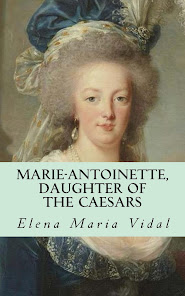
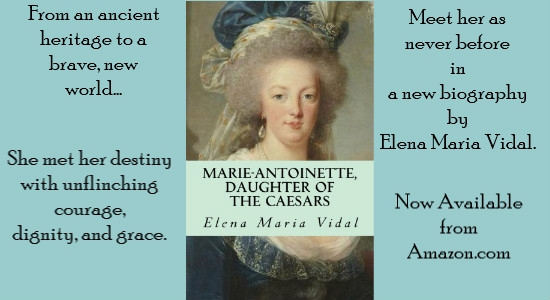
The King was killed before he could fulfill his Vow. There are more details in my biography of Louis's wife, Marie-Antoinette.

Meanwhile, Cardinal Burke has called for Russia to be consecrated in the manner requested by Our Lady of Fatima:
“It is evident that the consecration (of Russia) was not carried out in the manner requested by Our Lady,” said Vatican Cardinal Raymond Burke in his keynote address marking the highlight and conclusion of the Fatima Centennial Summit held over the weekend.

“I do not doubt for a moment the intention of Pope St. John Paul II to carry out the consecration on March 25, 1984,” said Cardinal Burke. He noted that Sister Lucia stated that “Our Lady had accepted it.”

He continued nonetheless, “Recognizing the necessity of a total conversion from atheistic materialism and communism to Christ, the call of Our Lady of Fatima to consecrate Russia to Her Immaculate Heart in accord with Her explicit instruction remains urgent.”

The former head of the Vatican’s highest court reissued his call, first made at the Rome Life Forum in May, for the faithful to pray and work for the consecration of Russia according to Our Lady’s specific instruction. He quoted the end of the famous secret to the children where Our Lady Herself predicted: “In the end, my Immaculate Heart will triumph. The Holy Father will consecrate Russia to me, and she shall be converted, and a period of peace will be granted to the world.” With some 700 attendees, the conference was the largest Fatima centennial celebration in North America. To a standing ovation both before and after he spoke, Cardinal Burke delved deeply into the message of Our Lady of Fatima, her predictions and the consequences of failing to heed her warnings to the world. The Cardinal drew a direct line from the famous Third Secret of Fatima’s dire predictions for the massacre of priests, religious and the death of the Pope to the current crisis in the Church.

“The teaching of the Faith in its integrity and with courage is the heart of the office of the Church’s pastors: the Roman Pontiff, the Bishops in communion with the See of Peter, and their principal co-workers, the priests,” he said. “For that reason, the Third Secret is directed, with particular force, to those who exercise the pastoral office in the Church. Their failure to teach the faith, in fidelity to the Church’s constant teaching and practice, whether through a superficial, confused or even worldly approach, and their silence endangers mortally, in the deepest spiritual sense, the very souls for whom they have been consecrated to care spiritually.”

Cardinal Burke, who has suffered publicly for his defense of the faith, urged the faithful, “Let us not fail to embrace whatever suffering comes from our faithful witness to Him Who is the true Treasure of our hearts.”

“Let us not give way to discouragement but rather remember that the Immaculate Heart of the Blessed Virgin Mary assumed into glory, never ceases to beat with love for us, the children Her Divine Son gave to Her as He was dying on the cross,” he said. (Read more.)


And the Consecration has been made, HERE and HERE.

Thursday, May 28, 2026

Blessed Margaret Pole, the Last Plantagenet

Today is the feast of Blessed Margaret Pole, last princess of the royal house of Plantagenet. Accounts of her heroism and suffering, HEREHERE and HEREThere have been a few books published in the last few years about Blessed Margaret Pole. From The London Review of Books:
As the heir to the throne, Mary enjoyed a separate household, and in 1525 she was sent to Ludlow to hold court. The countess was to look after the little girl’s health and diet, ensure that she did not wear herself out in learning French and Latin, and see that her immediate environment was kept spotless, ‘so that everything about her be pure, sweet, clean and wholesome, as to so great a princess doth appertain’. Mary’s food, Henry ordered, was to be served with ‘joyous and merry communication’. Whether the countess was up to this is hard to say, but later the Imperial ambassador was to declare that Mary regarded her as ‘a second mother’. When Henry began proceedings to annul his first marriage, when Catherine was discarded and the Princess Mary downgraded to ‘Lady Mary, the king’s daughter’, Margaret proved fiercely loyal and protective. In an effort to force their co-operation, Henry separated his wife and child, and Margaret – who was Mary’s godmother – offered to serve the young girl at her own expense. She was no longer, though, the sort of influence Henry wished for his daughter. After his marriage to Anne Boleyn and the birth of their daughter, Elizabeth, Mary was sent to join the household of the infant princess. There, she was surrounded by connections of the Boleyn queen. Margaret was superfluous; curtly, Henry wrote her off as a fool. If he had trusted her once, he no longer did so. The prestige of her ancient family, her traditionalist stance in religion, and her status as a peer in her own right – all these defined a woman who might wish to resist the new order. And her gender did not necessarily disqualify her from becoming leader of the opposition – if that was what she chose. (Read more.)
 More HERE.


Friday, May 22, 2026

Saint Rita: A Messy Life


An account of St. Rita's life is as follows:

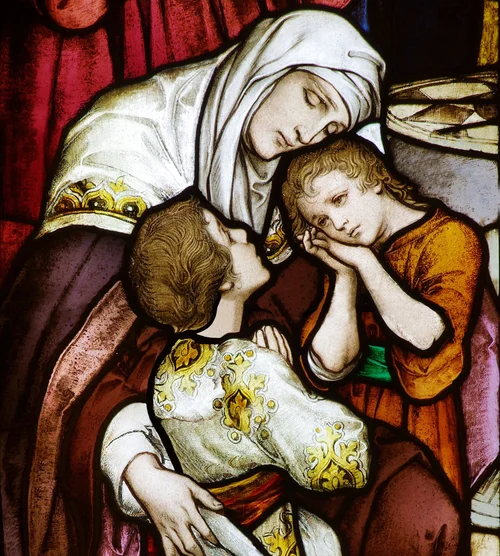
High in the hills of the republic of Cascia, in a tiny Umbrian village called Roccaporena, Antonio and Amata Lotti were well-respected peacemakers. In 1381, they welcomed their only child, Margherita. In the local dialect, her name meant “pearl," but she was known simply as Rita. Baptized in the church of Saint Augustine in Cascia, Rita became acquainted with the local Augustinian nuns of Saint Mary Magdalene Monastery and was attracted to their way of life. But her parents arranged a marriage for her in order to provide safety and security, and so Rita obediently married Paolo Mancini with whom she had two sons.

 In the troubling political climate of the times, there was often open conflict between families. Paolo was the victim of one such conflict, and he was murdered when their sons were still young. The expectation of society at the time was that the boys should avenge the murder of their father to defend the family honor. Rita, however, influenced by the peacemaking example of her parents, pledged to forgive her husband’s killers. She faced a steep challenge, however, in convincing her sons to do the same. Tradition has it that she often pointed out to them the image of the crucified Christ and the fact that he forgave those who killed him. Within a year, however, both sons succumbed to a deadly illness leaving Rita not only a widow, but also childless. Following these tragedies, Rita placed her trust in God, accepting them and relying on her deep faith to find her way. After eighteen years of marriage, Rita felt called to a second but familiar vocation: to religious life in the Augustinian convent. (Read more.)


 This is one of the most beautiful pieces of writing I have ever read. To quote Fr. Mark:

Catholicism is a fleshy affair: it is the religion of thorns in the flesh and roses in the snow. It is the religion of little children making furtive neighborhood pilgrimages, weaving crowns of flowers for the Mother of God, and secretly lighting candles to the saints. It is the religion of men quietly telling their beads, interceding for their families. It is the religion of those who kneel in prayer at the tombs of the saints and shed tears over holy relics. Catholicism is the religion of little old ladies stopping in church laden with plastic shopping bags and burdened, even more, with concern for their children and their children’s children. It is the religion of the lonely, the confused, the broken, and the wounded who know that, in spite of everything, there is no shame in going to the Crucified Jesus, for He was “despised and rejected by men, a man of sorrows and acquainted with grief” (Is 53:3).
Catholicism is the religion of those tormented by gnawing hungers of the heart and thirsts of the spirit who, with faith and the fear of God, approach the inexhaustible Chalice of the Holy Mysteries for healing and relief. It is the untidy religion of those who trust that God and his saints can sort out whatever mess we have made of our lives and, in the end, by grace alone set all things aright. It all makes one supremely happy, and grateful, to be Catholic.
This was the religion of Saint Rita of Cascia, the wife of a husband who was murdered, the mother of two sons set on vengeance, a widow marked by emotional scars and lacerated by the cruel tongues of the pious. Finally, the doors of the cloister opened to admit her for the last stage of her life, one marked by sickness. Saint Rita’s life was messy.
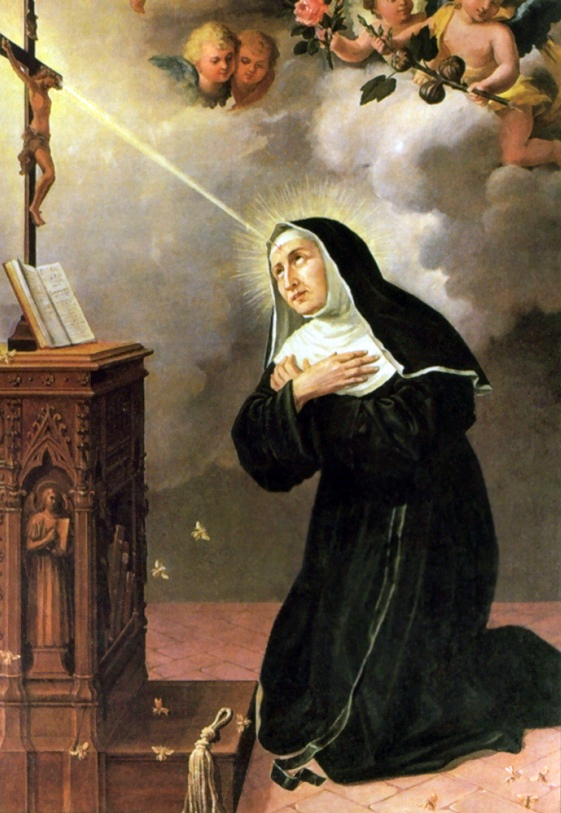
Saint Rita lifted her eyes to meet the gaze of Christ and lived in His radiance; He blessed her with a thorn from His bloody crown and with a rose to console her in her final hour. By means of these very material signs, “the Counselor, the Spirit of Truth” (Jn 15:26) bore witness in Saint Rita’s life and in the Church to the abiding presence of the Crucified and Risen Lord.
Saint Rita, pray for us today, that we may not live in denial of the messiness of our lives but, rather, find comfort in the bosom of a Church warm with the intercession of the saints, a Church wide open to little children, a Church hospitable to failures and to fools, a Church who knows the value of the “little things” by which all of life can be suffused by paschal grace. (Read more.)

Thursday, April 9, 2026

Pascha


 From The Catholic Company:

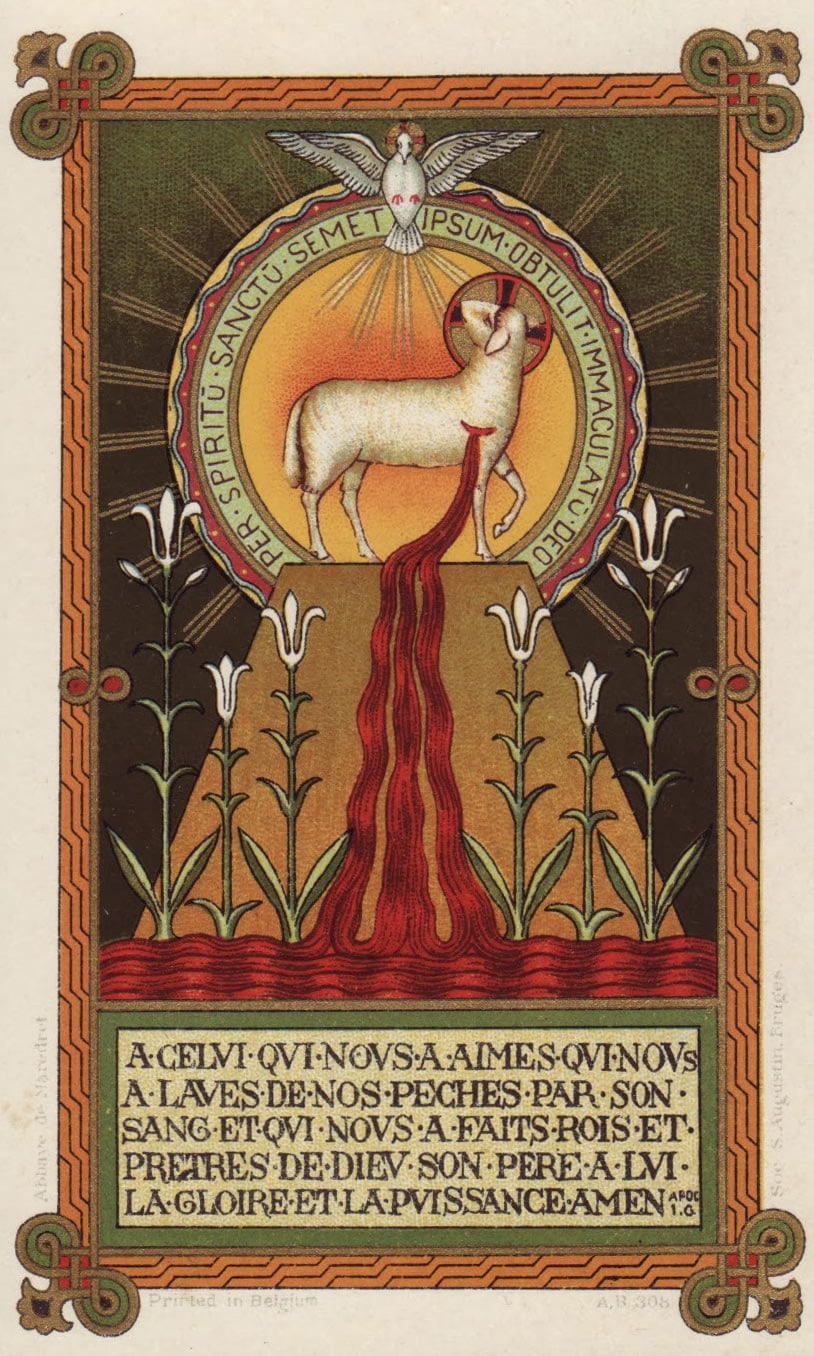
“Pascha” means “Passover”—it is the Aramaic form of Hebrew’s Pesach, the feast commemorating Israel’s release from bondage in Egypt. Calling Easter “Pascha” brings home the reality of Christ as the Paschal Lamb. At Passover, God commanded the Israelites to sacrifice a pure lamb and mark their doorposts with its blood. Seeing the lamb’s blood, the angel of death would skip their homes as he went throughout Egypt, slaying every firstborn male among man and beast. At Easter, Christ allowed Himself to be crucified and His Blood poured out. His Blood redeems us from eternal death, setting us apart from those who reject Him. It’s no coincidence that this event occurred during the Passover feast. (Read more.)

Tuesday, April 7, 2026

Mystery of Faith

Fr. Angelo explores the mystery at hand.
Indeed, the New Garden of Paradise is the Heart of Mary and it is like the enclosed space of the Cenacle where the first Mass was celebrated. It is like Garden of the Agony of Jesus where He resigned Himself to the Chalice of Suffering. And it is like the Garden of the Passion and Resurrection, where the New Tree of Life grows and bears fruit. Her virginal womb is truly the Virgin Earth from which grows forth the Tree of Life, and, one way or another, it is the exemplar for the enclosed space in which the Victim and Victor is laid and from which He rises. It is the true Grail of the Blood of Christ where we enter into The Mystery of Faith. St. Louis de Montfort writes that devotion to Mary is the secret that the Holy Spirit unseals for us (The Secret of Mary, 20). We are invited to enter this Enclosed Garden and Fountain Sealed, if we are willing to be humble in the face of the mysterium fidei.
The Easter mystery is all about sacrificial love, Christ’s, first of all, then ours in the Heart of the Immaculate Coredemptrix, the one in whom the mysteries we celebrate are fully realized. The Great Sacrifice makes Jesus present as our food, and in Him, in our participation in that Sacrifice through Holy Communion, we are incorporated into the mystery, mysticism and transformation in preparation for our own resurrection. This is what we celebrate as we witness the Bride of Christ decked out in all Her liturgical glory. This is the real secret of liturgical reform and its only real object.
May the Peace of Easter be yours. (Read more.)

Friday, April 3, 2026

Good Friday


Abba Joseph related that Abba Isaac said, 'I was sitting with Abba Poemen one day and I saw him in ecstasy and I was on terms of great freedom of speech with him, I prostrated myself before him and begged him, saying, 'Tell me where you were." He was forced to answer and he said, "My thought was with Saint Mary, the Mother of God, as she wept by the cross of the Saviour. I wish I could always weep like that."
The Divine Mercy novena begins today. Never underestimate the power of prayer.

"My people, what have I done to you? How have I offended you? Answer me!...I gave you a royal scepter, but you gave me a crown of thorns." ~from the Improperia.

Thursday, April 2, 2026

Holy Thursday


Let us prepare for the Last Supper with Our Lord. Dom Gueranger writes of the Mass of the Lord's Supper in The Liturgical Year, Vol. VI:
The Mass of Maundy Thursday is one of the most solemn of the year; and although the feast of Corpus Christi is the day for solemnly honouring the mystery of the holy Eucharist, still, the Church would have the anniversary of the last Supper to be celebrated with all possible splendour. The colour of the vestments is white, as it is for Christmas day and Easter Sunday; the decorations of the altar and sanctuary all bespeak joy, and yet, there are several ceremonies during this Mass; which show that the holy bride of Christ has not forgotten the Passion of her Jesus, and that this joy is but transient. The priest entones the angelic hymn, Glory be to God in the highest! and the bells ring forth a joyous peal, which continues during the whole of the heavenly canticle: but from that moment they remain silent, and their long silence produces, in every heart, a sentiment of holy mournfulness. But why does the Church deprive us, for so many hours of the grand melody of these sweet bells, whose voices cheer us during the rest of the year? It is to show us that this world lost all its melody and joy when its Saviour suffered and was crucified. Moreover, she would hereby remind us, how the apostles (who were the heralds of Christ, and are figured by the bells, whose ringing summons the faithful to the house of God), fled from their divine Master and left Him a prey to His enemies. (Read more.)


"And there appeared to Him an angel from Heaven, strengthening Him. And being in an agony, he prayed the longer." Luke 22:43

Wednesday, April 1, 2026

Into the Harbor of the Sacred Passion

From Vultus Christi:
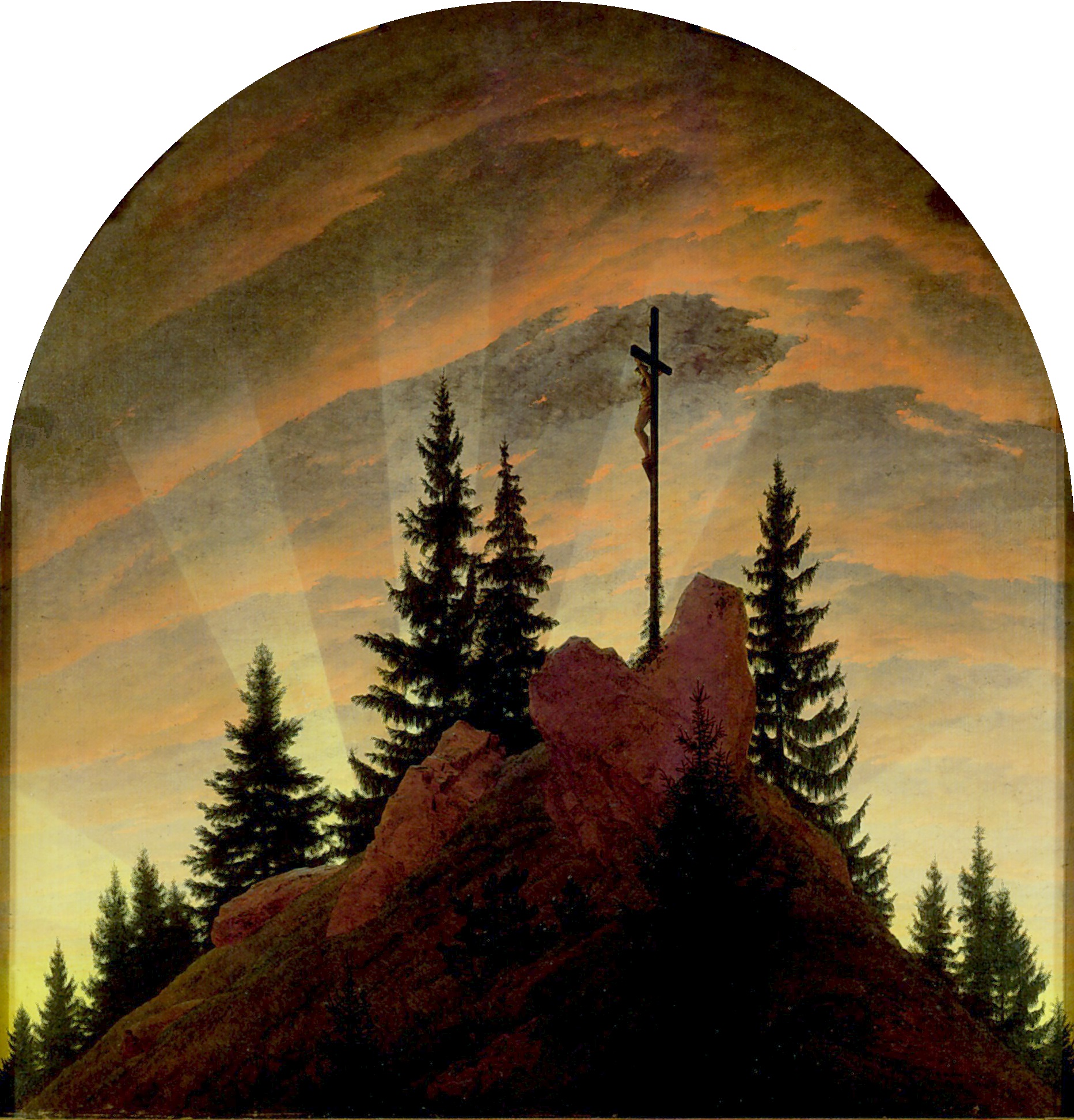
Most of us are repulsed by the Cross. We live in fear of suffering. We are willing to contemplate the Cross from a distance, willing to place it on our walls or to wear it on a chain over our hearts. It is quite another thing to be lifted up in its arms, to surrender to its embrace and to remain there naked, exposed and vulnerable. And yet, the saints are unanimous in testifying that for those who surrender to the embrace of the Cross and remain there, it becomes the Tree of Life, the Marriage Bed, and the Altar of Sacrifice.

My Yoke is Sweet
An ancient liturgical text describes the beginning of Holy Week as a ship coming into harbour. The Cross of Christ is our haven and our rest. Our Lord speaks to us and says: “Come to me, all you that labour, and are burdened, and I will refresh you. Take up my yoke upon you, and learn of me, because I am meek, and humble of heart: and you shall find rest to your souls. For my yoke is sweet and my burden light.” (Matthew 11:28-29).

The Will of the Father is Always Love
The sweet yoke of Jesus is fashioned from the wood of the Cross. Those whom He draws to Himself find rest with Him in the arms of the Cross. When we struggle and strain against the Cross, we condemn ourselves to a long and restless agony, saying with Job: “My heart is in turmoil and is never still” (Job 30:27). When we surrender to the embrace of the Cross, we rest with Jesus in the will of the Father. We discover that the will of the Father is always love, and so begin to pray: “Father, not my will, but Thine, be done” (Lk 22:42).

Tree of Life, Marriage Bed, and Altar
The Cross is the “tree that is planted beside flowing waters, that yields its fruit in due season and whose leaves never fade” (Psalm 1:3). Incandescent with the fire of the Holy Spirit, the Cross is the bush that Moses saw “burning and yet not consumed” (Exodus 3:2). The Cross is the marriage bed upon which Christ the Bridegroom and His Bride, the Church consummate their love. The Cross is the altar from which ascends a fragrant sacrifice: the immolation of the Lamb who takes away the sins of the world.

The Mass
How do we pass over from struggle to rest, from the tempest to the harbour? How do we pass over from the barren desert to the Tree of Life, from isolation to communion? How do we pass over from the threshold to the altar, and from the altar to God? By the Cross. Holy Week is the time of our great passover: from darkness to light, from sadness to joy, from time to eternity, from death to life. If you would leave behind the rot of your sins, and the darkness of untruth, and the horror of all that attacks innocence and outrages the Face of Love, then let yourself be drawn to the Cross. To each of us, and in every Mass, Our Lord offers the healing wood of the Cross. The Holy Sacrifice of the Mass is the place, and the means, and the price of our Passover; the Mass is the Church held in the embrace of the Cross. (Read more.)

Wednesday of Holy Week

Madonna of the Precious Blood
From Vultus Christi:
We confess the self-emptying obedience of Christ, obedience even to the death of the cross, calling him LORD. We summon the entire cosmos — things in heaven, on earth, and under the earth — to adoration of his Name! Already, we lift our eyes to the see the glory of the risen and ascended Christ. The very melody of the introit scales an entire octave to soar into the heights, obliging us to “seek the things that are above” (Col 3:1). Dame Aemiliana speaks of “the irresistible, shining tone of triumph with which today’s Mass straightaway puts the approaching shadows of evening to flight.” Like Saint Stephen at the hour of his death, we see Christ in the glory of God the Father. “Behold, I see the heavens opened, and the Son of Man standing on the right hand of God” (Acts 7:56). The Crucified is our Kyrios, the triumphant king, raised up into the glory of the Father.
[...]

The Communion Antiphon begins today with a mysterious word, a word of the suffering Christ, given to sustain us. Potum meum cum fletu temperebam. “I mingled my drink with weeping” (Ps 101:10). The chalice is given Christ by the Father. “Father, if thou art willing, remove this cup from me; nevertheless not my will, but thine, be done” (Lk 22:42). The chalice of Christ’s sufferings is made full when he adds to it his own tears, the tears of a Man, the tears of God. This is the chalice offered us in the Eucharist: a communion with the suffering Christ, a communion in his blood and in his tears. He mingled his drink with weeping to make our drink sweet. He was lifted up and thrown down (cf. Ps 101:10) that we who are thrown down might, by grace, be lifted up. He became withered like the grass (cf. Ps 101:11) that the garden of the kingdom might be planted and flourish and grow beautiful among us. (Read more.)
And they shall say to him: What are these wounds in the midst of thy hands? And he shall say: With these I was wounded in the house of them that loved me. (Zacharias 13:6)
  

Tuesday, March 31, 2026

Tuesday of Holy Week


From Dom Gueranger:

On the road from Bethania to Jerusalem, the Disciples are surprised at seeing the fig-tree, which their Divine Master had yesterday cursed, now dead. Addressing himself to Jesus, Peter says: Rabbi, behold, the fig-tree, which thou didst curse, is withered away. In order to teach us that the whole of material nature is subservient to the spiritual element, when this last is united to God by faith—Jesus replies: Have the faith of God. Amen I say to you, that whosoever shall say to this mountain: Be thou removed and cast into the sea! and shall not stagger in his heart, but believe, that whatsoever he saith shall be done, it shall be done unto him.

Having entered the City, Jesus directs his steps towards the Temple. No sooner has he entered, than the Chief Priests, the Scribes, and the Ancients of the people accost him with these words: By what authority dost thou these things? and who has given thee this authority, that thou shouldst do these things? We shall find our Lord’s answer given in the Gospel. Our object is to mention the leading events of the last days of our Redeemer on earth; the holy Volume will supply the details.

As on the two preceding days, Jesus leaves the City towards evening: he passes over Mount Olivet, and returns to Bethania, where he finds his Blessed Mother and his devoted friends.

In today’s Mass, the Church reads the history of the Passion according to St.Mark, who wrote his Gospel the next after St. Matthew: hence it is that the second place is assigned to him. His account of the Passion is shorter than St. Matthew’s, of which it would often seem to be a summary; and yet certain details are peculiar to this Evangelist, and prove him to have been an eyewitness. Our readers are aware that St. Mark was the disciple of St. Peter, and that his Gospel was written under the very eye of the Prince of the Apostles. (Read more.)

Sunday, March 22, 2026

Vexilla Regis

From A Clerk at Oxford:
This season, from this present day until the holy Eastertide, is called Christ's Passion-tide, and all God's servants in the holy church with their divine liturgies honour and hold in mind his Passion, through which we were all redeemed. Our books say, too, that we should keep this fortnight with great devotion, because of the approach of the holy Passion and the glorious resurrection of our Saviour. In these days we omit in our responses 'Gloria Patri', in mourning for the holy Passion, except if a great feast-day occurs then.

This is the opening of Ælfric's sermon for the Fifth Sunday in Lent. As he explains, the last two weeks before Easter are traditionally Passiontide, Cristes ðrowung-tid, a season with its own customs and character of deepening solemnity for genealæcunge þære halgan ðrowunge 'because of the approach of the holy Passion'. Along with practices such as that mentioned by Ælfric of omitting 'Gloria Patri' in the liturgy, the season has its own hymns, most famously 'Vexilla Regis Prodeunt': (Read more.)

Wednesday, February 18, 2026

Ash Wednesday

Remember, man, that you are dust, and unto dust you shall return.
Our forty days of penance commence with the reception of blessed ashes. The words from the book of Genesis (3:19) help us to think of the shortness of life, of our last end, and of that moment when each shall come before God to be judged. "Remember," wrote Saint Teresa of Avila, "that you have only one life, which is short and has to be lived by you alone; that there is only one glory, which is eternal."

Since Old Testament times, ashes have been a symbol of sorrow for sin. "For I did eat ashes like bread, and mingled my drink with weeping." (Psalm 101:10) In the early Church, only "public" sinners, those guilty of murder, adultery, or idolatry, who had formally repented, would receive ashes on Ash Wednesday. During Lent, they would humbly kneel at the doors of the church, not entering until they were given absolution on Holy Thursday. The famous liturgist, Abbot Gueranger, gives a description of the ceremony "of the Wednesday in Quinquagesima:"
Before the Mass of the day began, they [the penitents] presented themselves at the church....The priests received the confession of their sins, and then clothed them in sackcloth, and sprinkled ashes on their heads...the clergy and the faithful prostrated themselves and recited aloud the seven penitential psalms. A procession, in which the penitents walked barefooted, then followed; and on its return, the bishop then addressed these words to the penitents: 'Behold, we drive you from the doors of the church by reason of your sins and crimes, as Adam, the first man, was driven out of paradise....' The clergy then sang several responsories, taken from the book of Genesis....The doors were shut, and the penitents were not to pass the threshold until Maunday Thursday, when they were to come to receive absolution. (The Liturgical Year, Vol IV , p 204-205)
During the Middle Ages, it became the custom for all of the faithful to receive ashes on Ash Wednesday. We are blessed that so many indulgences can now be gained with very little effort on our part. How light are the penances now demanded of us; what little fasting is required of us! Perhaps the best penance is the patient and loving endurance of hardships and sorrows which come our way; those unchosen mortifications can be heavy enough. Interiorly, we can share the contrition of the brave penitents of old by receiving the ashes with great love for Christ and a determination to follow Him, no matter what. It is time for a new beginning, and for trying, again, to be a disciple.

Lent is like a retreat for the entire church in which all Christians strive more vigorously against the world, the flesh, and the devil, our spiritual enemies. The three works which Holy Mother Church exhorts us to perform during Lent in order to overcome those enemies are prayer, fasting, and alms giving. Through prayer, we grow in strength to conquer the evil one. It is important to make more time for prayer during Lent because it arouses compunction, charity, humility, and other dispositions without which the other two practices would be empty of merit.

We fast in order to imitate Our Lord's forty day fast in the desert. Unlike Him, we need to tame the concupiscence of the flesh, acquire self-discipline, and atone for our personal sins. It was by breaking God's commandment to abstain from eating a certain fruit that Adam and Eve lost the earthly paradise. Both Moses and Elias fasted for forty days before encountering the living God. (Exodus 24:18 and 3 Kings 19:8)

In former times, every day of Lent (except for Sundays and first-class feasts) was a fast day. Now, only two fast days remain -- Ash Wednesday and Good Friday. Ash Wednesday and Good Friday are also days of abstinence from meat, as are all Fridays of Lent. Many people think that the Second Vatican Council did away with Friday abstinence, but it did not. Every Friday of the year is a day of abstinence from meat unless the bishops of the country decide to substitute another form of penance. In the United States, it is up to every individual to perform some other Friday penance if they are not able to abstain from meat. However, every Friday of Lent remains a day of strict abstinence.

The third Lenten good work is almsgiving, by which we overcome the "world," that is, the love of riches, luxuries, and honors. Through almsgiving we not only help the poor, the missions, and the temporal needs of the Church, but we mortify any inordinate desires for material things. By having Masses offered, our alms can assist the "Church Suffering" in purgatory. As the aged Tobias said to his son: "Prayer is good with fasting and alms more than more than to lay up treasures of gold. For alms delivereth from death, and...purgeth away sins." (Tobias 12:8-9) As Jesus commands in the Gospel for Ash Wednesday: "Let not your right hand know what your left hand is doing." (Matthew 6:3) It is most important that all our good works are accompanied by charity, humility, and the desire to please God alone.
Thursday, January 1, 2026

Octave-day of Christmas

It is the Solemnity of Mary, the Mother of God.
Your blessed and fruitful virginity is like the bush, flaming yet unburned, which Moses saw on Sinai. Pray for us, Mother of God. (Antiphon for Vespers of January 1)
We recall that on the eighth day after His birth, Our Lord shed His first drops of blood for the redemption of the world. 

Sunday, December 7, 2025

Second Sunday of Advent

a statue of jesus carrying the cross with a lamb on a rock next to it 

Here is a meditation from Dom Gueranger:

The Roman Church makes the Station today in the basilica of Holy-Cross-in-Jerusalem. It was in this venerable church that Constantine deposited a large piece of the true Cross, together with the title which was fastened to it by Pilate's order, and which proclaimed the kingly character of the Saviour of the world. These precious relics are still kept there; and, thus enriched with such a treasure, the basilica of Holy-Cross-in-Jerusalem is looked upon, in the Roman liturgy, as Jerusalem itself, as is evident from the allusions made in the several Masses of the Stations held in that basilica. In the language of the sacred Scriptures and of the Church, Jerusalem is the image of the faithful soul; and the Office and Mass of this Sunday have been drawn up on this idea, as the one of the day. We regret not to be able here to develop the sublime beauty of this figure; and must proceed at once to the passage, which the Church has selected from the prophet Isaias. There she tells her children how well founded are her hopes in the merciful and peaceful reign of the Messias. But first let us adore this Divine Messias:

Come, let us adore the King, our Lord, Who is to come.

Sunday, November 2, 2025

All Souls

The day following All Saints is the Commemoration of the Faithful Departed, All Souls Day. "It is a holy and wholesome thought to pray for the dead, that they might be loosed from their sins." (2 Maccabees 12: 46) These words reflect the Jewish origins of the practice of praying for the dead, a practice continued by the Church. On All Souls Day, every priest has the privilege of celebrating three Masses. A full plenary indulgence can be gained for a soul of the faithful departed on November 2 and on everyday of the week that follows, by fulfilling the usual conditions. As The Catechism of the Catholic Church says:
An indulgence is a remission before God of the temporal punishment due to sins whose guilt has already been forgiven, which the faithful Christian who is duly disposed gains under certain prescribed conditions through the action of the Church which, as the minister of redemption, dispenses and applies with authority the treasury of the satisfactions of Christ and the saints.

An indulgence is partial or plenary according as it removes either part or all of the temporal punishment due to sin.The faithful can gain indulgences for themselves or apply them to the dead.” (CCC, 1471)
The custom of gaining indulgences for the living and the dead goes back to the early Church. As explained by Fr. William Saunders:
From the earliest days of the Church, individuals have offered prayers and good works for the salvation of sinners. In those times, absolution was not granted until both confession and penance had been performed (and the penances were very lengthy in duration, even lasting months). Penitents oftentimes asked martyrs facing death for aid (to offer their sufferings for the atonement of the penitents’ sins) so that full reconciliation with the Church and re-admission to the sacraments could be obtained more speedily. When a martyr offered his sufferings to expiate the sins of a penitent, the Church recognized this charitable act and granted absolution. For example, St. Cyprian (d. 258) stated, "Those who have received certificates from the martyrs and are able to be assisted by their privileged position before God" may be absolved and "come to the Lord with the peace which the martyrs, as indicated in letters sent to us, desired to be given them" ("Letter to the Clergy," 18 (12), 1). In such cases, the penitents received an indulgence which satisfied their penance. Herein lies part of the basis for our belief. (Fr. William Saunders, The Catholic Herald, January 27, 2005)
However, it is not only on All Souls Day but on every day of the year that Holy Mother Church prays for her departed children. Every Mass is offered for both the living and the dead. According to the Council of Trent, the Holy Sacrifice of the Mass is the chief means of bringing succor to the souls in Purgatory. The prayers and good works of the faithful can also benefit the dead.

St. Teresa of Avila had a great love for the suffering souls, a love that was willing to bear the vicissitudes of life in order to aid them. We, too, can bear the pin pricks of inconveniences, of gossip, of calumny and misunderstanding, to gain deliverance from the chastisements of the netherworld those whom we have loved, family members, and even our enemies.

Purgatory is not inevitable, but we can undergo our purgation here on earth by our patient endurance of trials. It is not the intensity of the trial itself that expiates sin; rather it is the intensity of the love for God with which the trial is accepted. Love is what matters most.

Saturday, October 4, 2025

St. Francis of Assisi


It is the feast of St. Francis of Assisi, and so let us pray for Our Holy Father on his name-day. Here is an excerpt from one of his letters:
It was through his archangel, Saint Gabriel, that the Father above made known to the holy and glorious Virgin Mary that the worthy, holy and glorious Word of the Father would come from heaven and take from her womb the real flesh of our human frailty. Though he was wealthy beyond reckoning, he still willingly chose to be poor with his blessed mother. And shortly before his passion he celebrated the Passover with his disciples. Then he prayed to his Father saying: Father, if it be possible, let this cup be taken from me. 
Nevertheless, he reposed his will in the will of his Father. The Father willed that his blessed and glorious Son, whom he gave to us and who was born for us, should through his own blood offer himself as a sacrificial victim on the altar of the cross. This was to be done not for himself through whom all things were made, but for our sins. It was intended to leave us an example of how to follow in his footsteps. (Read more.)

Monday, September 29, 2025

Angels Everywhere

From Fr. Mark on the feast of St. Michael:
Are we in danger of forgetting the angels? While the liturgy mentions them repeatedly, all too often we assist at the Sacred Mysteries as if the angels were not there, joining in our praises, observing our attitudes, grieving over lack of zeal, and rejoicing to see us recollected and reverent. Saint Benedict speaks explicitly of the presence of the angels in Chapter 19 of the Rule: “We must therefore consider how we should behave in the sight of the Divine Majesty and his Angels, and as we sing our Psalms let us see to it that our mind is in harmony with our voice” (RB 19:6-7).
One thing is certain. We need the angels. God created the angels for the praise of his glory and for our salvation, that is, to participate in his work of bringing us to wholeness, to peace, and to life everlasting in his presence. The angels are sent to us to comfort us in the hour of trial and affliction. Saint Luke, the evangelist most sensitive to angelic interventions, relates that an angel was sent to console Jesus during His agony in the garden (cf. Lk 22:43).
The angels are sent to bring us the healing of heavenly medicine, and the brightness of God’s deifying light. The angels are sent before every advent of the Word, to dispose our hearts and unstop our ears. The angels are sent before Christ, our Priest and our Victim, present in the offering of His Body and of His Blood. The angels are sent to bear our prayers up to heaven, and to descend to us, laden with heavenly blessings. The angels protect us in all our ways. They do all of these things gladly, joyfully, and unhesitatingly in obedience to the command of God. (Read more.)

Tuesday, September 23, 2025

Padre Pio, the Eucharist, and Reparation for Priests


From Vultus Christi:

It was for love of his Eucharistic Beloved, and not for any remembrance of old wounds, that Padre Pio cried that day as he recalled being denied Communion. We can say of Padre Pio, mutatis mutandis, what Saint Thérèse said of Saint Mary Magdalene, along with Saint Augustine, “these souls to Whom ‘many sins were forgiven because they loved much.'” She says:

…I love their repentance, and especially…their loving audacity! When I see Magdalene walking up before the many guests, washing with her tears the feet of her adored Master, Whom she is touching for the first time, I feel that her heart has understood the abysses of love and mercy of the Heart of Jesus, and, sinner though she is, this Heart of love was not only disposed to pardon her but to lavish on her the blessings of His divine intimacy, to lift her to the highest summits of contemplation.

Do we not sense in the tears of Padre Pio that his heart has understood the abysses of love and mercy of the Heart of Jesus? It was love alone that filled Padre Pio with a dread of sinning that is impossible for those who love less to understand. It was not scrupulosity, but love that made him say, for instance...(Read more.)


From The Catholic Gentleman:

When we think of great mystics and wonder-working saints, we often think of those who lived centuries ago. Yet, St. Pio of Pietrelcina was both a mystic and a performer of many miracles—and he died in 1968, only 46 years ago.

In many ways, this saint was and is a contradiction to our scientific, rational age, and despite their eagerness to prove him a fraud, skeptics remain consistently unable to explain the many miracles that accompanied St. Pio’s life.

But while St. Pio is remembered as a miracle worker, he was perhaps best known in his day as a spiritual father to countless souls. He gave wise and holy counsel to those dealing with the struggles of living a holy life in the world, and through his advice, he guided many souls to heaven.

Here are five habits St. Padre Pio believed all Catholics should practice, based on advice he gave to his spiritual children. (Read more.)

Monday, September 15, 2025

Novena to Our Lady of Mercy

I ask whoever is able to join me in this novena to Our Lady of Mercy, also known as Our Lady of Ransom, for all victims of human trafficking and for the deliverance of America. The novena begins today and ends on September 23. September 24 is the feast of Our Lady of Ransom, a feast especially dedicated to the deliverance of the enslaved and unjustly imprisoned. And please pray for a special intention.
Blessed be Thou, O Mary, the honor and the joy of Thy people! On the day of Thy glorious Assumption, Thou didst take possession of Thy queenly dignity for our sake; and the annals of the human race are a record of Thy merciful interventions. The captives whose chains Thou hast broken, and whom Thou hast set free from the degrading yoke of the Saracens, may be reckoned in the millions. We are still rejoicing in the recollection of Thy dear Birthday; and Thy smile is sufficient to dry our tears and chase away the clouds of grief. And yet, what sorrows there are still upon the earth, where Thou Thyself didst drink such long draughts from the cup of suffering! Thou alone, O Mary, canst break the inextricable chains, in which the cunning prince of darkness entangles the dupes he has deceived by the high-sounding names of equality and liberty. Show thyself a Queen, by coming to the rescue. The whole earth, the entire human race, cries out to Thee, in the words of Mordochai: “Speak to the King for us, and deliver us from death!” (Esther 15: 3)
(State your request here)
Let us Pray. O God, Who through the most glorious Mother of Thy Son wast pleased to give new children to Thy Church for the deliverance of Christ's faithful from the power of the heathen, grant, we pray Thee, that we who affectionately honor her as the Foundress of so great a work, may, by her merits and intercession, be delivered from the slavery of sin and the eternal flames of Hell. Through Our Lord Jesus Christ Thy Son, Who liveth and reigneth with Thee in the Unity of the Holy Ghost, One God, forever, unto ages of ages. Amen.
(Source)

UPDATE: It is good to pray or sing the Ave Maris Stella during this novena.
Hail, You Star of Ocean
Hail, you Star of Ocean!
Portal of the sky,
Ever Virgin Mother,
Of the Lord most high.


O! by Gabriel's Ave,
Uttered long ago,
Eva's name reversing,
Establish peace below.


Break the captive's fetters;
Light on blindness pour;
All our ills expelling,
Every bliss implore.


Show yourself a mother;
Offer him our sighs,
Who for us Incarnate
Did not you despise.


Virgin of all virgins!
To your shelter take us;
Gentlest of the gentle!
Chaste and gentle make us.


Still as on we journey,
Help our weak endeavor,
Till with you and Jesus
We rejoice forever.


Through the highest heaven,
To the Almighty Three,
Father, Son, and Spirit,
One same glory be. AMEN.

Our Lady of Sorrows


"Holy Mother, pierce me through;
In my heart each wound renew
Of my Saviour, crucified."
~ Stabat Mater
How well do the words of the Stabat Mater reflect the words of Simeon to Our Lady: "Thy own soul a sword shall pierce." (Luke 2:35) According to many saints, the Blessed Virgin suffered throughout her life, knowing that her Son was to undergo a cruel death. Her sufferings reached their climax at the foot of the Cross. As St. Elizabeth of the Trinity wrote: "O Queen of Virgins, you are also the Queen of Martyrs; but it was written within your heart that the sword transpierced you, for with you everything took place within your soul."

Few are called to physical martyrdom, but all Christians are called to compassionate the Saviour at the foot of the Cross. Like the heart of Mary, the heart of the Holy Mother St. Teresa was also mystically pierced. We can apply to her, in a much lesser degree, of course, the Responsory from the Vespers of Our Lady of Sorrows: "Happy is she who without dying has won the martyr's crown." (Roman Breviary)
Related Posts with Thumbnails