Showing posts with label Brown Scapular. Show all posts

Thursday, September 17, 2026

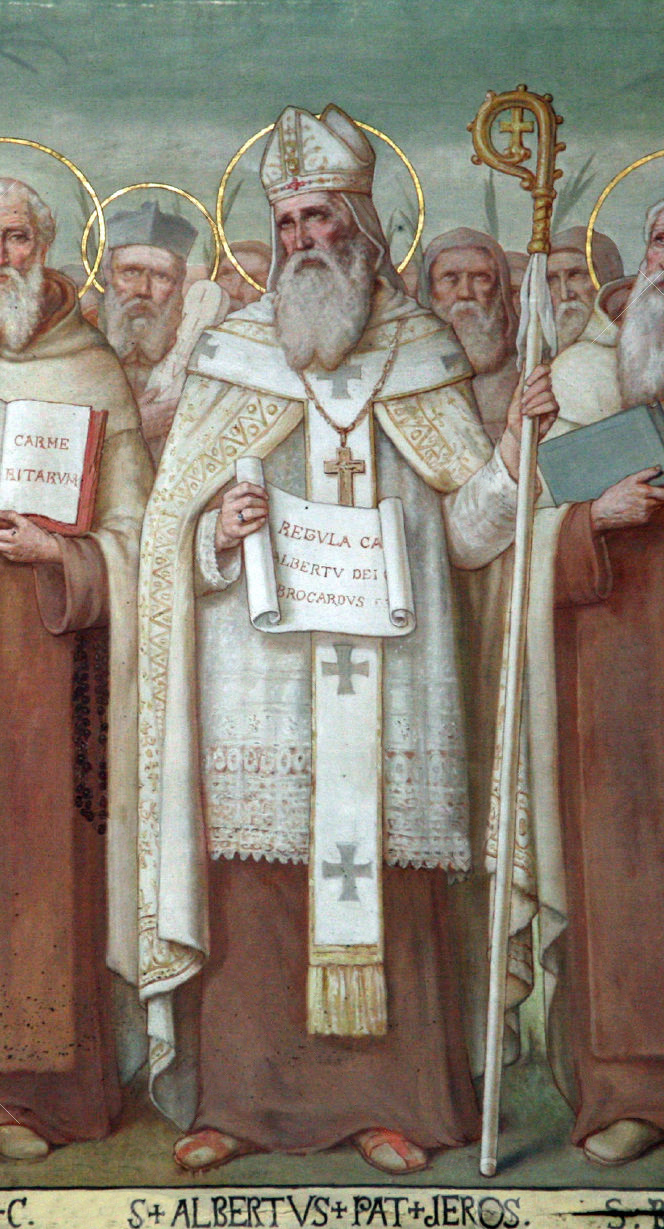
St. Albert of Jerusalem


Albert, by the grace of God, Patriarch of Jerusalem, to his beloved sons, Brocard and the other religious hermits who live under his obedience, near the fountain of Elias, on Mt. Carmel, health in the Lord, and the blessings of the Holy Spirit.
Thus opens the primitive Rule of St. Albert, one of the four great Rules of the Roman Church. Written for the early Carmelites, it is the shortest of all the Rules, because minimal attention is placed on material things and the affairs of the world. The heavenly strivings of the Hermit Brothers of Our Lady of Mt. Carmel are thereby emphasized. St Albert's exhortations on solitude, silence, poverty, obedience, fasting, and manual labor are all well-supported by his thorough knowledge of Sacred Scripture. Although the Rule was written for the hermits, its charism can be lived by any who seek to live a life of contemplation, even amid the cares of this world. The heart of the Rule is that the Carmelite should be "meditating day and night on the Law of the Lord, and watching in prayer." Is not our striving for interior recollection an attempt to mirror this precept?

St. Albert of Vercelli, an Italian by birth, was sent to Palestine by Pope Innocent III because his wisdom and diplomacy were needed in that turbulent region. As the Latin Patriarch, St. Albert gained the respect of the eastern Christians and even of the Moslems. As an Augustinian Canon of the Holy Cross, St. Albert knew the religious life first hand. Between 1206 and 1210 he composed the Rule for the Carmelite hermits. On September 14, 1214, the Feast of the Exaltation of the Holy Cross, St. Albert was stabbed to death by a disgruntled, immoral cleric whom he had deposed. St. Albert's feast on the Carmelite calendar is September 17.

Wednesday, August 26, 2026

The Pierced Heart

Today on the Carmelite calendar it is the feast of the Transverberation of the Heart of St. Teresa of Avila. Although the Holy Mother claimed the experience was purely mystical, it was found after her death that her heart had indeed been physically pierced. A priest once told me that such a phenomenon was a stigmata, although not the same stigmata that saints like St. Pio and St Francis of Assisi experienced. Those saints bore the five wounds of Christ; St Teresa bore a single wound in her heart. In this she resembled the Sorrowful Mother, trans-pierced at the foot of the Cross. St. Teresa, and those who wish to follow her in the Carmelite way, are to model the Blessed Virgin Mary, faithful in the greatest moment of darkness which was the crucifixion. It was also the moment of redemption, in which Mary became the Mother of the Church. Through our own sufferings and heartaches, we can participate in the redemption of the world.

Here is an excerpt of Richard Crashaw's "The Flaming Heart", about the transverberation of the heart of St. Teresa:
O heart, the equal poise of love’s both parts,
Big alike with wounds and darts,
Live in these conquering leaves; live all the same,
And walk through all tongues one triumphant flame;
Live here, great heart, and love and die and kill,
And bleed and wound, and yield and conquer still.
Let this immortal life, where’er it comes,
Walk in a crowd of loves and martyrdoms;
Let mystic deaths wait on ’t, and wise souls be
The love-slain witnesses of this life of thee.
O sweet incendiary! show here thy art,
Upon this carcass of a hard cold heart,
Let all thy scatter’d shafts of light, that play
Among the leaves of thy large books of day,
Combin’d against this breast, at once break in
And take away from me my self and sin;
This gracious robbery shall thy bounty be,
And my best fortunes such fair spoils of me.
O thou undaunted daughter of desires!
By all thy dow’r of lights and fires,
By all the eagle in thee, all the dove,
By all thy lives and deaths of love,
By thy large draughts of intellectual day,
And by thy thirsts of love more large than they,
By all thy brim-fill’d bowls of fierce desire,
By thy last morning’s draught of liquid fire,
By the full kingdom of that final kiss
That seiz’d thy parting soul and seal’d thee his,
By all the heav’ns thou hast in him,
Fair sister of the seraphim!
By all of him we have in thee,
Leave nothing of my self in me:
Let me so read thy life that I
Unto all life of mine may die.

Tuesday, July 28, 2026

Blessed John Soreth

He founded the first monasteries of Carmelite nuns. From Louange de sa gloire:

John Soreth was born at Caen in Normandy and entered Carmel as a young man. He pursued a doctorate of theology in Paris and served as regent of studies and provincial of the province. He was prior general from 1451 until his death at Angers in 1471. He restored observance within the Order and promoted its reform, wrote a famous commentary on the Rule, issued new Constitutions in 1462, and promoted the growth of the nuns and the Third Order.

Monday, July 20, 2026

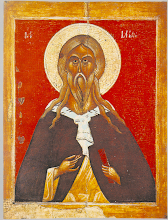
Our Lady of Mount Carmel and the Holy Prophet Elias

From Speramus:
God choose in his providence that the Queen of Heaven and Earth was to make her last apparition at Lourdes on the feast of Our Lady of Mount Carmel, July 16th 1858, and in the last public vision of Fatima, Our Lady also appeared as Our Lady of Mt Carmel on October 13, 1917.  At Fatima she  was holding the Rosary and the scapular out to a subdued and frightened crowd as they beheld  the Miracle of the Sun. Many in the crowd were terrified because they thought during the time it was the end of the world. 

Lourdes and Fatima belong to a long line of Approved Marian Apparitions leading back to the founding of the Carmelite Order on Mt Carmel by the Prophet Elijah. Here  Elijah battled 450 priests of Baal in a public spiritual contest which led to their defeat and ruin. He challenged the people to stop hobbling first on one foot and then on the other but to choose who is God in Israel Yahweh or Baal. According to the story, which can be found in the First Book of Kings, chapter 18, Elijah’s sacrifice was consumed by fire from heaven and proved to the people that Yahweh was the true God. Is it possible God is sending his Mother the Queen of prophets to help us defeat the prophets of Baal resurrected in our own time.                                                        
In the book of Malachi Elijah's return is prophesied to take place "before the coming of the great and terrible day of the Lord." He is  a forerunner in both advents of the Messiah. It seems that  Heaven has confirmed Our Lady at Fatima in the same mission of the prophet Elijah. Our Lady at Fatima appearing  in her Carmelite habit with a similar fire from Heaven during the miracle of the sun. The stupendous Fatima Miracle is the Greatest Supernatural Event of the 20th Century and does not belong [just] to faith or science; it is an Historical Event!

The Miracle of the Sun authenticated Fatima as supernatural in origin and also is a prefigurement or warning of a future catastrophe if the simple requests made at Fatima by our Lady are not heeded. (Read more.)

Friday, July 17, 2026

Gertrud von le Fort and the Martyrs of Compiègne

I have long been an admirer of Gertrud von le Fort and her novel Song at the Scaffold, about the Blessed Martyrs of Compiègne. Baroness von le Fort's short but powerful depiction of the sixteen Carmelite nuns guillotined in 1795 during the Reign of Terror was the inspiration for the play by Bernanos and the opera by Poulenc, Dialogues des Carmelites. To Quell the Terror by William Bush is an excellent historical treatise on the martyrdom of the Carmelites. It is not widely known that Queen Marie-Antoinette provided a dowry for a poor, pious girl named Mademoiselle Lidoine, so that she could enter the Carmel of Compiègne. Mademoiselle Lidoine became the Mother Prioress of the heroic Martyrs of Compiègne, who like Marie-Antoinette, died on the guillotine during the French Revolution.

There is more HERE from The Inn At The End of the World.

 Here is the final scene from Poulenc's opera:

Thursday, July 16, 2026

Our Lady's Scapular

In the last forty years many of the sacramentals of the Church, such as the scapular, have been either forgotten or misinterpreted. I have seen some very sophisticated Catholics on the internet mock the scapular as being superstitious. It requires a certain child-like piety to understand such things; an understanding of the history of the devotion does not hurt either. Here is an explanation of the origins of the scapular:
This monastic scapular, like the whole monastic habit and indeed the liturgical vestments of the priest, developed from the ordinary clothing of the laity. And, just as the stole is the special sign of the priestly dignity and power, the scapular is now the sign of the monk. In the West, in the case of St. Benedict, the scapular was at first nothing else than a working garment or apron such as was then worn by agricultural labourers. Thus, in the Rule of St. Benedict, it was expressly termed "scapulare propter opera" (c. xxv in P.L. LXXVI, 771). From this developed the special monastic garment, to which a hood could be fastened at the back. In fact, the original scapular of the Dominican Order was so made that it acted also as a covering for the head, and thus as a hood. The scapular of the West corresponded to the analabus of the East.
Since many of the religious orders had a version of the monastic scapular, lay people who were affiliated with those orders wished to a tangible sign of their dedication. In the beginning, tertiaries were permitted to don the habit of the order with which they were affiliated. Later, since a religious habit was not always conducive to the duties of secular life the small scapulars were worn instead, as the following relates:
Like the large scapulars the first and oldest small scapulars originated to a certain extent in the real monastic scapular. Pious lay persons of either sex attached themselves to the Servites for instance; many of those who were in a position to do so attached themselves to the third order with vows, but in the case of many others either this was impossible or the idea of doing so had as yet not occurred to them. In this manner developed, shortly after the foundation of the Servite Order, the Confraternity of the Servi B. Mariae Virginis. Similarly originated the Confraternity of Our Lady of Mount Carmel; that this existed in 1280 is proved by the still extant "Libro degli ordinamenti de la compagnia di Santa Maria del Carmine scritto nel 1280" (edited by Giulio Piccini at Bologna, 1867, in "Scelta di Curiosità letterarie"). The members of these confraternities were called the confratres and consores of the respective orders; they had special rules and participated in the spiritual goods of the order to which then belonged. It is probable also that many of those who could not be promoted to the third order or who were special benefactors of the first order received the habit of the order or a large scapular similar to that of the oblates, which they might wear when dying and in which they might be buried. It was only later and gradually that the idea developed of giving to everyone connected with the order the real scapular of the order in miniature as their badge to be always worn day and night over or under their ordinary clothing.
The scapulars, especially the brown scapular of the Carmelites, became so popular among the Christian people that even those who did belong to a religious order began to wear them. The brown scapular became the most highly indulgenced so that children were enrolled in the scapular confraternity around the time they made their first Holy Communion. Fr. Kieran Kavanaugh, OCD, discusses the facts surrounding the Carmelite scapular:
If we look for the earliest references to the scapular, we find them in the Carmelite constitutions of 1281 in which it was prescribed that all Carmelite friars should wear their tunics and scapulars to bed under penalty of a serious fault. It was also prescribed that the white mantle be made in such a way that the scapular would not be hidden. But the reason for these prescriptions was not a Marian one. At the time, the scapular was seen as signifying the "yoke of Christ." This yoke of Christ in turn pointed to obedience. And that explains the strictness of the legislation. Taking off the scapular was like taking off the yoke of Christ, or rebelling against authority. Only gradually did the scapular take on a Marian tone and grow until it reached such a point that it became identified with Carmelite piety toward Our Lady. In fact the feast of Our Lady of Mount Carmel began to be called the scapular feast. Devotion to Mary expressed by wearing the brown scapular seems to be resilient and resists the attempts made in various periods of history to diminish its value. The faithful keep coming back to it. From the official teaching of the Church, we can gather that the scapular of Carmel is one of the most highly recommended Marian devotions. This is true through the centuries, and into our own times with popes Paul VI and John Paul II.
Fr. Kieran goes on to explore how sacramental aspects of the brown scapular developed:
One of the early Carmelites in his enthusiasm went so far as to call the scapular a "sacrament." Actually the category into which the scapular fits is that of a sacramental. Sacramentals are sacred signs. The scapular is not a natural sign in the sense that smoke is the sign of fire. Smoke is intrinsically connected with fire. Where there's smoke there's fire, the saying goes.
The scapular is what is called a conventional sign. In the case of a conventional sign, the meaning is assigned to the object from outside. Thus a wedding ring is a sign or pledge of mutual love and enduring fidelity between two spouses. In this kind of sign, which is a conventional sign, there has to be an intervention from outside that establishes the connection between the object and what it represents. In the case of sacramentals, it is the Church that determines the connection.
Sacramentals also signify effects obtained through the intercession of the Church, especially spiritual graces. The sacramentals -- as holy pictures or icons, statues, medals, holy water, blessed palm and the scapular -- are means that dispose one to receive the chief effect of the sacraments themselves, and this is closer union with Jesus.
St. Teresa of Avila for example speaks in her life about holy water and the power she experienced that this sacramental has against the devil. She mentions as well how this power comes not through the object in itself but through the prayer through the prayer of the Church. Along with the sacraments, sacramentals sanctify almost every aspect of human life with divine grace. The passion, death, and resurrection of Christ is the source of the power of the sacramentals as it is of the sacraments themselves.
Such everyday things as water and words, oil and anointing, cloth and beeswax, paintings and songs are ingredients of the sacraments and sacramentals. The Son of God became the Son of Mary. What could be more down-to-earth, more human, indeed more unpretentious, plain, and simple? (Read more.)
 
Pope John Paul II, who was a Carmelite tertiary, wrote profoundly of the brown scapular in March 2001:
Over time this rich Marian heritage of Carmel has become, through the spread of the Holy Scapular devotion, a treasure for the whole Church. By its simplicity, its anthropological value and its relationship to Mary's role in regard to the Church and humanity, this devotion was so deeply and widely accepted by the People of God that it came to be expressed in the memorial of 16 July on the liturgical calendar of the universal Church....
The sign of the Scapular points to an effective synthesis of Marian spirituality, which nourishes the devotion of believers and makes them sensitive to the Virgin Mother's loving presence in their lives. The Scapular is essentially a "habit". Those who receive it are associated more or less closely with the Order of Carmel and dedicate themselves to the service of Our Lady for the good of the whole Church.... Those who wear the Scapular are thus brought into the land of Carmel, so that they may "eat its fruits and its good things" (cf. Jer 2: 7), and experience the loving and motherly presence of Mary in their daily commitment to be clothed in Jesus Christ and to manifest him in their life for the good of the Church and the whole of humanity....
Therefore two truths are evoked by the sign of the Scapular: on the one hand, the constant protection of the Blessed Virgin, not only on life's journey, but also at the moment of passing into the fullness of eternal glory; on the other, the awareness that devotion to her cannot be limited to prayers and tributes in her honour on certain occasions, but must become a "habit", that is, a permanent orientation of one's own Christian conduct, woven of prayer and interior life, through frequent reception of the sacraments and the concrete practice of the spiritual and corporal works of mercy. In this way the Scapular becomes a sign of the "covenant" and reciprocal communion between Mary and the faithful: indeed, it concretely translates the gift of his Mother, which Jesus gave on the Cross to John and, through him, to all of us, and the entrustment of the beloved Apostle and of us to her, who became our spiritual Mother.
...A splendid example of this Marian spirituality, which inwardly moulds individuals and conforms them to Christ, the firstborn of many brethren, is the witness to holiness and wisdom given by so many Carmelite saints, all of whom grew up in the shadow and under the protection of their Mother.
I too have worn the Scapular of Carmel over my heart for a long time!

Monday, July 13, 2026

Mt. Carmel Novena, Day 7 -- Fatima

"And a great sign appeared in the heavens, a woman clothed with the sun, with the moon at her feet, and on her head a crown of twelve stars." Apocalypse 12:1

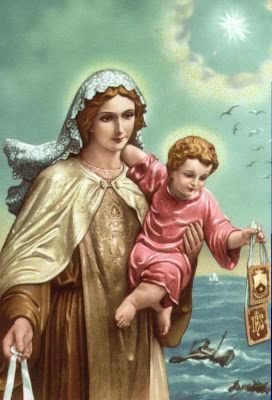
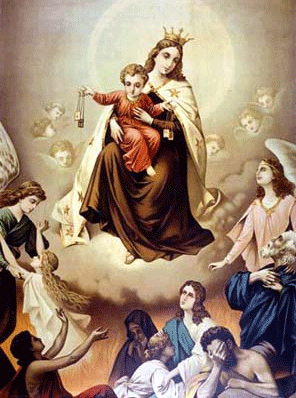
During her final apparition at Fatima in October 1917, the Blessed Virgin Mary was dressed as Our Lady of Mt. Carmel, holding the brown scapular; she was obviously encouraging everyone to wear the garment of grace, just as she urged everyone to pray the rosary on a daily basis. 750 years before, Our Lady had given the scapular to St Simon Stock, telling him: "Whosoever shall die wearing this scapular shall not suffer eternal fire."

On July 13, 1917, Our Lady at Fatima showed the three little children the Vision of Hell; it was the first part of the controversial "Secret of Fatima," and in some ways, the most terrible aspect of it, for hell is a place where anyone can go if they break God's law and do not repent. The children were so frightened by the vision that afterwards all earthly sufferings seemed like nothing. I think someone once said that Our Lord in the Gospels warns His disciples about hell "where the worm dieth not, and the flame is not extinguished" (Mark 9 :44) more often than He promises them Heaven, "for straight is the way and narrow is the gate that leads to life, and few there are that find it." (Matthew 7:14)

Along with the scapular and rosary, Our Lady asked that we perform the duties of our state in life; she knew that in future times how difficult it would become to fulfill one's most basic obligations to God and to other people, and yet the fulfillment of those duties often is the difference between heaven and hell. Yet, as the saints testify, many have been saved because they clung to some small token of devotion to Our Lady in spite of everything, and the Mother of Mercy interceded for them. As the angel at Fatima instructed the three children to pray:

O my Jesus, forgive us our sins, save us from the fires of hell, lead all souls to heaven, especially those who are in most need of thy mercy!

Novena Prayer to Our Lady of Mt. Carmel:
O most beautiful Flower of Mt Carmel, fruitful vine, splendor of Heaven, Blessed Mother of the Son of God, Immaculate Virgin, assist me in this my necessity. O Star of the Sea, help me and show me herein you are my Mother.

O Holy Mary, Mother of God, Queen of Heaven and earth, I humbly beseech you from the bottom of my heart, to succor me in this my necessity, there are none that can withstand your power.

O show me herein you are my Mother.

Mary, conceived without sin, pray for us that have recourse to thee. (3 times)

Sweet Mother, I place this cause in your hands. (3 times) AMEN.

Tuesday, July 7, 2026

Novena to Our Lady of Mount Carmel

It begins today. There will be little meditations offered here for everyday of the novena. The Carmelite Scapular was given to the world as a symbol of the protection and help of the Holy Mother of God when no earthly help is available, particularly at the hour of death. As Our Lady stood at the foot of the Cross, she stands with the Church in the present ordeals; she stands with each of us. Let us pray for all the children of the world, especially those who are in danger. Let us pray for the freedom of the Church, that Our Lady Immaculate may deliver us. And please pray for some special intentions of mine.
O most beautiful Flower of Mt Carmel, fruitful vine, splendor of Heaven, Blessed Mother of the Son of God, Immaculate Virgin, assist me in this my necessity. O Star of the Sea, help me and show me herein you are my Mother.

O Holy Mary, Mother of God, Queen of Heaven and earth, I humbly beseech you from the bottom of my heart, to succor me in this my necessity, there are none that can withstand your power.

O show me herein you are my Mother.

Mary, conceived without sin, pray for us that have recourse to thee. (3 times)

Sweet Mother, I place this cause in your hands. (3 times) AMEN.

Monday, June 15, 2026

Of Fatima, the King of France, and the Consecrations

Let us revisit a post by Fr. Richard Heilman on Roman Catholic Man:
On Sunday May 13th, 1917, the children were pasturing their flock as usual at the Cova da Iria, which was about a mile from their homes. They were playing when suddenly a bright shaft of light pierced the air. The lady spoke to them and said: “Fear not! I will not harm you.” “Where are you from?” the children asked. “I am from heaven” the beautiful lady replied, gently raising her hand towards the distant horizon. “What do you want of me?”, Lucia asked. ” I came to ask you to come here for six consecutive months, on the thirteenth day, at this same hour. I will tell you later who I am and what I want.”

It was Mary’s final appearance, on Oct. 13, 1917 (exactly 33 years, to the day, after Pope Leo XIII’s vision), that became the most famous. An estimated 70,000 people were in attendance at the site, anticipating the Virgin’s final visit and with many fully expecting that she would work a great miracle. As everyone gazed upward, and saw that a silvery disc had emerged from behind clouds, they experienced what is known [as] a ‘sun miracle.’ Not everyone reported the same thing; some present claimed they saw the sun dance around the heavens; others said the sun zoomed toward Earth in a zigzag motion that caused them to fear that it might collide with our planet (or, more likely, burn it up). Some people reported seeing brilliant colors spin out of the sun in a psychedelic, pinwheel pattern. The whole event took about 10 minutes.

With these apparitions at Fatima, God asked for the Consecration of Russia to the Immaculate Heart of Mary by the Pope in union with all of the bishops of the world. Our Lady of Fatima said that if the Consecration of Russia was done, Russia would be converted and there would be peace. However, if the Pope and the bishops did not obey the request, Our Lady said that Russia would spread her errors throughout the world, causing wars and persecutions of the Church and of Holy Father, the martyrdom of the good and the annihilation of nations. I find it interesting that Our Lady appeared in Fatima with these warnings exactly 100 years before the 500th anniversary of the Protestant revolt (1517-2017).

[...]

At Rianjo, Spain in August 1931, Our Lord communicated to Sister Lucy His dissatisfaction with the Pope’s and the Catholic bishops’ failure to obey His command to consecrate Russia. He said:
Make it known to My ministers, given that they follow the example of the King of France in delaying the execution of My requests, they will follow him into misfortune. It is never too late to have recourse to Jesus and Mary.
In another text Lucy wrote that Our Lord complained to her:
They did not wish to heed My request! Like the King of France they will repent of it, and they will do it, but it will be late. Russia will have already spread its errors in the world, provoking wars and persecutions against the Church. The Holy Father will have much to suffer.
 The reference by Jesus to the King of France’’s disobedience and punishment is as follows:
On June 17, 1689 the Sacred Heart of Jesus manifested to Saint Margaret Mary Alacoque His command to the King of France that the King was to consecrate France to the Sacred Heart. For 100 years to the day the Kings of France delayed, and did not obey. So on June 17, 1789 the King of France was stripped of his legislative authority by the upstart Third Estate, and four years later the soldiers of the French Revolution executed the King of France as if he were a criminal. In 1793 France sent its King, Louis XVI, to the guillotine. He and his predecessors had failed to obey Our Lord’s request that France be consecrated to the Sacred Heart of Jesus, and thus misfortune had befallen both the King and his country. (Read more.)
Now it must be noted that Louis XVI, with the consent and guidance of his confessor, the Eudist priest Fr. Hebert, made a Vow to the Sacred Heart in the spring of 1791 when he and his family were under house arrest at the Tuileries Palace in Paris. To quote from the Vow:
O Jesus-Christ! divine Redeemer of all our iniquities, it is in Your Adorable Heart that I want to deposit the overflowing of my afflicted heart. I call upon the help of the tender Heart of Mary, my majestic protector and my mother, and the assistance of Saint Louis, my most famous patron and of my ancestor. O adorable Heart, by the so pure hands of my powerful intercessors, receive with kindness the wishes that confidence inspires in me and that I offer to You like the humble expression of my feelings. If, by an effect of the infinite kindness of God, I recover my freedom, my crown and my royal power, I promise solemnly:
1. To revoke as soon as possible all the laws which will be indicated to me, either by the Pope, or by a Council, or by the four Bishops chosen among most enlightened and most virtuous of my kingdom, with the purity and the integrity of the faith, the discipline and the spiritual jurisdiction of Holy Catholic, Apostolic Church, Roman, and in particular to revoke the Civil Constitution of the Clergy. (Read more.)
The King was killed before he could fulfill his Vow. There are more details in my biography of Louis's wife, Marie-Antoinette.

Meanwhile, Cardinal Burke has called for Russia to be consecrated in the manner requested by Our Lady of Fatima:
“It is evident that the consecration (of Russia) was not carried out in the manner requested by Our Lady,” said Vatican Cardinal Raymond Burke in his keynote address marking the highlight and conclusion of the Fatima Centennial Summit held over the weekend.

“I do not doubt for a moment the intention of Pope St. John Paul II to carry out the consecration on March 25, 1984,” said Cardinal Burke. He noted that Sister Lucia stated that “Our Lady had accepted it.”

He continued nonetheless, “Recognizing the necessity of a total conversion from atheistic materialism and communism to Christ, the call of Our Lady of Fatima to consecrate Russia to Her Immaculate Heart in accord with Her explicit instruction remains urgent.”

The former head of the Vatican’s highest court reissued his call, first made at the Rome Life Forum in May, for the faithful to pray and work for the consecration of Russia according to Our Lady’s specific instruction. He quoted the end of the famous secret to the children where Our Lady Herself predicted: “In the end, my Immaculate Heart will triumph. The Holy Father will consecrate Russia to me, and she shall be converted, and a period of peace will be granted to the world.” With some 700 attendees, the conference was the largest Fatima centennial celebration in North America. To a standing ovation both before and after he spoke, Cardinal Burke delved deeply into the message of Our Lady of Fatima, her predictions and the consequences of failing to heed her warnings to the world. The Cardinal drew a direct line from the famous Third Secret of Fatima’s dire predictions for the massacre of priests, religious and the death of the Pope to the current crisis in the Church.

“The teaching of the Faith in its integrity and with courage is the heart of the office of the Church’s pastors: the Roman Pontiff, the Bishops in communion with the See of Peter, and their principal co-workers, the priests,” he said. “For that reason, the Third Secret is directed, with particular force, to those who exercise the pastoral office in the Church. Their failure to teach the faith, in fidelity to the Church’s constant teaching and practice, whether through a superficial, confused or even worldly approach, and their silence endangers mortally, in the deepest spiritual sense, the very souls for whom they have been consecrated to care spiritually.”

Cardinal Burke, who has suffered publicly for his defense of the faith, urged the faithful, “Let us not fail to embrace whatever suffering comes from our faithful witness to Him Who is the true Treasure of our hearts.”

“Let us not give way to discouragement but rather remember that the Immaculate Heart of the Blessed Virgin Mary assumed into glory, never ceases to beat with love for us, the children Her Divine Son gave to Her as He was dying on the cross,” he said. (Read more.)


And the Consecration has been made, HERE and HERE.

Saturday, May 16, 2026

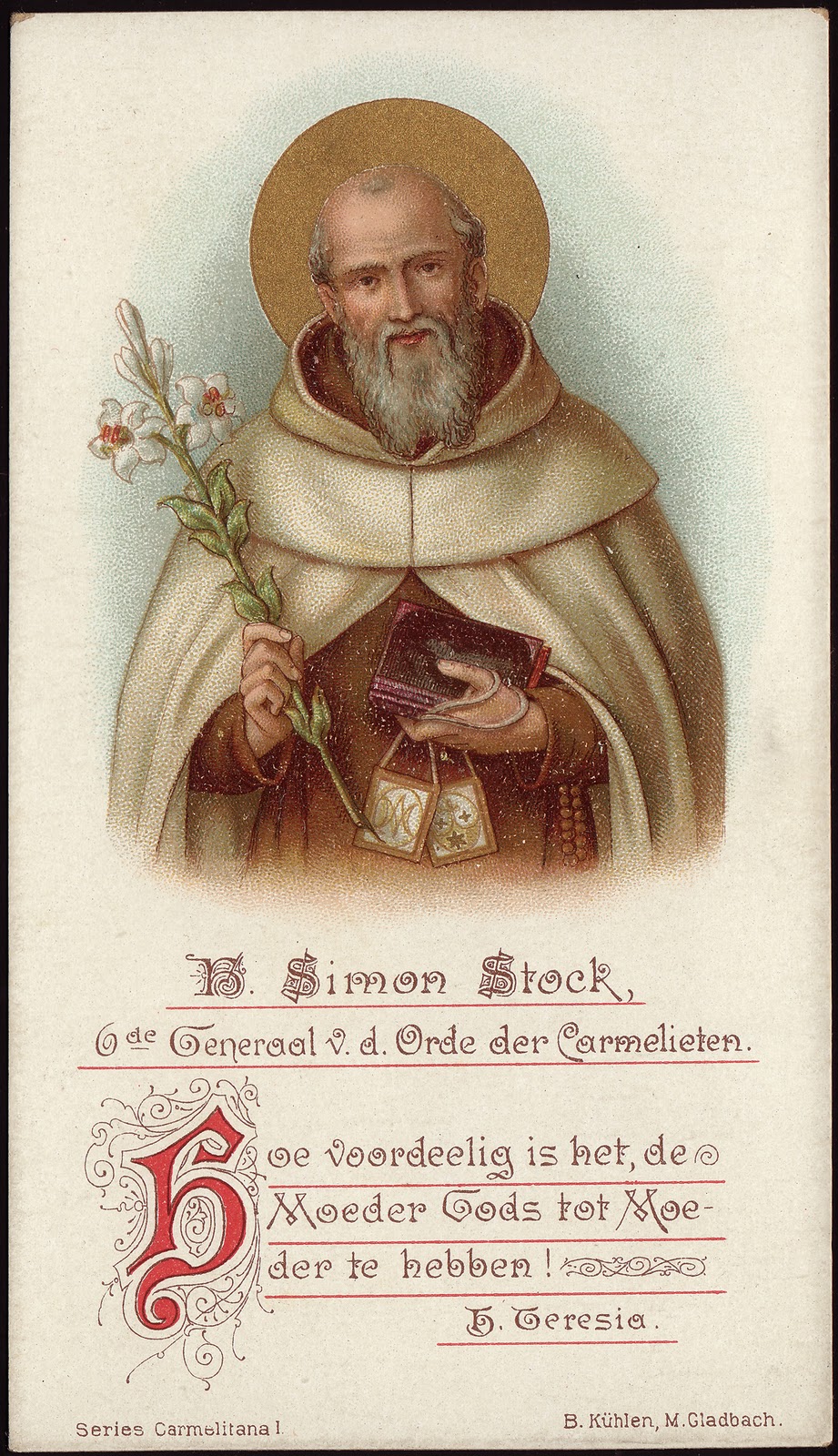
St. Simon Stock and the Scapular

From Louange de sa Gloire:
The Brown Scapular is a Marian devotion which originated at about the same time as the Rosary, and like the Marian shrine at Walsingham, had its origin in England. In the thirteenth century, during the time of the Crusades, Simon Stock went on a pilgrimage to the Holy Land where he met a group of hermits on Mount Carmel. These claimed to be the successors of Elijah and his followers, and, attracted by their way of life, Simon returned with them to England when the situation became too dangerous in Palestine because of the Saracens.
They settled at Aylesford in Kent and in 1254 Simon was elected Superior-general of the now mendicant Carmelites, who were regarded somewhat like the other mendicant orders such as the Franciscans and Dominicans.
Simon founded other houses as the order began to grow but he faced many problems as the original 'solitary' ideal of the hermits changed towards the more communal approach of the mendicants. These weren't just internal problems, as older orders also resented the arrival of these newcomers with their own particular devotion to Mary. 
Simon withdrew to his monastic room or 'cell' - probably at Cambridge by this time - to try and gain some relief from the problems faced both by himself and his Carmelite order, and in order to pray to Mary; it was then that he had his famous vision of her bringing the Brown Scapular to him with the following words, which are preserved in a fourteenth century narrative: "This will be for you and for all Carmelites the privilege, that he who dies in this will not suffer eternal fire.  
The Scapular promise is based on the two elements of Mary's spiritual maternity and her mediation of grace, that is that she is the 'spiritual' mother of all mankind, as well as the 'channel' by which all grace comes to us, understood in the sense that she too is dependent on the sole mediation of Christ, her son. 
This promise implies that Mary will intercede to ensure that the wearer of the Scapular obtains the grace of final perseverance, that is of dying in a state of grace. The modern Scapular consists of two pieces of brown rectangular cloth, roughly an inch by an inch and a half, which are usually decorated with appropriate Marian pictures, and are connected by two narrow brown cords, are worn around the neck and shoulders, hanging down to the front and back. 
The Scapular promise has come in for criticism, on somewhat similar grounds to those argued against Walsingham, that is, a lack of early supporting documentation. However it seems that the above account was found in the earliest record of St Simon Stock's life, and it is unreasonable to expect written evidence from the thirteenth century, since the Carmelite order didn't produce much literature until it had grown somewhat larger in the mid-fourteenth century.
It was about this time that the wearing of the Scapular spread to the laity, and gradually over the centuries it has gained in popularity, particularly following promotion of the 'Sabbatine Privilege' by popes of the sixteenth and seventeenth centuries. This is an idea which probably grew out of a deepened understanding of the promise originally made to St Simon, and essentially involves the idea that Mary will intervene to help those who have worn the Scapular before death and now find themselves in purgatory, particularly on a Saturday, the day traditionally dedicated to Mary. 
In order to be eligible for the Scapular promise, which is really a sign of consecration to Mary and hence to God, it is necessary for the wearer to have observed the virtue of chastity according to their state in life, whether married or single, and to have complied with the spirit of inner devotion which the wearing of the Scapular implies. 
This is a devotion which has also been continually encouraged by more recent popes, and so it is not something which has lost its power, even if it may have become unfashionable in some circles. If, as in the case of the Rosary, a whole series of popes, have, by virtue of their unique position of authority, approved the Scapular devotion, then clearly it just cannot be dismissed out of hand, at least not by Catholics who take the teaching and pastoral authority of the Church seriously. There is also an emphasis on the Scapular in the apparitions at Fatima which means it retains its relevance for today.

Sources: Farmer, The Oxford Dictionary of Saints; Carol, Mariology, Vol. 3

Great talk on the scapular, HERE.

Thursday, May 14, 2026

Ascension of the Lord

(Icon of the Ascension by Andrei Rublev)

Let us look towards Heaven.
Our desires, on this Day, should be, that we may follow our Jesus to life everlasting, and overcome all the hindrances that we may have to encounter on the way thither....
A tradition, handed down from the early ages, and confirmed by the revelations of the Saints, tells us that the Ascension of our Lord took place at the hour of Noon. The Carmelites of St. Teresa's Reform honour this pious tradition by assembling in the Choir, at the hour of mid-day on the Ascension; and spend it in the contemplation of this last of Jesus' mysteries, following him, in thought and desire, to the throne of his glory.
Let us, also, follow him; but before looking on the bright Noon which smiles on his triumph, let us go back in thought to his first coming among us. It was at mid-night, in the stable of Bethlehem. That dark and silent hour was an appropriate commencement to the three and thirty years of his life on earth. He had come to accomplish a great mission: year by year, and day by day, he laboured in its fulfillment. It was nigh to its fulfillment, when men laid their sacrilegious hands upon him, and nailed him to a Cross. It was mid-day, when he was thus raised up in the air; but the Eternal Father would not permit the sun to shine on Jesus' humiliation. Darkness covered the face of the earth ; and that Day had no Noon. Three hours after, the sun re-appeared. Three days after, the Crucified rose again from the Tomb, and it was at the early dawn of light.
On this day, yea at this very hour, his work is completed. He has redeemed us, by his Blood, from our sins ; he has conquered death by his "Resurrection to life :—had he not a right to choose, for his Ascension, the hour when the sun is pouring forth his warmest and brightest beams... ~Abbot Gueranger's The Liturgical Year
Here is the Ascension hymn:
Jesu, nostra redemptio,
Amor et desiderium,
Deus Creator omnium,
Homo in fine temporum.


O Jesus, our redemption,
our love, and our desire,
God, Creator of all things,
become Man in the fullness of time.

Quae te vicit clementia,
Ut ferres nostra crimina,
Crudelem mortem patiens,,
Ut nos a morte tolleres!


What tender love, what pity
compelled Thee to bear our crimes,
to suffer a cruel death
that we, from death, might be saved?

Inferni claustra penetrans,
Tuos captivos redimens,
Victor triumpho nobili
Ad dextram Patris residens:


Into death’s dark cloister didst Thou descend,
and from it captives free didst bring;
Thy triumph won, Thou didst take Thy place,
Thou, the Victor, at the Father’s right.

Ipse te cogat pietas,
Ut mala nostra superes,
Parcendo, et voti compotes
Nos tuo vultu saties.


'Twas a tender love, a costly compassion
that pressed Thee our sorrows to bear;
granting pardon, Thou didst raise us up
to fill us full with the splendour of Thy face.

Tu esto nostrum gaudium,
Qui es futurus praemium:
Sit nostra in te gloria
Per cuncta semper saecula. 


Thou art already the joy of all our days,
Thou Who in eternity will be our prize;
let all our glory be in Thee,
forever, and always, and in the age to come.

Saturday, May 9, 2026

Novena Rose Prayer


My dear friends, please join me in making a novena to St.
Thérèse of the Child Jesus and the Holy Face for several personal intentions.
Novena Rose Prayer
O Little Therese of the Child Jesus, please pick for me a rose from the heavenly gardens and send it to me as a message of love.
O Little Flower of Jesus, ask God today to grant the favors I now place with confidence in your hands...(mention petitions).
St. Therese, help me to always believe as you did, in God's great love for me, so that I might imitate your "Little Way" each day.  Amen.

(Say this prayer for nine days and St. Therese will send you a rose!)

Saturday, January 10, 2026

Restoring Carmel in England


From Carmelite Quotes:

The Servant of God Hermann Cohen was invited by Cardinal Nicholas Wiseman of Westminster to help restore religious life in England after centuries of absence, and in 1862 traveled to Rome to seek permission for the foundation, where the pope gave him a striking blessing, saying: “I send you to convert England as, in the sixth century, one of my predecessors also blessed and sent the monk Augustine, the former apostle of that country.” Cohen then departed from Paris for England on August 5, 1862.


What a joy it is, my Lords and Gentlemen, for a Religious of the Order of Mary to stand before you and say: there is hope for us now, for not only does the Faith grow daily in England, but the gentle sway of Mary and the subduing power of her sweet devotion spreads over “that land” well known of yore as “Mary’s Dowry.”

I insist upon this progress as being of the highest importance; for devotion guards Faith as the advanced rampart defends the citadel: a breach once made in the outer walls, and the fortress is quickly in the hands of the enemy.

We may date, then, the happy change we have signalized, from the time when His Eminence began to guide the Catholic movement; and now we can say, that if on the one hand, Apostolic labor in England costs the Priest much sweat of the brow; on the other, it presents him with refreshing draughts of consolation.

Oh! that the name of Jesus, healing the people, might be the bond of peace between citizens, and of peace between all races of peoples! That the Blessed Virgin Mary might soon number all the children of England among the offspring of her love! (Read more.)

Friday, November 28, 2025

Saint Thérèse of the Child Jesus on Purgatory


 On June 9, 1895, at the Carmel of Lisieux, Saint Thérèse made the Act of Oblation to Merciful Love. In her autobiography she said: "I received the grace to understand, more than ever, how much Jesus desires to be loved." Instead of offering herself as victim to the justice of God, as did other religious, taking upon themselves the "punishment reserved for sinners," Saint Thérèse decided to offer herself as a victim to the Merciful Love of God. She asked to be consumed as a holocaust in the fire of the Sacred Heart, in order to console that Heart and save souls. "Fire transforms all things into itself, " the saint wrote in her Act of Oblation. "I know that the fire of love is more sanctifying than the fire of Purgatory."
 

 From Help the Holy Souls:

The common teaching within the Church is that Purgatory can hardly be avoided. While still only a novice, the saint commented about this with one of the sisters,  Sr. Maria Philomena, who believed in the near impossibility of going to heaven without passing through purgatory:

You do not have enough trust. You have too much fear before the good God. I can assure you that He is grieved over this. You should not fear Purgatory because of the suffering there, but should instead ask that you not deserve to go there in order to please God, Who so reluctantly imposes this punishment. As soon as you try to please Him in everything and have an unshakable trust He purifies you every moment in His love and He lets no sin remain. And then you can be sure that you will not have to go to Purgatory.5

She even said that we would offend God if we didn’t trust enough that we would get to heaven right after dying. When she found out that her novices talked occasionally that they would probably have to expect to be in Purgatory, she corrected them saying: “Oh! How you grieve me! You do a great injury to God in believing you’re going to Purgatory. When we love, we can’t go there.”6 Now, this is a new doctrine, but only for those who don’t know God, who are not childlike, who don’t trust. It is so correct to see things this way. It is true that God will judge us at one point, but He is always and first our Father Who… suffers when He has to punish His child and sees its suffering. The child should do His will just out of love, and not to avoid punishment. And this really means that God does not want Purgatory! He allows that His children suffer, but only as if He had to look away.7 (Read more.)


It has come to my attention from perusing Facebook that there is a great deal of confusion about purgatory, especially among Catholics. The EWTN website offers excellent catechesis. To quote St. John Paul II:

According to Old Testament religious law, what is destined for God must be perfect. As a result, physical integrity is also specifically required for the realities which come into contact with God at the sacrificial level such as, for example, sacrificial animals (cf. Lv 22: 22) or at the institutional level, as in the case of priests or ministers of worship (cf. Lv 21: 17-23). Total dedication to the God of the Covenant, along the lines of the great teachings found in Deuteronomy (cf. 6: 5), and which must correspond to this physical integrity, is required of individuals and society as a whole (cf. 1 Kgs 8: 61). It is a matter of loving God with all one's being, with purity of heart and the witness of deeds (cf. ibid., 10: 12f.)

The need for integrity obviously becomes necessary after death, for entering into perfect and complete communion with God. Those who do not possess this integrity must undergo purification. This is suggested by a text of St Paul. The Apostle speaks of the value of each person's work which will be revealed on the day of judgement and says:  "If the work which any man has built on the foundation [which is Christ] survives, he will receive a reward. If any man's work is burned up, he will suffer loss, though he himself will be saved, but only as through fire" (1 Cor 3: 14-15).

3. At times, to reach a state of perfect integrity a person's intercession or mediation is needed. For example, Moses obtains pardon for the people with a prayer in which he recalls the saving work done by God in the past, and prays for God's fidelity to the oath made to his ancestors (cf. Ex 32: 30, 11-13). The figure of the Servant of the Lord, outlined in the Book of Isaiah, is also portrayed by his role of intercession and expiation for many; at the end of his suffering he "will see the light" and "will justify many", bearing their iniquities (cf. Is 52: 13-53, 12, especially vv. 53: 11).

Psalm 51 can be considered, according to the perspective of the Old Testament, as a synthesis of the process of reintegration:  the sinner confesses and recognizes his guilt (v. 3), asking insistently to be purified or "cleansed" (vv. 2, 9, 10, 17) so as to proclaim the divine praise (v. 15).

Purgatory is not a place but a condition of existence

4. In the New Testament Christ is presented as the intercessor who assumes the functions of high priest on the day of expiation (cf. Heb 5: 7; 7: 25). But in him the priesthood is presented in a new and definitive form. He enters the heavenly shrine once and for all, to intercede with God on our behalf (cf. Heb 9: 23-26, especially, v. 24). He is both priest and "victim of expiation" for the sins of the whole world (cf. 1 Jn 2: 2).

Jesus, as the great intercessor who atones for us, will fully reveal himself at the end of our life when he will express himself with the offer of mercy, but also with the inevitable judgement for those who refuse the Father's love and forgiveness.

This offer of mercy does not exclude the duty to present ourselves to God, pure and whole, rich in that love which Paul calls a "[bond] of perfect harmony" (Col 3: 14).

5. In following the Gospel exhortation to be perfect like the heavenly Father (cf. Mt 5: 48) during our earthly life, we are called to grow in love, to be sound and flawless before God the Father "at the coming of our Lord Jesus with all his saints" (1 Thes 3: 12f.). Moreover, we are invited to "cleanse ourselves from every defilement of body and spirit" (2 Cor 7: 1; cf. 1 Jn 3: 3), because the encounter with God requires absolute purity.

Every trace of attachment to evil must be eliminated, every imperfection of the soul corrected. Purification must be complete, and indeed this is precisely what is meant by the Church's teaching on purgatory. The term does not indicate a place, but a condition of existence. Those who, after death, exist in a state of purification, are already in the love of Christ who removes from them the remnants of imperfection (cf. Ecumenical Council of Florence, Decretum pro Graecis:  DS 1304; Ecumenical Council of Trent, Decretum de iustificatione:  DS 1580; Decretum de purgatorio:  DS 1820).

It is necessary to explain that the state of purification is not a prolongation of the earthly condition, almost as if after death one were given another possibility to change one's destiny. The Church's teaching in this regard is unequivocal and was reaffirmed by the Second Vatican Council which teaches:  "Since we know neither the day nor the hour, we should follow the advice of the Lord and watch constantly so that, when the single course of our earthly life is completed (cf. Heb 9: 27), we may merit to enter with him into the marriage feast and be numbered among the blessed, and not, like the wicked and slothful servants, be ordered to depart into the eternal fire, into the outer darkness where "men will weep and gnash their teeth' (Mt 22: 13 and 25: 30)" (Lumen gentium, n. 48).

6. One last important aspect which the Church's tradition has always pointed out should be reproposed today:  the dimension of "communio". Those, in fact, who find themselves in the state of purification are united both with the blessed who already enjoy the fullness of eternal life, and with us on this earth on our way towards the Father's house (cf. CCC, n. 1032).

Just as in their earthly life believers are united in the one Mystical Body, so after death those who live in a state of purification experience the same ecclesial solidarity which works through prayer, prayers for suffrage and love for their other brothers and sisters in the faith. Purification is lived in the essential bond created between those who live in this world and those who enjoy eternal beatitude. (Read more.)


There can be children in purgatory, if they have committed any actual sins after reaching the age of reason and not expiated them on earth. From The New Theological Movement:
Is purgatory in the Bible?
While the word “purgatory” never appears in the Bible, the concept is present both implicitly and explicitly. Implicitly, the idea of praying for the dead – as when Job prays for his sons and daughters, or in Maccabees, or when St. Paul encourages the Corinthians to pray for the dead (cf. 1 Corinthians 15) – necessitates belief in purgatory. If the dead are in hell, our prayers could do no good; if they are in heaven, then they have no need of prayer. Therefore, there must be some third place (neither in heaven nor in hell) where the souls of the dead can benefit from our prayers.
The concept of purgatory is also explicitly presented in the Bible. Consider when Jesus says that the sin of blasphemy against the Holy Spirit cannot be forgiven in this life or in the next (cf. Matthew 12:31) – thus, it is clear that some sins can be forgiven in the next life (we mean the punishment of sin, not the guilt of sin). Likewise, St. Paul states that some who have died will be purified as by fire: If any man's work burn, he shall suffer loss; but he himself shall be saved, yet so as by fire. (1 Corinthians 3:15)
Must I believe in purgatory in order to be saved?
Yes, purgatory has been taught by the Catholic Church as de fide. To deny the existence of purgatory is to deny the authority of Christ Jesus who has revealed this doctrine to us through the Church. Hence, belief in purgatory is as necessary for salvation as the other truths of the Faith.
What is purgatory?
Purgatory is that purification which they must undergo who have died in God’s grace and friendship, but are still imperfect. Purgatory is “this final purification of the elect, which is entirely different from the punishment of the damned.” (CCC 1031) Purgatory is a great and most generous gift from the Lord.
How is purgatory different from hell?
Purgatory is essentially different from hell insofar as the souls there still possess grace. The souls in purgatory have faith, hope and love. Their punishment and suffering is of a purifying nature and prepares them for heaven. Moreover, purgatory is only a temporary purgation and all the souls in purgatory will eventually gain entrance to heaven.
Hell, on the other hand, is eternal. The sufferings of hell do not purify but only torture and punish. The souls in hell have no grace, neither have they any (true) faith, hope or love. The souls in hell will never attain to salvation.
How is purgatory different from heaven?
Purgatory is a sort of ante-chamber to heaven, a preparatory purgation for heaven. The souls in purgatory suffer intensely and are not yet perfectly happy. The souls in purgatory still have hope (rather than the fulfillment of hope in heaven), since they are not yet perfectly possessed by God. Likewise they still have faith, since they do not yet see God.
Do the souls in purgatory become holier?
Essentially, the souls in purgatory cannot grow in holiness. They cannot merit more grace or glory. Neither can they grow in charity. Rather, purgatory is a cleansing which purifies the holiness that they already possess.
Do the souls in purgatory want to get out?
This is a difficult question. On the one hand, they certainly desire heaven (this desire is cause of their chief pain, since they are not yet where they want to be). On the other hand, they would not want to move ahead without being purified. Hence, they love the sufferings insofar as they are purified by them. None are angry or upset about being in purgatory, but they do very much desire the assistance of our prayers so as to swiftly attain to the joy of heaven.
Are there any young children in purgatory?
No, there are most certainly no children who died before the age of reason in purgatory. Purgatory is a punishment for actual sin (either direct sins or sins of omission). Hence, since a child cannot sin until it has attained to the use of reason, it is not possible for any children to be in purgatory.
If the child has been baptized, it most certainly goes directly to heaven. If the child has not been baptized, it either goes to limbo (which is a state of perfect natural happiness, on the fringe of hell) or to heaven.
In any case, young children who die before gaining the use of reason are very happy, indeed they are perfectly happy. They are either supernaturally happy in heaven, or naturally happy in limbo – but they certainly do not suffer any subjective pains (as do the souls in hell and in purgatory).
Will purgatory go on forever?
No. Purgatory will be completed at the time of the final judgment. All the souls in purgatory at that time will be purified instantaneously and will be caught up with the saints in glory.
Is there really fire in purgatory?
Yes. There is real, physical fire in purgatory. This is the best and safest opinion which is nearly unanimous among the Latin theologians (especially the Fathers and Doctors), also it enjoys the favor of several prominent Eastern Doctors (including St. Basil the Great). Additionally, the mystics of the Church speak of physical fires.
It is in this sense only that purgatory can be called a “place”.
How can I help the souls in purgatory?
You can help the poor souls by praying for them, offering up works of mercy, gaining indulgences for them, mortifying yourself in their behalf, and completing other spiritual works for their sake. [Be sure that no prayer will go to waste; since, if the soul is not in purgatory (for one reason or another), Our Blessed Mother will certainly make good use of the graces for another]
Most especially, we consider the importance of praying for the holy souls when at Mass (especially during the Eucharistic prayer), and having Masses offered for the deceased.
Can the souls in purgatory help me?
This is a very complicated question. Generally we would say, no. The main point of purgatory is that the souls cannot help themselves or anyone else, but are in a passive state of purification. They are powerless, hence they rely greatly upon our prayers.
However, it is possible that God may (in exceptional circumstances) allow those in purgatory to pray for or assist in some manner those who are on earth and who implore their aid. Still, this does not seem to be the norm – however, there are most certainly cases in the lives of the saints (e.g. St. Pio) where this did occur. (Read more.)
Related Posts with Thumbnails