

Showing posts with label Virgins. Show all posts

Monday, October 5, 2026

The Debate Over St. Faustina

 From Christine Niles:

October 5th is the feast day of St. Faustina. Debate continues to swirl around her and the Divine Mercy devotion. In this episode (originally aired June 6, 2023), Christine Niles delves into St. Faustina's life and the controversies surrounding Divine Mercy to answer the question: Is Divine Mercy a fraud — or is it one of God's greatest gifts to the modern world? 

 Objection 1: St. Faustina's diary was placed on the Index of Forbidden Books. 

ANSWER: This was owing to errors in the Italian translation. Once an accurate translation was commissioned, any errors were eliminated and the ban was lifted in 1978. 

Objection 2: Divine Mercy preaches unconditional mercy without sacrifice. 

ANSWER: False. St. Faustina was given a terrifying vision of Hell, and confirmed that many souls who reject God and His mercy will end up there. She also practiced many penances and mortifications in reparation for sinners, understanding that suffering is the price of sin. 

Objection 3: How could Our Lord say to St. Faustina that He united Himself more intimately with her than with any other creature, when God clearly unites Himself more intimately with Our Lady? 

ANSWER: He clearly meant He united Himself with her more intimately than with any other mortal creature at that time living on earth — not for all time. 

 Objection 4: How could St. Faustina claim the Lord told her, “From today on, do not fear God’s judgment, for you will not be judged.” 

ANSWER: Any saint who dies in the state of perfection and goes directly to Heaven is exempt from judgment. Saint Faustina lived an extraordinarily holy life and is now a canonized saint; it would not be difficult to believe that God granted her the extraordinary grace not only of sainthood, but of knowing that she would escape judgment. (Read more and listen.)


Tuesday, September 1, 2026

St. Theresa Margaret of the Sacred Heart of Jesus


One dawn at the Discalced Carmelite chapel in Florence, a lovely, fair-haired girl of seventeen, in white veil and bridal dress, walked slowly down the aisle, candle in her hand. Anna Maria Redi, the beloved eldest child of a noble Tuscan family, offered herself as spouse to the King of Heaven. In doing so, she exchanged wealth and comforts for poverty and humiliations. Joyfully, she gave up her silk dress for the rough brown habit of Our Lady, and undertook to serve Our Lady by adoring her Eucharistic Son.

Re-named "Theresa Margaret," she strove to console the Heart of Christ by performing many penances. One day at Vespers, the words Deus Caritas Est (God is love) sank deep into her soul. She realized that love (not hairshirts) was what counted most. "You know, my God," wrote St. Theresa Margaret, "that my one desire is to be a victim of your Sacred Heart, wholly consumed as a holocaust in the fire of your holy love...dispose of me according to your good pleasure...." she struggled to give up her own will, to be humble and obedient, even when it meant performing duties that were unpleasant, such as caring for a nun who had gone insane.

On March 7, 1770, at age 24, she died after 18 hours of agony due to a mysterious intestinal infection. The incorrupt body of St. Theresa Margaret lies in a glass coffin in the monastery chapel where she once entered as a bride.

Tuesday, August 25, 2026

The Little Arab


Today on the Carmelite calendar it is the feast of Saint Mary of Jesus Crucified, Miriam Baouardy, known as the "Little Arab." Miraculous phenomena surrounded her. Let us pray to her for Christians who are suffering persecution in Moslem countries. She said: “Everything passes here on earth. What are we? Nothing but dust, nothingness, and God is so great, so beautiful, so lovable and He is not loved.”

From Mystics of the Church:

 We see in the lives of many mystic saints that an ecstatic, while in ecstasy, can be drawn a little above the ground through a supernatural and mysterious grace. However, Sister Mary of Jesus Crucified was one of the only ones, along with Saint Joseph of Cupertino, to make real flights. The phenomena was verified for the first time on June 22, 1873 in the garden of the Carmel of Pau. Noticing her absence at supper, the mistress of novices looked for her in vain in the cloister and the orchard, then another nun heard a song: "Love! Love!" She looked up and discovered Mariam balancing herself without support at the top of an enormous lime tree.

Advised of this, the prioress arrived and confronted with this phenomena she initially did not know what to do. After a prayer she addressed the little one: "Sister Mary of Jesus Crucified, if Jesus wishes it, come down through obedience without falling or hurting yourself." At the simple word obedience, the ecstatic descended in fact "with the radiant face" and perfect modesty, stopping on some of the branches to sing Love."Hardly was she on the ground," noted a witness, "and as if to make amends to our mother and sisters for our anxiety in looking for her and in seeing her perched up so high, she embraced us with a sort of enthusiasm and affection impossible to express."

Eight ecstatic levitations were documented: Beginning in 1873 on June 22, July 9, 19,25, 27, 31, August 3, 1873 and finally on July 5, 1874. "How did you manage to climb like that?" the mother prioress asked her. And she replied: "The Lamb held out His hands to me:" Some of the nuns wanted to make sure of this so they spied on her. One day a lay sister who was working in the garden was witness to the flight: "She had taken hold of the tip of a little branch that a bird would have bent; and from there, in an instant, she had been lifted on high." On July 5, perched on the lime tree, she addressed the mother prioress: "I was on that one there and I came up here. Look, see, my alpargates (a kind of soft slipper) are still there."

On July 19, 1873, when the order was given for her to descend, she hesitated a moment. She begged to be allowed more time with the Lamb. "No," insisted the prioress, "through obedience, come down." She obeyed, but the shadow of hesitation had been fatal: the vision had disappeared. "The Lamb went away." Sighed the sister, "He left me alone to come down." In fact, because of her hesitance in obedience it was with effort that she got down to the ground and for four days of grief she expiated that unhappy moment. On July 25, the levitation lasted from four to seven o'clock in the evening; on July 31, it lasted from the end of recreation, which follows supper in the evening, until nine o'clock. This phenomenon occurred only at the Carmel of Pau.

In a letter dated February 14, 1927, Father Buzy, the Carmelite´s biographer, wrote the following statement to bishop Oliver Leroy: "Sister Mary used to raise herself to the top of the trees by the tips of the branches: she would take her scapular in one hand, and with the other the end of a small branch next to the leaves, and after a few moments she would glide along the outside edge of the tree to its top. Once up there, she would remain holding on to branches normally too weak to bear a person of her weight. "

The following are some depositions given by witnesses at process: "Sister E., now deceased, told me that one day when she happened to be in the garden with the servant of God, the latter said to her: "Turn around." She had hardly turn her head when looking back again, she saw the little one already seated on the top of the lime tree, on a little branch, balancing herself like a bird and singing divine love. Another person declared: "Once I saw her in ecstasy at the top of the lime tree, seated at the tip of the highest branch, which, normally would never have been able to support her. Her face was resplendent! I saw her come down from the tree like a bird, from branch to branch, with great nimbleness and modesty." (Read more.)


Tuesday, August 11, 2026

Saint Clare, Virgin

 From EWTN:

The Lady Clare, "shining in name, more shining in life," was born in the town of Assisi about the year 1193. Her mother was to become Blessed Ortolana di Fiumi. Her father is said to have been Favorino Scifi, Count of Sasso-Rosso, though whether he came of that noble branch of the Scifi family is not certain. Concerning Clare's childhood we have no reliable information. She was eighteen years old when St. Francis, preaching the Lenten sermons at the church of St. George in Assisi, influenced her to change the whole course of her life. It is likely that a marriage not to her liking had been proposed; at any rate, she went secretly to see Friar Francis and asked him to help her to live "after the manner of the Holy Gospel." Talking with him strengthened her desire to leave all worldly things behind and live for Christ. On Palm Sunday of that year, 1212, she came to the cathedral of Assisi for the blessing of palms, but when the others went up to the altar-rails to receive their branch of green, a sudden shyness kept Clare back. The bishop saw it and came down from the altar and gave her a branch.

The following evening she slipped away from her home and hurried through the woods to the chapel of the Portiuncula, where Francis was then living with his small community. He and his brethren had been at prayers before the altar and met her at the door with lighted tapers in their hands. Before the Blessed Virgin's altar Clare laid off her fine cloak, Francis sheared her hair, and gave her his own penitential habit, a tunic of coarse cloth tied with a cord. Then, since as yet he had no nunnery, he took her at once for safety to the Benedictine convent of St. Paul, where she was affectionately welcomed.

When it was known at home what Clare had done, relatives and friends came to rescue her. She resisted valiantly when they tried to drag her away, clinging to the convent altar so firmly as to pull the cloths half off. Baring her shorn head, she declared that Christ had called her to His service, she would have no other spouse, and the more they continued their persecutions the more steadfast she would become. Francis had her removed to the nunnery of Sant' Angelo di Panzo, where her sister Agnes, a child of fourteen, joined her. This meant more difficulty for them both, but Agnes' constancy too was victorious, and in spite of her youth Francis gave her the habit. Later he placed them in a small and humble house, adjacent to his beloved church of St. Damian, on the outskirts of Assisi, and in 1215, when Clare was about twenty-two, he appointed her superior and gave her his rule to live by. She was soon joined by her mother and several other women, to the number of sixteen. They had all felt the strong appeal of poverty and sackcloth, and without regret gave up their titles and estates to become Clare's humble disciples. Within a few years similar convents were founded in the Italian cities of Perugia, Padua, Rome, Venice, Mantua, Bologna, Milan, Siena, and Pisa, and also in various parts of France and Germany. Agnes, daughter of the King of Bohemia, established a nunnery of this order in Prague, and took the habit herself.

The "Poor Clares," as they came to be known, practiced austerities which until then were unusual among women. They went barefoot, slept on the ground, observed a perpetual abstinence from meat, and spoke only when obliged to do so by necessity or charity. Clare herself considered this silence desirable as a means of avoiding the innumerable sins of the tongue, and for keeping the mind steadily fixed on God. Not content with the fasts and other mortifications required by the rule, she wore next her skin a rough shirt of hair, fasted on vigils and every day in Lent on bread and water, and on some days ate nothing. Francis or the bishop of Assisi sometimes had to command her to lie on a mattress and to take a little nourishment every day.

Discretion, came with years, and much later Clare wrote this sound advice to Agnes of Bohemia: "Since our bodies are not of brass and our strength is not the strength of stone, but instead we are weak and subject to corporal infirmities, I implore you vehemently in the Lord to refrain from the exceeding rigor of abstinence which I know you practice, so that living and hoping in the Lord you may offer Him a reasonable service and a sacrifice seasoned with the salt of prudence."

Francis, as we know, had forbidden his order ever to possess revenues or lands or other property, even when held in common. The brothers were to subsist on daily contributions from the people about them. Clare also followed this way of life. When she left home she had given what she had to the poor, retaining nothing for her own needs or those of the convent. Pope Gregory IX proposed to mitigate the requirement of absolute poverty and offered to settle a yearly income on the Poor Ladies of St. Damien. Clare, eloquent in her determination never to break her vows to Christ and Francis, got permission to continue as they had begun. "I need," she said, "to be absolved from my sins, but I do not wish to be absolved from my obligation to follow Jesus Christ." In 1228, therefore, two years after Francis' death, the Pope granted the Assisi sisterhood a Privilegium paupertatis, or Privilege of Poverty, that they might not be constrained by anyone to accept possessions. "He who feeds the birds of the air and gives raiment and nourishment to the lilies of the field will not leave you in want of clothing or of food until He come Himself to minister to you for eternity." The convents in Perugia and Florence asked for and received this privilege; other convents thought it more prudent to moderate their poverty. Thus began the two observances which have ever since been perpetuated among the Poor Clares, as they later came to be called. The houses of the mitigated rule are called Urbanist, from the concession granted them in 1263 by Pope Urban IV. But as early as 1247 Pope Innocent IV had published a revised form of the rule, providing for the holding of community property. Clare, the very embodiment of the spirit and tradition of Francis, drew up another rule stating that the sisters should possess no property, whether as individuals or as a community. Two days before she died this was approved by Pope Innocent for the convent of St. Damian.

Clare governed the convent continuously from the day when Francis appointed her abbess until her death, a period of nearly forty years. Yet it was her desire always to be beneath all the rest, serving at table, tending the sick, washing and kissing the feet of the lay sisters when they returned footsore from begging. Her modesty and humility were such that after caring for the sick and praying for them, she often had other sisters give them further care, that their recovery might not be imputed to any prayers or merits of hers. Clare's hands were forever willing to do whatever there was of woman's work that could help Francis and his friars. "Dispose of me as you please," she would say. "I am yours, since I have given my will to God. It is no longer my own." She would be the first to rise, ring the bell in the choir, and light the candles; she would come away from prayer with radiant face.

The power and efficacy of her prayers are illustrated by a story told by Thomas of Celano, a contemporary. In 1244, Emperor Frederick II, then at war with the Pope, was ravaging the valley of Spoleto, which was part of the patrimony of the Holy See. He employed many Saracens in his army, and a troop of these infidels came in a body to plunder Assisi. St. Damien's church, standing outside the city walls, was one of the first objectives. While the marauders were scaling the convent walls, Clare, ill as she was, had herself carried out to the gate and there the Sacrament was set up in sight of the enemy. Prostrating herself before it, she prayed aloud: "Does it please Thee, O God, to deliver into the hands of these beasts the defenseless children whom I have nourished with Thy love? I beseech Thee, good Lord, protect these whom now I am not able to protect." Whereupon she heard a voice like the voice of a little child saying, "I will have them always in My care." She prayed again, for the city, and again the voice came, reassuring her. She then turned to the trembling nuns and said, "Have no fear, little daughters; trust in Jesus." At this, a sudden terror seized their assailants and they fled in haste. Shortly afterward one of Frederick's generals laid siege to Assisi itself for many days. Clare told her nuns that they, who had received their bodily necessities from the city, now owed it all the assistance in their power. She bade them cover their heads with ashes and beseech Christ as suppliants for its deliverance. For a whole day and night they prayed with all their might- and with many tears, and then "God in his mercy so made issue with temptation that the besiegers melted away and their proud leader with them, for all he had sworn an oath to take the city." (Read more.)

Thursday, July 30, 2026

Port-Royal, Jansenism, and St. Thérèse: The Hidden Heresy That Still Haunts Catholicism

Port-Royal Abbey, Paris - Wikipedia
Madame de Montpeyroux, abbess of Port-Royal Abbey

 From Sensus Fidelium:

One of the greatest spiritual battles in Catholic history was not fought over the Trinity, the Eucharist, or even the papacy. It was fought over the character of God Himself.

Is God primarily a loving Father eager to save?

Or is He chiefly a stern Judge searching for reasons to condemn?

That question gave rise to one of the most influential, and spiritually devastating, movements in Church history: Jansenism.

Although officially condemned by multiple popes, its spirit survived for centuries. It shaped convents, seminaries, confessionals, and even family life. Its influence was so pervasive in France that St. Thérèse of Lisieux spent much of her short life offering what amounts to the Church’s greatest practical answer to it.

Ironically, the story begins not with obvious heretics, but with one of the most admired convents in Europe. (Read more.)

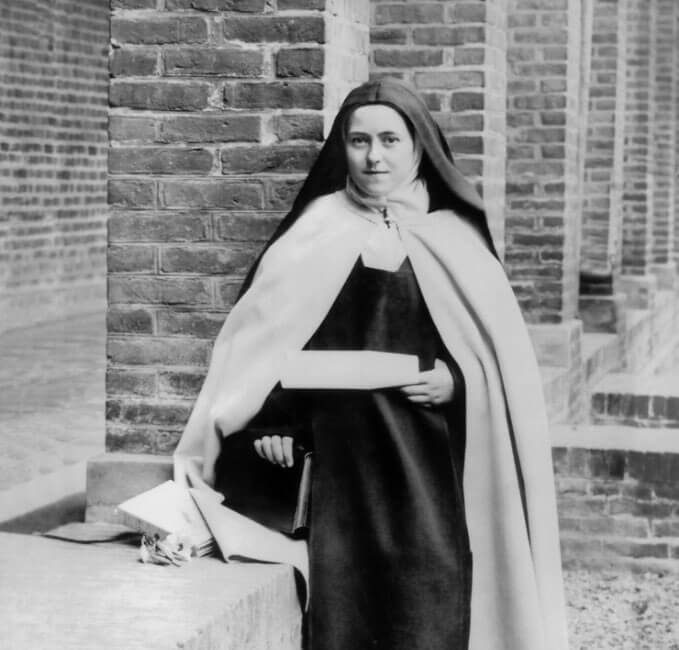
About the Little Flower — Little Flower Basilica
St. Thérèse of the Child Jesus


Wednesday, July 29, 2026

St. Martha's Day


St. Martha of Bethany. It is ironic to me that she who tamed a dragon would also be the patroness of housewives. To quote from Aleteia:

Once there, Martha was immediately sought after for her association with Jesus. According to tradition, she performed many miraculous feats, including the slaying of a dragon along the Rhone river. The Golden Legend provides all the details.

At that time, in the forest along the Rhone between Aries and Avignon, there was a dragon that was half animal and half fish, larger than an ox, longer than a horse, with teeth as sharp as horns and a pair of bucklers on either side of his body. This beast lurked in the river, killing all those who tried to sail by and sinking their vessels … The people asked Martha for help, and she went after the dragon. She found him in the forest in the act of devouring a man, sprinkled him with blessed water, and had a cross held up in front of him. The brute was subdued at once and stood still like a sheep while Martha tied him up with her girdle, and the people killed him then and there with stones and lances.

(Read entire article)

Tuesday, July 28, 2026

Blessed John Soreth

He founded the first monasteries of Carmelite nuns. From Louange de sa gloire:

John Soreth was born at Caen in Normandy and entered Carmel as a young man. He pursued a doctorate of theology in Paris and served as regent of studies and provincial of the province. He was prior general from 1451 until his death at Angers in 1471. He restored observance within the Order and promoted its reform, wrote a famous commentary on the Rule, issued new Constitutions in 1462, and promoted the growth of the nuns and the Third Order.

Friday, July 17, 2026

Gertrud von le Fort and the Martyrs of Compiègne

I have long been an admirer of Gertrud von le Fort and her novel Song at the Scaffold, about the Blessed Martyrs of Compiègne. Baroness von le Fort's short but powerful depiction of the sixteen Carmelite nuns guillotined in 1795 during the Reign of Terror was the inspiration for the play by Bernanos and the opera by Poulenc, Dialogues des Carmelites. To Quell the Terror by William Bush is an excellent historical treatise on the martyrdom of the Carmelites. It is not widely known that Queen Marie-Antoinette provided a dowry for a poor, pious girl named Mademoiselle Lidoine, so that she could enter the Carmel of Compiègne. Mademoiselle Lidoine became the Mother Prioress of the heroic Martyrs of Compiègne, who like Marie-Antoinette, died on the guillotine during the French Revolution.

There is more HERE from The Inn At The End of the World.

 Here is the final scene from Poulenc's opera:

Saturday, May 30, 2026

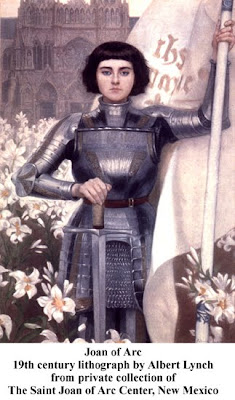
Feast of St. Joan

"O how beautiful is the chaste generation with glory: for the memory thereof is immortal...." Wisdom 4:1
In 1431 May 30 fell upon a Wednesday, the Vigil of Corpus Christi. It was around noon when Jehanne Darc, or Jehanne la Pucelle, "the Maid," as she called herself, was led into the public square of Rouen by enemy soldiers to where the stake awaited her. Nineteen years old, her head shaven, surrounded by placards branding her a witch, idolatress, and abjured heretic, she invoked the Holy Names of Jesus and Mary, and St Michael the Archangel. She had been calumniated and condemned by those whose holy office it was to guide and protect her soul; she had been exposed to lewdness and impurity by those whose sacred duty it was to shelter her innocence and virginity. She was abandoned by the king whose crown her victories had won. She was in great interior darkness; the voices of her saints were silent.

Although she conversed with angels and saints, Joan the Maid was known to be practical and blunt. Very feminine, she missed her embroidery and her mother, yet she emerges on the pages of late medieval history like someone from the Acts of the Apostles. Surrounded by miracles, she was herself a Miracle; she led an army to victory at the age of 17, an illiterate peasant girl, who knew nothing of war or politics. She saved France as a nation, for it had all but ceased to exist when she came on the scene.

Such was her Faith that she confounded her judges, while exhausted, frightened and pushed to the breaking point of her mental and physical strength. Denied the Sacraments by her persecutors, she gazed upon the upheld crucifix, calling out, "Jesus! Jesus!" as the flames consumed her. When Joan's ashes were scattered in the river, her heart was found, untouched by the flames, and still bleeding.

"If I walk in the midst of the shadow of death, I shall fear no evil, for Thou art with me, O Lord Jesus." Communion Antiphon for the Feast of St Joan

St. Joan, pray for us!


Monday, May 25, 2026

Saint Mary Magdalen de Pazzi

Today is her feast.
Put me as a seal upon thy heart, as a seal upon thy arm, for love is as strong as death....Many waters cannot quench charity, neither can the floods drown it: if a man should give all the substance of his house for love, he shall despise it as nothing. ~Canticle of Canticles 8: 7-8


From Nobility:

Caterina was clothed in 1583, when she took the name of Maria Maddalena; and on 29 May, 1584, being then so ill that they feared she would not recover, she was professed. After her profession, she was subject to an extraordinary daily ecstasy for forty consecutive days, at the end of which time she appeared at the point of death. She recovered, however, miraculously; and henceforth, in spite of constant bad health, was able to fill with energy the various offices to which she was appointed. She became, in turn, mistress of externs—i.e. of girls coming to the convent on trial—teacher and mistress of the juniors, novice mistress (which post she held for six years), and finally, in 1604, superior. For five years (1585-90) God allowed her to be tried by terrible inward desolation and temptations, and by external diabolic attacks; but the courageous severity and deep humility of the means that she took for overcoming these only served to make her virtues shine more brilliantly in the eyes of her community.

From the time of her clothing with the religious habit till her death the saint’s life was one series of raptures and ecstasies, of which only the most notable characteristics can be named in a short notice.

  • First, these raptures sometimes seized upon her whole being with such force as to compel her to rapid motion (e.g. towards some sacred object).
  • Secondly, she was frequently able, whilst in ecstasy, to carry on work belonging to her office—e.g., embroidery, painting, etc.—with perfect composure and efficiency.
  • Thirdly—and this is the point of chief importance—it was whilst in her states of rapture that St. Mary Magdalen de’ Pazzi gave utterance to those wonderful maxims of Divine Love, and those counsels of perfection for souls, especially in the religious state, which a modern editor of a selection of them declares to be “more frequently quoted by spiritual writers than those even of St. Teresa”. These utterances have been preserved to us by the saint’s companions, who (unknown to her) took them down from her lips as she poured them forth. She spoke sometimes as of herself, and sometimes as the mouthpiece of one or other of the Persons of the Blessed Trinity. These maxims of the saint are sometimes described as her “Works”, although she wrote down none of them herself. (Read more.)

Saturday, May 9, 2026

Novena Rose Prayer


My dear friends, please join me in making a novena to St.
Thérèse of the Child Jesus and the Holy Face for several personal intentions.
Novena Rose Prayer
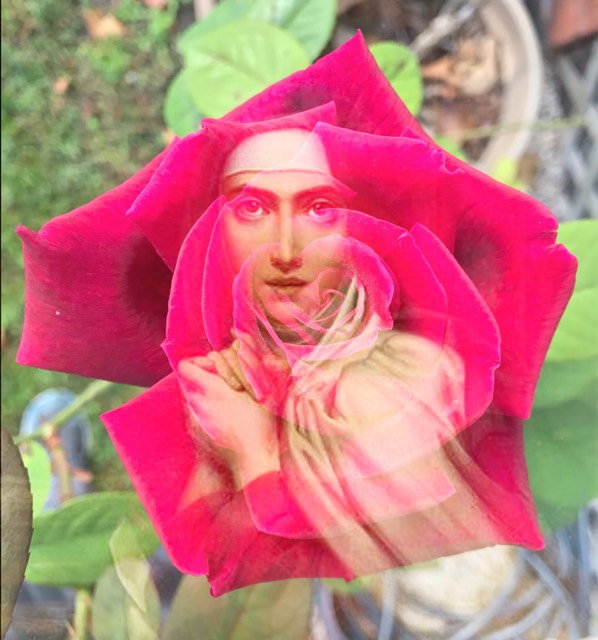
O Little Therese of the Child Jesus, please pick for me a rose from the heavenly gardens and send it to me as a message of love.
O Little Flower of Jesus, ask God today to grant the favors I now place with confidence in your hands...(mention petitions).
St. Therese, help me to always believe as you did, in God's great love for me, so that I might imitate your "Little Way" each day.  Amen.

(Say this prayer for nine days and St. Therese will send you a rose!)

Wednesday, April 29, 2026

Two Dominican Saints

Today is the feast of St. Catherine of Siena. She was not a nun but a Dominican tertiary. From New Advent:

 She was the youngest but one of a very large family. Her father, Giacomo di Benincasa, was a dyer; her mother, Lapa, the daughter of a local poet. They belonged to the lower middle-class faction of tradesmen and petty notaries, known as "the Party of the Twelve", which between one revolution and another ruled the Republic of Siena from 1355 to 1368. From her earliest childhood Catherine began to see visions and to practise extreme austerities. At the age of seven she consecrated her virginity to Christ; in her sixteenth year she took the habit of the Dominican Tertiaries, and renewed the life of the anchorites of the desert in a little room in her father's house. After three years of celestial visitations and familiar conversation with Christ, she underwent the mystical experience known as the "spiritual espousals", probably during the carnival of 1366. She now rejoined her family, began to tend the sick, especially those afflicted with the most repulsive diseases, to serve the poor, and to labour for the conversion of sinners. Though always suffering terrible physical pain, living for long intervals on practically no food save the Blessed Sacrament, she was ever radiantly happy and full of practical wisdom no less than the highest spiritual insight. All her contemporaries bear witness to her extraordinary personal charm, which prevailed over the continual persecution to which she was subjected even by the friars of her own order and by her sisters in religion. She began to gather disciples round her, both men and women, who formed a wonderful spiritual fellowship, united to her by the bonds of mystical love. During the summer of 1370 she received a series of special manifestations of Divine mysteries, which culminated in a prolonged trance, a kind of mystical death, in which she had a vision of Hell, Purgatory, and Heaven, and heard a Divine command to leave her cell and enter the public life of the world. She began to dispatch letters to men and women in every condition of life, entered into correspondence with the princes and republics of Italy, was consulted by the papal legates about the affairs of the Church, and set herself to heal the wounds of her native land by staying the fury of civil war and the ravages of faction. She implored the pope, Gregory XI, to leave Avignon, to reform the clergy and the administration of the Papal States, and ardently threw herself into his design for a crusade, in the hopes of uniting the powers of Christendom against the infidels, and restoring peace to Italy by delivering her from the wandering companies of mercenary soldiers. While at Pisa, on the fourth Sunday of Lent, 1375, she received the Stigmata, although, at her special prayer, the marks did not appear outwardly in her body while she lived. (Read more.)

And Terry reminds us that yesterday was the feast of St. Peter of Verona, who was murdered by the Cathars. According to one account:
Saint Peter Martyr was born in the year 1205 at Verona in Italy. His family belonged to a religious sect called the Cathars meaning "pure ones", which were popular in the region of Verona at that time. The Cathars were perceived as dangerous as they spread the word that Rome had betrayed and corrupted the original purity of the message of Christianity. Peter of Verona (Peter Martyr) received a good education and attended a Catholic school and went on to study at the University of Bologna where he met met Saint Dominic and then joined the Dominican Friars, forsaking the beliefs of the Cathars and adhering to the traditional Catholic Faith. His preaching was so successful that he attracted the attention of Pope Innocent III. Pope Innocent III had come to power in 1198 and had been determined to began a programme of conversion for the Cathars. By 1229 Inquisition he established an Inquisition to discover the leaders and followers of Catharism. Pope Innocent IV became Pope in 1243 and in 1252 appointed Peter Martyr the Inquisitor for Lombardy. Cathars who refused to recant were dealt with severely and punishments ranged from being sentenced to galley slaves or burned at the stake. In 1252 St. Peter Martyr was murdered by the hired Cathar assassins of two noblemen of the Venetian States whom he had handed over to the secular authorities accused of adhering to Catharism, and who, in consequence, had been imprisoned. St. Peter Martyr was attacked with an axe receiving wounds to his head and then stabbed in the heart.

My novel on the Cathars, HERE. 

Thursday, April 23, 2026

St. George's Day


But the knight, turning him about, bade her remain where she was, and went out to meet the dragon.
When it observed him approach, the beast was struck with amazement, and, having paused for but a moment, it ran toward the knight with a great swiftness, and beating its dark wings upon the ground as it ran.
When it drew near to him, it puffed out from its nostrils a smoke so dense that the knight was enveloped in it as in a cloud; and darted hot flames from its eyes. Rearing its horrid body, it beat against the knight, dealing him fearful blows; but he, bending, thrust his spear against it, and caught the blows upon his shield. 
~ Legend of St. George and the Dragon

The legend of St. George and the dragon was one of the most popular stories in the Middle Ages. St. George is generally believed to have lived in Asia Minor and to have suffered under the Emperor Diocletian. Ascalon, the sword of St. George, was celebrated by knights who took the martyred warrior as the patron of chivalry. While his name became the battle-cry of Merry Old England, St. George  was universally venerated in both the East and the West; in the Roman Church he was one of the Fourteen Holy Helpers.

While we know there was indeed a martyr named George, how true is the account of his battle with the dragon? According to New Advent:
This episode of the dragon is in fact a very late development, which cannot be traced further back than the twelfth or thirteenth century. It is found in the Golden Legend (Historia Lombardic of James de Voragine and to this circumstance it probably owes its wide diffusion. It may have been derived from an allegorization of the tyrant Diocletian or Dadianus, who is sometimes called a dragon (ho bythios drakon) in the older text, but despite the researches of Vetter (Reinbot von Durne, pp.lxxv-cix) the origin of the dragon story remains very obscure. In any case the late occurrence of this development refutes the attempts made to derive it from pagan sources....

The best known form of the legend of St. George and the Dragon is that made popular by the "Legenda Aurea", and translated into English by Caxton. According to this, a terrible dragon had ravaged all the country round a city of Libya, called Selena, making its lair in a marshy swamp. Its breath caused pestilence whenever it approached the town, so the people gave the monster two sheep every day to satisfy its hunger, but, when the sheep failed, a human victim was necessary and lots were drawn to determine the victim. On one occasion the lot fell to the king's little daughter. The king offered all his wealth to purchase a substitute, but the people had pledged themselves that no substitutes should be allowed, and so the maiden, dressed as a bride, was led to the marsh. There St. George chanced to ride by, and asked the maiden what she did, but she bade him leave her lest he also might perish. The good knight stayed, however, and, when the dragon appeared, St. George, making the sign of the cross, bravely attacked it and transfixed it with his lance. Then asking the maiden for her girdle (an incident in the story which may possibly have something to do with St. George's selection as patron of the Order of the Garter), he bound it round the neck of the monster, and thereupon the princess was able to lead it like a lamb. They then returned to the city, where St. George bade the people have no fear but only be baptized, after which he cut off the dragon's head and the townsfolk were all converted. The king would have given George half his kingdom, but the saint replied that he must ride on, bidding the king meanwhile take good care of God's churches, honour the clergy, and have pity on the poor. The earliest reference to any such episode in art is probably to be found in an old Roman tombstone at Conisborough in Yorkshire, considered to belong to the first half of the twelfth century. Here the princess is depicted as already in the dragon's clutches, while an abbot stands by and blesses the rescuer.
The key to the legend of St. George is that it epitomizes the spiritual combat in which all Christians are engaged, on one level or another. As Fr. Blake explains:
I love saints like St George, whose true story is lost in myth. In both stories George becomes a Christian "everyman". The first legend reminds us that despite every attempt to overcome him by God's grace George endures and survives all, and even in death is victorious.
The second story draws on apocalyptic imagery, the dragon is the symbol of evil, the power of sin, but here it is to be contrasted with the pure virgin. I am reminded of St Athanasius' struggle for twenty years in the tomb against demons. In all of us there is the pure virgin and the dragon. George, here takes on the attributes of St Michael (Michael means "Who is like God"), in his struggle he overcomes evil which then becomes subject to purity.

More HERE. 

Thursday, February 5, 2026

Saint Agatha of Sicily


 From My Catholic Life:

It is shocking what people are capable of doing. Some are capable of the most hideous, diabolical, and self-serving acts. Others are capable of enduring those evils for the love of Christ with peace, strength, and joy. Regardless of the historical accuracy of the details of Saint Agatha’s life and death, her story, as it has been handed down, reveals the potential in every human heart. We have the potential to be great sinners, the potential to be great saints, or somewhere in-between. Allow the witness of Quintianus to fill your heart with a holy fear of sin and the witness of Saint Agatha to move you from that “in-between.” Her courage and unwavering fidelity to Christ have shone a light for countless people throughout the centuries. One day, in Heaven, we will meet the true Saint Agatha and rejoice as we gaze upon the beauty and purity of her soul. Seek to make your soul radiate with that same glory by the grace of God and your fidelity to His holy will. (Read more.)

Monday, February 2, 2026

Candlemas Day

Adorn thy bridal chamber, O Sion, and receive Christ the King. Salute Mary, the gate of Heaven; for she beareth the King of Glory, Who is the new Light.... —Antiphon for feast of the Presentation of the Lord
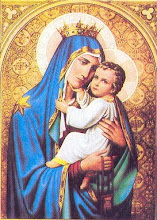
On the fortieth day after Christmas we celebrate the Presentation of Our Lord in the Temple, where He is offered by His Mother and St Joseph to the Eternal Father for the sins of the world. Many prophecies were fulfilled that day, unknown at the time except to Mary and Joseph, Simeon and Anna, all persons of prayer and of special consecration to God. In a time of great darkness there was suddenly and quite publicly a great light, to be received only by those whose hearts were open. A small Child is the ultimate sacrifice for the redemption of humanity, but He is not alone; He is with His family. The Holy Family stand between us and utter chaos and despair. Like the Child Jesus, we do not make our offering alone, we make it with Mary and Joseph, we make it in the context of our own families.
Behold this child is set for the fall, and for the resurrection of many in Israel, and for a sign which shall be contradicted; and thy own soul a sword shall pierce, that, out of many hearts, thoughts may be revealed. --St. Luke 2:34-35
 The "Purification of Our Lady" as the feast is traditionally called, is a feast of the Virgin as well as the Virgin's Son. We marvel at the humility of Immaculate Mary who submits to the ritual of purification for all Jewish mothers, although she herself had no need to be purified. It is also known as Candlemas Day because since early times, candles have been blessed and carried in procession in honor of Christ, the Light of the World.

At Christmas, we adored Him with the shepherds at dawn; at Epiphany, we rejoiced in the brightness of His manifestations to the nations; at Candlemas, with the aged Simeon, we take Him into our arms. With the prophetic words of Simeon, the day also becomes a preparation for Lent and the Passion of Our Lord. We must offer ourselves with Jesus to the Father; we must embrace our own purification.
 

This feast day links Christmas with Lent, the joyful mysteries with the sorrowful mysteries. Mary's Heart is pierced as Simeon's prophecy is uttered, for a mother suffers for her child, especially when that Child is God. Fr Gabriel of St. Mary Magdalen, O.C.D. wrote so magnificently of this feast in his book Divine Intimacy:
O Jesus, through the hands of Mary, I wish to offer myself today with You to the eternal Father. But You are a pure, holy, and Immaculate Host, while I am defiled with misery, and sin....O Virgin Most pure, lead me along the way of a serious and thorough purification; accompany me yourself, so that my weakness will not make me faint because of the roughness of the road.

Sunday, February 1, 2026

St. Brigid of Kildare

It is the feast of the great Irish abbess, St. Brigid of Kildare. During the fall of Rome and before the rise of Islam, as Europe descended into chaos, Brigid built a center of learning, contemplation, art, and scholarship that would last a thousand years. To quote:
Born in 451 or 452 of princely ancestors at Faughart, near Dundalk, County Louth; d. 1 February, 525, at Kildare. Refusing many good offers of marriage, she became a nun and received the veil from St. Macaille. With seven other virgins she settled for a time at the foot of Croghan Hill, but removed thence to Druin Criadh, in the plains of Magh Life, where under a large oak tree she erected her subsequently famous Convent of Cill-Dara, that is, "the church of the oak" (now Kildare), in the present county of that name. It is exceedingly difficult to reconcile the statements of St. Brigid's biographers, but the Third, Fourth, and Fifth Lives of the saint are at one in assigning her a slave mother in the court of her father Dubhthach, and Irish chieftain of Leinster. Probably the most ancient life of St. Brigid is that by St. Broccan Cloen, who is said to have died 17 September, 650. It is metrical, as may be seen from the following specimen:
Ni bu Sanct Brigid suanach
Ni bu huarach im sheire Dé,
Sech ni chiuir ni cossens
Ind nóeb dibad bethath che. (Saint Brigid was not given to sleep,
Nor was she intermittent about God's love;
Not merely that she did not buy, she did not seek for
The wealth of this world below, the holy one.)

(Read more.)

More on the abbey she founded here and here.

St. Brigid is the patroness of two characters in my novel The Paradise Tree. 


Wednesday, January 21, 2026

St. Agnes, Virgin and Martyr


Today is the birthday of a virgin; let us imitate her purity. It is the birthday of a martyr; let us offer ourselves in sacrifice. It is the birthday of Saint Agnes, who is said to have suffered martyrdom at the age of twelve. The cruelty that did not spare her youth shows all the more clearly the power of faith in finding one so young to bear it witness.
~from a treatise "On Virgins" by Saint Ambrose, bishop, in the Roman breviary.
More HERE:
Of all the virgin martyrs of Rome none was held in such high honour by the primitive church, since the fourth century, as St. Agnes. In the ancient Roman calendar of the feasts of the martyrs (Depositio Martyrum), incorporated into the collection of Furius Dionysius Philocalus, dating from 354 and often reprinted, e.g. in Ruinart [Acta Sincera Martyrum (ed. Ratisbon, 1859), 63 sqq.], her feast is assigned to 21 January, to which is added a detail as to the name of the road (Via Nomentana) near which her grave was located. The earliest sacramentaries give the same date for her feast, and it is on this day that the Latin Church even now keeps her memory sacred.
Since the close of the fourth century the Fathers of the Church and Christian poets have sung her praises and extolled her virginity and heroism under torture. It is clear, however, from the diversity in the earliest accounts that there was extant at the end of the fourth century no accurate and reliable narrative, at least in writing, concerning the details of her martyrdom. On one point only is there mutual agreement, viz., the youth of the Christian heroine. St. Ambrose gives her age as twelve (De Virginibus, I, 2; P.L., XVI, 200-202: Haec duodecim annorum martyrium fecisse traditur), St. Augustine as thirteen (Agnes puella tredecim annorum; Sermo cclxxiii, 6, P.L., XXXVIII, 1251), which harmonizes well with the words of Prudentius: Aiunt jugali vix habilem toro (Peristephanon, Hymn xiv, 10 in Ruinart, Act. Sinc., ed cit. 486). Damasus depicts her as hastening to martyrdom from the lap of her mother or nurse (Nutricis gremium subito liquisse puella; in St. Agneten, 3, ed. Ihm, Damasi epigrammata, Leipzig, 1895, 43, n. 40). We have no reason whatever for doubting this tradition. It indeed explains very well the renown of the youthful martyr.
The Amo Christum is an ancient Responsory for the feast of Saint Agnes, also used at religious professions:
I love Christ, into whose chamber I shall enter, whose Mother is a virgin, whose Father knows not woman, whose music and melody are sweet to my ears. When I love Him, I remain chaste; when I touch Him, I remain pure; when I possess Him, I remain a virgin. With His ring my Lord Jesus Christ has betrothed me and He has adorned me with the bridal crown.

Wednesday, January 7, 2026

Birthday of La Pucelle

The great feast of Epiphany coincides with the birthday of Saint Joan of Arc, who called herself La Pucelle, "The Maid." Here is a link to some of her most famous quotations, in addition to those included below.
Je me attens a Dieu, mon createur, de tout; je layme (l'ayme) de tout mon cuer.
"I place trust in God, my creator, in all things; I love Him with all my heart."

Je suis cy envoiée de par Dieu, le roy du ciel.
"I am sent here by God, the King of Heaven".

Je me attens a mon juge, cest (c'est) le roy du ciel et de la terre.
"I trust in my Judge, who is the King of Heaven and Earth".

Birthday of St. Bernadette

Another French saint born on the Epiphany is Saint Bernadette (1844-1879). During the 1858 apparitions, Our Lady said to fourteen-year-old Bernadette: "I cannot promise to make you happy in this world, only in the next." St. Bernadette had a life of suffering indeed, but it was suffering infused with love. Her childhood was spent in destitution and she was afflicted with a lifetime of bad health. The apparitions intensified her trials. Her spirit was never broken, which is no small victory. As one article says:
What, apart from this bare chronology, can we know about Bernadette Soubirous? One thing is certain: she strove with all her might to fulfill the vocation announced to her by the Virgin at Massabielle-----to do penance, to pray and suffer for sinners. And she did suffer. The Mother Superior at Nevers testified, "It took her an hour to find a bearable position, during which her face changed and she became as if dead. Even when asleep, the faintest movement of her leg made her cry out. Such sharp cries that her companions in the dormitory could not sleep. She shrank to nothing." In fact, she had tuberculosis. Bernadette did not 'enjoy' suffering, though she spoke of it as 'my job'. And she once said, "I pray to St. Bernard, but I do not imitate him. St. Bernard liked suffering, but I avoid it if I can."
Apart from her physical pain, she bore much personal grief. Her mother died early, at forty-one. Her sister Toinette's first child, also named Bernadette, died in February of 1871, to be followed by her father a month later. In fact all five of Toinette's babies died and Bernadette wrote to her: "I like to imagine that dear little group praying in Heaven for us poor exiles on this miserable earth."
Bernadette suffered, too, from the interrogations of religious historians who tried to make her offer elaborate theological explanations for her visions. But she replied, "It is best for people to speak and write very simply. It is more moving to read the Passion than to have it explained."
In the last stages of her final illness, she requested to be left only with the crucifix sent to her by Pope Pius IX. When she became too weak to hold it, she had it fastened to her breast. After her death she was first beatified in 1925 and then canonized as St. Bernadette in 1933.
St. Bernadette suffered greatly at school and later in the convent at the hands of Sister Vauzous, whose jealousy and revulsion for the simple peasant was so great she was unable to contain it. How sad that the saint's greatest tormentor was not a pagan but her own sister in Christ! Too often, we Christians make life miserable for each other; it usually boils down to jealousy, envy and the refusal to forgive. As one biographical account relates:
Acting under the quite unfounded notion that Bernadette's visions and all the attendant publicity might have made the young woman vain or self-important, Sister Marie Therese Vauzous, now novice-mistress at Nevers, was very severe with her former pupil. Although she made life difficult for Bernadette, the little novice met all tests with perfect humility. She cheerfully performed the menial tasks assigned to her, at first in the convent kitchen, although this work must have taxed her strength. Later, when it was noted that her sympathetic manner made her a favorite with sick people, she was appointed assistant infirmarian. Her step and touch were light, and her very presence brought comfort. But during these years, Bernadette was suffering from the chronic disease which was slowly draining her life away. She was finally given work in the sacristy, where cleverness with the needle made her work admired and cherished. She displayed a real gift for design and color in embroidering the sacred vestments. To all tasks she brought a pure grace of spirit and an utter willingness to serve. (Read more.)
Through St. Bernadette's patient endurance many miracles, cures, and conversions occurred. She allowed herself to be an instrument of God, and God used her offering of herself to bring joy and faith to others. We are not all called to suffer in the same degree as a victim soul like Bernadette, but we can each participate in the redemption of the world by uniting our trials with those of Jesus on the cross.

Saturday, January 3, 2026

St. Geneviève

Today is the feast of Saint Geneviève, Patroness of Paris. She was a virgin consecrated to God from her earliest childhood, and displayed wisdom and courage. She guided kings, fed and taught the poor, worked miracles, cast out demons and courageously withstood the Franks and Attila the Hun. She encouraged the people of Paris to pray and do penance in order to avert the plague. She died in 512 and her tomb was for centuries a sight of pilgrimage and healings for all of France. Louis XV began to build a new church in her honor in 1764 after he was healed through her intercession. During the Revolution the church was converted into a pagan temple called the Pantheon. Most of the Saint's relics were destroyed in 1791.
Related Posts with Thumbnails