


Saturday, March 21, 2026

Passiontide


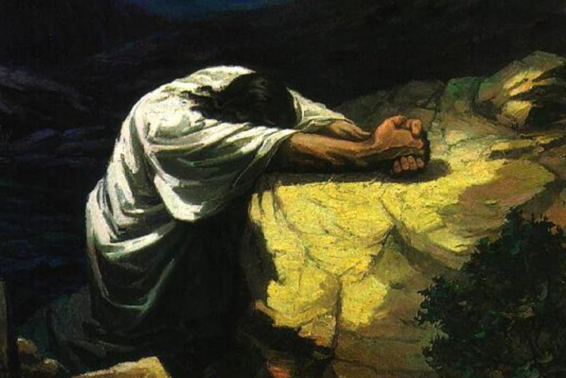
Today we veil the statues and pictures of our home altar with purple cloth, in observance of Passiontide. Although the Fifth Sunday of Lent is not designated as "Passion Sunday" on the new calendar, it is still permissible to cover the statues and sacred images during this week and the next. It really helps to create a spirit of mourning in honor of the sufferings of Our Lord. The Church offers a treasury of beautiful hymns which draw the soul into the mystery of Christ's passion and death.

As Abbot Gueranger writes in The Liturgical Year, Vol VI:
Let us hope that, by God's mercy, the holy time we are now entering upon will work such a happy change in us, that, on the day of judgment, we may confidently fix our eyes on Him we are now about to contemplate crucified in the hands of sinners. The death of Jesus puts the whole of nature in commotion; the midday sun is darkened, the earth is shaken to its very foundations, the rocks are split; may it be that our hearts, too, be moved and pass from indifference to fear, from fear to hope, and, at length from hope to love; so that having gone down with our Crucified to the very depths of sorrow, we may deserve to rise with Him unto light and joy, beaming with the brightness of His Resurrection, and having within ourselves the pledge of new life, which shall then die no more.
During Passiontide, it is good to reflect upon the nature of envy and jealousy, for it is envy and jealousy which killed Jesus.
Envy disrupts social life generally. It sets the child against the father, brother against brother, neighbor against neighbor, and nation against nation. It kills friendship, undermines business relationships, and hinders reconciliation. It is one of the chief sources of misunderstanding, criticism, hatred, vengeance, calumny, detraction, and perverse attacks upon private life.

Envy and greed, the source of the world's unrest and wars, are sins against charity, because they make us seek what belongs to others. Often, even at the cost of harm to our neighbor, we want what does not belong to us....The envious person becomes distrustful, unjust, suspicious. Envy makes its victims ill-tempered, sad, and unapproachable....

Jealousy implies the fear of being displaced by a rival, or of being deprived of that which is rightfully ours or of that which we think ought to be ours. Jealousy is anther form of envy. Jealousy has to do with our own possessions, whereas envy has to do with the possessions of others. We resent an intrusion upon that which belongs to us, and we are prone to become vengeful at this disregard of our rights and claims.

Jealousy goes a step further than envy; it not only tries to lessen the good opinion others enjoy and criticizes those who are praised and rewarded, but is characterized by an excessive love of our own personal good and brings on a fear that we will be deprived of it. Jealousy prefers to see good left undone rather than lose a single degree of praise.
(Excerpt from The Hidden Power of Kindness by Father Lawrence Lovasik, Sophia Institute Press, 1999, pp.62-63)

Thursday, March 19, 2026

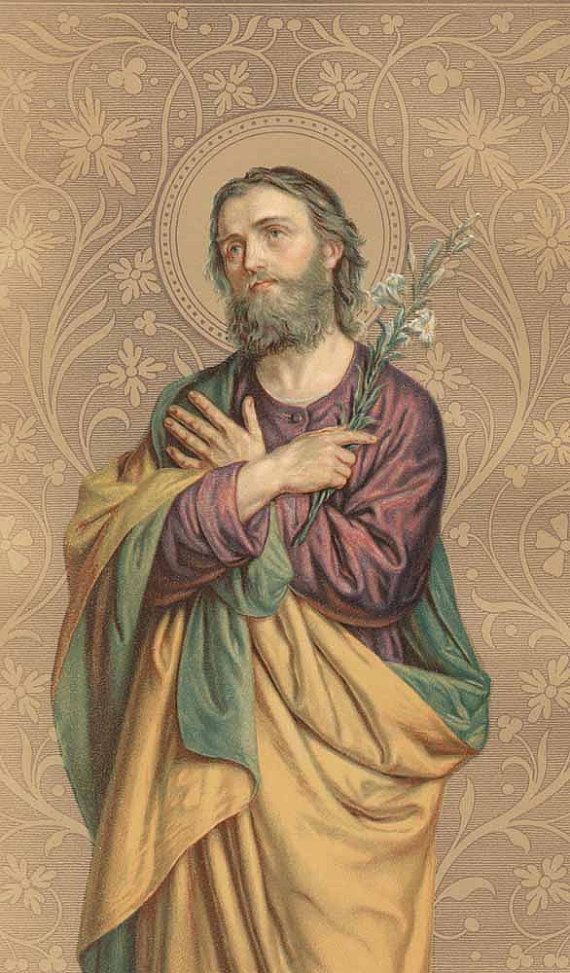
The Glory of St. Joseph

Here is a beautiful meditation given by Prof. Plinio Corrêa de Oliveira:
Saint Joseph—prince of the House of David, prince of a royal family that, although dethroned and decadent, was at its apogee because from it was born the Hope of the Nations—knocks at the door and is rejected! But in this rejection is his first glory....He took the first step of his martyrdom: he led Our Lady to a cave suitable only for animals, where the Child Jesus was born.

To this glory—which was certainly a negative one—were added many others: the glory of being considered a person of no consequence although all public honors were due him; the glory of taking upon himself all the humiliation, all the ignominy and all the weight of the opprobrium that was to fall upon Our Lord. From the very beginning, he had the special bliss of being refused for his love of justice and his grandeur of soul. (Read more.)

St. Joseph's Life of Faith

The following is an excerpt from Divine Intimacy by Father Gabriel of Saint Mary Magdalen, O.C.D: 
St. Joseph's whole life may be summed up as a continual adherence to the Divine plan, even in situations which were very obscure and mysterious to him. In our life, too, there is always some mystery, either because God is pleased to work in a hidden, secret manner or because His action is always incomprehensible to our poor human intelligence. Therefore, we need that glance of faith, that complete confidence which, relying on the infinite goodness of God, convinces us that He always and in all circumstances wills our good and disposes everything to that end. Only this loving trust will permit us, like Joseph, always to say yes to every manifestation of the divine will, a humble, prompt, trustful yes, in spite of the obscurities, the difficulties, the mystery.... (p. 1131)

Wednesday, March 18, 2026

The Passion of Saint Joseph

 From Catholicism:

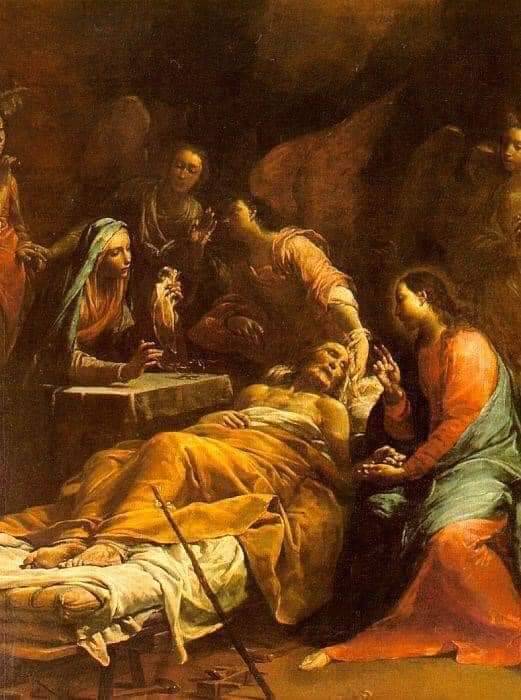
It has always been believed that Saint Joseph died some time before Our Lord’s Passion. The Virgin-Father of Our Lord breathed forth his last surrounded by Jesus and Mary, and thus became the patron of a holy death. Whereas the most holy Virgin was predestined to participate directly and most closely in the Passion of Our Lord — so much so that she earned the title Co-Redemptrix — not so, Saint Joseph. To speak, then, of “The Passion of Saint Joseph” is to consider something other than the great carpenter’s direct participation in the events of Good Friday.

While his body and soul awaited their reunion — the former in the tomb and the latter in the Limbo of the Just — Saint Joseph’s foreknowledge and influence both made him an indirect but very real participant in the drama of our redemption.

To Saint Joseph was given a foreknowledge of Our Lord’s Passion. In 1956, the Patriarch himself revealed this to the visionary, Sister Mary Ephrem Neuzel, as part of the revelations of Our Lady of America:

“My heart suffered with the Hearts of Jesus and Mary. Mine was a silent suffering, for it was my special vocation to hide and shield, as long as God willed, the Virgin Mother and Son from the malice and hatred of men.

“The most painful of my sorrows was that I knew beforehand of their passion, yet would not be there to console them.

“Their future suffering was ever present to me and became my daily cross. I became, in union with my holy spouse, coredemptor of the human race. Through compassion for the sufferings of Jesus and Mary I cooperated, as no other, in the salvation of the world.”

If his foreknowledge of Our Lord’s terrible sufferings made him participate actively, albeit indirectly, in the Passion, his influence made him also a unique passive participant. For potencies that Saint Joseph had carefully fashioned for many years were put into act long after his death as his son “trod the winepress alone” (Is. 63:3).

Parents often observe each other’s features in their offspring. “You look just like your mother when you do that,” or some such thing, is commonly uttered — evoking either a pleasant or a painful correspondence between spouse and child. Jesus, naturally, looked very much like Mary, having received, as He did, all of His genes from her, and none from her husband.[1]

But genes are not all that goes into a child. Whether we call it education, discipline, or training, the multi-faceted art of child-rearing impresses as much or more of the parent onto the child as do the data contained on the double helix of DNA. Personality or temperament are already determined at birth (of this I am reasonably confident), but character is formed by upbringing. As Saint Joseph was truly father to Our Lord in every conceivable way other than the strictly biological, he was, with Mary, responsible for Jesus’ upbringing, that is, the formation of His very unique character. As a father in Israel, he had the duty to foster an environment of respect, love, piety, and religious observance in the home. Head of the Jewish “domestic Church” of the Holy House, he dutifully performed certain household religious ceremonies at which Jesus assisted. As a poor artisan, Joseph also had the duty of teaching Our Lord a trade, and that an arduous one. In this light, we can consider what Saint Paul meant when he wrote to the Hebrews that “whereas indeed he was the Son of God, he learned obedience by the things which he suffered” (Heb. 5:8). Finally, as the male parent of the Boy, Saint Joseph was particularly responsible for imparting the masculine character that the Son of God would bring to His mission to save our race.

In a word, Our Lord’s practice of manly virtue was an icon that had been painted by Saint Joseph. (Read more.)


 (Image source)

Tuesday, March 17, 2026

The Lorica of Saint Patrick

Here is Fáed Fíada, "The Cry of the Deer" or "St. Patrick's Breastplate," a prayer attributed to the great Apostle of Ireland. 
 I arise today through a mighty strength, the invocation of the Trinity, through belief in the Threeness, through confession of the Oneness of the Creator of creation. I arise today through the strength of Christ with His Baptism,
through the strength of His Crucifixion with His Burial
through the strength of His Resurrection with His Ascension,
through the strength of His descent for the Judgment of Doom.

I arise today through the strength of the love of Cherubim
in obedience of Angels, in the service of the Archangels,
in hope of resurrection to meet with reward,
in prayers of Patriarchs, in predictions of Prophets,
in preachings of Apostles, in faiths of Confessors,
in innocence of Holy Virgins, in deeds of righteous men.

I arise today, through the strength of Heaven:
light of Sun, brilliance of Moon, splendour of Fire,
speed of Lightning, swiftness of Wind, depth of Sea,
stability of Earth, firmness of Rock.

I arise today, through God's strength to pilot me:
God's might to uphold me, God's wisdom to guide me,
God's eye to look before me, God's ear to hear me,
God's word to speak for me, God's hand to guard me,
God's way to lie before me, God's shield to protect me,
God's host to secure me:
against snares of devils, against temptations of vices,
against inclinations of nature, against everyone who
shall wish me ill, afar and anear, alone and in a crowd.
I summon today all these powers between me (and these evils):
against every cruel and merciless power that may oppose
my body and my soul,
against incantations of false prophets,
against black laws of heathenry,
against false laws of heretics, against craft of idolatry,
against spells of witches and smiths and wizards,
against every knowledge that endangers man's body and soul.
Christ to protect me today
against poison, against burning, against drowning,
against wounding, so that there may come abundance of reward.

Christ with me, Christ before me, Christ behind me, Christ in me,
Christ beneath me, Christ above me, Christ on my right,
Christ on my left, Christ in breadth, Christ in length,
Christ in height, Christ in the heart of every man who thinks of me,
Christ in the mouth of every man who speaks of me,
Christ in every eye that sees me, Christ in every ear that hears me.

I arise today through a mighty strength, the invocation of the Trinity,
through belief in the Threeness, through confession of the Oneness
of the Creator of creation.
Salvation is of the Lord. Salvation is of the Lord.
Salvation is of Christ. May Thy Salvation, O Lord, be ever with us.

Visions of St. Patrick

Saint Patrick had many visions during his life. He once spent forty days and forty nights in deep prayer on a mountain, in imitation of Moses. According to New Advent:
His only shelter from the fury of the elements, the wind and rain, the hail and snow, was a cave, or recess, in the solid rock; and the flagstone on which he rested his weary limbs at night is still pointed out. The whole purpose of his prayer was to obtain special blessings and mercy for the Irish race, whom he evangelized. The demons that made Ireland their battlefield mustered all their strength to tempt the saint and disturb him in his solitude, and turn him away, if possible, from his pious purpose. They gathered around the hill in the form of vast flocks of hideous birds of prey. So dense were their ranks that they seemed to cover the whole mountain, like a cloud, and they so filled the air that Patrick could see neither sky nor earth nor ocean. St. Patrick besought God to scatter the demons, but for a time it would seem as if his prayers and tears were in vain. At length he rang his sweet-sounding bell, symbol of his preaching of the Divine truths. Its sound was heard all over the valleys and hills of Erin, everywhere bringing peace and joy. The flocks of demons began to scatter, He flung his bell among them; they took to precipitate flight, and cast themselves into the ocean. So complete was the saint's victory over them that, as the ancient narrative adds, "for seven years no evil thing was to be found in Ireland." The saint, however, would not, as yet, descend from the mountain. He had vanquished the demons, but he would now wrestle with God Himself, like Jacob of old, to secure the spiritual interests of his people. The angel had announced to him that, to reward his fidelity in prayer and penance, as many of his people would be gathered into heaven as would cover the land and sea as far as his vision could reach. Far more ample, however, were the aspirations of the saint, and he resolved to persevere in fasting and prayer until the fullest measure of his petition was granted. Again and again the angel came to comfort him, announcing new concessions; but all these would not suffice. He would not relinquish his post on the mountain, or relax his penance, until all were granted. At length the message came that his prayers were heard:
  • many souls would be free from the pains of purgatory through his intercession;
  • whoever in the spirit of penance would recite his hymn before death would attain the heavenly reward;
  • barbarian hordes would never obtain sway in his Church;
  • seven years before the Judgment Day, the sea would spread over Ireland to save its people from the temptations and terrors of the Antichrist; and
  • greatest blessing of all, Patrick himself should be deputed to judge the whole Irish race on the last day.
Such were the extraordinary favors which St. Patrick, with his wrestling with the Most High, his unceasing prayers, his unconquerable love of heavenly things, and his unremitting penitential deeds, obtained for the people whom he evangelized.
Saint Patrick, although he did not die for the faith, came very close to red martyrdom.
He tells us in his "Confessio" that no fewer than twelve times he and his companions were seized and carried off as captives, and on one occasion in particular he was loaded with chains, and his death was decreed. But from all these trials and sufferings he was liberated by a benign Providence. It is on account of the many hardships which he endured for the Faith that, in some of the ancient Martyrologies, he is honoured as a martyr.
The reward of his sufferings was an extraordinary vision that was granted him before he died.
He saw the whole of Ireland lit up with the brightest rays of Divine Faith. This continued for centuries, and then clouds gathered around the devoted island, and, little by little, the religious glory faded away, until, in the course of centuries, it was only in the remotest valleys that some glimmer of its light remained. St. Patrick prayed that the light would never be extinguished, and, as he prayed, the angel came to him and said: "Fear not: your apostolate shall never cease." As he thus prayed, the glimmering light grew in brightness, and ceased not until once more all the hills and valleys of Ireland were lit up in their pristine splendour, and then the angel announced to St. Patrick: "Such shall be the abiding splendour of Divine truth in Ireland."
Many in Ireland said, after Saint Patrick passed from this world, that the night was no longer as dark as it had been before.

Sunday, March 15, 2026

Laetare Sunday

Laetare Jerusalem: et conventum facite omnes qui diligitis eam: gaudete cum laetitia, qui in tristitia fuistis: ut exsultetis, et satiemini ab uberibus consolationis vestrae. (Psalm) Laetatus sum in his, quae dicta sunt mihi: in domum Domini ibimus. Gloria Patri.
Rejoice, O Jerusalem: and come together all you that love her: rejoice with joy, you that have been in sorrow: that you may exult, and be filled from the breasts of your consolation. (Psalm) I rejoiced at the things that were said to me: we shall go into the house of the Lord. Glory be to the Father.
It is Laetare Sunday. Here is a meditation from The Liturgical Year by Abbot Gueranger, O.S.B.:
This Sunday, called, from the first word of the Introit, Lætare Sunday, is one of the most solemn of the year. The Church interrupts her lenten mournfulness; the chants of the Mass speak of nothing but joy and consolation; the organ, which has been silent during the preceding three Sundays, now gives forth its melodious voice; the deacon resumes his dalmatic, and the subdeacon his tunic; and instead of purple, rose-coloured vestments are allowed to be used. These same rites were practised in Advent, on the third Sunday, called Gaudete. The Church's motive for introducing this expression of joy into today's liturgy is to encourage her children to persevere fervently to the end of this holy season. The real mid-Lent was last Thursday, as we have already observed; but the Church, fearing lest the joy might lead to some infringement on the spirit of penance, has deferred her own notice of it to this Sunday, when she not only permits, but even bids, her children to rejoice!...
The blessing of the golden rose is one of the ceremonies peculiar to the fourth Sunday of Lent, which is called on this account Rose Sunday. The thoughts suggested by this flower harmonize with the sentiments wherewith the Church would now inspire her children. The joyous time of Easter is soon to give them a spiritual spring, of which that of nature is but a feeble image.
 Hence, we cannot be surprised that the institution of this ceremony is of a very ancient date. We find it observed under the pontificate of St. Leo IX (eleventh century); and we have a sermon on the golden rose preached by the glorious Pope Innocent III, on this Sunday, and in the basilica of Holy Cross in Jerusalem. In the middle ages, when the Pope resided in the Lateran palace, having first blessed the rose, he went on horseback to the church of the Station. He wore the mitre, was accompanied by all the Cardinals, and held the blessed flower in his hand. Having reached the basilica, he made a discourse on the mysteries symbolized by the beauty, the colour, and the fragrance of the rose. Mass was then celebrated.
After the Mass, the Pope returned to the Lateran palace. Surrounded by the sacred college, he rode across the immense plain which separates the two basilicas, with the mystic flower still in his hand. We may imagine the joy of the people as they gazed upon the holy symbol. When the procession had reached the palace gates, if there were a prince present, it was his privilege to hold the stirrup, and assist the Pontiff to dismount; for which filial courtesy he received the rose, which had received so much honour and caused such joy. ~ Dom Gueranger's The Liturgical Year, Vol. V
Papal Golden Rose (14th century)

Tuesday, March 10, 2026

Novena to St. Joseph

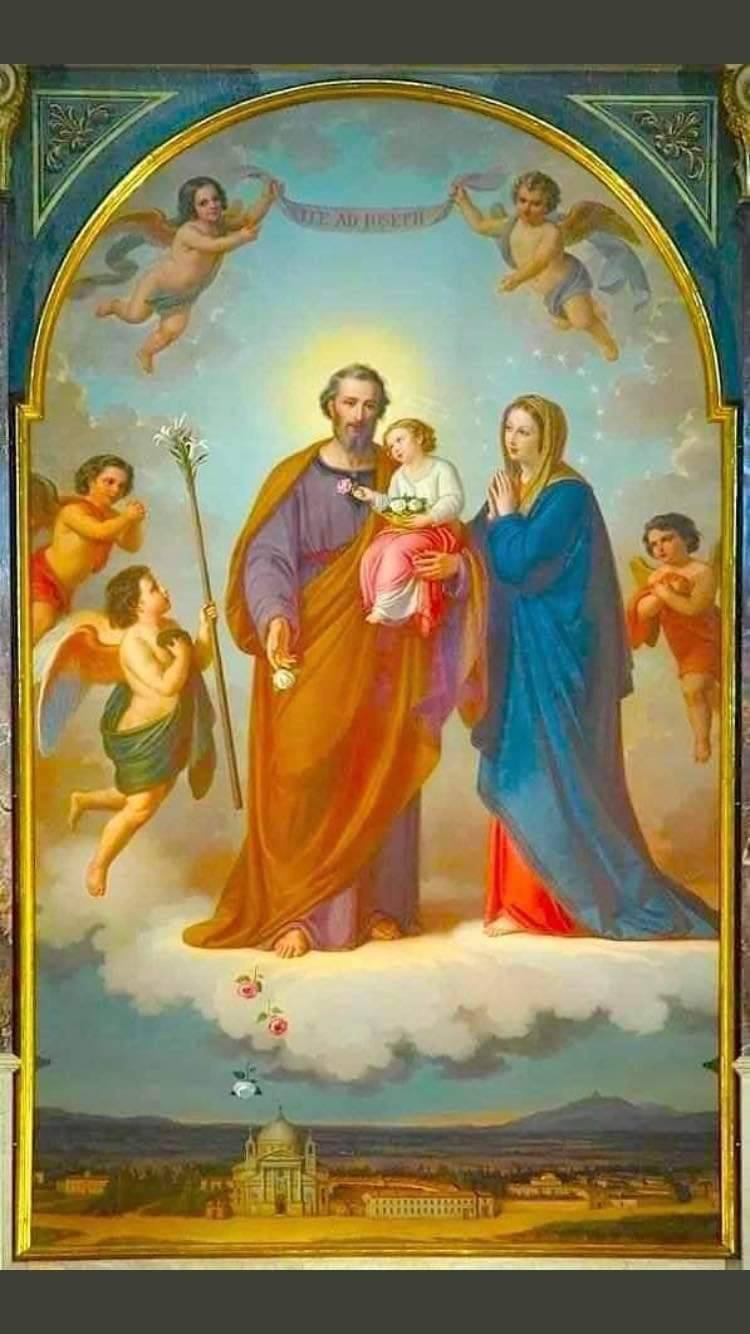
Today begins the nine-days of intensive prayer to Saint Joseph, the foster-father of Our Lord Jesus Christ. He is the patron and protector of fathers and of families, and of the dying. The month of March is dedicated to Saint Joseph. Let us beg his direct intercession. His intercession is powerful; all those who have experienced his intervention know what I am talking about. Really, he will help in any dire situation. I love Saint Joseph. Here is the Fr. Lallemant Novena:
This novena has proven to be highly efficacious. It seems to be pleasing to St. Joseph and helpful to souls. No particular prayers need to be said for this Novena. Every day for nine days turn to St. Joseph in spirit four times (called a visit). during the day and honour Him in the following four points:
 
1. During the first visit, consider ST. JOSEPH'S FIDELITY TO GRACE.Reflect upon the action of the Holy Ghost in his soul. At the conclusion of this brief meditation, thank God for so honoring St. Joseph,and ask, through his intercession for a similar grace.
 
2. Later in the day, consider ST. JOSEPH'S FIDELITY TO THE INTERIOR LIFE.Study his spirit of recollection. Think, thank God, and ask.
 
3. Later still, consider ST. JOSEPH'S LOVE FOR OUR LADY.Think, thank God, and ask.
 
4. Finally, in a fourth visit, reflect upon ST. JOSEPH'S LOVE FOR THE DIVINE CHILD.Think, thank God, and ask.
 

Here is another novena prayer:
Oh, St. Joseph, whose protection is so great, so strong, so prompt before the throne of God. I place in you all my interests and desires. Oh, St. Joseph, do assist me by your powerful intercession, and obtain for me from your Divine Son all spiritual blessings, through Jesus Christ, our Lord. So that, having engaged here below your heavenly power, I may offer my thanksgiving and homage to the most loving of Fathers.

Oh, St. Joseph, I never weary of contemplating you, and Jesus asleep in your arms; I dare not approach while He reposes near your heart. Press Him in my name and kiss His fine head for me and ask him to return the Kiss when I draw my dying breath. St. Joseph, Patron of departing souls - Pray for Me.
 

Here is another little prayer as well:
Dear Saint Joseph, you who have the power to render possible that which seems impossible, come to our aid in our present trouble and distress. Take this important and difficult affair under your particular protection that it may end happily.
Dear Saint Joseph, all our confidence is in you. Let it not be said we have invoked you in vain. Since you are so powerful with Jesus and Mary, show that your goodness equals your power.
Divine Providence did provide. Divine Providence can provide. Divine Providence will provide. Amen.


Sunday, March 8, 2026

Novena to St. Patrick

Today begins the novena to Saint Patrick, Apostle of the Irish. 
Say once a day for 9 days, especially beginning on 8 March and ending on 16 March, the eve of the Feast of St. Patrick. (From Fish Eaters) 
Blessed saint Patrick, glorious Apostle of Ireland, who didst become a friend and father to me for ages before my birth, hear my prayer and accept, for God, the sentiments of gratitude and veneration with which my heart is filled. Through thee I have inherited that faith which is dearer than life. I now make thee the representative of my thanks, and the mediator of my homage to Almighty God. Most holy Father and patron of my country, despise not my weakness; remember that the cries of little children were the sounds that rose, like a mysterious voice from heaven, and invited thee to come amongst us. Listen, then, to my humble supplication; may my prayer ascend to the throne of God, with the praises and blessings which shall ever sanctify thy name and thy memory. May my hope be animated by the patronage and intercession of our forefathers, who now enjoy eternal bliss and owe their salvation, under God, to thy courage and charity. Obtain for me grace to love God with my whole heart, to serve him with my whole strength, and to persevere in good purposes to the end, o faithful shepherd of the Irish flock, who wouldst have laid down a thousand lives to save one soul, take my soul, and the souls of my countrymen, under thy special care. Be a father to the Church of Ireland and her faithful people. Grant that all hearts may share the blessed fruits of that Gospel thou didst plant and water. Grant that, as our ancestors of old had learned, under thy guidance, to unite science with virtue, we too, may learn, under thy patronage, to consecrate all Christian duty to the glory of God. I commend to thee my native land, which was so dear to thee while on earth. Protect it still, and, above all, direct its chief pastors, particularly those who teach us. Give them grace to walk in thy footsteps, to nurture the flock with the word of life and the bread of salvation, and to lead the heirs of the Saints thou hast formed to the possession of that glory which they, with Thee, enjoy in the kingdom of the Blessed: through Christ Jesus, our Lord. Amen.
V. Pray for us, O glorious saint Patrick. R. And obtain for us the intention of this Novena.

Third Sunday of Lent

It is Scrutiny Sunday.To quote:

In order that we may understand the full force of the warning conveyed to us by the Church in this Gospel, we must keep before us the great reality that this is the acceptable Time. In every part of the world, there are conversions being wrought; millions are being reconciled with God; divine Mercy is lavish of pardon to all that seek it. But will all persevere? They that are now being delivered from the power of Satan—will they all be free from his yoke when next year’s Lent comes around? A sad experience tells the Church that she may not hope so grand a result. Many will return to their sins, and that too before many weeks are over. And if the Justice of God overtake them in that state—what an awful thing it is to say it, yet it is true;—some, perhaps many, of these sinners will be eternally lost! Let us, then, be on our guard against a relapse; and in order that we may ensure our Perseverance, without which it would have been to little purpose to have been for a few days in God’s grace—let us watch, and pray; let us keep ourselves under arms; let us ever remember that our whole life is to be a warfare. Our soldier-like attitude will disconcert the enemy, and he will try to gain victory elsewhere.

The Third Sunday of Lent is called Oculi from the first word of the Introit. In the primitive Church, it was called Scrutiny Sunday, because it was on this day that they began to examine the Catechumens, who were to be admitted to Baptism on Easter night. All the Faithful were invited to assemble in the Church, in order that they might bear testimony to the good life and morals of the candidates. At Rome, these examinations, which were called the Scrutinies, were made on seven different occasions, on account of the great number of aspirants to Baptism; but the principal Scrutiny was that held on the Wednesday of the Fourth Week. We will speak of it later on.

The Roman Sacramentary of St. Galasius gives us the form in which the Faithful were convoked to these assemblies. It is as follows. “Dearly beloved Brethren: you know that the day of Scrutiny, when our elect are to receive the holy instruction, is at hand. We invite you, therefore, to be zealous and to assemble on N., (here, the day was mentioned), at the hour of Sext; that so we may be able, by the divine aid, to achieve, without error, the heavenly mystery, whereby is opened the gate of the kingdom of heaven, and the devil is excluded with all his pomps.” The invitation was repeated, if needed, on each of the following Sundays. The Scrutiny of this Sunday ended in the admission of a certain number of candidates: their names were written down and put on the Diptychs of the Altar, that they might be mentioned in the Canon of the Mass. The same also was done with the names of their Sponsors.

The Station was, and still is, in the Basilica of Saint Laurence outside the walls. The name of this, the most celebrated of the Martyrs of Rome, would remind the Catechumens that the Faith they were about to profess would require them to be ready for many sacrifices. (Read entire post.)

Saturday, March 7, 2026

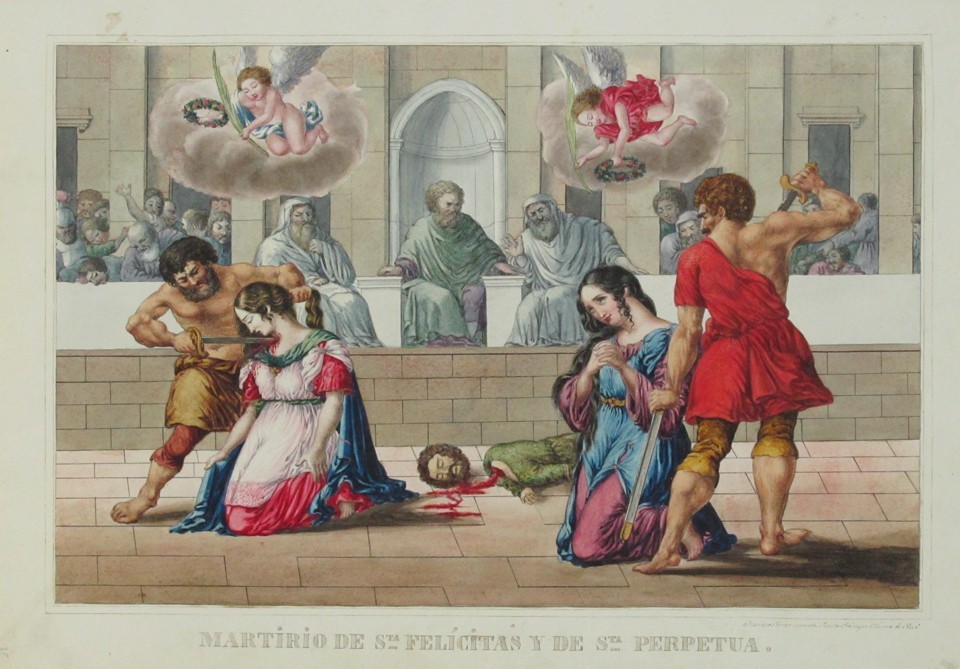
Saints Perpetua and Felicity

The detailed account of their sufferings is one of the earliest and most highly authenticated testimonies from the early Church. The martyrs, two young mothers and their friends, faced their ordeal with courage and joy.
Now dawned the day of their victory, and they went forth from the prison into the amphitheatre as it were into heaven, cheerful and bright of countenance; if they trembled at all, it was for joy, not for fear. Perpetua followed behind, glorious of presence, as a true spouse of Christ and darling of God; at whose piercing look all cast down their eyes. Felicity likewise, rejoicing that she had borne a child in safety, that she might fight with the beasts, came now from blood to blood, from the midwife to the gladiator, to wash after her travail in a second baptism. And when they had been brought to the gate and were being compelled to put on, the men the dress of the priests of Saturn, the women the dress of the priestesses of Ceres, the noble Perpetua remained of like firmness to the end, and would not. For she said: For this cause came we willingly unto this, that our liberty might not be obscured. For this cause have we devoted our lives, that we might do no such thing as this; this we agreed with you. Injustice acknowledged justice; the tribune suffered that they should be brought forth as they were, without more ado. Perpetua began to sing, as already treading on the Egyptian's head. Revocatus and Saturninus and Saturus threatened the people as they gazed. Then when they came into Hilarian's sight, they began to say to Hilarian, stretching forth their hands and nodding their heads: You judge us, they said, and God you. At this the people being enraged besought that they should be vexed with scourges before the line of gladiators (those namely who fought with beasts). Then truly they gave thanks because they had received somewhat of the sufferings of the Lord.

[....]

But for the women the devil had made ready a most savage cow, prepared for this purpose against all custom; for even in this beast he would mock their sex. They were stripped therefore and made to put on nets; and so they were brought forth. The people shuddered, seeing one a tender girl, the other her breasts yet dropping from her late childbearing. So they were called back and clothed in loose robes. Perpetua was first thrown, and fell upon her loins. And when she had sat upright, her robe being rent at the side, she drew it over to cover her thigh, mindful rather of modesty than of pain. Next, looking for a pin, she likewise pinned up her dishevelled hair; for it was not meet that a martyr should suffer with hair dishevelled, lest she should seem to grieve in her glory. So she stood up; and when she saw Felicity smitten down, she went up and gave her her hand and raised her up. And both of them stood up together and the (hardness of the people being now subdued) were called back to the Gate of Life. There Perpetua being received by one named Rusticus, then a catechumen, who stood close at her side, and as now awakening from sleep (so much was she in the Spirit and in ecstasy) began first to look about her; and then (which amazed all there), When, forsooth, she asked, are we to be thrown to the cow? And when she heard that this had been done already, she would not believe till she perceived some marks of mauling on her body and on her dress. Thereupon she called her brother to her, and that catechumen, and spoke to them, saying: Stand fast in the faith, and love you all one another; and be not offended because of our passion. (Read more.)
 (Image)

Wednesday, March 4, 2026

Novena of Grace

The powerful novena to St. Francis Xavier begins today.
Most amiable and most loving Saint Francis Xavier, in union with thee I reverently adore the Divine Majesty. I rejoice exceedingly on account of the marvelous gifts which God bestowed upon thee. I thank God for the special graces He gave thee during thy life on earth and for the great glory that came to thee after thy death. I implore thee to obtain for me, through thy powerful intercession, the greatest of all blessings--that of living and dying in the state of grace. I also beg of thee to secure for me the special favor I ask in this novena.
(Here you may mention the grace, spiritual or temporal, that you wish to obtain.)
In asking this favor, I am fully resigned to the Divine Will. I pray and desire only to obtain that which is most conducive to the greater glory of God and the greater good of my soul.
V. Pray for us, Saint Francis Xavier.
R. That we may be made worthy of the promises of Christ

Let Us Pray
O God, Who didst vouchsafe, by the preaching and miracles of Saint Francis Xavier, to join unto Thy Church the nations of the Indies, grant, we beseech Thee, that we who reverence his glorious merits may also imitate his example, through Jesus Christ Our Lord. Amen.
Then Recite:
  • Our Father
  • Hail Mary - Three times in memory of Saint Francis Xavier's devotion to the Most Holy Trinity
  • Glory be to the Father - 10 times in thanksgiving for the graces received during his 10 years of apostleship.

Sunday, March 1, 2026

Second Sunday of Lent

undefined

  Moses and Elias witness the Transfiguration.

The Gospel is from St. Matthew 17:1-9. This momentary vision of Christ, in his glory, was given in order to strengthen the three principal Apostles to face the trials to their faith, which the sufferings and crucifixion of their beloved master would bring on them. For the very same reason it is retold to us today, in the early part of Lent, to encourage us to persevere in our Lenten mortification. It reminds us that, very soon, the Easter bells will be ringing out their message of joy once more. If we are sharers with Christ in his sufferings, we shall be sharers with him in his glory as St. Paul reminds us.
This is a truth we all too easily forget, namely, that we cannot and do not get to heaven in a limousine. Our spell on earth is the chance given us by our heavenly Father to earn an eternal reward. This reward surpasses even the wildest imagination of man. We could never earn it, but God accepts the little we can do and provides the balance of his infinite mercy. And yet there are many, far too many, who refuse even that little bit that is asked of them, and are thus running the risk of not partaking in God's scheme for their eternal happiness.
And are they any happier during their few years on this earth by acting thus towards the God of mercy? Can they, by ignoring God and their duties towards him, remove all pain, all sorrow, all sufferings, from their daily lives? Death, which means a total separation from all we possessed and cherished in this world, is waiting around the corner for all of us. Who can face it more calmly and confidently —the man who is firmly convinced that it is the gateway to a new life, and who has done his best to earn admission through that gateway, or the man who has acted all his life as if death did not exist for him, and who has done everything to have the gate to the new life shut forever in his face?
Illnesses and troubles and disappointments are the lot of all men. They respect neither wealth, nor power, nor position. The man who knows his purpose in life, and is ever striving to reach the goal God's goodness has planned for him, can and will see in these trials of life the hand of a kind father who is preparing him for greater things. His sufferings become understandable and more bearable because of his attitude to life and its meaning. The man who ignores God and tries to close the eyes of his mind to the real facts of life has nothing to uphold him or console him in his hours of sorrow and pain. Yet, sorrow and pain will dog his footsteps, strive as he will to avoid them, and he can see no value, no divine purpose in these, for him, misfortunes.
Christ has asked us to follow him, carrying our daily cross, and the end of our journey is not Calvary but resurrection, the entrance to a life of glory with our risen Savior. The Christian who grasps his cross closely and willingly, knowing its value for his real life, will find it becomes lighter and often not a burden but a pleasure. The man who tries to shuffle off his cross, and who curses and rebels against him who sent it, will find it doubles its weight and loses all the value it was intended to have for his true welfare. (Read entire post.)
Related Posts with Thumbnails