

Sunday, May 17, 2026

Sunday within the Octave of the Ascension

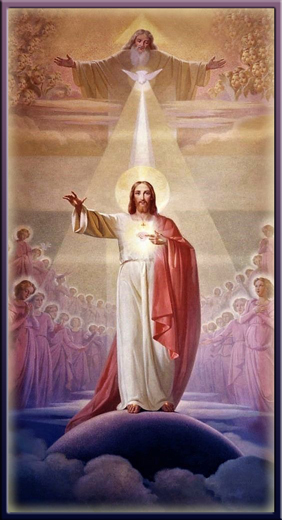
Ascension of Our Lord 

From Dom Gueranger:

In the Middle Ages, the Sunday within the Octave of the Ascension, was called “The Sunday of Roses,” because it was the custom to strew the pavement of the Churches with roses, as an homage to Christ who ascended to heaven when earth was in the season of flowers. How well the Christians of those times appreciated the harmony that God has set between the world of grace and nature! The Feast of the Ascension, when considered in its chief characteristic, is one of gladness and jubilation, and Spring’s loveliest days are made for its celebration. Our forefathers had the spirit of the Church; they forgot, for a moment, the sadness of poor earth at losing her Emmanuel, and they remembered how he said to his Apostles: If ye loved me, ye would be glad, because I go to my Father! Let us do in like manner; let us offer to Jesus the Roses wherewith he has beautified our earth: their beauty and fragrance should make us think of him who made them, of Him who calls himself The Flower of the field and the Lily of the valleys. He loved to be called “Jesus of Nazareth;” for Nazareth means a Flower: and the symbol would tell us what a charm and sweetness there is in Him we serve and love as our God. (Read more.)


From The Catholic Company:

First, this was the first time the Second Person of the Holy Trinity appeared in heaven after he "made himself a little lower than the angels" in his Incarnation.  A completely new thing took place in heaven; at the Ascension the angels worship human nature in the Person of Jesus Christ for the first time, ever.

Human nature was created lower than angelic nature, and, because of the Fall, there were no human beings in heaven before Jesus ascended there. That is, not only were we created lower, but through sin we fell from the place that we did have in God's creation.  Now, because of his Incarnation, Passion, and Resurrection, the Second Person of the Holy Trinity has a physical, human body in heaven. Human nature has been exalted in Jesus! This feat of the redemption of mankind was even greater than God's original act of creation.

Second, even more remarkable is that Christians have a share in the Ascension of Jesus. Christ ascending into heaven in his glorified human body applies to all of the redeemed, in that we through Christ are brought back to the throne of God, back to what we were created for. Through his saving work, the redeemed we will be in heaven for all eternity, soul and body. When we reflect on the Ascension, we should remember that this is the future glory that we are meant for; in God's mercy he has restored us to Himself through His Son. 

This destiny that God has planned for us, which is a stunning and remarkable display of his mercy and love, is an eternal reality that should inform our daily actions for the better.

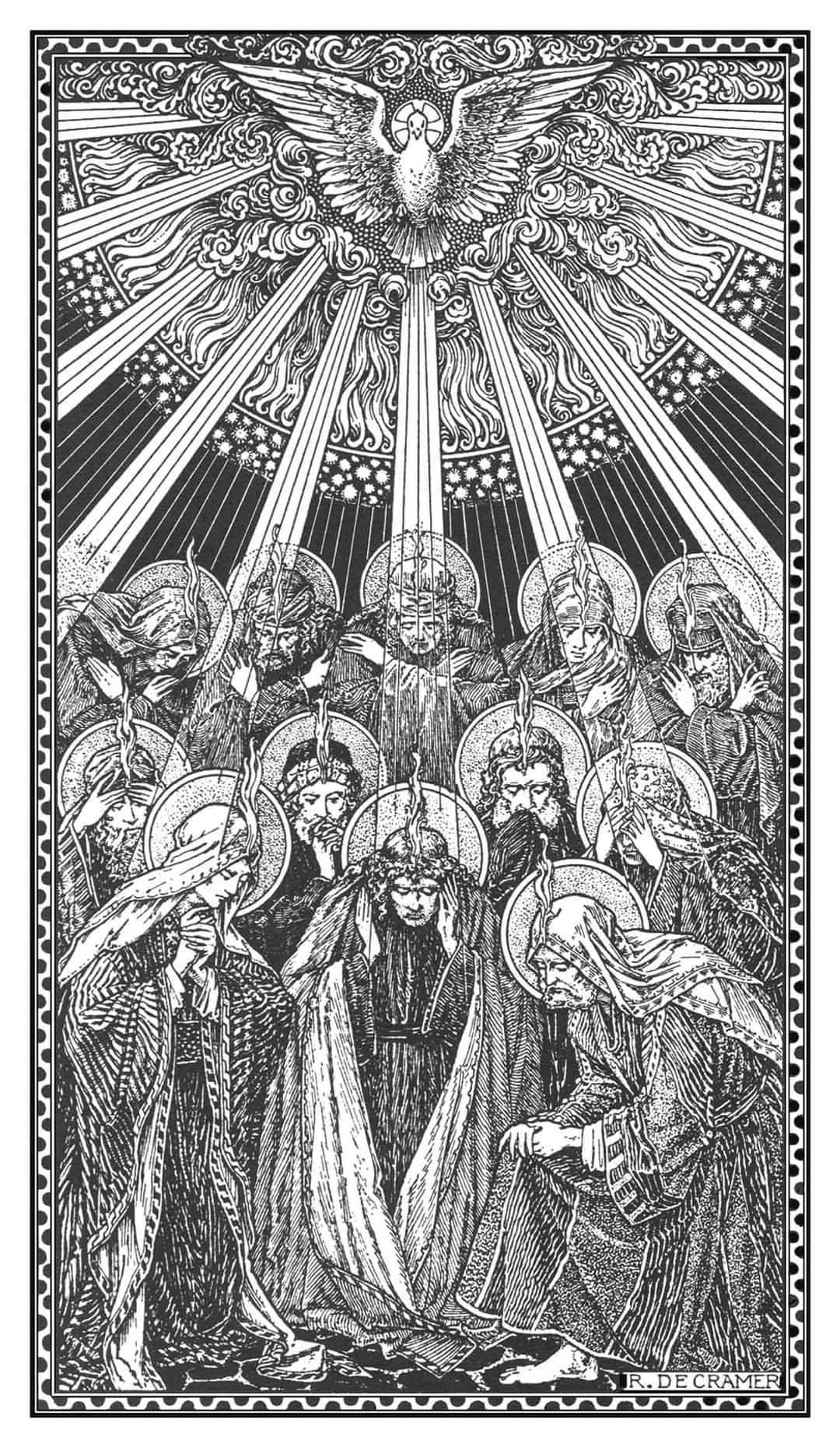
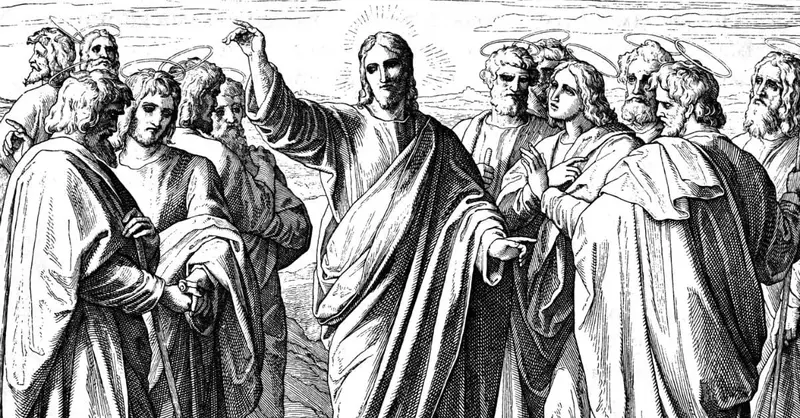
Third, Ascension Thursday is closely connected with Pentecost. After Jesus ascended into heaven, the disciples were instructed to go to Jerusalem and wait. They, together with the Blessed Virgin Mary, waited and prayed for a period of 9 days until the Holy Spirit was poured out on them at Pentecost. Although Jesus' physical presence was taken from them with his Ascension into heaven, he did not leave them as orphans; he sent the Holy Spirit to dwell in their souls and to guide them into all truth.

“I have said these things to you while I am still with you. But the Advocate, the Holy Spirit, whom the Father will send in my name, will teach you everything, and remind you of all that I have said to you" (John 14).

In fact, Jesus told his disciples that unless he ascended to heaven, the Holy Spirit would not come to them. This period of 9 days that the Apostles prayed and waited, from the Ascension to Pentecost, was the Church's first novena, and the biblical precedent for all the various novenas that believers pray today.

This period of nine days of prayer to the Holy Spirit is something that we can enter into again. Scroll below for a novena to prepare your hearts for Pentecost, just like the Apostles and the Blessed Mother did 2,000 years ago. (Read more.)

Saturday, May 16, 2026

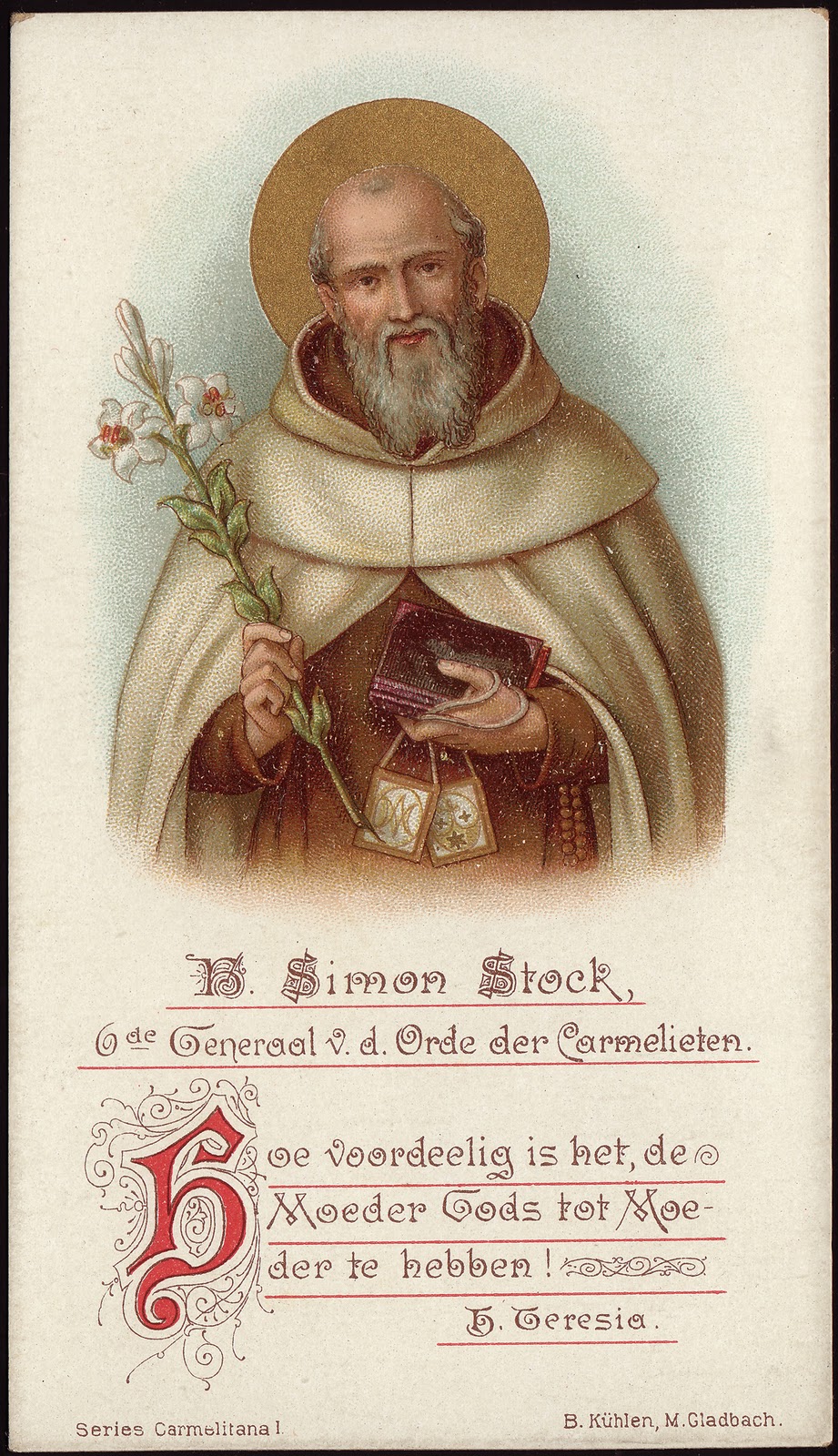
St. Simon Stock and the Scapular

From Louange de sa Gloire:
The Brown Scapular is a Marian devotion which originated at about the same time as the Rosary, and like the Marian shrine at Walsingham, had its origin in England. In the thirteenth century, during the time of the Crusades, Simon Stock went on a pilgrimage to the Holy Land where he met a group of hermits on Mount Carmel. These claimed to be the successors of Elijah and his followers, and, attracted by their way of life, Simon returned with them to England when the situation became too dangerous in Palestine because of the Saracens.
They settled at Aylesford in Kent and in 1254 Simon was elected Superior-general of the now mendicant Carmelites, who were regarded somewhat like the other mendicant orders such as the Franciscans and Dominicans.
Simon founded other houses as the order began to grow but he faced many problems as the original 'solitary' ideal of the hermits changed towards the more communal approach of the mendicants. These weren't just internal problems, as older orders also resented the arrival of these newcomers with their own particular devotion to Mary. 
Simon withdrew to his monastic room or 'cell' - probably at Cambridge by this time - to try and gain some relief from the problems faced both by himself and his Carmelite order, and in order to pray to Mary; it was then that he had his famous vision of her bringing the Brown Scapular to him with the following words, which are preserved in a fourteenth century narrative: "This will be for you and for all Carmelites the privilege, that he who dies in this will not suffer eternal fire.  
The Scapular promise is based on the two elements of Mary's spiritual maternity and her mediation of grace, that is that she is the 'spiritual' mother of all mankind, as well as the 'channel' by which all grace comes to us, understood in the sense that she too is dependent on the sole mediation of Christ, her son. 
This promise implies that Mary will intercede to ensure that the wearer of the Scapular obtains the grace of final perseverance, that is of dying in a state of grace. The modern Scapular consists of two pieces of brown rectangular cloth, roughly an inch by an inch and a half, which are usually decorated with appropriate Marian pictures, and are connected by two narrow brown cords, are worn around the neck and shoulders, hanging down to the front and back. 
The Scapular promise has come in for criticism, on somewhat similar grounds to those argued against Walsingham, that is, a lack of early supporting documentation. However it seems that the above account was found in the earliest record of St Simon Stock's life, and it is unreasonable to expect written evidence from the thirteenth century, since the Carmelite order didn't produce much literature until it had grown somewhat larger in the mid-fourteenth century.
It was about this time that the wearing of the Scapular spread to the laity, and gradually over the centuries it has gained in popularity, particularly following promotion of the 'Sabbatine Privilege' by popes of the sixteenth and seventeenth centuries. This is an idea which probably grew out of a deepened understanding of the promise originally made to St Simon, and essentially involves the idea that Mary will intervene to help those who have worn the Scapular before death and now find themselves in purgatory, particularly on a Saturday, the day traditionally dedicated to Mary. 
In order to be eligible for the Scapular promise, which is really a sign of consecration to Mary and hence to God, it is necessary for the wearer to have observed the virtue of chastity according to their state in life, whether married or single, and to have complied with the spirit of inner devotion which the wearing of the Scapular implies. 
This is a devotion which has also been continually encouraged by more recent popes, and so it is not something which has lost its power, even if it may have become unfashionable in some circles. If, as in the case of the Rosary, a whole series of popes, have, by virtue of their unique position of authority, approved the Scapular devotion, then clearly it just cannot be dismissed out of hand, at least not by Catholics who take the teaching and pastoral authority of the Church seriously. There is also an emphasis on the Scapular in the apparitions at Fatima which means it retains its relevance for today.

Sources: Farmer, The Oxford Dictionary of Saints; Carol, Mariology, Vol. 3

Great talk on the scapular, HERE.

Friday, May 15, 2026

Pentecost Novena


The Pentecost novena begins today, even for those who were not able to celebrate the Ascension yesterday. The Golden Sequence makes a superb novena prayer.

Veni, Sancte Spiritus,        Come, Holy Spirit,
et emitte caelitus                send forth the heavenly
lucis tuae radium.               radiance of your light.

Veni, pater pauperum,      Come, father of the poor,
veni, dator munerum         come giver of gifts,
veni, lumen cordium.         come, light of the heart.

Consolator optime,             Greatest comforter,
dulcis hospes animae,         sweet guest of the soul,
dulce refrigerium.               sweet consolation.

In labore requies,                In labor, rest,
in aestu temperies               in heat, temperance,
in fletu solatium.                  in tears, solace.

O lux beatissima,                 O most blessed light,
reple cordis intima               fill the inmost heart
tuorum fidelium.                  of your faithful.

Sine tuo numine,                  Without your divine will,
nihil est in homine,               there is nothing in man,
nihil est innoxium.                nothing is harmless.

Lava quod est sordidum,     Wash that which is unclean,
riga quod est aridum,           water that which is dry,
sana quod est saucium.        heal that which is wounded.

Flecte quod est rigidum,      Bend that which is inflexible,
fove quod est frigidum,        warm that which is chilled,
rege quod est devium.          make right that which is wrong.

Da tuis fidelibus,                    Give to your faithful,
in te confidentibus,                who rely on you,
sacrum septenarium.            the sevenfold gifts.

Da virtutis meritum,             Give reward to virtue,
da salutis exitum,                  give salvation at our passing on,
da perenne gaudium,            give eternal joy.
Amen, Alleluia.                      Amen, Alleluia.

Thursday, May 14, 2026

Ascension, Time and Eternity

From the Sisters of Carmel Newsletter:
In the midst of this great work of life, the work of our salvation, weariness is bound to plague us: the way seems so very long!  But we have Our Lord's own testimony that it is but "a little while." (John 16)  "Christ's return is both His real presence now in our lives and in the life of the Church and His glorious return at the end of time.  Even the second is not far off, says St. Augustine: 'It seems long because now time is still passing by; but when the wait is over we shall see how short it was.'" (St. Andrew's, Matins Lesson, 3rd Sunday after Easter)

"Time."  What is it?  And what is its worth?  In this perpetually moving and busy world of ours, where we seem to have more and more to do and less time to do it, where we are constantly on the move from one task to the next, always having to think of the next thing, and almost constantly "multi-tasking," how often is it that we think about this great treasure in our lives - and how by it God means to form and mold us?  Time shakes us each/ like a sieve/causing what is true in us/to rise towards the surface (-S. R.)

We cannot pause time, nor slow it down or speed it up, nor replay what has already passed.  We have been given only so much of it by our good God, and it is constantly passing by.  Understanding time, and its value, is perhaps done best by realizing what time is not: time is not eternity.  How often we can read in the writings and counsels of the Saints the importance of knowing the shortness of time and the length of eternity.  By reminding us of this, they mean to instruct us that our hearts, far from being attached to the passing things of earth, should rather be "fixed where true joys are." (Paschaltide liturgy)  The eminent theologian, Fr. Reginald Garrigou- Lagrange, wrote beautifully and succinctly to explain this, and it merits reading, meditation - and further re-reading and consideration.  It is counsel for a lifetime:

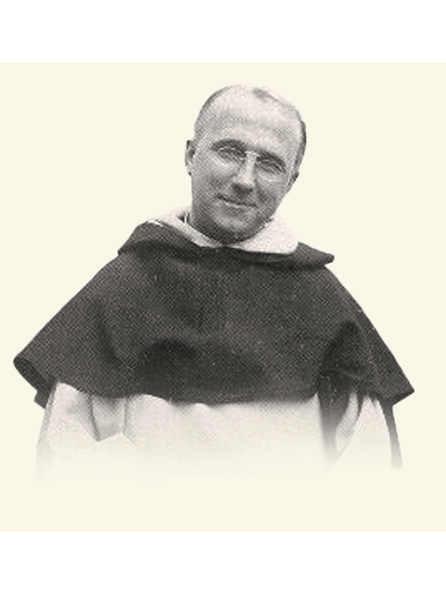
 Father Garrigou-Lagrange"As the present minute is passing, let us bear in mind that what exists is not merely our body with its sensibility, its varying emotions of pain and pleasure; but also our spiritual and immortal soul, and the actual grace we receive, and Christ who exerts His influence upon us, and the Blessed Trinity dwelling within us.  We shall then have some idea of the infinite riches contained in the present moment and the connection it has with the unchanging instant of eternity into which we are someday to enter.  We should not be satisfied with viewing the present moment along the horizontal line of time, as the connecting link between a vanished past and an uncertain temporal future; we ought rather to view it along that vertical line of time which links it up with the unique instant of unchanging eternity."
- Fr. Reginald Garrigou- Lagrange
(Read more.)

Ascension of the Lord

(Icon of the Ascension by Andrei Rublev)

Let us look towards Heaven.
Our desires, on this Day, should be, that we may follow our Jesus to life everlasting, and overcome all the hindrances that we may have to encounter on the way thither....
A tradition, handed down from the early ages, and confirmed by the revelations of the Saints, tells us that the Ascension of our Lord took place at the hour of Noon. The Carmelites of St. Teresa's Reform honour this pious tradition by assembling in the Choir, at the hour of mid-day on the Ascension; and spend it in the contemplation of this last of Jesus' mysteries, following him, in thought and desire, to the throne of his glory.
Let us, also, follow him; but before looking on the bright Noon which smiles on his triumph, let us go back in thought to his first coming among us. It was at mid-night, in the stable of Bethlehem. That dark and silent hour was an appropriate commencement to the three and thirty years of his life on earth. He had come to accomplish a great mission: year by year, and day by day, he laboured in its fulfillment. It was nigh to its fulfillment, when men laid their sacrilegious hands upon him, and nailed him to a Cross. It was mid-day, when he was thus raised up in the air; but the Eternal Father would not permit the sun to shine on Jesus' humiliation. Darkness covered the face of the earth ; and that Day had no Noon. Three hours after, the sun re-appeared. Three days after, the Crucified rose again from the Tomb, and it was at the early dawn of light.
On this day, yea at this very hour, his work is completed. He has redeemed us, by his Blood, from our sins ; he has conquered death by his "Resurrection to life :—had he not a right to choose, for his Ascension, the hour when the sun is pouring forth his warmest and brightest beams... ~Abbot Gueranger's The Liturgical Year
Here is the Ascension hymn:
Jesu, nostra redemptio,
Amor et desiderium,
Deus Creator omnium,
Homo in fine temporum.


O Jesus, our redemption,
our love, and our desire,
God, Creator of all things,
become Man in the fullness of time.

Quae te vicit clementia,
Ut ferres nostra crimina,
Crudelem mortem patiens,,
Ut nos a morte tolleres!


What tender love, what pity
compelled Thee to bear our crimes,
to suffer a cruel death
that we, from death, might be saved?

Inferni claustra penetrans,
Tuos captivos redimens,
Victor triumpho nobili
Ad dextram Patris residens:


Into death’s dark cloister didst Thou descend,
and from it captives free didst bring;
Thy triumph won, Thou didst take Thy place,
Thou, the Victor, at the Father’s right.

Ipse te cogat pietas,
Ut mala nostra superes,
Parcendo, et voti compotes
Nos tuo vultu saties.


'Twas a tender love, a costly compassion
that pressed Thee our sorrows to bear;
granting pardon, Thou didst raise us up
to fill us full with the splendour of Thy face.

Tu esto nostrum gaudium,
Qui es futurus praemium:
Sit nostra in te gloria
Per cuncta semper saecula. 


Thou art already the joy of all our days,
Thou Who in eternity will be our prize;
let all our glory be in Thee,
forever, and always, and in the age to come.

Wednesday, May 13, 2026

Vigil of the Ascension


Let us live as if we were already There.
Why do we on earth not strive to find rest with Him in heaven even now, through the faith, hope and love that unites us to Him? While in Heaven He is also with us; and we while on earth are with Him. He is here with us by His divinity, His power and His love. We cannot be be in heaven, as He is on earth, by divinity, but in Him, we can be there by love.
~ St. Augustine, Sermon for the Ascension

Fatima

"And a great sign appeared in the heavens, a woman clothed with the sun, with the moon at her feet, and on her head a crown of twelve stars." Apocalypse 12:1

During her final apparition at Fatima in October 1917, the Blessed Virgin Mary was dressed as Our Lady of Mt. Carmel, holding the brown scapular; she was obviously encouraging everyone to wear the garment of grace, just as she urged everyone to pray the rosary on a daily basis. 750 years before, Our Lady had given the scapular to St Simon Stock, telling him: "Whosoever shall die wearing this scapular shall not suffer eternal fire."

On July 13, 1917, Our Lady at Fatima showed the three little children the Vision of Hell; it was the first part of the controversial "Secret of Fatima," and in some ways, the most terrible aspect of it, for hell is a place where anyone can go if they break God's law and do not repent. The children were so frightened by the vision that afterwards all earthly sufferings seemed like nothing. I think someone once said that Our Lord in the Gospels warns His disciples about hell "where the worm dieth not, and the flame is not extinguished" (Mark 9 :44) more often than He promises them Heaven, "for straight is the way and narrow is the gate that leads to life, and few there are that find it." (Matthew 7:14)

Along with the scapular and rosary, Our Lady asked that we perform the duties of our state in life; she knew that in future times how difficult it would become to fulfill one's most basic obligations to God and to other people, and yet the fulfillment of those duties often is the difference between heaven and hell. Yet, as the saints testify, many have been saved because they clung to some small token of devotion to Our Lady in spite of everything, and the Mother of Mercy interceded for them. As the angel at Fatima instructed the three children to pray:

O my Jesus, forgive us our sins, save us from the fires of hell, lead all souls to heaven, especially those who are in most need of thy mercy!

Sunday, May 10, 2026

Sixth Sunday of Easter


 Or Fifth Sunday after Easter according to the traditional rite. From Dom Prosper Gueranger, The Liturgical Year, Paschaltide.:

Our Lord begins now to reap the fruit of the word he has sown in their hearts: oh! how patiently has he not waited for it! If he praised them for their faith, when they were with him on the night of the Last Supper; he may surely do so now that they have seen him in the splendor of his Resurrection, and have been receiving such teaching from his lips. He said to them, at the Last Supper: The Father loveth you, because ye have loved Me;—how much more must not the Father love them now, when their love for Jesus is so much increased? Let us be consoled by these words. Before Easter, our love of Jesus was weak, and we were tepid in his service; but now that we have been enlightened and nourished by his Mysteries, we may well hope that the Father loves us, for we love Jesus better, far better, than we did before. This dear Redeemer urges us to ask the Father, in his name, for everything we need. Our first want is perseverance in the spirit of Eastertide; let it be our most earnest prayer; let it be our intention now that we are assisting at the holy Sacrifice, which is soon to bring Jesus upon our Altar.

Saturday, May 9, 2026

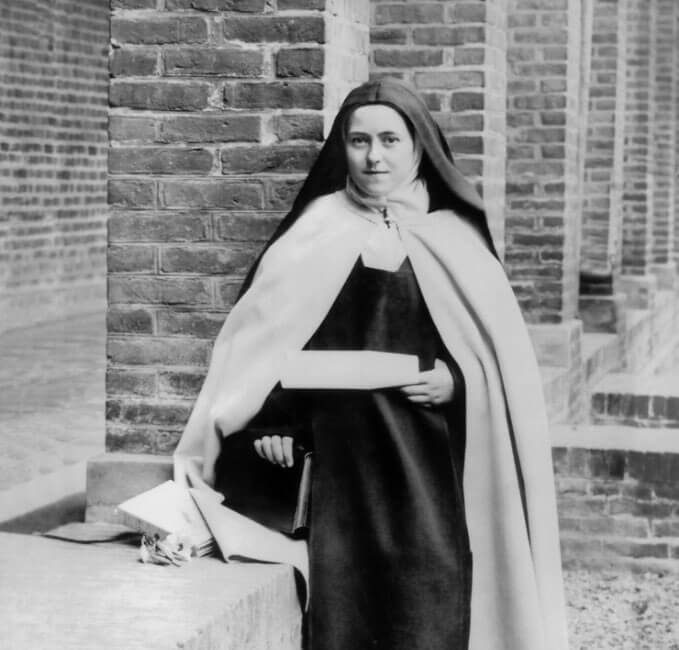
Novena Rose Prayer


My dear friends, please join me in making a novena to St.
Thérèse of the Child Jesus and the Holy Face for several personal intentions.
Novena Rose Prayer
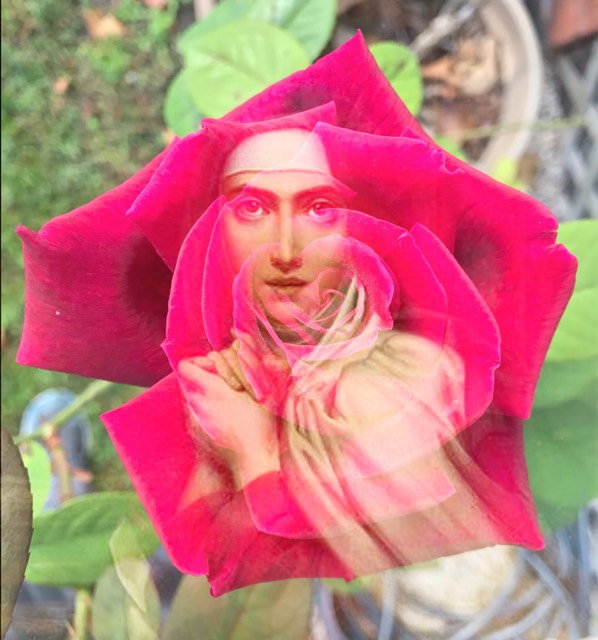
O Little Therese of the Child Jesus, please pick for me a rose from the heavenly gardens and send it to me as a message of love.
O Little Flower of Jesus, ask God today to grant the favors I now place with confidence in your hands...(mention petitions).
St. Therese, help me to always believe as you did, in God's great love for me, so that I might imitate your "Little Way" each day.  Amen.

(Say this prayer for nine days and St. Therese will send you a rose!)

Friday, May 8, 2026

Apparition of St. Michael the Archangel

Here is a post about the Defender of the people of God.
"That the blessed Archangel Michael hath oftentimes been seen of men is attested on the authority of the Holy Bible, and also by the ancient traditions of the Saints.  For this reason such visions are held in remembrance in many places.  As of old time did the Synagogue of the Jews, so now doth the Church of God venerate Michael as her watcher and defender.  But during the Popedom of Gelasius I, the summit of Mount Gargano in Apulia, at whose foot lieth the town of Siponto, was the scene of an extraordinary appearance of this same Archangel Michael.
And it came to pass on this wise.  A certain man had a bull grazing with the flock upon Mount Gargano, and it strayed.  And when they had sought it for a long while they found it jammed in the mouth of a cavern.  Then one that stood there shot an arrow at it to slay it, but the arrow turned round and came back against him that had shot it.  They therefore that saw it, and all those that heard it, were sore afraid because of that which had come to pass, so that no man dared any more to draw near to the cavern.  But when they had sought counsel of the Bishop of Siponto, he answered, that it behooved to seek the interpretation from God, and proclaimed three days of fasting and prayer.
After three days the Archangel Michael gave warning to the Bishop that that place was under his protection, and that he had thus pointed out by a sign that he wished that worship should be offered to God there, with remembrance of himself and of the Angels.  Then the Bishop and the citizens made haste and came to the cavern; and when they found that the form thereof was somewhat after the fashion of a Church  they began to perform the public worship of God  therein: which sanctuary hath been glorified with many miracles.  It was not long after these things that Pope Boniface IV hallowed the Church of St. Michael on Hadrian's Mole at Rome, on the 29th day of September, on the which day the Church also holdeth in remembrance All Angels.  But this present day is hallowed in remembrance of the manifestation of the Archangel Michael."
-- From the Breviary of St Pius X (1911)


From Dom Gueranger

Devotion to St. Michael was sure to spread through the Church, especially after the worship of idols had been banished from the various countries, and men were no longer tempted to give divine honor to creatures. Constantine built in honor of the great Archangel a celebrated Church called Michaëlion; and at the time of Constantinople’s falling under the power of the Turks, there were no less than fifteen Churches that bore the name of Saint Michael, either in the City or the suburbs. In other parts of Christendom, this devotion took root only by degrees; and it was by the holy Archangel’s appearing to men that the Faithful were prompted to have recourse to him. These apparitions were local, and for reasons which to us might seem of secondary importance: but God, who, from little causes, produces great effects, made use of them whereby to excite Christians to have confidence in their heavenly protector. The Greeks celebrate the apparition that took place at Chone, the ancient Colossa, in Phrygia. There was, in that city, a Church dedicated to St. Michael, and it was frequently visited by a holy man named Archippus, who was violently persecuted by the pagans. One day, when Archippus was at his devotions in his favorite St. Michael’s, his enemies resolved to destroy both him and the Church. Hard by, ran a brook which flowed into the river Lycus: this they turned off, and flooded the ground on which stood the Church. Suddenly, there appeared the Archangel St. Michael, holding a rod in his hand: the water immediately receded, and flowed into a deep gulf, near Colossa, where the Lycus empties itself and disappears. The date of this apparition is not certain, beyond its having occurred at the period when the pagans were numerous enough in Colossa to harass the Christians.

Another apparition, which encouraged devotion to St. Michael in Italy, took place on Mount Gargano, in Apulia; it is the one honored by today’s feast. A third happened on Mount Tomba, on the coast of Normandy: we will commemorate it on the 16th October. (Read more.)


More HERE.

Tuesday, May 5, 2026

St. Angelus

https://anastpaul.com/2020/05/05/saint-of-the-day-5-may-the-800th-anniversary-of-the-martyrdom-of-saint-angelus-of-jerusalem-o-carm-1185-1220-priest-martyr/ 

Here is the biography of an extraordinary saint. To quote:

"Angelus came into Sicily with the religious who emigrated to the island from Carmel and he died there, according to the traditional data — which, however, seem worthy of belief — having been killed at Licata at the hands of "impious infidels", during the first half of the XIII cent. Since he was considered a martyr, a church was erected in his honor on the site of his death, and his body was placed upon an altar in the church. These brief details are gathered from the Catalogue of Saints, which dates from the end of the XIV cent. or the beginning of the XV, while another mention, gathered, it is said, about 1370 by Nicholas Processi, a beneficiary of St. John Lateran's, speaks of a visit of Angelus to Rome.

Especially well-known and widespread is the life written by a certain Henoch, who is said to have been a Carmelite and a patriarch of Jerusalem. (Read More)

Monday, May 4, 2026

The Forty Martyrs of England and Wales


Today we remember so many valiant souls. 
"MERRY ENGLAND"

Merry, merry, merry England,
Isle of Saints and Martyrs blest!
Shining witnesses to Jesus,
Now enjoying Heavenly rest.
Happy England, Mary's Dowry,
Gladly own that cherished Name;
English hearts throughout the ages
Find their comfort in the same.

England, land of fairest Angles,
Apple of Saint Gregory's eye;
Fruitful land where Saints did scatter
Seeds of faith which never die.
Holy England, Catholic England,
Favoured Child of Church of Rome!
Once thy kings, as well as paupers
Kept the Faith within their homes.

Glorious England, land of Martyrs,
Giving forth a sweet perfume;
English Roses, crimson colored
'Neath the gallows thou didst bloom.
Watered by a tide most precious,
Strengthened by the Lord's own grace;
Manly courage shown in contest,
Crowned with victory in the race!

Merry England, Mary's England,
Be her Dowry as of old.
Thrive again beneath her mantle
In the One and Catholic Fold.
Saints of England send a blessing
 From thy place in Heaven above,
On the merry land which housed thee,
Homeland which thy hearts didst love!
By a Carmelite Nun of Rochester

Picture and poem courtesy of the Discalced Carmelite Nuns of Rochester, NY

Novena to Our Lady of Fatima

"If My requests are granted ... there will be peace"

The novena to Our Lady of Fatima begins today. Nothing is impossible with God. 
Most holy Virgin, who hast deigned to come to Fatima, to reveal the treasures of graces hidden in the recitation of the Rosary, inspire our hearts with a sincere love of this devotion, that meditating on the Mysteries of Our Redemption recalled therein, we may obtain the conversion of Russia. And (here name other favors you are praying for); which we ask you in this Novena, for greater glory of God, for your own honor, and for the good of souls. Amen.
For those who like to pray Scripture as part of a novena, here are some favorite passages: 
And the temple of God was opened in heaven: and the ark of his testament was seen in his temple, and there were lightnings, and voices, and an earthquake, and great hail. And a great sign appeared in heaven: A woman clothed with the sun, and the moon under her feet, and on her head a crown of twelve stars....(Apocalypse 11:19-12:1)
  But as the same Lord liveth, his angel hath been my keeper both going hence, and abiding there, and returning from thence hither: and the Lord hath not suffered me his handmaid to be defiled, but hath brought me back to you without pollution of sin, rejoicing for his victory, for my escape, and for your deliverance. Give all of you glory to him, because he is good, because his mercy endureth for ever. And they all adored the Lord, and said to her: The Lord hath blessed thee by his power, because by thee he hath brought our enemies to nought....Blessed art thou, O daughter, by the Lord the most high God, above all women upon the earth. Blessed be the Lord who made heaven and earth, who hath directed thee to the cutting off the head of the prince of our enemies. Because he hath so magnified thy name this day, that thy praise shall not depart out of the mouth of men who shall be mindful of the power of the Lord for ever, for that thou hast not spared thy life, by reason of the distress and tribulation of thy people, but hast prevented our ruin in the presence of our God....Blessed art thou by thy God in every tabernacle of Jacob, for in every nation which shall hear thy name, the God of Israel shall be magnified on occasion of thee....And when she was come out to him, they all blessed her with one voice, saying: Thou art the glory of Jerusalem, thou art the joy of Israel, thou art the honour of our people....(Judith 13:20-2, 23-25, 31,15:10 )

Sunday, May 3, 2026

Fifth Sunday of Easter

Our Lord Jesus Christ
 Or Fourth Sunday of Easter according to the old rite. From Dom Prosper Gueranger:

Our Jesus has organized his Church, and confided to his Apostles the sacred deposit of the truths which are to form the object of our faith. We must now follow him in another work, of equal importance to the world, and to which he gives his divine attention during these forty days: it is the institution of the Sacraments. It is not enough that we believe; we must, moreover, be made just, that is, we must bear upon us the likeness of God’s holiness; we must receive, we must have incorporated within us, that great fruit of the Redemption, which is called Grace; that thus being made living members of our divine Head, we may be made joint-heirs with him of the Kingdom of heaven. Now, it is by means of the Sacraments, that Jesus is to produce in us this wondrous work of our justification; he applies to us the merits of his Incarnation and Sacrifice but he applies them by certain means, which he himself, in his power and wisdom, has instituted.

Being the sovereign Master of his own gifts, he can select what means he pleases whereby to convey Grace to us; all we have to do is to conform to his wishes. Thus, each of the Sacraments is a law; so that it is in vain that we hope for a Sacrament to produce its effects, unless we fulfill the conditions specified by our Redeemer. And here, at once, we cannot but admire that infinite goodness, which has so mercifully blended two such widely distinct operations in one and the same act—namely, on the one side, the humble submission of man and, on the other, the munificent generosity of God.

We were showing, a few days back, how the Church, though a spiritual society, is also visible and exterior, because man, for whose sake the Church was formed, is a being composed of body and soul. When instituting the Sacraments, our Lord assigned to each an essential rite; and this rite is outward and sensible. He made the Flesh, which he had united to his Divine Person, become the instrument of our salvation by his Passion and Death on the Cross; he redeemed us by shedding his Blood for us:—so is it in the Sacraments; he follows the same mysterious plan, taking physical things as his auxiliaries in effecting the work of our justification. He raises them to a supernatural state, and makes them the faithful and all-powerful conductors of his grace, even to the most intimate depths of our soul. It is the continuation of the mystery of the Incarnation, the object of which is to raise us, by visible things, to the knowledge of things invisible. Thus is broken the pride of Satan; he despised man because he is not purely a spirit, but is spirit and matter unitedly; and he refused to pay adoration to the Word made Flesh. (Read more.)


Friday, May 1, 2026

St. Joseph the Worker

Abbot Gueranger, O.S.B. says in The Liturgical Year that devotion to St. Joseph was reserved for "these latter times." He quotes the 1645 book La gloire de Saint-Joseph by Father Jean Jacquinot, S.J.:
O thou bright sun, thou father of our days! speed thy onward course, and give us that happy day whereon are to be fulfilled the prophecies of the saints. They have said that in the latter ages of the world, the glories of Saint Joseph will be brought to light; that God will draw aside the veil, which has hitherto prevented us from seeing the wonderful sanctuary of Joseph's soul....
 Here is a quote from the encyclical Quamquam Pluries by Pope Leo XIII from Louange de sa gloire:
Thus in giving Joseph the Blessed Virgin as spouse, God appointed him to be not only her life's companion, the witness of her maidenhood, the protector of her honour, but also, by virtue of the conjugal tie, a participator in her sublime dignity. And Joseph shines among all mankind by the most august dignity, since by divine will, he was the guardian of the Son of God and reputed as His father among men. Hence it came about that the Word of God was humbly subject to Joseph, that He obeyed him, and that He rendered to him all those offices that children are bound to render to their parents. From this two-fold dignity flowed the obligation which nature lays upon the head of families, so that Joseph became the guardian, the administrator, and the legal defender of the divine house whose chief he was. And during the whole course of his life he fulfilled those charges and those duties. (Read more.)

 Father Mark urges us to "go to Joseph," saying:
The month of May begins with a feast of Saint Joseph. It is significant that the commemoration of Saint Joseph both precedes and follows the heart of the whole liturgical year: the glorious Pasch of the Lord. We celebrated Saint Joseph on March 19th; he returns to us again today. 

Saint Joseph is never far from the Blessed Virgin Mary, his immaculate spouse and, yes, his best friend, the friend of his heart, the love of his life, the unfailing cause of his joy in the midst of anxieties, hardship, and sorrow. Saint Joseph participated intimately in all those sorrows of hers that announced and prefigured the mysteries of Christ's passion, death, and burial: the prophecy of Simeon, the flight into Egypt, the disappearance of the boy Jesus in Jerusalem. If you would empathize with the Heart of Mary, go to Joseph....
Saint Joseph and Immigrants   
We recommend immigrants to Saint Joseph. He knows their struggles. He knows their anxieties, their hardships, and the fears. Saint Joseph was, after all, an immigrant in Egypt. He arrived there, in a strange land, with his Virgin Spouse and her Infant Son. He had to find housing, to look for work, to endure the suspicion, the prejudice, and the slights that are the lot of immigrants in every time and place.

Saint Joseph and Priests
And we recommend priests to Saint Joseph. The Church, in her wisdom, proposes to her priests two prayers in honour of Saint Joseph each day, one before Holy Mass, and one after. Every priest can find in Saint Joseph a friend, a model, a protector. Saint Joseph stands ready at every moment to introduce priests into a deeper intimacy with his Spouse, the Virgin Mary.
If you want to help priests, entrust them to Saint Joseph. All priests, especially parish priests, are exposed to being criticized and judged. It is a particular form of suffering that accompanies every priest from the day of his first Mass until the day of his last. I believe it was Archbishop Fulton Sheen who said that all priests are lacerated by the tongues of the pious! He knew of what he spoke; his own biography was entitled The Passion of Fulton Sheen. An effective way of countering the sins against charity that wound and discourage all priests is to entrust them to Saint Joseph.

Saint Joseph and Work
We recommend workers and those without work to Saint Joseph. People without meaningful work — be it manual or intellectual — fall more easily into depression. They have no self-esteem. They go from one thing to the next never finding the satisfaction and fulfillment that come from having a responsibility and from a job well done. Today let us not forget those suffering from idleness and unemployment. There is nothing more degrading to a human person. Even the sick and the very old find joy in work, in rendering the little service, in having others count on them for something.


Saint Joseph and the Dying
Finally, we recommend the dying to Saint Joseph. We will all want Saint Joseph near us at the hour of our death. Saint Joseph visits the dying because they are so much like little infants. They are vulnerable, weak, and subject to the attacks of evil spirits. Saint Joseph, exquisitely tender for souls redeemed by the Blood of Christ, is the “terror of demons.” He is the defense of those in the throes of the final combat. If you want to die in the company of Saint Joseph, live in the company of Saint Joseph. Pray to him, seek his company every day. (Read more.)

Month of May, Month of Mary

The month of May is traditionally dedicated to the Holy Mother of God. As Father Gabriel of St. Mary Magdalen says in Divine Intimacy by Fr. Gabriel of St. Mary Magdalen, OCD:
It is a great comfort on our spiritual way, which is often fatiguing and bristling with difficulties, to meet the gentle presence of a mother. One is so at ease near one's mother. With her, everything becomes easier; the weary, the discouraged heart, disturbed by storms, finds new hope and strength, and continues the journey with fresh courage.
(Picture courtesy of House Art Journal)

May processions and crownings are beautiful traditions. A simple May altar in the home is lovely as well. May is also a good time to make the rosary a part of one's daily devotions, if it is not already.

Here is a "May Day Carol," a folk song we sang at school in Maryland. 
The moon shines bright, the stars give a light
A little before 'tis day
Our Heavenly Father, he called to us
And bid us awake and pray.
Awake, awake, oh pretty, pretty maid
Out of your drowsy dream
And step into your dairy below
And fetch me a bowl of cream

If not a bowl of thy sweet cream
A cup to bring me cheer
For the Lord knows when we shall meet again
To go Maying another year.

A branch of May I've brought you here
And at your door I stand
'Tis nothing but a sprout, but it's well budded out
By the work of our Lord's hand.

My song is done and I must be gone
No longer can I stay
So it's God bless you all, both great and small
And send you a joyful May.
Related Posts with Thumbnails