
Saturday, August 15, 2020

Novena for Our Nation: August 15 – October 7


From August 15 until Oct 7, the feast of Our Lady of the Rosary. Let us join in prayer for our country, especially for the conversion of America. From Roman Catholic Man:
The novena consists of five decades of the Rosary (one set of mysteries) each day for twenty-seven days in petition; then immediately five decades each day for an additional twenty-seven days in thanksgiving, regardless of whether or not the request has been granted yet. So began six novenas of Rosaries — which became known as the 54-day Rosary Novena. To do the novena properly — one must pray the Rosary for 54 consecutive days, without missing a day, and must pray the particular Mystery indicated for that day following the correct sequence. That is, the first day of the novena always begins with the Joyful Mysteries (regardless of what day of the week the novena is started); the second day, the Sorrowful Mysteries are prayed; and the third day of the novena, the Glorious Mysteries are prayed. The fourth day of the novena begins again with the Joyful Mysteries and continues on in that sequence throughout the 54 days of the novena...(Read more.)


More from Fr. Heilman: 

“When people say the Rosary together, it is far more formidable to the devil, than one said privately. Because in this public prayer, it is an army that is attacking him. He can often overcome the prayer of an individual, but if this prayer is joined to other Christians, the devil has much more trouble in getting the best of it.” -St Louis de Montfort.

We are calling all “believing” Catholics to join in a powerful campaign of spiritual warfare, entitled, “Novena for Our Nation” (August 15 to October 7). The United States Grace Force has grown to nearly 68,000 Special Forces Prayer Warriors, and we want to get larger and stronger!!

Cardinal Burke has joined in calling us all to get in the fight …

“There is no question that we are living in the most troubled times. Fundamental truths about human life about marriage and the family and about the conscience are being called into question by threatening the lives of individuals and of our society. But we are full of courage because we know that our Lord is with us. He’s called us to be His soldiers on the ground, working with Him for the salvation of the world." (Read more.)

Monday, August 10, 2020

St Lawrence, Deacon and Martyr

Fr. Mark's reflections are worth reading year after year. Father gives us a lesson in the meaning of sacred art as well as of the life of the saint. To quote:
I wish that I could put you all in a bus today and accompany you to the Metropolitan Museum of Art in New York City just to see there the small round glass medallion dating from the fourth century that depicts Saint Laurence. The medallion bears the simple inscription: “Live with Christ and Laurence.” What some would see as a simple cultural artifact is for us a witness to the unchanging faith of the Church. The saints are those who have passed into eternal life with Christ. “Live with Christ and Laurence.” To live with Christ is to live in the society of the saints. Not only do we remember each year the anniversary of their birthday into the life of heaven; we seek their intercession and rely on it. We make our pilgrimage through this life in their company, having “over our head,” as the Letter to the Hebrews says, “so great a cloud of witnesses” (Heb 12:1).

I also wish that I could transport all of you to the Chapel of Pope Nicholas V in the Vatican to see there the series of frescoes that Blessed Fra Angelico painted to depict the life of Saint Laurence. This in itself is remarkable: a saint painting a saint.

In one scene of the series he shows Saint Laurence coming out of a basilica to meet the poor who are waiting for him. Laurence is youthful; he is dressed as a deacon for the liturgy. His dalmatic is deep rose in colour, suggesting joy, and trimmed in gold, hinting at the glory that is already transforming him. On the ground in front of him is a crippled man holding out his hand and begging for alms. To his right is an old man with a white beard, quite bent over, and leaning on his walking stick; he too is asking for alms. To Laurence’s left stands an impoverished widow in a dark dress and, just behind her, a young mother with a baby in her arms. Again to his left, is a man in need of medicine, pointing to a wound in his knee. On both sides of Laurence are little children; two of them, having already received their alms, are walking away, while a third is still waiting to receive something. (Read more.)

Saturday, August 8, 2020

St. Dominic and the Triumph of Grace

From Vultus Christi:
If Saint Dominic preached the rosary and prayed it, it was because he knew it to be a prayer capable of winning every grace. The rosary is a prayer of repetition. It is a prayer of confidence. It helps one to persevere in supplication, bead by bead, and decade by decade. Our Lord finds the rosary irresistible because His own Mother “subsidizes” it. She stands behind it. The rosary is the voice of the poor, the needy, the downtrodden, and the weak. Persevere in praying the rosary and one day you will hear Our Lord say to you what He said to the woman of the Gospel: “Great is thy faith! Be it done for thee as thou wilt” (Mt 15:28). Saint Dominic shows us that, with the rosary in hand, we will experience the triumph of grace. (Read more.)

Thursday, July 30, 2020

The Millenarian Heresy

From Unveiling the Apocalypse:
The Divine Will Movement rejects the amillenialism of St Augustine in favour of a "spiritual" version of the Chiliasm held by some early Christians, and holds that the "period of peace" promised by Our Lady of Fatima is actually an "era" that is equated with the Millennium of Rev 20. During this future "era of peace", they hold that Satan will be fully chained and all evil on earth will cease to exist. This is because the freedom of choice necessitated by human free will is going to be removed, and every person on earth will live according to the "Divine Will", during the establishment of the Kingdom of God on earth as it is in heaven, in fulfillment of the Lord's Prayer that "thy will be done on earth as it is in heaven". This notion is essentially the same as Quietism, which condemned as a heresy by Pope Innocent XI in 1687 in the papal bull Coelestis Pastor.
In his papal encyclical Spe Salvi, Pope Benedict XVI categorically ruled out the idea that the "kingdom of the good" could be definitively established on earth because of the permanent reality of human free will and original sin:
Since man always remains free and since his freedom is always fragile, the kingdom of good will never be definitively established in this world. Anyone who promises the better world that is guaranteed to last for ever is making a false promise; he is overlooking human freedom. Freedom must constantly be won over for the cause of good. Free assent to the good never exists simply by itself. If there were structures which could irrevocably guarantee a determined—good—state of the world, man's freedom would be denied, and hence they would not be good structures at all. (para 24)
The Divine Will Movement teaches that the establishment of this terrestrial paradise will be inaugurated on earth during a "Middle Coming" of Christ to reign with the resurrected saints for the duration of the Millennium of Rev 20. They closely follow the dual-antichrist eschatology of Joachim de Fiore, and posit the arrival of two separate antichrist figures, one before and one after the Millennium. The first antichrist figure will be slain by Christ during the event of the "Middle Coming" to establish the millennial reign on earth, and the final "tail/Gog" antichrist rises up to make one last assault against the Church at the end of the Millennium, when the forces of Satan once again surround the camp of the saints before the "Final Coming" of Christ in glory. This contradicts the most authorative account on the Antichrist given by the Church Doctor St. Robert Bellarmine, who teaches that there is only one Antichrist who comes at the very end of time, and that the opinion of Lactantius...(Read more.)

Monday, July 20, 2020

The Zeal of Saint Elias

From Fr. Mark:
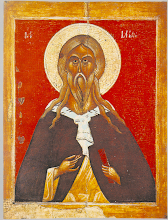
We see the glory of a good zeal in the prophet Saint Elijah: "And the angel of the Lord came again the second time, and touched him, and said to him: Arise, eat: for thou hast yet a great way to go. And he arose, and ate, and drank, and walked in the strength of that food forty days and forty nights, unto the mount of God, Horeb. And when he was come thither, he abode in a cave: and behold the word of the Lord came unto him, and he said to him: What dost thou here, Elias? [10] And he answered: With zeal have I been zealous for the Lord God of hosts" (1 Kings 19:7-10). The zeal of Elijah came to him with the mysterious food provided him from heaven, a figure of the Most Holy Eucharist. It disposed him to receive the Word of God, and to hear it. A good zeal never sets a man at odds with the Word of God, nor with the teachings of the Church. It is empowering -- yes-- but the power of a good zeal is deployed in the little, the lowly, and the weak. (Read entire post.)

Sunday, July 12, 2020

Prayer for the United States

From Dr. Marshall's blog.
 Almighty and Eternal God, King of Kings and Lord of Lords: graciously turn your gaze to us who invoke You with confidence. Bless us, citizens of the United States of America; grant peace and prosperity to our Nation; illuminate those who govern us so that they may commit themselves to the common good, in respect for Your holy Law. Protect those who, defending the inviolable principles of the Natural Law and Your Commandments, must face the repeated assaults of the Enemy of the human race. Keep in the hearts of Your children courage for the truth, love for virtue and perseverance in the midst of trials. Make our families grow in the example that Our Lord has given us, together with His Most Holy Mother and Saint Joseph in the home of Nazareth; give to our fathers and mothers the gift of Strength, to educate wisely the children with which you have blessed them. Give courage to those who, in spiritual combat, fight the good fight as soldiers of Christ against the furious forces of the children of darkness.
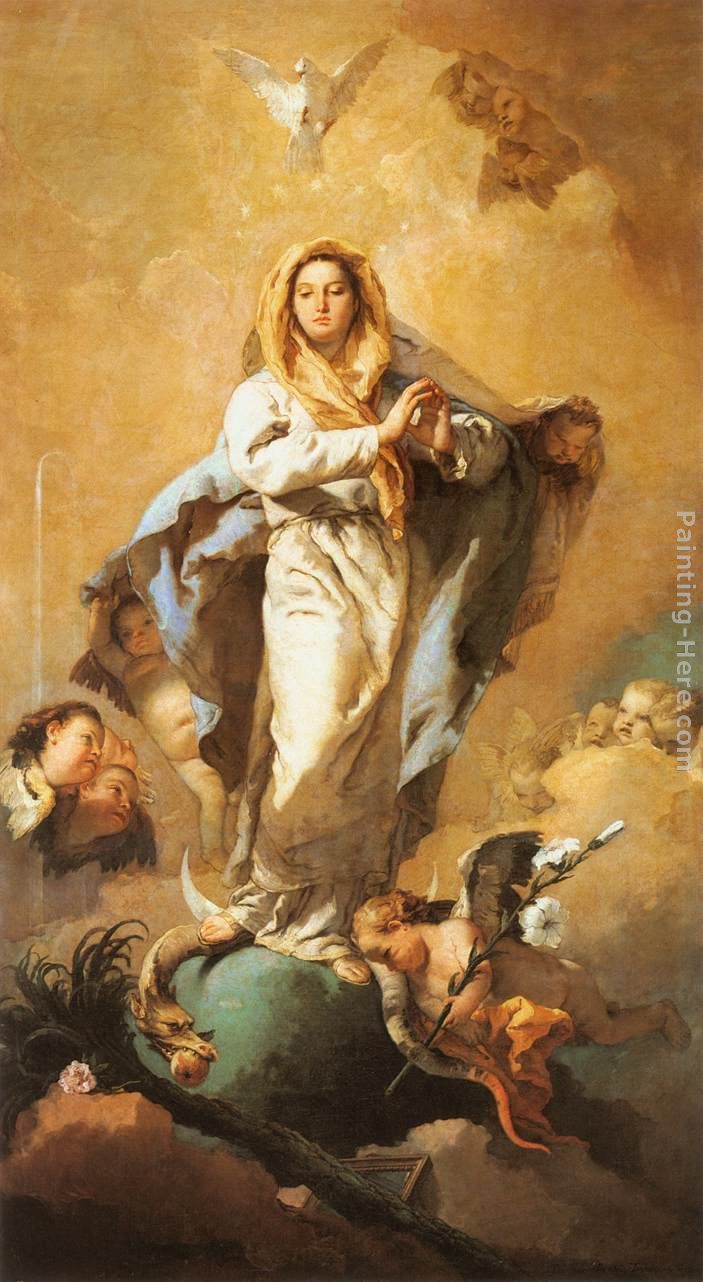
Keep each one of us, O Lord, in your Most Sacred Heart, and above all He whom Your Providence has placed at the head of our Nation. Bless the President of the United States of America, so that aware of his responsibility and his duties, he may be a knight of justice, a defender of the oppressed, a firm bulwark against Your enemies, and a proud supporter of the children of light. Place the United States of America and the whole world under the mantle of the Queen of Victories, our Unconquered Leader in battle, the Immaculate Conception. It is thanks to her, and through your Mercy, that the hymn of praise rises to you, O Lord, from the children whom you have redeemed in the Most Precious Blood of Our Lord Jesus Christ. Amen.

Monday, July 6, 2020

What is the Didache?

From Aleteia:
The Greek word didache means “teaching” or “the teaching,” and is a shortened form of the full title, which is often translated as, “The Lord’s Teaching Through the Twelve Apostles to the Nations.” Many scholars simply refer to it as the “Teaching of the Twelve Apostles.”

The Didache is a collection of Christian writings that is mentioned by various writers in the early Church and is often paired with the New Testament. For example, according to the Catholic Encyclopedia, “The Didache is mentioned by Eusebius after the books of Scripture (Church History III.25.4): ‘Let there be placed among the spuria the writing of the Acts of Paul … what are called the Teachings of the Apostles … if this be thought fit.” Furthermore, “St. Athanasius and Rufinus add the ‘Teaching’ to the sapiential and other deutero-canonical books.”

It is believed by scholars to have been written during the 1st century, and some claim it contains teachings that were handed down by the apostles. In a commentary on the Didache published in 1894, Charles Hoole explains some of the evidence that connects it to this early period of Christianity.
There existed at a very remote period, most likely before the end of the first century, a work handed down by oral tradition which was supposed to embody the verbal teaching of the first Apostles. The expression itself, “teaching of the Apostles,” occurs in Acts xi. 42, and the use of the word for teaching or doctrine is common in the New Testament, so that it would be the natural title for a collection of sayings or precepts which had been handed down by tradition as representing the verbal teaching of the Apostles. We may suppose that this work, after existing for a time in a traditional form, was embodied in writing, and used to form part of the earliest Christian books.
The contents of the Didache focus on ritual instructions regarding baptism, Holy Communion and fasting, for example. It also contains a spiritual exhortation on The Two Ways, the Way of Life and the Way of Death. (Read more.)
Related Posts with Thumbnails