O Little Therese of the Child Jesus,
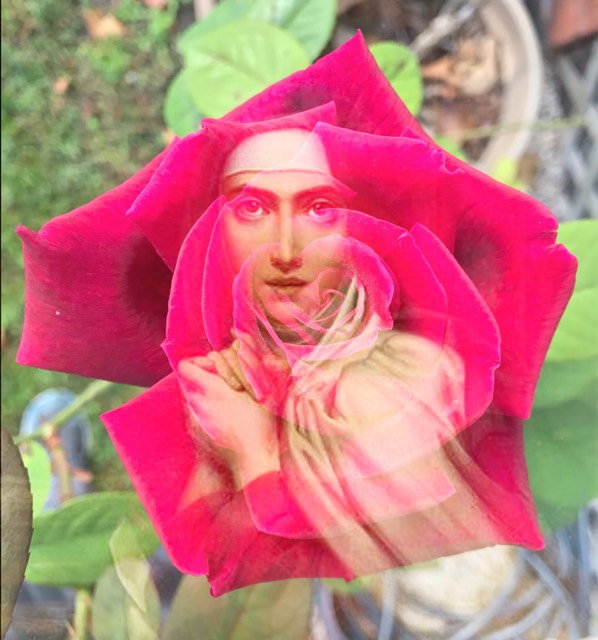
Please pick a rose for me
From the heavenly gardens
And send it to me
As a message of love.O little flower of Jesus,
Ask God today to grant the favors
I now place with confidence
In your hands.(Mention your specific requests)St. Therese, help me to always believe, As you did, In God's great love for me, so that I might imitate your "Little Way" each day. Amen
O Glorious St. Therese, whom Almighty God has raised up to aid and inspire mankind, I implore your Miraculous Intercession. You are so powerful in obtaining every need of body and spirit from the Heart of God. Holy Mother Church proclaims you a 'Prodigy of Miracles... the Greatest Saint of Modern Times.' Now I fervently beseech you to answer my petition (mention here) and to carry out your promises of spending Heaven doing good on earth...of letting fall from Heaven a Shower of Roses. Little Flower, give me your childlike faith, to see the Face of God in the people and experiences of my life, and to love God with full confidence. St. Therese, my Carmelite Sister, I will fulfill your plea 'to be made known everywhere' and I will continue to lead others to Jesus through you. Amen
Tuesday, September 22, 2026
Novena to the Little Flower
Monday, September 21, 2026
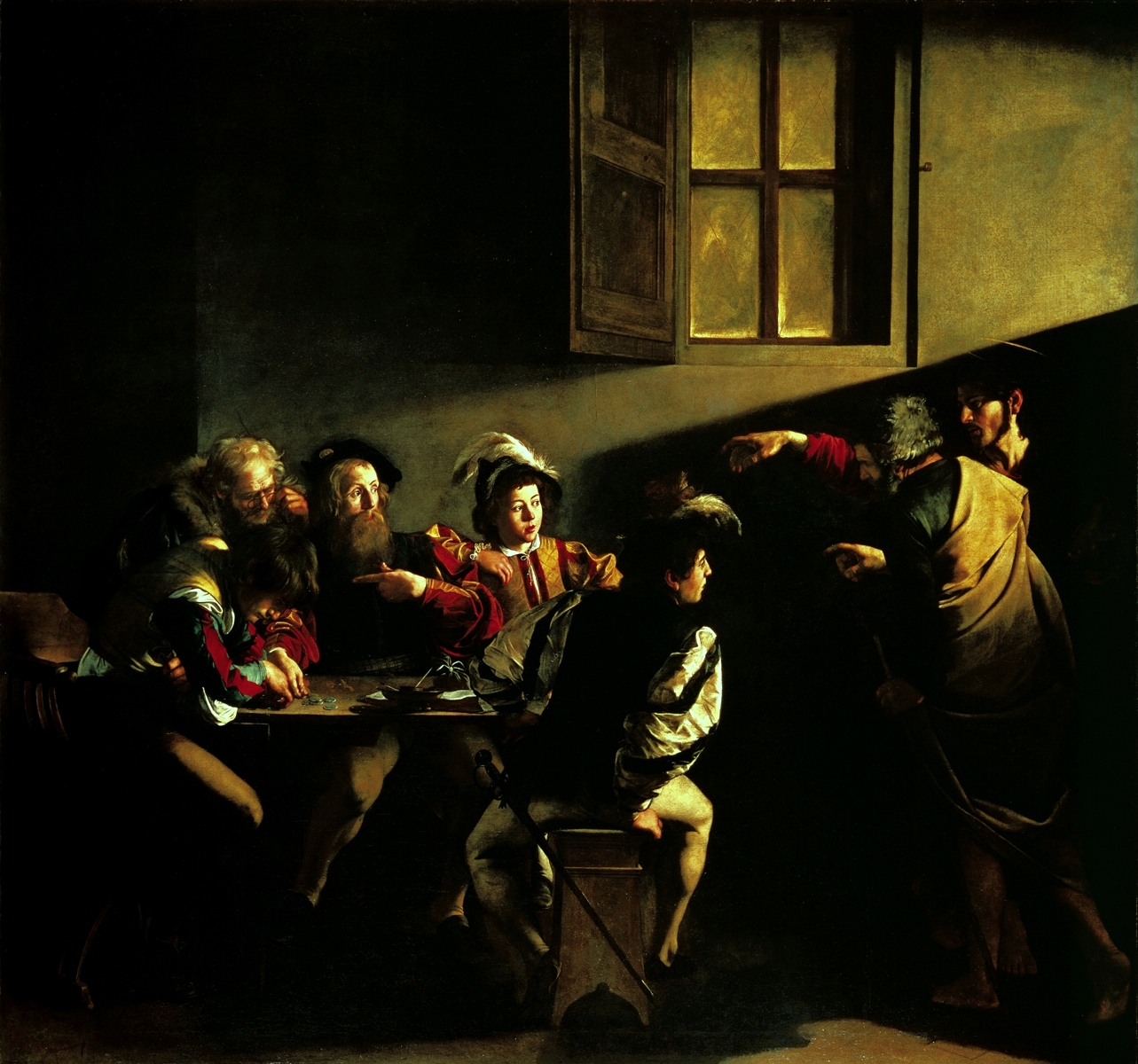
The Call of Saint Matthew
From The Catholic Physicist:
Let’s take a look at Matthew first; immediately, we can see that he has a look of surprise on his face and he gestures to himself as if to ask, “Me?” This speaks to the tendency we have as humans to be skeptical or even to deny ourselves the love of God. Often, we feel that we are not worthy of God’s mercy because of our sinful nature and rather than asking for forgiveness, we turn away from God, the one who wants to forgive us and welcome us back into His arms.
We can also see that he is leaning back toward his friends and metaphorically, to his life before this moment – a life of greed centered around money. Upon closer investigation however, we can see his legs seemingly drawn toward Christ as though they would get up and walk on their own. This is a statement about the yearning that each one of us has inside us – a restlessness until we leave ourselves and our worldly attachments to follow Christ’s call.
It’s also worth noting that the people to the left of Matthew are completely oblivious to Christ as he is calling their friend. They are so engrossed in the coins on the table that they cannot see anything else. In much the same way, as we give in to sin and let it become the center of our focus, we are not only separated from God, but we fail to even notice Him when He is standing right in front of us. Therefore, we feel the most distant from God and His saving love when we fall into sin and spend all our effort adoring worldly idols. This is the reason that the sacrament of reconciliation is so important to us as Catholics; when we commit mortal sin, we are separating ourselves from God and from the Church. Frequent confession of our sins frees us from the distraction of unholy obsessions and keeps us tuned in on Christ’s call to follow Him.
This body language of Matthew and those around him represents a pivotal moment; Matthew’s life is on the brink of something great – he can either get up and leave his money and friends to follow Christ, or he can stay where he is and continue to live his life as he has so far. If we look at Jesus’s feet, we can see them pointing away from everyone which gives his call a sense of urgency. Christ is calling, not waiting. God does not want us to wait around doing our earthly, human things and maybe get around to following his call eventually. He wants us to follow him now. Both of Matthew’s choices are simultaneously easy and difficult at the same time. Let’s imagine ourselves in Matthew’s shoes; we’re having some laughs with our friends and enjoying your day when suddenly, a man whom we have never seen before walks by, points at us, and says two words, “Follow me.” What do we do? We have places to be, people to meet, and a million other things we’d like to get wrapped up before we could even consider going along with this guy. That is not what Matthew does. Matthew simply got up and followed him. In an instant, Matthew made that terribly difficult decision; he made it look easy, in fact. His actions set the bar high for us as we receive the very same call from Jesus that he so fluidly accepted. (Read more.)
Sunday, September 20, 2026
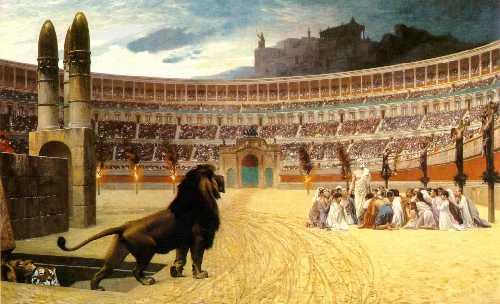
Martyrs
From Catholicism:
The Church was born out of blood and persecution. As the traditional saying credited to Tertullian went: “The blood of the martyrs is the seed of Christians.” All of the Apostles were martyrs, including Saint John, who, although submerged into boiling oil during the persecution of Emperor Domitian, was miraculously preserved from death and bodily harm. The fact that he was willing to die for Christ (tradition has it that he also felt the pain) merited for him the martyr’s crown. All of the saints named in the canon of the Mass were martyrs, except for Our Lady, whose unique, un-bloody martyrdom was like a sword piercing her soul. The first thirty-three popes were martyrs. It was revealed to Saint Alphonsus Maria de Liguori that in the first three centuries of persecution, from the Edict of Nero (which began the persecutions) in the year 66 to the Edict of Milan (which ended them) in 313 eleven million of the faithful were martyred for their Faith in Christ. Finally, in the last days, during the reign of antichrist, the faithful will endure the worst of all persecutions, and martyrs will usher in the final triumph of the Church, which will precede the end of the world.
Truly, then, we belong to a Church of martyrs. Every age has contributed its share, some ages many more than others, but there have been martyrs at all times, some of whom are known only to God, His angels, and His saints. We have our martyrs today and we shall surely have them tomorrow.
Some of the victims of Communism who were spared the shedding of blood unto death suffered more than the martyrs, even thirty years of prison or in labor camps, under the most inhuman of conditions. In Communist China, to be a bishop loyal to the pope, guaranteed a prison sentence with at least mental torture, or death.
Why does God require so much blood from His servants? Why such a price? Why so much suffering?
Could it be that God wishes to exact from His closest disciples that greatest of all acts of love which Jesus was Himself to manifest for all men: “Greater love than this no man hath, that a man lay down his life for his friends” (John 15:13)?
At the Last Supper, in anticipation of His Passion and Death, Our Lord was very anxious to assure His Apostles that they were now His intimate friends: “I will not now call you servants: for the servant knoweth not what his lord doth. But I have called you friends: because all things whatsoever I have heard of my Father, I have made known to you” (John 15:15).
It was in His Passion and Death that Christ manifested how great was His love for men. “In this we have known the charity of God, because he hath laid down his life for us: and we ought to lay down our lives for the brethren” (1John 3:16). So, too, with the martyrs, in their passion and death they manifest how great a love they have for their Savior.
Nevertheless, many of the holiest of saints, even though they desired the crown of martyrdom, were not asked to make that sacrifice. Rather their whole lives were continual oblations of self-sacrifice. Think of Saints Francis of Assisi or Teresa of Avila. Then, there are the stigmatists, such as Saint Padre Pio, who suffered a martyrdom in his hands, feet, and side, on the cross every day, but without death, for fifty years. (Read more.)
Martyrs
Saturday, September 19, 2026
Our Lady of La Salette
Our Lady wept at La Salette on September 19, 1846. It was roughly two years before another wave of revolutions would sweep across Europe, breaking down the structures what was left of Christendom. Once again, France was the site chosen by heaven for messages of supreme importance for the world. Taking God's name in vain and violating the Lord's day were not regarded as small matters by the Mother of Jesus. The Blessed Virgin spoke to two peasant children in the Dauphiné province in terms that they could understand, as the following shows:'If my people do not obey, I shall be compelled to loose my Son's arm. It is so heavy I can no longer restrain it. How long have I suffered for you! If my Son is not to abandon you, I am obliged to entreat Him without ceasing. But you take no heed of that. No matter how well you pray in the future, no matter how well you act, you will never be able to make up to me what I have endured on your behalf. I have given you six days to work. The seventh I have reserved for myself, yet no one will give it to me. This is what causes the weight of my Son's arm to be so crushing. The cart drivers cannot swear without bringing in my Son's name. These are the two things which make my Son's arm so heavy.'
The Lady then went on to speak about the coming punishments for these sins of Sabbath breaking and blasphemy, including crop blights and famine, at one point switching from French, which the children did not understand perfectly, to the local patois. Then she spoke to Maximin alone, imparting a secret to him which Mélanie could not hear, before turning to her to give a secret that Maximin likewise could not hear. Presently she again spoke to both saying that if the people were to be converted then the fields would produce self-sown potatoes and the stones become wheat.
She then asked a significant question: 'Do you say your prayers well, my children?' They replied that they hardly prayed, and she told them they should say at least their morning and night prayers, before continuing: 'Only a few rather old women go to Mass in the summer. Everyone else works every Sunday all summer long. And in the winter, when they don't know what else to do, they go to Mass only to scoff at religion. During Lent, they go to the butcher shops like dogs.'
She then asked the children if they had ever seen spoiled wheat and when both replied that they had not, the Lady reminded Maximin that he had once seen it when on a visit to a nearby hamlet with his father; he then remembered that what she had said was true. Finally the Lady spoke to them in French: 'Well, my children, you will make this known to all my people,' before moving forward between them. She went on a few yards and then re-emphasized her message to them without turning around: 'Now, my children, be sure to make this known to all my people.'Sources: Jaouen, A Grace called La Salette; Beevers, The Sun Her Mantle.
Here is a book about La Salette in which Louis XVII is mentioned since one of the pretenders approached Maximin, hoping for validation.
More commentary HERE.
Friday, September 18, 2026
St. Joseph of Cupertino
He was a child of poverty who became a great saint amid many persecutions from his own brethren, as the following biographical account relates:Ill fortune seemed to have set its seal on Joseph before he was born. His father, a carpenter by trade, was a good enough man in his way, but he was a poor hand at dealing with money; what little he earned seemed to slip at once through his fingers. At the very moment when his son came into the world his house was in the hands of bailiffs, and his effects were being sold up. Joseph was born in a shed at the back of the house, where his mother had hid herself out of very shame. With such a beginning Joseph had very poor prospects. As a child, utterly underfed and sickly, he was a very miserable specimen of humanity. He seemed to catch every disease that came his way; many a time he was at death's door, and, to tell the truth, if he had died it would have been a great relief to those responsible for him. Even his mother wearied of him. She, too, was good in her way, but she was hard by nature, and circumstances had made her harder; Joseph was ever in fault, and for every offense she punished him without mercy, according to her notions of a mother's duty. When he was little more than seven years old he developed a running ulcer which would not heal; and his mother was the more embittered against him, for now she supposed that even if the boy grew up he would probably be always to the family nothing but a burden. (Read more.)
Thursday, September 17, 2026
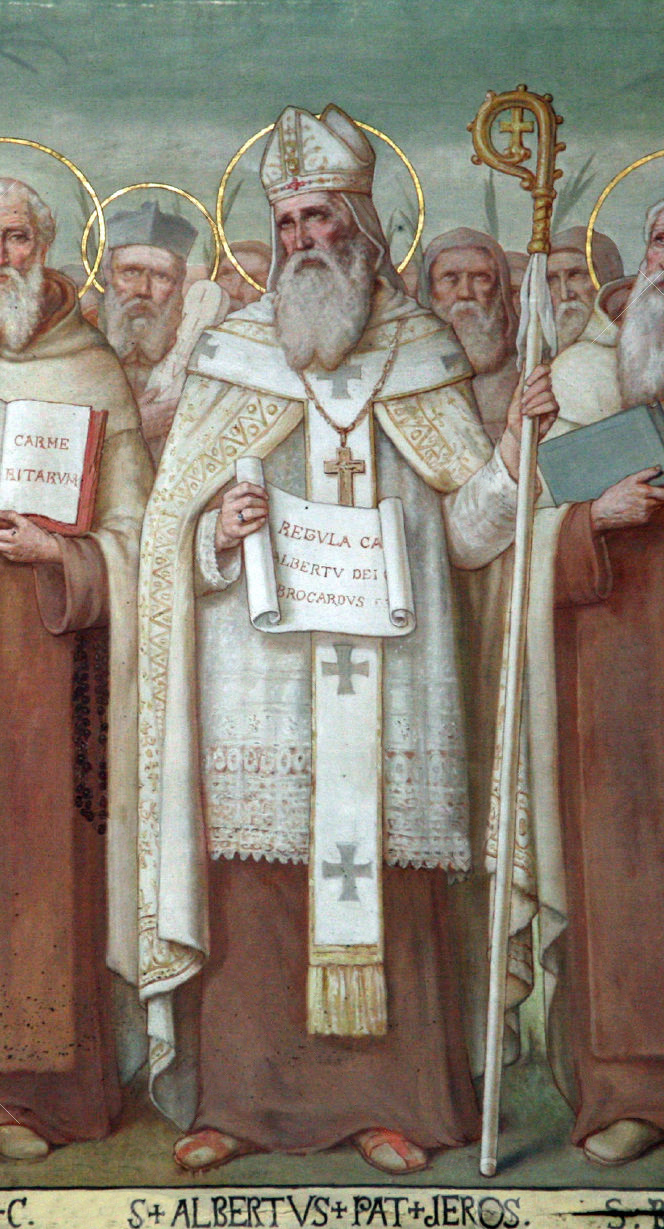
St. Albert of Jerusalem
Albert, by the grace of God, Patriarch of Jerusalem, to his beloved sons, Brocard and the other religious hermits who live under his obedience, near the fountain of Elias, on Mt. Carmel, health in the Lord, and the blessings of the Holy Spirit.Thus opens the primitive Rule of St. Albert, one of the four great Rules of the Roman Church. Written for the early Carmelites, it is the shortest of all the Rules, because minimal attention is placed on material things and the affairs of the world. The heavenly strivings of the Hermit Brothers of Our Lady of Mt. Carmel are thereby emphasized. St Albert's exhortations on solitude, silence, poverty, obedience, fasting, and manual labor are all well-supported by his thorough knowledge of Sacred Scripture. Although the Rule was written for the hermits, its charism can be lived by any who seek to live a life of contemplation, even amid the cares of this world. The heart of the Rule is that the Carmelite should be "meditating day and night on the Law of the Lord, and watching in prayer." Is not our striving for interior recollection an attempt to mirror this precept?
St. Albert of Vercelli, an Italian by birth, was sent to Palestine by Pope Innocent III because his wisdom and diplomacy were needed in that turbulent region. As the Latin Patriarch, St. Albert gained the respect of the eastern Christians and even of the Moslems. As an Augustinian Canon of the Holy Cross, St. Albert knew the religious life first hand. Between 1206 and 1210 he composed the Rule for the Carmelite hermits. On September 14, 1214, the Feast of the Exaltation of the Holy Cross, St. Albert was stabbed to death by a disgruntled, immoral cleric whom he had deposed. St. Albert's feast on the Carmelite calendar is September 17.
Tuesday, September 15, 2026
Novena to Our Lady of Mercy
Blessed be Thou, O Mary, the honor and the joy of Thy people! On the day of Thy glorious Assumption, Thou didst take possession of Thy queenly dignity for our sake; and the annals of the human race are a record of Thy merciful interventions. The captives whose chains Thou hast broken, and whom Thou hast set free from the degrading yoke of the Saracens, may be reckoned in the millions. We are still rejoicing in the recollection of Thy dear Birthday; and Thy smile is sufficient to dry our tears and chase away the clouds of grief. And yet, what sorrows there are still upon the earth, where Thou Thyself didst drink such long draughts from the cup of suffering! Thou alone, O Mary, canst break the inextricable chains, in which the cunning prince of darkness entangles the dupes he has deceived by the high-sounding names of equality and liberty. Show thyself a Queen, by coming to the rescue. The whole earth, the entire human race, cries out to Thee, in the words of Mordochai: “Speak to the King for us, and deliver us from death!” (Esther 15: 3)
(State your request here)
Let us Pray. O God, Who through the most glorious Mother of Thy Son wast pleased to give new children to Thy Church for the deliverance of Christ's faithful from the power of the heathen, grant, we pray Thee, that we who affectionately honor her as the Foundress of so great a work, may, by her merits and intercession, be delivered from the slavery of sin and the eternal flames of Hell. Through Our Lord Jesus Christ Thy Son, Who liveth and reigneth with Thee in the Unity of the Holy Ghost, One God, forever, unto ages of ages. Amen.(Source)
UPDATE: It is good to pray or sing the Ave Maris Stella during this novena.
Hail, You Star of Ocean
Hail, you Star of Ocean!
Portal of the sky,
Ever Virgin Mother,
Of the Lord most high.
O! by Gabriel's Ave,
Uttered long ago,
Eva's name reversing,
Establish peace below.
Break the captive's fetters;
Light on blindness pour;
All our ills expelling,
Every bliss implore.
Show yourself a mother;
Offer him our sighs,
Who for us Incarnate
Did not you despise.
Virgin of all virgins!
To your shelter take us;
Gentlest of the gentle!
Chaste and gentle make us.
Still as on we journey,
Help our weak endeavor,
Till with you and Jesus
We rejoice forever.
Through the highest heaven,
To the Almighty Three,
Father, Son, and Spirit,
One same glory be. AMEN.
Our Lady of Sorrows
"Holy Mother, pierce me through;How well do the words of the Stabat Mater reflect the words of Simeon to Our Lady: "Thy own soul a sword shall pierce." (Luke 2:35) According to many saints, the Blessed Virgin suffered throughout her life, knowing that her Son was to undergo a cruel death. Her sufferings reached their climax at the foot of the Cross. As St. Elizabeth of the Trinity wrote: "O Queen of Virgins, you are also the Queen of Martyrs; but it was written within your heart that the sword transpierced you, for with you everything took place within your soul."
In my heart each wound renew
Of my Saviour, crucified."
~ Stabat Mater
Few are called to physical martyrdom, but all Christians are called to compassionate the Saviour at the foot of the Cross. Like the heart of Mary, the heart of the Holy Mother St. Teresa was also mystically pierced. We can apply to her, in a much lesser degree, of course, the Responsory from the Vespers of Our Lady of Sorrows: "Happy is she who without dying has won the martyr's crown." (Roman Breviary)
Monday, September 14, 2026
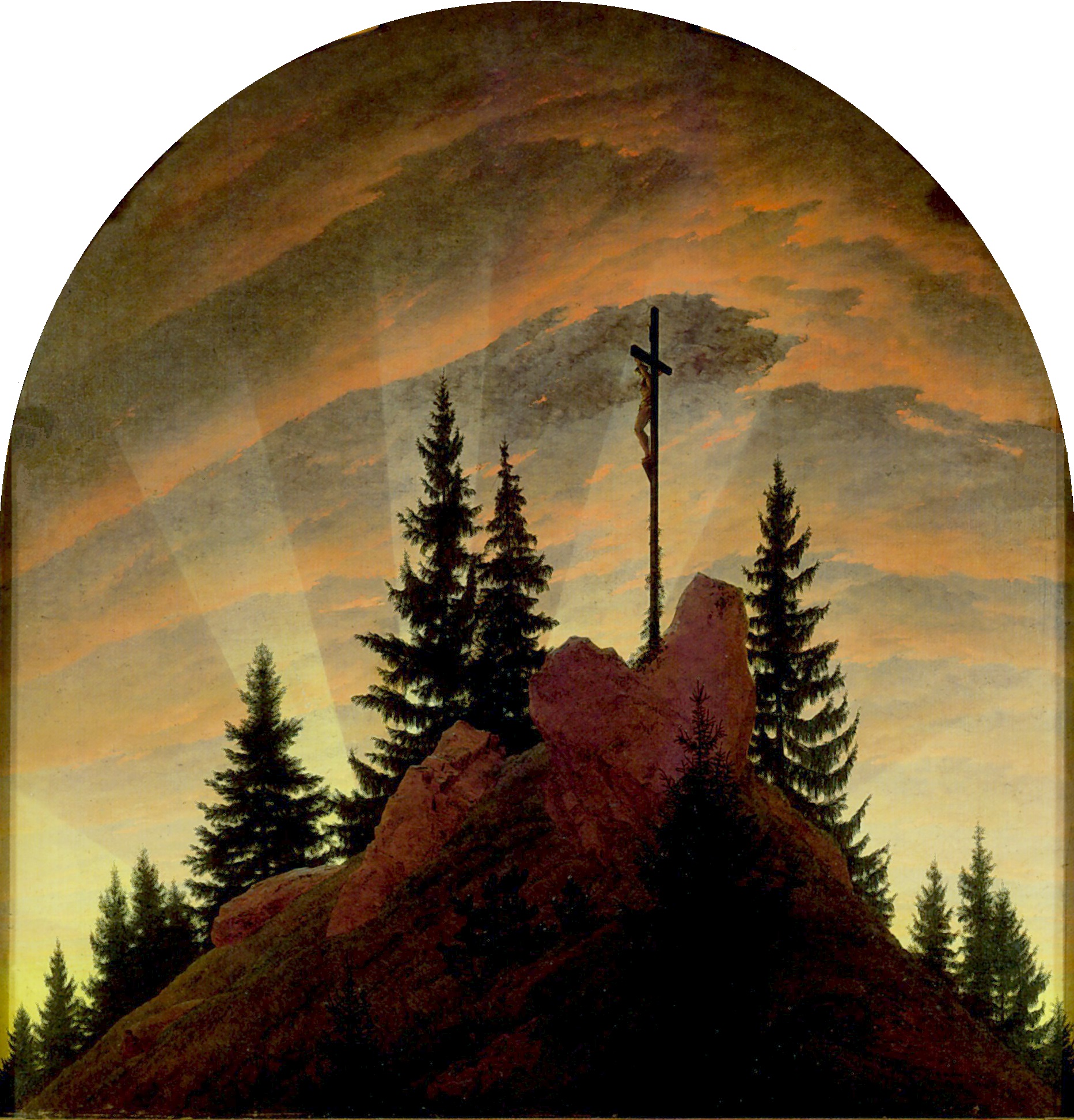
Holy Cross Day
Here is the "Litany of the True Cross" (For Private Recitation Only).
Sunday, September 13, 2026
The Children of Fatima and the Fifth Apparition
Today is the anniversary of the fifth apparition of Our Lady at Fatima. Our Lady said: "In October I will perform a miracle so that all may believe." Here is an account from the EWTN website about the three visionaries:There Lucia, Francisco, and Jacinta were born and raised in homes where the catechism was their daily bread, stories from the Bible their recreation, and the word of the village priest was law. Lucia de Jesus Santos was born, the youngest of seven children, to Antonio and Maria Rosa Santos, on 22 March 1907. She was a plain child with sparkling eyes and a magnetic personality, a natural leader to whom other children looked with confident affection. Blessed with an excellent memory, Lucia was able to learn her catechism, and make her First Communion and Confession, at age six. She herself became a catechist at nine. Lucia would be the constant guide and companion to her first cousins, Francisco and Jacinta Marto, through the trials that accompanied the apparitions of the Blessed Mother. (Read more.)
Saturday, September 12, 2026
The Holy Name of Mary
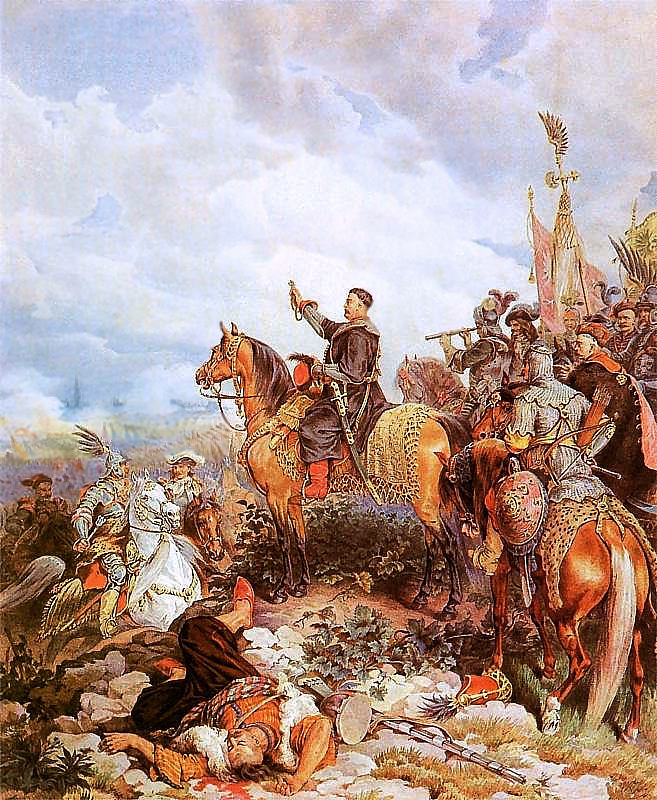
The Victory which the King of Poland has obtained over the Infidels, is so great and so complete that past Ages can scarce parallel the fame; and perhaps future Ages will never see any thing like it. All its Circumstances are as profitable to Christendom in general, and to the Empire in particular, as glorious to the Monarch. On one hand we see Vienna besieged by three hundred thousand Turks; reduced to the last extremity; its Outworks taken; the Enemy fixed to the Body of the Place; Masters of one Point of the Bastions, having frightful Mines under the Retrenchments of the besieged: We see an Emperor chased from his Capital; retired to a corner of his Dominions; all his country at the mercy of the Tartars, who have filled the Camp with an infinite number of unfortunate Slaves that had been forcibly carried away out of Austria. On the other hand we see the King of Poland, who goes out of his Kingdom, with part of his Army, and hastens to succor his Allies, who abandons what is dearest to him, to march against the enemies of the Christian Religion willing to act in Person on this occasion, as a true Buckler of Religion; and will not spare his eldest son, the Prince of Poland, whom he carries with him, even in a tender age, to so dangerous an Expedition as this was. That which preceded the battle is no less surprising. The Empire assembles on all sides, the Elector's of Saxony and Bavaria come in person to join their troops with the Imperialists under the command of the Duke of Lorraine. Thirty other Princes repair out of emulation, to one another, to the Army, which nevertheless, before they will enter upon Action, stay for the presence of the King of Poland, whose presence alone is worth an Army. (Read more.)
"Who is she that cometh forth as the morning rising, fair as the moon, bright as the sun, as terrible as an army set in array?" Canticle of Canticles 6:9
Tuesday, September 8, 2026
Nativity of Our Lady

"One is my love, my perfect one...she is the only one of her mother, the chosen of her that bore her."The month of September, the month of Our Lady of Sorrows, brings us the sacred day when the daughter of St. Joachim and St. Anne, conceived "full of grace," was born into this earth of sin and sorrow. Her birth was the dawn of salvation for all humanity, longing for the coming of the Redeemer. Few persons were aware that in the Child Mary, free from all stain of original sin, God had begun His work of the new creation.
~Canticle of Canticles 6: 8
Truly a better paradise than the first is given us at this hour. Eden, fear no more that man will endeavor to enter thee; thy Cherubim may leave the gates and return to heaven. What are thy beautiful fruits to us, since we cannot touch them without dying? Death is now for those who will not eat of the fruit so soon to appear amid the flowers of the virgin earth to which our God has led us." (Dom Gueranger, The Liturgical Year, Vol XIV)The child whose birth we celebrate on the eighth of September would one day be crowned Queen of the Universe by the Most Blessed Trinity. The earthly life of our Queen was characterized by poverty, by manual labor, exile, suffering and humiliation. The greatest, most important woman who ever lived spent her days busy with the thousand mundane, dreary tasks of an ordinary housewife in a backwater town, member of a despised people, living in a conquered nation. Although she was of the Davidic line, her royal descent, and that of her spouse St. Joseph, was seemingly forgotten.
Nevertheless, by reason of her Immaculate Conception, in the least action of the Blessed Virgin Mary there was an unfathomable glory, a treasury of merit which all the collective merits of all the angels and saints could not begin to equal. How contrary to the ways of the world, that such sublimity was veiled from the eyes of men.
In the words of Fr. Gabriel of St. Mary Magdalen, OCD:
Our Lady's origin is wrapped in silence, as was her whole life. Thus, her birth speaks to us of humility. The more we desire to grow in God's eyes, the more we should hide ourselves from the eyes of creatures. The more we wish to do great things for God, the more we should labor in silence and obscurity. (Divine Intimacy, 1964)"And the virgin's name was Mary." (Luke 1: 27) Let the holy name of Mary, along with that of her divine Son, be an antidote to the poison of vainglory, a light for the darkness of sin and the moral ambiguities which so obstruct the paths of those striving for Christian perfection. May the humility and littleness of the Child Mary be the mark of her children. "O Mary my Mother, teach me to live hidden with you in the shadow of God." (Fr. Gabriel of St. Mary Magdalen's Divine Intimacy)
As the Morning Rising
A meditation for Our Lady's Nativity, which is today.
How amazed, then, was the whole of creation at the Birth of this creature, the most amiable in the eyes of God, because She was the one most full of grace and merit! Hugo of St. Victor affirms that the Virgin Mary can be compared to the dawn which ends the night, because the centuries which preceded Her had been in darkness. Mary Most Holy is the true forerunner of the light of grace: She is the Star that announces the Sun of Justice, Who will be born from Her womb. In fact, “all the time which passed from the fall of Adam to the Birth of Our Lady, was an endless darkness, a long, deep, icy night. And yet at timers a star rose to brighten up those times: it was the holy Patriarchs and Prophets who enlightened the ignorance of those people by their virtue.” But the holiness and virtues of all the Saints turn pale compared to the Mother of God. “The Virgin Mary is the most refulgent dawn, Whose magnificent splendour obscures that of the ancient Fathers.” (Read entire post.)
Monday, September 7, 2026
The Perpetual Virginity of Mary
![]() |
| "The Magnificat" by Tissot |
Tomorrow is the feast of the Nativity of Mary. So much of what the Church teaches has been distorted in our times. The teaching on Our Lady's perpetual virginity is often misunderstood, as Fr. Mark explains:
Even in the minds of many of the faithful, enfeebled by a forty year dearth of popular orthodox catechesis, a tragic confusion holds sway concerning the privileges of the Blessed Virgin Mary and, in particular, her virginity before, during, and after childbirth. There are many, alas, who, affected by various mutations of creeping Nestorianism and Arianism, have no grasp of what it means to call the Blessed Virgin Mary, Mother of God. Those who do not confess the privileges of the Blessed Virgin Mary, honoring them and celebrating them, fall inevitably into one or another of the classic Christological heresies.Fr. Mark further discusses this beautiful and ancient teaching, as follows:
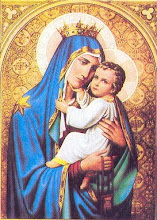
Ever since the Council of Ephesus in 431, icons of the Mother of God have been marked by three stars: one on her forehead, and one on each shoulder, The three stars signify her perpetual virginity: before, during, and after the birth of her Son....More on this de fide teaching in the Catechism of the Catholic Church:Ancient liturgical texts reflect the language of the first great Christological councils of the Church. It was crucial, in the context of the prevailing heresies, to invoke Mary as Theotokos, Mother of God, or as Ever-Virgin. It was feared that by referring to Mary as a woman called simply by her ordinary name, something of the mystery of Christ, True God and True Man, might be obscured or compromised. The liturgy in both East and West reflects this ancient preference. While, in preaching and in works of devotion, we often hear the name of Mary without her theological titles, the liturgy calls her Sancta Dei Genetrix (Holy God-bearer) and Semper Virgo (Ever-Virgin).
The most ancient prayer to the Virgin Mother is the Sub tuum praesidium, found on an Egyptian papyrus from the 3rd century. It does not include the name “Mary,” but invokes her as Holy God-bearer (Sancta Dei Genetrix) and Virgin glorious and blessed, (Virgo gloriosa et benedicta).
The liturgy through the ages is consistent in confessing that God Himself is the author of Mary’s perpetual virginity. The same thought is carried over into the ancient rites for the Consecration of Virgins. Virginity, before being something offered to God, is a gift received from Him. It is a gift wholly ordered to union with Christ. Christ is the Spouse of Virgins; He is, at the same time, the blessed Fruit of a virginity received from God and offered back to Him. The liturgy does not separate virginity from motherhood. The virginity given by God is characterized not by sterility, but by an astonishing fecundity.
The deepening of faith in the virginal motherhood led the Church to confess Mary's real and perpetual virginity even in the act of giving birth to the Son of God made man. In fact, Christ's birth "did not diminish his mother's virginal integrity but sanctified it." And so the liturgy of the Church celebrates Mary as Aeiparthenos, the "Ever-virgin."Here are some beautiful quotes from Fathers of Church:
Believe in the Son of God, the Word before all the ages, who was...in these last days, for your sake, made son of Man, born of the Virgin Mary in an indescribable and stainless way, -for there is no stain where God is and whence salvation comes.... (St. Gregory of Nazianzen, Oration on Holy Baptism, 40:45; 381 AD)
According to the condition of the body (Jesus) was in the womb, He nursed at His mother's breast, He lay in the manger, but superior to that condition, the Virgin conceived and the Virgin bore, so that you might believe that He was God who restored nature, though He was man who, in accord with nature, was born of a human being. (St. Ambrose of Milan, Mystery of the Lord's Incarnation, 6:54; 382 AD)
Who is this gate (Ezekiel 44:1-4), if not Mary? Is it not closed because she is a virgin? Mary is the gate through which Christ entered this world, when He was brought forth in the virginal birth and the manner of His birth did not break the seals of virginity. (St. Ambrose of Milan, The Consecration of a Virgin and the Perpetual Virginity of Mary, 8:52; c. 391 AD)
![]() |
| "Birth of the Virgin Mary" by Giotto |
![]() |
| The Annunciation by Tissot |
Sunday, September 6, 2026
Novena to Our Lady of Sorrows
My brothers and sisters in Christ, let us pray for all who suffer because of slavery and war. And please pray for my family.V. O God, hasten to my aid.
R. O Lord, make haste to help me.
V. Glory be to the Father and to the Son and to the Holy Ghost.
R. As it was in the beginning, is now, and ever shall be, world without end. Amen.
1. I grieve for thee, O Mary most sorrowful, in the affliction of thy tender heart at the prophecy of the holy and aged Simeon. Dear Mother, by thy heart so afflicted, obtain for me the virtue of humility and the Gift of the holy Fear of God.
2. I grieve for thee, O Mary most sorrowful, in the anguish of thy most affectionate heart during the flight into Egypt and thy sojourn there. Dear Mother, by thy heart so full of anguish, obtain for me the virtue of generosity, especially toward the poor, and the Gift of Piety.
3. I grieve for thee, O Mary most sorrowful, in those anxieties which tried thy troubled heart at the loss of thy dear Jesus in the Temple. Dear Mother, by thy heart so full of anguish, obtain for me the virtue of chastity and the Gift of Knowledge.
4. I grieve for thee, O Mary most sorrowful, in the consternation of thy heart at meeting Jesus as He carried His Cross. Dear Mother, by thy heart so troubled, obtain for me the virtue of patience and the Gift of Fortitude.
5. I grieve for thee, O Mary most sorrowful, in the martyrdom which thy generous heart endured in standing near Jesus in His agony on the Cross. Dear Mother, by thy afflicted heart, obtain for me the virtue of temperance and the Gift of Counsel.
6. I grieve for thee, O Mary most sorrowful, in the wounding of thy compassionate heart, when the side of Jesus was pierced by a lance before His Body was removed from the Cross. Dear Mother, by thy heart thus transfixed, obtain for me the virtue of fraternal charity and the Gift of Understanding.
7. I grieve for thee, O Mary most sorrowful, for the pangs that wrenched thy most loving heart at the burial of Jesus. Dear Mother, by thy heart sunk in the bitterness of desolation, obtain for me the virtue of diligence and the Gift of Wisdom.
Let us pray.
Let intercession be made for us, we beseech Thee, O Lord Jesus Christ, now and at the hour of our death, by the throne of Thy mercy, by the Blessed Virgin Mary, Thy Mother, whose most holy soul was pierced by a sword of sorrow in the hour of Thy bitter Passion, through Thee, O Jesus Christ, Savior of the world, Who with the Father and the Holy Ghost lives and reigns world without end. Amen.
Invocation of the Nine Choirs of Angels
September is dedicated to the Holy Angels. From Burning Lamp-stand:
More HERE.According to ancient tradition, the angels are arrayed in a hierarchy of nine ranks or choirs, whose designations are drawn from Scripture.
O holy Angels, watch over us at all times during this perilous life.
O holy Archangels, be our guides on the way to heaven.
O heavenly choir of the Principalities, govern us in soul and body.
O mighty Powers, preserve us against the wiles of the demons.
O celestial Virtues, give us strength and courage in the battle of life.
O powerful Dominions, obtain for us dominion over the rebellion of our flesh.
O sacred Thrones, grant us peace with God and man.
O brilliant Cherubim, illuminate our minds with heavenly knowledge.
O burning Seraphim, enkindle in our hearts the fire of charity. Amen.
Wednesday, September 2, 2026
September Martyrs of the French Revolution
Let us not forget the September Martyrs, including the murder of Madame de Lamballe.
France was populated with Catholics prior to social and political upheavals in 1787. The agitations reached initial climax in 1789, thus, the expression Revolution of 1789 to denote the end of ancient regime in France. On October 10, 1789, the properties of the Catholic Church were seized by the National Constituent Assembly as assignats, or security for expropriated lands. On July 12, 1790, the Civil Constitution was approved, which subordinated the Catholic Church to the French government, which the pope and clergy detested. The archbishop of Arus, France, refused to uphold the Constitution and was imprisoned.
Rumors spread that “foreign and royalist armies would attack Paris,” supported by prisoners who would be freed. On the eve of August 9, 1792, “a Jacobin insurrection overthrew the leadership of Paris Commune, headed by Jerome de Villeneuve who proclaimed a new revolutionary commune, headed by transitional authorities.”
The royal family of King Louis XVI [was arrested] on August 10, 1792, and a “de facto revolutionary commune” took over the government. Since the religious were considered state employees, they were required to swear an oath of allegiance to the state. Priests who abide by the order became constitutional jurors, and those who refused were imprisoned, killed or deported. Monasteries were emptied and transformed into prisons. Religious orders were dissolved. The initial atrocities started when 24 priests, who were being transported for imprisonment in l’Abbaye in Paris, were attacked by an angry mob.
On September 2, 1792, the angry crowds went to the Carmelite church where priests and religious were imprisoned. All were mandated to take the mandatory oath of loyalty to the government. Refusal meant they were enemies of the state and were “hacked to death as they passed down the stairway.”
They called on Archbishop John du Lau to come out. He came out and said: “I am he whom you seek.” In a few minutes, they cracked his skull, stabbed him and trampled him to death. The bishop of Beauvais, who was wounded on the leg, called: “I do not refuse to die with the others, but I cannot walk. I beg you to have the kindness to carry me where you wish me to go.” Bishop François Joseph de la Rochefauld was killed with his brother, Pierre Louis de la Rochefauld, bishop of Saintes. (Nobility org.) Ambrose Chevreux, the last superior-general of the monastic congregation of Saint Maur, was also executed. (Read more.)
Tuesday, September 1, 2026
St. Theresa Margaret of the Sacred Heart of Jesus
One dawn at the Discalced Carmelite chapel in Florence, a lovely, fair-haired girl of seventeen, in white veil and bridal dress, walked slowly down the aisle, candle in her hand. Anna Maria Redi, the beloved eldest child of a noble Tuscan family, offered herself as spouse to the King of Heaven. In doing so, she exchanged wealth and comforts for poverty and humiliations. Joyfully, she gave up her silk dress for the rough brown habit of Our Lady, and undertook to serve Our Lady by adoring her Eucharistic Son.
Re-named "Theresa Margaret," she strove to console the Heart of Christ by performing many penances. One day at Vespers, the words Deus Caritas Est (God is love) sank deep into her soul. She realized that love (not hairshirts) was what counted most. "You know, my God," wrote St. Theresa Margaret, "that my one desire is to be a victim of your Sacred Heart, wholly consumed as a holocaust in the fire of your holy love...dispose of me according to your good pleasure...." she struggled to give up her own will, to be humble and obedient, even when it meant performing duties that were unpleasant, such as caring for a nun who had gone insane.
On March 7, 1770, at age 24, she died after 18 hours of agony due to a mysterious intestinal infection. The incorrupt body of St. Theresa Margaret lies in a glass coffin in the monastery chapel where she once entered as a bride.


_-_James_Tissot_-_overall_.jpg)