Friday, October 8, 2010

Jesus: the Facts of the Matter

"And the angel answering, said to her: The Holy Ghost shall come upon thee, and the power of the most High shall overshadow thee. And therefore also the Holy which shall be born of thee shall be called the Son of God."
~Luke 1"35

 Yesterday, I woke up thinking of how my youth is gone and how many of my dreams will never come true. I thought of what I did not have instead if what I do have, a dangerous thing to do at any time but almost fatal first thing in the morning. I felt sad, as if my heart was breaking. Then I thought of Jesus. He died young. He died a horrible death, a criminal's death. He was hated. He was poor. His life was hard. Yes, He was the Second Person of the Blessed Trinity, a sublime reality which nobody appreciated or understood, except  for His Mother, who knew the Scriptures well. "With thee is the principality in the day of thy strength: in the brightness of the saints: from the womb before the day star I begot thee." (Psalm 109:3) All the majesty was hidden, though, to be manifested only on occasion. His Apostles, His friends and companions, thought only of earthly glory, of the restoration of the Israelite Kingdom. They soon found that the real Kingdom was hidden and that the path to it was through the harsh realities of exile and/or death. So when I want my kingdom to be here, when I become greedy for the happiness of this world, I have to remind myself of what it is really all about.

Monday, October 4, 2010

Saint Francis of Assisi

It is the feast of St. Francis of Assisi. Here is an excerpt from one of his letters:
It was through his archangel, Saint Gabriel, that the Father above made known to the holy and glorious Virgin Mary that the worthy, holy and glorious Word of the Father would come from heaven and take from her womb the real flesh of our human frailty. Though he was wealthy beyond reckoning, he still willingly chose to be poor with his blessed mother. And shortly before his passion he celebrated the Passover with his disciples. Then he prayed to his Father saying: Father, if it be possible, let this cup be taken from me.

Nevertheless, he reposed his will in the will of his Father. The Father willed that his blessed and glorious Son, whom he gave to us and who was born for us, should through his own blood offer himself as a sacrificial victim on the altar of the cross. This was to be done not for himself through whom all things were made, but for our sins. It was intended to leave us an example of how to follow in his footsteps.


And he desires all of us to be saved through him, and to receive him with pure heart and chaste body.

Sunday, October 3, 2010

Wounded

In the House of them that loved Me. Some insights from Fr.Mark:
Several years ago, in the context of a course I was teaching, I suggested that the erosion of faith in the Most Holy Eucharist was, in fact, fostered by a number of liturgical and disciplinary changes:
-- Minimalistic approach to the fast before Holy Communion.
-- The offering of the Holy Sacrifice by the priest facing the congregation.
-- The removal of the communion rail and obfuscation of the sanctuary as "the holy place."
-- The relegation of the tabernacle to the side of the sanctuary.
-- The reception of Holy Communion standing, and in the hand.
-- The introduction of Extraordinary Ministers of Holy Communion.
Taken together, these changes sent a chilling message to the Catholic faithful (and even to confused clergy): "Folks, the Blessed Sacrament just isn't all that we thought it was."

The Protestantization of Catholic Worship

Let it be noted, en passant, that while all of these changes are a cause of scandal to Eastern Orthodox Christians, not one of them would be considered offensive to mainstream Protestants. When one begins to worship like a Protestant, one begins to believe like a Protestant.

Ignorance

The cumulative effect of these changes, compounded by a woefully deficient sacramental catechesis and by certain lamentable theological, liturgical, and moral sensibilities in seminaries during the 60s, 70s, and 80s, is the current Eucharistic Crisis. Redemptionis Sacramentum (2004) remains, in most dioceses, a document that is virtually unknown. Pope John Paul II's Year of the Eucharist seems to have faded into oblivion; his Encyclical Ecclesia de Eucharistia (2003), and his Apostolic Letter, Mane nobiscum, Domine (2004) seem not to have been assimilated at the parish level. Pope Benedict XVI's Sacramentum Caritatis (2007) is, in many places, unknown.

Adoration and Reparation

Adoration in a spirit of reparation is more than ever necessary. Where are the adorers and reparators who will console the Heart of Jesus, wounded by the irreverence, coldness, indifference, and sacrilege that He receives "in the house of them that loved Him," and in the Sacrament of His Love?

As for the much discussed "reform of the reform," might it not be a case of too little too late? Can anything apart from a Divine Intervention, a new sacerdotal Pentecost, obtained through the intercession of the Maternal Heart of Mary, bring about the change of heart that is needed?

Thursday, September 30, 2010

St. Jerome and the Vulgate

His remarkable translation is without equal.To quote:
....When Damasus appointed Jerome to be his secretary in 382, he also entrusted to him the task of having a complete version of the Bible in Latin. What a task this was as evident in Jerome's reply.
"You urge me to revise the old Latin version, and, as it were, to sit in judgment on the copies of the Scriptures which are now scattered throughout the whole world; and, inasmuch as they differ from one another, you would have me decide which of them agree with the Greek original. The labour is one of love, but at the same time both perilous and presumptuous; for in judging others I must be content to be judged by all; and how can I dare to change the language of the world in its hoary old age, and carry it back to the early days of its infancy? Is there a man, learned or unlearned, who will not, when he takes the volume into his hands, and perceives that what he reads does not suit his settled tastes, break out immediately into violent language, and call me a forger and a profane person for having the audacity to add anything to the ancient books, or to make any changes or corrections therein? Now there are two consoling reflections which enable me to bear the odium-in the first place, the command is given by you who are the supreme bishop; and secondly, even on the showing of those who revile us, readings at variance with the early copies cannot be right."
....Nor was Jerome content merely to gather up this or that teacher's words; he gathered from all quarters whatever might prove of use to him in this task. From the outset he had accumulated the best possible copies of the Bible and the best commentators on it, but now in Bethlehem he worked on copies from the Jewish synagogues and from the library formed at Caesarea by Origen and Eusebius. He hoped that by assiduously comparing texts he would ascertain at greater accuracy of text and its meaning. With this same intent he also scoured Palestine. He thoroughly believed as he once wrote to Domnio and Rogatian:
"A man will understand the Bible better if he has seen Judaea with his own eyes and discovered its ancient cities and sites either under the old names or newer ones. In company with some learned Hebrews I went through the entire land the names of whose sites are on every Christian's lips."
I am sure Paula assisted Jerome immensely in his work as the latter corrected some of the earlier Latin versions of Scripture; translated New Testament Greek into Latin and nearly all the books of the Old Testament from Hebrew into Latin. Although immersed in this work he gave time to those who visited him about the Bible and also corresponded with those wanting answers about the Bible. Meditating on Holy Scripture was indeed the love of Jerome's life and he poured over it day and night even in his old age. Indeed for Jerome and many after him, knowledge of Scripture was like the "pearl beyond price".
Like all scholars of his time Jerome believed that Scripture was inspired by God, yet he never questioned that the individual authors/editors of the various Books worked in full freedom under the divine inspiration, according to his own individual nature and character. Jerome was able to convey something of this individuality in the Vulgate. 
Apart from trying to provide a more accurate account of Scripture, there was another purpose in Jerome's mind for his work. This was to enhance the preaching of priests. To him it was imperative that they could quote from the Bible. "Let a priest's speech be seasoned with the Bible," for "the Scriptures are a trumpet that stirs us with a mighty voice and penetrates to the soul of them that believe," and "nothing so strikes home as an example taken from the Bible," insisted Jerome. This Latin doctor had eight-eight formulation of sound principles regarding reading and studying the bible, which he believed provided a safe path for all to follow in getting from the Sacred Books their full meaning.
Tuesday, September 28, 2010

Warning Signs

Patrick Madrid quotes the late Fr. Jordan Aumann, O.P. on how to recognize a diabolical spirit.
1. Spirit of falsity. The devil is the father of lies, but he cleverly conceals his deceit by half-truths and pseudo-mystical phenomena.

2. Morbid curiosity. This is characteristic of those who eagerly seek out the esoteric aspects of mystical phenomena or have a fascination for the occult or preternatural.

3. Confusion, anxiety, and deep depression.

4. Obstinacy. One of the surest signs of a diabolical spirit.

5. Constant indiscretion and a restless spirit. Those who constantly go to extremes, as in penitential exercises or apostolic activity; or neglect their primary obligations to do some personally chosen work.

6. Spirit of pride and vanity. Very anxious to publicize their gifts of grace and mystical experiences.

7. False humility. This is the disguise for their pride and self-love.

8. Despair, lack of confidence, and discouragement. A chronic characteristic that alternates with presumption, vain security, and unfounded optimism.

9. Disobedience and hardness of heart.

10. Impatience in suffering and stubborn resentment.

11. Uncontrolled passions and strong inclination to sensuality, usually under the guise of mystical union.

12. Hypocrisy, simulation, and duplicity.

13. Excessive attachment to sensible consolations, particularly in their practice of prayer.

14. Lack of deep devotion to Jesus and Mary.

15. Scrupulous adherence to the letter of the law and fanatical zeal in promoting a cause. This characteristic readily opens the door to diabolical influence in reformers and demagogues.

Sunday, September 26, 2010

The Last Things

Scott Richert opens up an old copy of The Baltimore Catechism, which is a great place to go for clear and concise answers.
Lesson Thirty-Seventh, the final lesson of the Baltimore Catechism No. 2, discusses the last judgment, the resurrection of the body, Hell, Purgatory, and Heaven.
We will all be judged in the last judgment, so that God's plan will be revealed to all. But the final disposition of our soul is determined at our death; we will either go to Heaven or to Hell. Those who will go to Heaven yet die without having fully atoned for their sins will finish their atonement in Purgatory.

Saturday, September 25, 2010

Imitation of Christ and of Mary

Here is a marvelous quotation from louange de sa gloire: 
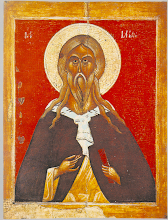
From the earliest beginnings of the Order, the Carmelites have cultivated devotion to Mary, the Mother of God. They took her for their patron and tried to model their life on hers. The Carmelites were hermit solitaries, like Elias [Elijah], and were related through him to the tradition of the Old Testament. They participated in the spirit of the New Testament through Mary and tried to imitate her interior life. They knew that there is no better way of living Christ's life than to imitate Mary, because Mary is all for Jesus, as Jesus is all for God.
Carmelite friars and nuns, therefore, strive to live in intimate union with Mary. They have recourse to her in all their activities, begging her to enlighten and direct them. They take care to remain under her guidance, so that she may protect and defend them. They entrust themselves to her in all their needs of body and soul, and they especially take her as a guide in the way of contemplation. In short, they expect from her that she will form Christ in them.

-- The Spirit and Prayer of Carmel by François Jamart, ocd
Related Posts with Thumbnails