Wednesday, February 16, 2011

A Priest's Life

It is a martyr's life. In the words of the late Father John Hardon, S.J., of blessed memory:
...We Catholics must be ready to live a martyr's life for our faith in the priesthood. We priests must live a martyr's life for our faith in our own priesthood and the religious and the laity for faith in the priesthood. What is this faith? It is the Faith professed now for twenty centuries except for the apostates. What do we believe when we believe in the priesthood? We believe that Jesus Christ did institute the sacrament of Holy Orders on Holy Thursday night when he ordained the Apostles bishops with full power of the priesthood.

And even the English translation of the consecration, "Do this in memory of Me" (at the raising of the chalice ) "When supper was ended, He took the cup". In English it is “He took the cup” in Latin it is chalice. We don't say take grape juice or water in a chalice. A chalice is sacred, not for profane use. However I especially want to note, the words in the consecration of the chalice "Do this in memory of Me." It is not memory, the word is "commemoration." And that is why, (and I am sure) I have said this at some time. Pope Paul VI published a formal document for the whole Church. For the meaning of the word in the Liturgy, is never that of the vernacular. Never! It is always that of the original Latin. This Sacramentary has been deeply tampered with. We believe as Catholics that bishops are ordained and ordain other bishops. We believe that from the very dawn of Christianity it was only given to the priests.

What was given the priesthood? Only priests could offer the Holy Sacrifice of the Mass.

Sunday, February 13, 2011

Seek His Face

If you would know His Heart....Here are some beautiful words from Vultus Christi:
Just as one learns what is in the heart of one’s dearest friend by looking at his face, just as a wife can know what her husband carries for her in his heart by reading his face, so too does the Church look to the Eucharistic face of Christ to discover there all the secrets of His Sacred Heart for her. The connection between face and heart is something deeply inscribed in the human person. Face and person are, in fact synonymous, not only because in Greek the same word denotes both but even more because there is nothing more personal, nothing more precious, nothing dearer than the face of a loved one.
The psalmist’s cry, “I long to see your face” (Ps 26:8), is the cry of every lover to his beloved, the cry of child to parent, of parent to child, and of friend to friend. The most poignant moment in the rites of Pope John Paul II’s death and burial came when a veil was laid over his face. We cherish photographs of those we love, but what is a photograph without a face? The relationships that we call “heart to heart” never tire of the “face to face to face.”

The more one is drawn to the Sacred Heart of Jesus, the more one experiences the need to seek His Face — and to seek it in the adorable mystery of the Eucharist. The heart is a secret organ, a thing not visible to the eye. The “thoughts of the heart” are transmitted to the face. It is true that some persons try to dissimulate what they hold in the heart by putting on a plastic face, a professional face, or a face of stony indifference, but all of that dissimulation is related to sin. In Jesus Christ, the Lamb without stain, there is no disconnection between face and heart.
All that Jesus holds in his Sacred Heart for us and for his Father is revealed on His Face. If you would know His Heart, seek His Face, and seek it in the Eucharist. It is in the contemplation of the Most Holy Eucharist that, fulfilling Zechariah's ancient prophecy, we “look upon Him whom they have pierced” (Jn 19:37).

Saturday, February 12, 2011

The Witness of Our Holy Mother Saint Teresa

In the words of Pope Benedict:
It is not easy to summarize in a few words the profound and complex Teresian spirituality. I would like to mention some essential points. In the first place, St. Teresa proposes the evangelical virtues as the basis of all Christian and human life -- in particular, detachment from goods or evangelical poverty (and this concerns all of us); love for one another as the essential element of community and social life; humility as love of the truth; determination as fruit of Christian audacity; theological hope, which she describes as thirst for living water -- without forgetting the human virtues: affability, veracity, modesty, courtesy, joy, culture. In the second place, St. Teresa proposes a profound harmony with the great biblical personalities and intense listening to the Word of God. She felt in consonance above all with the bride of the Canticle of Canticles and with the Apostle Paul, as well as with the Christ of the passion and with the Eucharistic Jesus.

The saint stressed how essential prayer is; to pray, she said, "means to frequent with friendship, because we frequent him whom we know loves us" ("Life," 8, 5). St. Teresa's idea coincides with the definition that St. Thomas Aquinas gives of theological charity, as "amicitia quaedam hominis ad Deum," a type of friendship of man with God, who first offered his friendship to man; the initiative comes from God (cf. Summa Theologiae II-II, 23, 1). Prayer is life and it develops gradually at the same pace with the growth of the Christian life: It begins with vocal prayer, passes to interiorization through meditation and recollection, until it attains union of love with Christ and with the Most Holy Trinity. Obviously, it is not a development in which going up to the higher steps means leaving behind the preceding type of prayer, but is rather a gradual deepening of the relationship with God, which envelops our whole life. More than a pedagogy of prayer, St. Teresa's is a true "mystagogy": She teaches the reader of her works to pray while praying herself with him; frequently, in fact, she interrupts the account or exposition to burst out in a prayer.

Another topic dear to the saint is the centrality of the humanity of Christ. In fact, for Teresa, the Christian life is a personal relationship with Jesus, which culminates in union with him through grace, love and imitation. Hence the importance that she attributes to meditation on the passion and the Eucharist, as presence of Christ, in the Church, for the life of every believer and as heart of the liturgy. St. Teresa lived an unconditional love for the Church: She manifested an intense "sensus Ecclesiae" in face of incidents of division and conflict in the Church of her time. She reformed the Carmelite Order with the intention of serving and defending better the "Holy Roman Catholic Church," and she was prepared to give her life for it (cf. "Life," 33, 5).

Friday, February 11, 2011

Alternate States of Unreality

Here is an article worth pondering.
Personal transformation via alternate states of consciousness is not Christian mysticism.  It is not the goal of the contemplative life to make oneself a channel of the spiritual, but rather to converse with God.  Knowing and willing, objective thought and personal love must never be abandoned, though if one clings to Christ and his Word (objective truth) the Shepherd may open the Sheep’s Gate so that the soul can pasture in the fields planted by His own hand (cf. Jn 10:9).  In the Catholic tradition, contemplative knowing and loving does at times presuppose a suspension of the ordinary functioning of the faculties of the soul, but is never a generic awareness, something other than knowing and willing.  Contemplatives should never make it their goal to induce alternate states of consciousness or to make themselves open channels of subjective experience to the spiritual world.

Thursday, February 10, 2011

My Pilgrimage to Lourdes, Part II


 I had several novenas going as I traveled by plane and train to Lourdes on my own. I arrived on July 16, the feast of Our Lady of Mount Carmel. After about the first twenty days, I did not know where I would be staying, and so I did not hesitate to importune the intercession of Saint Anne and Saint Therese.

The first ten days were spent at the Saint-Francois d’Assise hotel, clean, safe and respectable. However, I began feeling very lonely. I wondered what the purpose of my life was and what God was calling me to do. I had begun to think that maybe I was called to get married, an idea I had given up on when I became a nun. So I began to pray for a good husband.

The next ten days were spent at a youth hostel on the hill, called the International Acceuil. It was run by an older French couple, and most of the employees were young men from Morocco. They were perfect gentlemen who took upon themselves the duty of watching over me. Due to my quaint attire they thought I was still a nun; they had a high respect for consecrated women. The “International” was not too clean, due to the influx of students who came and went, but it was there that I met my friend Winnie.

Winifred Mary Teresa Carson was a feisty widow of 75 years with cropped white hair. She was from Liverpool but had run the English tea-room and hostel in Lourdes for many summers. She had a falling out with certain individuals and some disappointments which had made her decide never to return to Lourdes again. One night, however, she awoke to see a woman standing at the foot of her bed. “How the hell did she get into me house?” Winnie asked herself aloud, and then she realized that the woman was the Blessed Mother. Our Lady said nothing but Winnie knew that she was meant to return to Lourdes. She immediately reserved her ticket and packed her suitcase, and arrived in time to meet me on the feast of Saint Anne at the International Acceuil. I was convinced that the grandmother of Jesus had sent Winnie to be a grandmother to me. She introduced me to many of her old friends, and to the Astoria. 

The Astoria was the Irish hotel in Lourdes and renowned for its piano bar. Although owned by a French family, the Astoria was run by "Irishers" as well as inhabited by them during the pilgrimage season. Hearing that my great-great-great grandfather had come to Canada from County Cork, many of the Irish people I met adopted me as a long-lost relative, kept an eye on me and bought me tea.

My most vigilant guardian was Winnie’s friend Rose, a lovely middle-aged spinster from Dublin who worked at one of the better shops along the Rue de la Grotte. A few days before my arrival on July 16, Rose had been at the Eucharistic procession. She had suddenly looked up and noticed the monstrance had stopped and was turned in her direction, just a few feet away. In all of her years in Lourdes, such a thing had never happened. At that moment, she noticed a Carmelite nun in the crowd, wearing the floor-length traditional wool habit. As she blinked, the nun vanished. She thought it must be the Little Flower. When she met me and I told her I was a Carmelite tertiary, she saw it as a sign that she was meant to offer me a place to stay. I went to her apartment in early August, when my time at the hostel ended. Rose maintained that hospitality was an ancient and venerable Irish tradition, “because we know what it is to have nothing.” Her favorite word to describe the unpleasant was “desperate.” 

“’Tis desperate, Mary, ‘tis desperate,” she often said while reflecting upon situations involving the world, the flesh and the devil. 

She complained of the high temper of Madame who owned the shop. “Those French and their tempers!” she often sighed.

“Well, Rose, don’t the Irish have a problem with losing tempers?” I asked.

“Yes,” she replied. “But at least when we get mad, it’s over something important.”

Before I settled in with Rose, I started going with Winnie on her daily peregrinations to the grotto, where she would wash in the water of the spring. We would go to Mass and Benediction and she would tell me stories of her family and of Lourdes. Yes, Lourdes has had its share of scandal over the years, just like everywhere else. Often we would go to the train station to meet the incoming pilgrims, most of whom seemed to be coming from Liverpool. Since “Liverpool is the capital of Dublin” I was told, many of the pilgrims were of mixed English-Irish descent, and their arrival in Lourdes was like an electric storm hitting the town. Let us just say that they were not as quiet and restrained as the native French. 

“We keep the Frenchies on their toes,” Winnie explained to me as she danced the hokey-pokey at the depot with the folk from Liverpool.

In the evening, I would accompany the aged dame to the Astoria’s piano bar, where she would dance and sing into the wee hours, with the variety of Irish and British pilgrims, and Mary, the piano lady. Mary was able to play the piano, drink whiskey and carry on a conversation all at the same time. “Give us a song, Mary,” she invited me, and I became a regular chanteuse at the Astoria with renditions of “Danny Boy” and “Loch Lomond.” Mary had started coming to Lourdes when first hearing that she had cancer. She had not been healed, but “pruned” she said, like the trees along the River Gave. Watching those trees being trimmed in the springtime had consoled her and prepared her for surgery, and she returned to Lourdes every summer to play the piano at the Astoria. After a day of prayer and processions the light-hearted recreation and singing was relaxing for many pilgrims; I know it was for me. Music is as cleansing to the soul as water is to the body, even Irish ballads and tavern songs.

The Astoria had a walled courtyard with a fountain in the center. When the lobby became too crowded, many of us would drift to tables outside for conversation away from the noise. The Pyrenean evenings were usually clear and warm and sitting outside under the stars with a glass of wine is what being in the south of France is all about. Many were the wonderful conversations that went on for hours. Once there was a priest from England and a man with cerebral palsy from Australia; we talked about Marian apparitions, the meaning of martyrdom and how the struggle between good and evil seemed to be more intense at Lourdes. There was a devout Indian lady from London who loved Our Lady and the saints although she was a Hindu. She wanted to become a Catholic but feared the rejection of her caste. Still, she would pray all night in the Grotto. 

I also met Josephine from England, unable to walk without crutches. Right in front of several people, including myself, she threw down her crutches, declaring herself to be healed. She had been coming to Lourdes for many years out of love for Our Lady, not really expecting to be healed.

“All the pain has vanished!” she exclaimed. “And I have been constantly in pain for a long time.”

During the annual international gypsy Lourdes pilgrimage, which lasted for a week in the latter part of August, seven thousand gypsies descended upon the town. The locals were terrified of all the gypsies. Many were there to pray, but some were there for mischief. Extra police were brought in from neighboring principalities. Shops and cafes closed as soon as it dusk fell. Only the Astoria lounge, protected by its courtyard, stayed open for evening festivities, as well as the Café Rotonde. The Café Rotonde was owned and operated by two brothers and their families and was famous for some of the best cuisine in Lourdes. Rose and I always had supper there on her day off. They really had superb food, wine and cheese, which one could enjoy in spite of the incredibly tacky 1970’s décor and French pop music which played non-stop. One night a boisterous band of gypsies decided to join us. I will never forget the proprietors of the Rotonde and their wives and children, lined up wide-eyed behind the counter, watching the gypsies with fear and trembling. Nothing happened, but with gypsies the unexpected was usually expected.

It was during the gypsy pilgrimage that an English friend and I decided to make an all night prayer vigil in the Grotto. There was a group of gypsy women kneeling before Our Lady. They really looked like archetypal gypsies, with large gold hoop earrings, long black hair, brightly colored scarves and long cotton dresses. They prayed on their knees for a very long time. Around midnight, the grotto closed and everyone left except for the seven or eight people who were spending the night there. All strangers from different lands, I think by the end of the night we were brethren in Christ. We did not speak, but the presence of others gave mutual support. It rained most of the night, so we all huddled beneath the sheltering cliff. There were no chairs, no kneelers, nothing but cold damp stone, but I did not feel any physical discomfort. Being in that sacred spot in the dead of night was like being lifted outside of time and space. At dawn, the grotto reopened and pilgrims began filing past again. Then at six o’clock in the morning, the Polish mass began, so we had to clear away from behind the stone altar. The all night vigil was over, and it was beautiful to end it with a Mass sung in Polish.

On her day off, Rose and I would sometimes take walks around Lourdes, shopping and visiting friends. From the Rue de Pau we could sit on a bench and take in the Chateau-Fort from an angle which revealed the ruined donjon, with crumbling chambers and staircases. I had been up inside the castle the previous spring, and had been fascinated by it, especially when I heard that it had been a Cathari fortress. I discovered this fact when I went to the Lourdes Public Library, in Abbé Peyramale’s former rectory, to do some research. 

“I would like to write a novel about the castle,” I told some of my friends. “I will write.” I thought it would be interesting to write a novel about a Catholic maiden taken prisoner by the Cathari. I told Winnie, before she returned to Liverpool.

“And you will marry,” said Winnie. “I can see it. You will marry.”

Over the portal of the Rosary basilica were the words in Latin from the Ecclesiasticus which translated into English read: “Bud forth as the rose planted by the brooks of the waters.” On my last visit to the grotto, I pondered those words, as if they were meant for me.

“Your life will be more public now” a priest had said to me.

On September 1, the pilgrimage came to an end. It was time to return to the States, to get a job, find a husband. Everything would come together, all in its proper time. Before I said “good-bye” to Rose, I told her that I promised Our Lady that I would return to thank her if she sent me a husband.

“No,” said Rose. “Just promise to return if everything works out. God’s will be done.”

I arose early to catch the train to Paris. I said “farewell” to Lourdes. It was the same old world, the same sorrows, the same problems, but for me, everything had changed, forever.
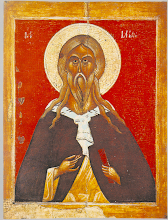
Devotion to Our Lady of Mount Carmel

A history. To quote:
We can find Mount Carmel on the Mediterranean coast of Israel, overlooking the modern-day city of Haifa. It rises 1742 feet above sea level and towers above the Mediterranean coastline and its limestone rocks form a cliff-like landscape. The name "Carmel" means, in Hebrew (Hakkarmel [with the definite article], "the garden" or "the garden-land" because of its renowned lush and verdant beauty during ancient times. (Isaiah 35:2) It is known for its cover of flower blossoms, flowering shrubs, and fragrant herbs. Such was its charm and appeal that it was compared to the beauty of the bride in Solomon’s song. (Song of Songs 7:5)

Wednesday, February 9, 2011

My Pilgrimage to Lourdes, Part I


(Parts of this essay originally appeared in the Feb-March 2007 edition of Canticle Magazine.)


There are seasons of grace accorded to every life in which the wounds of the past are anointed with healing balm, and while failures cannot be entirely reversed, one is confronted with the overwhelming truth that all things are possible with God. One such season was granted to me in 1994 when I was recovering from various disappointments, including an attempt at religious life. I had flung myself with gusto into all the rigors of a monastic community, to be told in the end that I had no vocation to be a cloistered nun, but had “gifts” which were meant to be used in the world. St Teresa of Avila had said to her nuns, “You have come to Carmel to die for Christ.” I had willingly embraced the material austerities, but the “death” of having to give up my vocation seemed too much to bear. 

I remembered the words of my mother before I first entered the Carmelite monastery. “Well, what I’m worried about is what will happen if it doesn’t work out. What if you are there for several years, but have to leave? What if you have to come back out into the world and you are in your thirties, with no job, with nothing? What will you do then?”

“I’ll just have to trust in God, Mom,” I had said, little imagining that such difficult circumstances would indeed come to pass. The disorientation of being suddenly catapulted from the silence of the cloister, where the sixteenth century constitutions of St Teresa of Avila were observed, into the noise, the fashions, the situations of the waning twentieth century, was almost paralyzing. Stumbling around in the home town where I had become a stranger, I often found myself saying to God, “Why?”

After departing the cloister, I worked in the capacity of live-in tutor to a home schooling family in an antebellum house in the heart of the Maryland countryside. The house was said to be haunted by the Confederate and Union soldiers buried in the front yard. It was an old house with attics upon attics, and a cottage which had once been inhabited by slaves. It had served as the headquarters for General Lew Wallace, author of Ben Hur, during the Battle of the Monocacy. But that is another story altogether. An intriguing experience it was, living in an historic edifice and tutoring the daughter of the family. I knew that I must eventually be moving on, and discover a way to express the “gifts” for which I had been sent back to The World. 

A fellow Carmelite tertiary approached me after Mass one day, saying, “I have information on a pilgrimage to Lourdes. Why don’t you go?” I renewed my passport, and signed up. I had always loved The Song of Bernadette, both the book by Franz Werfel and the film with Jennifer Jones. One special place in both childhood and adulthood was the shrine in Emmitsburg, Maryland, behind Mount Saint Mary’s Seminary, dedicated to Our Lady of Lourdes. Like the real Lourdes, there was a spring reputed to be miraculous. Once we took my mother there after she had dropped a motor bike on her foot. She limped up to the grotto; we poured water on her foot and prayed. While walking back to the car, she declared all the pain had vanished. Afterwards, we went there often, my mother and I, and it was one of the experiences that contributed to her conversion to Catholicism. She thought the trip to France and to the original Lourdes would be good for me. She helped me to get my passport and arrange for the trip.

The only other people on the pilgrimage were a family from Minnesota, whose daughter had been seriously injured in a car accident. She had already been brought out of her coma by the sprinkling of Lourdes water, and her parents were going to Lourdes with her, praying for a complete healing of the remaining injuries. They had never before been out of the USA, and had heard every rumor in the world about the rudeness of the French. I had been to France, but never to Lourdes. The French people were much more gracious than I had remembered, but nothing could prepare me for the splendor of the Pyrenees.

It was April and Paschaltide; the spring rains and bright sun had both drenched the snow-tipped mountains, bringing them to life. Flowers were blooming in the town and in the courtyard of the castle on the hill; the grotto of Massabielle was cleansed from the winter, renewed and ready for a new influx of pilgrims from all over the world. I had been warned about the numerous souvenir shops, which many people find cheap and tawdry. Yes, there were some gaudy, plastic statues and glow-in-the dark devotional items, but there were also wonderful things, such as embroidered Pyrenean linens and lace, vintage holy cards, and rare books. There were wine shops and open markets. A local farmer was selling lavender essential oils from his cart, more pungent than anything one could buy in a shop in the states. I was intrigued by the number of cafes and hotels which lined the narrow cobblestone streets, and the sturdy, dark natives of the Bigorre who operated the vast shrine year in and year out.

My first view of the grotto was at high noon. Most of the pilgrims were at dinner; only a handful of people prayed at Massabielle in the shade of the massive gray cliffs, above which rested the gothic majesty of the double basilica. I knelt on the tile which marked the spot where St. Bernadette was when she first beheld the Blessed Virgin Mary. There is a brand of awe that can only be experienced when visiting a spot where an extraordinary event occurred, which is why, I suppose, the Church has always considered pilgrimages to be a useful spiritual exercise. The reality of Bernadette’s story hit me hard, a story of wonder and suffering culminating in thousands of healings in the waters of the spring she had dug beneath the Virgin’s feet.

It was pouring rain when I first climbed the hill that had the life size golden-plated Stations of the Cross. Wearing an old trench coat and a black beret, I was utterly drenched. Such was the sense of devotion that permeates Lourdes, I did not care. Climbing that rocky slope in the downpour, meditating upon the Sacred Passion, brings one in touch with the reality of Our Lord’s sufferings and the sufferings of the world. As I reached the peak of the mountain, the sun broke through the rain.

At the foot of the hill were some Croatian pilgrims pondering the replica of the empty tomb. “Resurrexit, sicut dixit,” their priest was saying, and I thought of all the fighting and atrocities that were then going on in the Balkans. Many of the Croatian pilgrims were weeping.

There is a rhythm of life at Lourdes, where hours are counted by the chiming of the many bells in the various churches and chapels. The days were busy, with Mass, visits to the grotto and the holy baths, leisurely French meals, the daily processions. When I first plunged into the icy waters of Massabielle on April 25, Saint Mark’s day, it was as if a burden had been lifted. The next day we visited the cachot, the hovel which had served as a dwelling for Saint Bernadette’s destitute family. A Christian marriage lived out in dire circumstances had brought forth a saint. It was poignant to contemplate. 

The week sped by. The family from Minnesota discovered late in the week that their young daughter, whose vocal cords had been damaged in the accident, had regained her full voice. It happened after she went in the holy baths; we were at supper and her mother kept telling her to stop talking so loud. It was several minutes before it dawned on us that only a few hours ago the poor girl had hardly been able to speak above a whisper. The mother burst into tears saying, “She has her voice back- and her happiness!”

The week was too short and I hated to leave Lourdes. I was determined to come back as soon as possible; I did not know how or when, but I felt Our Lady was calling me to linger there. Through a series of events that can be given no other name but providential, everything quickly fell into place for my return to Lourdes. I had few possessions, and hardly any clothes, having given away most belongings when entering Carmel. When a friend’s grandmother died that spring, I was given many of her old clothes, including vintage garments from the 1950’s and Ferragamo pumps, as well as a yard and a half long mantilla from Rome, once worn by Grandmother to a papal audience. Thus attired, I made my second pilgrimage to Lourdes, on my own, without at tour group or guide. 

“You have never in your life caused me as much anxiety as you are now,“ my mother told me as I was packing for my summer abroad.

“Why?” I asked.

“Traveling to Europe, all by yourself. Anything could happen to you, and it is so far away,” she explained.

“Oh, I will be alright. Our Lady will take care of me.”

“Just watch out for those Frenchmen,” she advised.

(To be continued....)

Novena Prayer
Related Posts with Thumbnails