


Monday, June 12, 2023

Life: A Battlefield of Many Wounds

 From Church Life Journal:

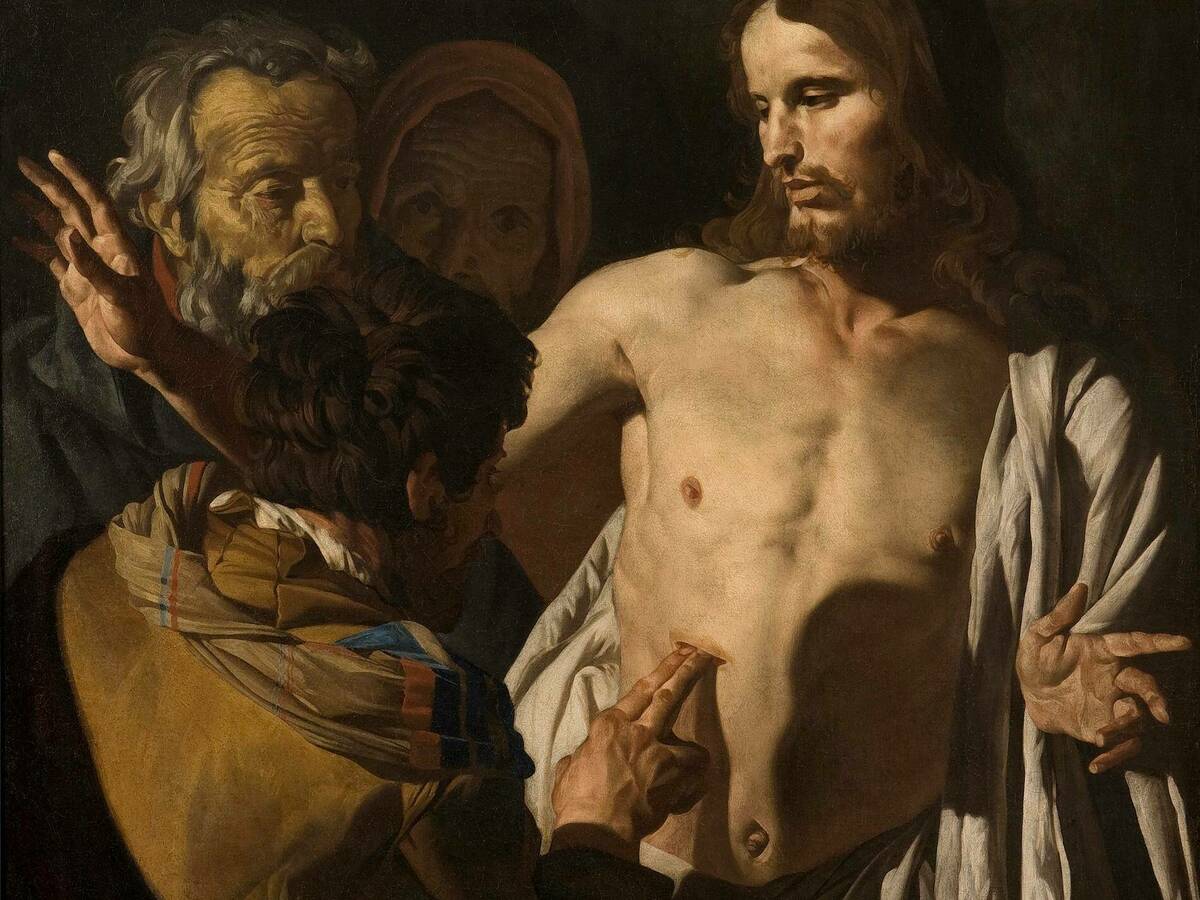
“Men and women are flesh and bone, hands and feet, the pierced side of Christ—his mystic body,” adds the author concealed by the pseudonym Moine de l’Eglise d’Orient. “In them we can achieve the reality of resurrection by our actions.” He challenges us to see Christ not only in the socially needy, the sick, the poor, and the abandoned, but above all in people who are remote from us and that we don’t like: “Christ is imprisoned once more in many of those men and women—in wicked and criminal people. Free him by recognizing him quietly and silently and you will invoke him in them.”

These are difficult, demanding words. Who can listen to them? And who has the courage to put them into practice, or at least try? We are accustomed from many sermons to being challenged to help people in social distress, and maybe we do so from time to time. There are not too many sermons about loving one’s enemies—and when there are, one often has the embarrassing feeling that neither the preacher nor his listeners take it too “literally,” or, more likely, they don’t take it seriously at all. That’s just something they say in church! We have already mentioned that the main difficulty with that saying of Jesus is that we take the concepts of love and hate to be simply emotions (and not attitudes and conscious decisions, the focus of our life). Naturally we are well aware that “there is no accounting” for emotions and that feelings of resentment persist in spite of our good intentions to fulfill Jesus’s outlandish command.

Here the pseudonymous author presents us with a new theological and spiritual stimulus to have the courage to accept those people whom we would normally not be inclined to—“the wicked and criminal.” He doesn’t tell us to love and accept their wickedness, or to ignore, downplay, or forgive their wicked deeds and characteristics. Nor does he urge us to have any emotional attachment toward them. He simply tells us that Christ is present in the humanity of everybody through the mystery of the Incarnation. He is “imprisoned” in the “wicked” because they have not allowed him his freedom, they have not allowed him to reign in their hearts and actions.

By realizing that they too “belong to Christ” (and hence to us too) we do not liberate those people from evil. So far we only liberate our relationship to them—by allowing Christ to enter our attitude to them as the faithful image of the Father, who “makes his sun rise on the evil and on the good, and sends rain on the righteous and on the unrighteous.” Just how much our attitude toward them and our way of thinking about them influences our behavior and actions, and how much our behavior can retroactively affect them, influence them and possibly change them, is another open chapter of this story.

Christ only ever comes as a challenge, a proposition, an invitation to follow him, an open possibility—as The God Who May Be. It is entirely foreign to him to pressure us to manipulate us or not respect our freedom. The God that Christ presents us with (through his words and his personality) addresses us and challenges us but never forces us to do anything. That is what our Christian witness should be like: we are here to broaden the horizon of “possible” (i.e., anticipated, usual, “logical,” “natural” behavior—the way things are done, the way of the world) to include what to people who do not know God and don’t take Christ seriously naturally seems impossible. This also—being here as an “alternative”—is part of our ministry of healing, liberation, and “driving out evil,” of which many have a somewhat romantic perception.

The “supernatural” in day-to-day “exorcism” (driving out evil) does not consist of what gripping films about exorcists luridly describe. It is something quite different: the breaking down of the boundaries of “the possible,” or what the world around us regards as “normal” and natural, by our “impossible” behavior. Yes, we are called on to perform miracles—if we understand miracles, not in a romantic or Enlightenment sense of “breaking natural laws,” but as what they really are: events that we have no right to expect in the given circumstances. (Read more.)

Tuesday, May 30, 2023

St. Joan and the Royal House of France


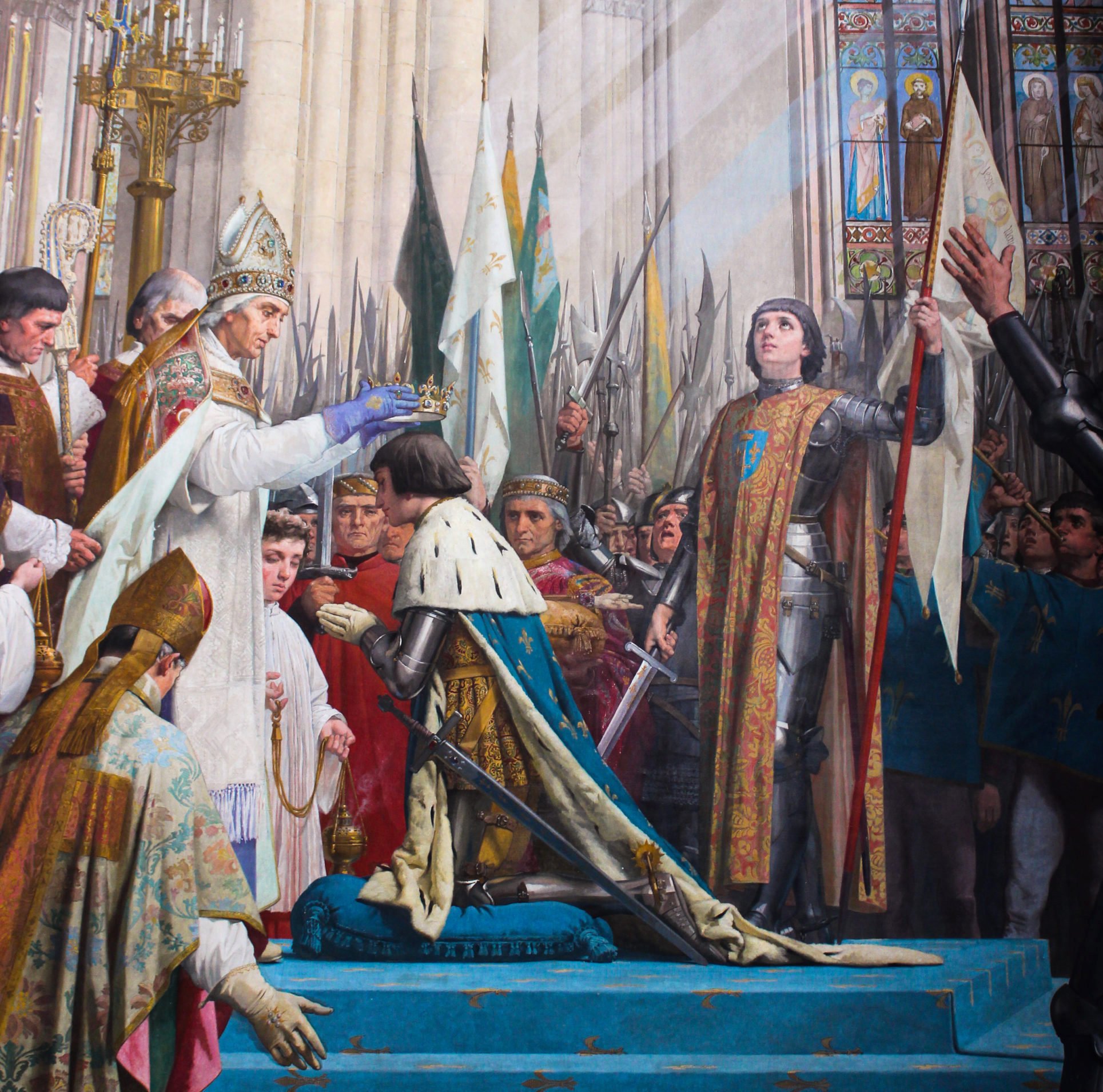
 Most Catholics, I have concluded, do not have trouble accepting the fact that St. Joan of Arc donned male apparel and led armies to victory. What seems to disturb many people, however, is that she gave her help to a king, and worse yet, to a King of France. Many Americans seem to be convinced that monarchy is an intrinsically evil institution. They are not able to see beyond their own time and their own political process. I recently read a comment in which someone said that St. Louis of France was a saint "in spite of being a king." May I be so bold to say that St. Louis saw his kingship as a vocation in which he served God and man. What is more, he saw it as a calling to share in the Kingship of Christ, from Whom he held his authority and to Whom he had to render an account. St. Joan, in her simple piety, viewed kingship in a similar manner. She honored her King Charles VII, although he was far from being a saint, because in doing so she gave honor to Christ the King. The office was deserving of respect, even if the man was not. On her banner she bore an image of Christ the King surrounded by the fleur de lys, the lilies of royal France.

In a small volume entitled Joan of Arc In Her Own Words there are many quotations of St. Joan which make explicit reference to the fact that she was called to serve God by assisting the French monarch. She said: "[St. Michael] told me the pitiful state of the Kingdom of France. And he told me that I must succour the King of France." To Robert de Baudricourt she insisted: "The Kingdom of France is not the Dauphin's but my Lord's. But my Lord wills that the Dauphin shall be made King and have the Kingdom in custody. The Dauphin shall be King in spite of his enemies, and I shall lead him to his anointing." She welcomed the Duc d'Alencon by saying: "The more there are gathered together of the blood of the King of France, the better it will be." In her letter to the English lords, Joan dictated: "Do justice to the King of Heaven; surrender to the Maid, who is sent here from God to uphold the blood royal."

Joan placed great store upon the mystical aspects of the coronation ceremony, telling the royal council: "When once the King is crowned and anointed, his enemies' strength will steadily grow less, and finally they will have no power to harm him or the Kingdom." At her trial she announced: "As for the good work I have done...I must needs leave that with the King of Heaven, who sent me to Charles, son of Charles King of France, who shall be King. And you shall see that the French will very soon achieve a great task which God will send to the French, and such that almost the whole Kingdom of France will tremble. And I say it, so that when it comes to pass it will be remembered that I said it." The Maid believed her country had a mission from God, a task to fulfill.

There are also some odd connections between St. Joan and Queen Marie-Antoinette. At first glance no two people appear to be as different from each other as the Habsburg archduchess and the peasant girl from Domremy, other than a shared love for children and needlework. Joan has often been referred to as the "Maid of Lorraine" or even as "Joan of Lorraine." Father Jean-Marie Charles-Roux, in building a case for the martyrdom of Marie-Antoinette in his book Louis XVII: La Mère et l'Enfant martyrs, points out that the queen's full name was Marie-Antoinette-Josephe-Jeanne de Lorraine, even as the Maid was Jeanne de Lorraine. Both women were called to their "mission" at age thirteen. At thirteen, Joan began to hear her voices; at thirteen, Marie-Antoinette was told she was to marry the heir to the French throne. Both were known for their staunch purity, and yet both were branded by enemies with the epithet of "whore." Both the queen and the peasant have had their reputations shredded beyond recognition. Both suffered the ordeal of a long imprisonment in which they suffered outrages against modesty. Both were forced to defend themselves against calumnies and half-truths amid the scrutiny of a public trial. Both persisted in their loyalty to the Holy See. Both were condemned to an ignominious death and each were taken to the scaffold in a cart. Unlike St. Joan, Marie-Antoinette never had a posthumous retrial. She was never officially vindicated and her name continues to be slandered in books and movies to this day. May the prayers of St. Joan bring the truth to light.

Tuesday, April 18, 2023

How True Stories of the Dying Can Help the Living


 From Francis Slobodnik at TFP:

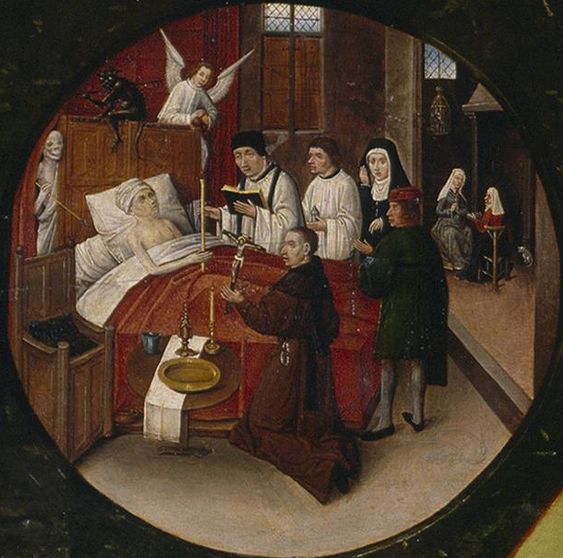
The prism of death often provides an excellent perspective to influence how to live. Thus, the book Life Stories of Dying Penitents or Sick Calls from the Diary of a Missionary Priest invites the reader to make serious, profound, hopeful and tragic reflections. Originally published in the late nineteenth century, the book is a compilation of accounts of sick calls to the dying written by an anonymous Irish priest at a parish in London, England.

In the Litany of the Saints, there is the invocation: “From a sudden and unprovided death, deliver me, O Lord.” After reading this book, the reader can see why the Church makes this plea. Death comes to all, and it is best to be prepared.

The rich descriptions in the book provide a snapshot of how death visits all the social classes. It offers insights into the complex situations priests faced at the time.

Most accounts end happily with the priest hearing the final confession and administering Extreme Unction. However, others are tragic. Some cases involved situations where the family contacted the priest on behalf of a dying relative who had not practiced the Faith for a long time. It is pretty sobering to consider that such dying people often refuse to confess and repent despite the pleadings of the priest and family members. The tragedy contradicts the Hollywood narratives, where everything turns out fine in the end. As Saint Alphonsus Liguori wrote, “most die as they lived.” (Read more.)

Monday, April 17, 2023

Novena to Our Lady of Good Counsel


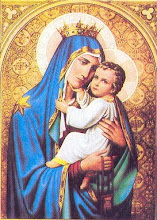
The feast of Our Lady of Good Counsel is April 26. Let us pray for the Holy Father.


Holy Virgin, moved by the painful uncertainty we experience in seeking and acquiring the true and the good, we cast ourselves at thy feet and invoke thee under the sweet title of  Mother of Good Counsel.  We beseech thee: come to our aid at this moment in our worldly sojourn when the twin darknesses of error and of evil that plots our ruin by leading minds and hearts astray.

Seat of Wisdom and Star of the Sea, enlighten the victims of doubt and of error so that they may not be seduced by evil masquerading as good; strengthen them against the hostile and corrupting forces of passion and of sin.

Mother of Good Counsel, obtain for us from thy Divine Son the love of virtue and the strength to choose, in doubtful and difficult situations, the course agreeable to our salvation. Supported by thy hand we shall thus journey without harm along the paths taught us by the word and example of Jesus our Savior, following the Sun of Truth and Justice in freedom and safety across the battlefield of life under the guidance of thy maternal Star, until we come at length to the harbor of salvation to enjoy with thee unalloyed and everlasting peace. Amen.
(By Pope Pius XII, 23 January 1953)

Litany of Our Lady of Good Counsel
 
Lord, have mercy on us.
Christ, have mercy on us.
Lord, have mercy on us.
Christ, hear us.
Christ, graciously hear us.
God the Father of Heaven, Have mercy on us.
God the Son, Redeemer of the world, Have mercy on us.
God the Holy Ghost, Have mercy on us.
Holy Trinity, One God, Have mercy on us.
Beloved Daughter of the Eternal Father, pray for us.
August Mother of God the Son, pray for us.
Blessed Spouse of God the Holy Ghost, pray for us.
Living temple of the Holy Trinity, pray for us.
Queen of Heaven and earth, pray for us.
Seat of Divine Wisdom, pray for us.
Depositary of the secrets of the Most High, pray for us.
Virgin most prudent, pray for us.
In our doubts and difficulties, pray for us.
In our tribulations and anguish, pray for us.
In our discouragements, pray for us.
In perils and temptations, pray for us.
In all our undertakings, pray for us.
In all our needs, pray for us.
At the hour of death, pray for us.
By thine Immaculate Conception, pray for us.
By thy happy nativity, pray for us.
By thine admirable presentation, pray for us.
By thy glorious Annunciation, pray for us.
By thy charitable Visitation, pray for us.
By thy Divine Maternity, pray for us.
By thy holy Purification, pray for us.
By the sorrows and anguish of thy maternal heart, pray for us.
By thy precious death, pray for us.
By thy triumphant Assumption, pray for us.
Lamb of God, Who takest away the sins of the world, Spare us, O Lord.
Lamb of God, Who takest away the sins of the world, Graciously hear us, O Lord.
Lamb of God, Who takest away the sins of the world, Have mercy on us.
V. Pray for us, O holy Mother of God,
R. And obtain for us the gift of good counsel.

Let Us Pray.
V. Lord Jesus, Author and Dispenser of all good, Who in becoming incarnate in the womb of the Blessed Virgin hast communicated to her lights above those of all the Heavenly intelligences, grant that in honoring her under the title of Our Lady of Good Counsel, we may merit always to receive from her goodness counsels of wisdom and salvation, which will conduct us to the port of a blessed eternity.
R. Amen.

Friday, April 14, 2023

The Angels at the Resurrection

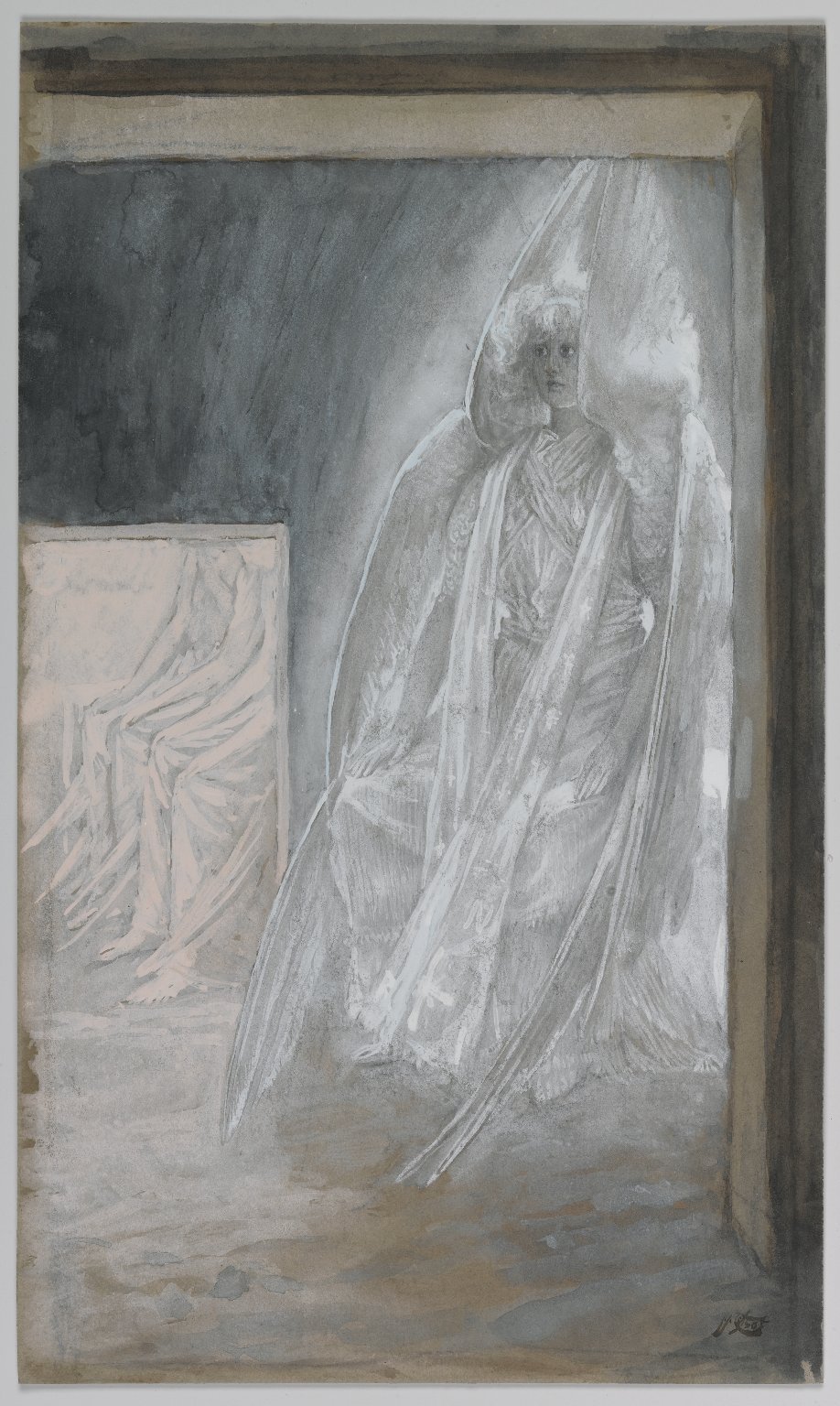
"The Angel Seated on the Stone" by Tissot

 From Catholic Exchange:

Angels have a glorious sense of humor. When the disciples came to find Jesus after hearing of his resurrection, they ran as fast as they could to the tomb where angels greeted them with holy wit. They told them, “Why do you seek the living one among the dead?” One can only imagine the snicker they had to hold back at their statement.

And yet, their comment served as the key that unlocked the greatest realization the world has ever known. For they continued saying, “‘He is not here, but he has been raised. Remember what he said to you while he was still in Galilee, that the Son of Man must be handed over to sinners and be crucified, and rise on the third day.’ And they remembered his words.” (Read more.)


Saturday, April 8, 2023

The Harrowing of Hell

 From The Imaginative Conservative:

Our Lord’s descent into hell is well attested to by divine revelation. For example, Christ says, “as Jonah was three days and three nights in the belly of a whale, so will the Son of man be three days and three nights in the belly of the earth” (Mt. 12:40). Further, in Acts of the Apostles, St. Peter says, “[David] foresaw and spoke of the resurrection of the Christ, that he was not abandoned to Hades, nor did his flesh see corruption” (2:31). Likewise in the Apostles’ Creed we profess, “He descended into hell.”

Besides making clear that the soul of Christ descended into hell, these texts clearly refer the descent into hell to the Person of Christ. And this is supremely fitting. For, since the personal union of the Word of God with both His body and soul remained even after death, whatever could be attributed to either of these principles of His human nature, while they were separated, was also attributable to God the Son. Thus, in the Apostles’ Creed we profess that He (i.e., God the Son) was buried insofar as His body was placed in the tomb. In like manner, we profess that God the Son descended into hell on account of His soul going to the underworld.

Connected with this, St. Thomas Aquinas points out that it is even true to say that “during the three days of His death, the whole Christ was in the tomb, in hell, and in heaven, on account of His Person, which was united to His body lying in the tomb, and to His soul-harrowing hell, and which was subsisting in His divine nature reigning in heaven” (Compendium Theologiae, ch. 229). Indeed, insofar as by His divine immensity the Son of God comprehends or contains all things, we must affirm that the whole Person of Christ is both in every place and in all places put together, yet He is not wholly contained by any one place nor by all places put together (Summa Theologiae, III, q 52, a. 3, ad 3um).

When reflecting on our Lord’s harrowing of hell, it is, of course, necessary to distinguish different meanings of the name “hell.” In its most general meaning, “hell” signifies “the underworld,” which the Hebrews refer to as, Sheol, and the Greeks call by the name, Hades (Catechism of the Catholic Church, #633). Further, as the Roman Catechism teaches, there are three main parts to the underworld. There is gehenna, or hell in the strict sense, which is the abode of the damned. There is also purgatory wherein the punishments, unlike those of gehenna, are cleansing and only temporary in character. Lastly, there is that part of the underworld known as “Abraham’s bosom” (see, Luke 16:22-26). It was in here that “the souls of the just prior to the coming of Christ the Lord were received, and where, without experiencing any sort of pain, but supported by the blessed hope of redemption, they enjoyed peaceful repose” (Roman Catechism, pt. 1, art. 5).

So, into which part or parts of hell did Christ descend and why? Taking St. Thomas Aquinas as our guide, we can affirm both that our Lord descended into all three parts of hell and that He descended into only one part of hell (i.e., into Abraham’s bosom). But to see how both of these statements are true without contradiction, we must distinguish two ways in which something can be somewhere.

Thinking of everyday examples first, it is true that one and the same fire is simultaneously both in the fireplace and in every part of the room which it heats. The fire is in the fireplace as in a proper place, while it is in every part of the room through its effect, that is, through the heat which it produces. Likewise, it is true that one and the same musician is simultaneously both on the stage and in every part of the concert hall. For the musician is on the stage insofar as that is his proper place, yet he is also present in every part of the concert hall through his effect, that is, through the music that he produces.

Applying this distinction to our Lord’s descent into hell, it is true to say that Christ’s soul, through its essence, only entered Abraham’s bosom. Nonetheless, through its effect, Christ’s soul was in some way present in every part of hell. As St. Thomas puts it, “being in one part of hell, his effect in some way spread to every part of hell, just as by suffering in one place on earth, he liberated the whole world by His passion” (Summa Theologiae, III, q. 52, a. 2). More specifically, St. Thomas teaches that the proper effect of Christ in the underworld was the bestowal of the beatific vision on the souls of the just waiting for Him in Abaham’s bosom. This, properly speaking, constitutes the harrowing or despoiling of hell. For, through granting the souls of the just the vision which beatifies, the King of all things “robbed” hell of its most prized possessions. But Christ’s presence in hell also had the effects of giving hope of attaining eternal glory to the souls in purgatory and of confounding and bewildering those in gehenna (Summa Theologiae, III, q. 52, a. 2).

These considerations, in turn, cast some light on the reasons for God the Son’s descent into hell. For one thing, He went there to manifest His power and authority to the underworld. As St. Paul writes, “at Jesus’ name every knee must bend in the heavens, on the earth, and under the earth, and every tongue proclaim to the glory of God the Father: Jesus Christ in Lord!” (Phil. 2:10-11). But secondly, and more importantly, our Lord came to deliver His loved ones from their exile. He came to reward those who, from our first father, Adam, to His own foster-father, St. Joseph, had fought the good fight and had finished the race. The King descended into Hell in order to bring nothing less than His own beatific vision, the very paradise which He promised to Dismas just a few hours before (Lk. 23:43), to these just and holy souls. (Read more.)

Friday, April 7, 2023

Prefigurations of the Crowning with Thorns

 Scholarly and devotional. Worth a listen on Good Friday.

Related Posts with Thumbnails