Sunday, July 31, 2011

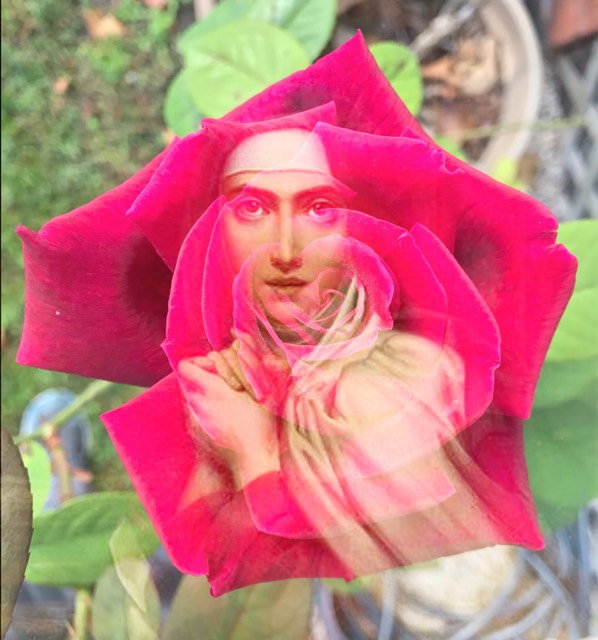
Blessed Elizabeth to be Canonized

It has been announced.
DIJON-FRANCE (12-07-2011).- On July 11, 2011, in the Chapel of the Archbishop of Dijon, in the presence of the Most Reverend Roland Minnerah, Archbishop of Dijon, the super miro process for the canonization of Blessed Elizabeth of the Trinity (1880-1906) was opened.

After a brief prayer and in the presence of a relic of the Carmelite of Dijon, the following members of the Tribunal were sworn in: His Excellency, Ennio Apeciti of the Archdiocese of Milan, Archdiocesan Judge-Delegate; Canon Paul Chadeuf, Promoter of Justice; and Mr. Yves Frot, Notary.

Canon Marc Galen, Archdiocesan Chancellor, read the supplice libello of the Vice-Postulator for the Cause, Father Antonio of the Mother of God, OCD, in which opening of the process is requested as a result of the proposed miracle attributed to the intercession of Blessed Elizabeth of the Trinity.

Following this initial session, three Discalced Carmelites of the Monastery of Flavignerot were interviewed. The Belgian Monastery of Flavignerot is the location of the proposed healing miracle of Miss Marie-Paul Stevens.

Marie-Paul is a professor of religion in the Marist Brothers’ School in Malmedy, Belgium. In May 1997, she began to experience great difficulty in articulating words, simultaneously with the onset of salivary dysfunction. On the advice of a physician who was her friend, she underwent clinical analyses with a resulting diagnosis of Sjögren syndrome. This disease would gradually affect several body systems.

She traveled to Flavignerot after several unsuccessful treatments to thank Elizabeth of the Trinity for her support during her illness. On April 2, 2002, after having prayed in the chapel of the Carmel and made thanksgiving to Elizabeth for her help, she sat on some stones surrounding the parking area of the Monastery. Unexpectedly, before the dumbfounded eyes of two friends who accompanied her, she lifted her arms on high and exclaimed, full of surprise and joy, “I am no longer ill!” After that day, Marie-Paul resumed a completely normal life. (Read entire article.)

Saturday, July 30, 2011

Kneeling for Communion

The Vatican's prefect for the Congregation for Divine Worship, Cardinal Antonio Canizares Llovera, recently recommended that Catholics receive Communion on the tongue, while kneeling. (Via Serge.)
 Receiving Communion in this way, the cardinal continued, “is the sign of adoration that needs to be recovered. I think the entire Church needs to receive Communion while kneeling.”

“In fact,” he added, “if one receives while standing, a genuflection or profound bow should be made, and this is not happening.”

“If we trivialize Communion, we trivialize everything, and we cannot lose a moment as important as that of receiving Communion, of recognizing the real presence of Christ there, of the God who is the love above all loves.... (Read entire article.)

Thursday, July 28, 2011

Modesty and the Popes

A reader sent me a site which contains some of the traditional Catholic teachings on modesty from the not too distant past. Such directives and exhortations were intended to protect the dignity of women in an age when sexuality was being used more and more as a tool of  further exploitation. We are now so far beyond what anyone in the first part of the twentieth century would consider decent as far as clothing goes. However, I think we can derive at least a general idea of what is considered to be appropriate attire becoming to a devout Christian. Some Catholics find such writings by prelates to be very offensive; I can't think why. To quote:
Modesty will moreover suggest and provide suitable words for parents and educators by which the youthful conscience will be formed in matters of chastity. "Wherefore," as We said in a recent address, "this modesty is not to be so understood as to be equivalent to a perpetual silence on this subject, nor as allowing no place for sober and cautious discussion about these matters in imparting moral instruction."[103] In modern times however there are some teachers and educators who too frequently think it their duty to initiate innocent boys and girls into the secrets of human generation in such a way as to offend their sense of shame. But in this matter just temperance and moderation must be used, as Christian modesty demands.  ~Pius XII
Tuesday, July 26, 2011

The Christ of the Tabernacle

Fr. Mark on Eucharistic Adoration.
The hidden Christ, the silent Christ, the humble Christ of the Tabernacle models the virtues of the Rule of Saint Benedict in the most astonishing way, and communicates those same virtues to those who linger in His company. Far from being a baroque adornment detracting from some mythical primitive Benedictine sobriety, Eucharistic adoration is the wellspring of the holiness that Saint Benedict describes in his Rule.
Eucharistic Adoration is the school of hiddenness,
-- of silence,
-- of solitude,
-- of humility,
-- of obedience,
-- of servanthood,
-- of an abiding love that calls no attention to itself,
-- of ceaseless prayer to the Father,
-- of the Work of God,
-- of compassion for sinners,
-- of burning love for souls,
-- of gentleness towards the weak,
-- of Divine Hospitality,
-- of monastic perfection. (Read entire article.)

Monday, July 25, 2011

Masters of the Spiritual Life

Father Peter Damian M. Fehlner, F. I., gives an exposition on the seven great spiritual masters. (via Immaculatae.)

Thursday, July 21, 2011

When Saints Help Saints

How St. Vincent de Paul came to the rescue.
I have long believed that saints, like the fruit of the vine, grow in clusters. The history of the saints in every age bears this out. Saint Vincent de Paul was no exception. He was in relation with a myriad of other holy souls of France's Grand Siècle, the age of what Henri Brémond called her "mystical invasion."
The ravages of The Thirty Years War in Mother Mectilde's native Lorraine stirred Saint Vincent de Paul to an active compassion. He sent out priests belonging to his Congregation of the Mission to bring relief to those distressed by the war, those turned out of their homes and reduced to a miserable poverty. (Read entire article.)

Tuesday, July 19, 2011

Pope Benedict on the Brown Scapular

From Zenit:
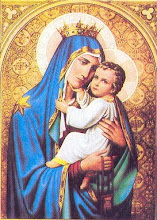
The scapular is a particular sign of union with Jesus and Mary. For those who wear it, it is a sign of filial abandonment to the protection of the Immaculate Virgin. In our battle against evil, may Mary our Mother wrap us in her mantle. I commend you to her protection and I bless you from my heart. (More HERE.)

(Image Source)
Related Posts with Thumbnails