Saturday, November 21, 2026

Presentation of Mary

Presentation of Mary by Titian

Father Mark offers some history and thoughts to ponder on the feast commemorating Our Lady being taken to the Temple at the age of three by her parents.
In the hidden recesses of the old Temple, the Holy Ghost prepares the new Temple, the all-holy Virgin, to become the Mother of God . Destined to be the living Temple of the Word, Mary dwells in the Temple of the Old Dispensation. She hears the chanting of the psalms, the prophets, and the Law. Was it there that the Most Holy Virgin learned Psalm 118, the long litany of loving surrender to the Word? And was it from Psalm 118, held in her heart from so tender an age, that she drew her response to the message of the Angel, “Be it done unto me according to Thy Word” (Luke 1:38)?
There planted in the Lord, the dew of His Spirit made her flourish in the courts of her God, and like a green olive she became a tree, so that all the doves of grace came and lodged in her branches. (Saint John Damascene, Upon the Orthodox Faith, Book IV, ch. 15)
Virgin Mother of the Lamb
There Mary smells the fragrance of incense and burnt offerings. There she observes the faithful of Israel streaming towards Zion, filling the Temple, seeking the Face of the Lord. Priest, altar, and oblation are not unfamiliar to the Virgin who, gazing upon her Son, will recognize in Him the Eternal priest, the Altar of the New Covenant, the pure Victim, the holy Victim, the spotless Victim offered in unending sacrifice.
To Belong to God
In the seventeenth century — the age of France’s “mystical invasion” — the mystery of the Presentation of the Virgin in the Temple captivated the hearts of Monsieur Olier and of others on fire with zeal for the holiness of the priesthood, for the beauty of the consecrated life, and for the worthy praise of God. The so-called French School of spirituality, marked above all by the imperative of adoration and the virtue of religion, gravitated to the feast of November 21st as to the purest liturgical expression of the desire to be offered to God, to belong to God, and to abide in God’s house.
Virgo Sacerdos
When, in 1641, Jean-Jacques Olier (1608 – 1657) established the seminary of Saint-Sulpice, he placed it under the patronage of the Virgin Mary in the mystery of her Presentation in the Temple. The Child Mary, hidden in the Temple, learns the meaning of sacrifice and oblation; she is the sacerdotal Virgin, prepared by the Holy Spirit to stand at the altar of the Cross united to her Son, High Priest and immolated Lamb. Under the influence of the French Sulpicians, many religious congregations, established after the horrors of the French revolution, chose the feast of the Presentation of the Virgin Mary as their foundation day, the day of religious profession, and of the renewal of vows. (Read more.)

This feast is a wonderful prelude to Advent. According to Dom Gueranger:
Mary, led to the Temple in order to prepare in retirement, humility, and love for her incomparable destiny, had also the mission of perfecting at the foot of the figurative altar the prayer of the human race, of itself ineffectual to draw down the savior from heaven. (From Abbot Gueranger's The Liturgical Year, Vol XV )

"For better is one day in thy courts above thousands. I have chosen to be an abject in the house of my God, rather than to dwell in the tabernacles of sinners." Psalm 83:11 (The Vulgate)

Friday, November 20, 2026

Of Relics

Incorrupt Body of St. John Vianney in Ars, France

 From Catholicism:

It is no surprise that in [St. John Damascene's] other masterpiece, On the Orthodox Faith , this eighth-century apologist gives us a beautiful defense of saints’ relics based on the fact that “through their minds God has also dwelt in their bodies.”

What’s the common thread uniting icons and relics? It is that God has sanctified stuff — matter, as we call it — and has chosen to give us divine assistance through its use. In his defense of relics, St. John goes on to cite the same passage from First Corinthians that the fathers of the Council of Trent did, in this excerpt from the Council’s 25th session: “the holy bodies of holy martyrs and of others now living with Christ — which bodies were the living members of Christ and ‘the temple of the Holy Ghost’ (I Cor., vi, 19), and which are by Him to be raised to eternal life and to be glorified, are to be venerated by the faithful85”

Like St. John, who points out miracles worked through the relics of the saints, the Council goes on to state a reason why the relics are to be honored: “for through these [bodies] many benefits are bestowed by God on men85” The fact that relics were used by God to bestow benefits on men is clearly to be seen in the inspired history of the Bible.

In the Fourth Book of Kings (or Second Kings, in Protestant Bibles), the story is told of Elias (Elijah) the Prophet being taken up to heaven in a fiery chariot. Eliseus (Elisha) the Prophet, who inherited his spiritual father’s “double spirit” — the legal prerogatives of firstborn son — took up the mantle of Elias which had fallen in the violence of the whirlwind. “And he took up the mantle of Elias, that fell from him: and going back, he stood on the bank of the Jordan; and he struck the waters with the mantle of Elias, that had fallen from him, and they were not divided. And he said: Where is now the God of Elias? And he struck the waters, and they were divided hither and thither, and Eliseus passed over” (4 Kings 2:13-14 / KJV: 2 Kings 2:13-14 ).

Elias had, previous to his being taken up, worked the same miracle using his mantle (2:8). This is how the two prophets ended up on the side of the Jordan they were on when the fiery chariot came. After Elias’ prodigious departure, the relic of his mantle became Eliseus’ “passport” to get back to the other side. Here is a concrete instance of God bestowing a benefit on men through a relic.

The next Old Testament relic apologetic also involves Eliseus. Here, the relic is not a garment, but the prophet’s dead body: “And Eliseus died, and they buried him. And the rovers from Moab came into the land the same year. And some that were burying a man, saw the rovers, and cast the body into the sepulchre of Eliseus. And when it had touched the bones of Eliseus, the man came to life and stood upon his feet” (4 [KJV:2] Kings 13:20-21).

There is no denying that the inspired history relates a cause-and-effect relationship between the dead man’s body touching the corpse of Eliseus, and that man’s resurrection.

Before proceeding to the New Testament, we cite one more B.C. proof: God chose to work many and great miracles through the Ark of the Covenant. What did the Ark contain? Relics. In it were found the tablets of the Law, the Rod of Aaron, and a jar of manna from the Israelites’ wandering in the desert. (Read more.)


Thursday, November 19, 2026

St. Raphael Kalinowski

Today on the Carmelite calendar is commemorated a saint who worked for true ecumenism, without compromising his convictions. His motto was: "Mary, always and in everything." From the Discalced Friars website:
St. Raphael of St. Joseph was born as Joseph Kalinowski on September 1, 1835. In spite of losing his mother early on, Joseph was a happy child and grew up in a very warm and affectionate Christian home. The phrase, “To be a Catholic and to be a Pole,” summed up his youth. 
Because of his many intellectual gifts, Joseph left home to study agronomy in St. Petersburg at the age of sixteen. All around him the spirit of irreligion reigned, so Joseph himself stopped attending Mass and receiving the sacraments. After graduation he joined the Czarist army as an engineering officer. Joseph struggled with poor health and was sent to Warsaw to be treated at a sanitarium. There he became friends with a young woman who was on fire with her faith. Their conversations were so powerful that a process of conversion began in him. In Warsaw, he discovered the terrible plight of his countrymen under Imperialist Russia. When a patriotic cousin was going to be sent into exile in Siberia, Joseph sought to procure a crucifix for him from his sister. She agreed to give it to him on one condition: he must go to confession! He sheepishly agreed, bringing about the final push in his conversion. Afterward, he simply said: “It was an exhilarating experience.” 
Around this time, Joseph was asked to join the secret Polish government behind a plot of insurrection. He knew this was futile and would lead to much bloodshed, but he also saw that it was necessary to make this sacrifice for the sake of his fellow Poles. In very little time he was discovered, arrested, and sentenced to ten years of labor in the salt mines of Siberia. In the camp, 100-200 prisoners shared a barracks with only wooden planks for beds in the freezing cold. He took care of his fellow prisoners, giving money and food to those who needed it, often going hungry himself. He loved to take time alone for quiet prayer and also helped organize prayer services for the men. He said in a letter: “God empties my heart of all natural attachment, probably to fill it with things more pure, of which nothing surpasses the desire to do good to my neighbor.” In Siberia, he also felt a strong attraction toward religious life. 
After serving his sentence, Joseph was released and returned home a changed man. He was hired to tutor a young Polish nobleman, Prince Auguste Czartoryski. In Krakow, he met a cousin of the young prince who had become a Carmelite nun. She gave Joseph a book on the spirituality of St. Teresa of Jesus and St. John of the Cross. Through his reading, he also discovered that Carmel was placed under Mary’s patronage in a unique way. His newfound love for Carmelite spirituality and deep devotion to Our Lady sealed the deal; he knew God was calling him to become a Carmelite. 
While the young Prince Auguste was saddened to be without his tutor, he also went on to religious life. Eventually, he entered the Salesians, receiving the habit from the hands of St. John Bosco. Father Auguste would help bring the Salesians to Poland and was himself beatified by Pope John Paul II in 2004. Joseph entered the Discalced Carmelite Friars on November 26, 1877, at the age of forty-two and took the name Raphael of St. Joseph. He made solemn profession and was ordained a priest on January 15, 1882, in Czerna, Poland. (Read more.)


More HERE.

Wednesday, November 18, 2026

Of the Consecration of Churches

 
From Liturgical Arts Journal:

The tradition of consecrating churches is thought to date back to the first century, and the antiquity of the specific ceremony we are treating today is already attested to already by the time of St. Gregory the Great.

The Catholic Encyclopedia comments:

Before the time of Constantine the consecration of churches was, on account of the persecutions, necessarily private, but after the conversion of that emperor it became a solemn public rite, as appears from Eusebius of Cæsarea (Church History X): "After these things a spectacle earnestly prayed for and much desired by us all appeared, viz. the solemnization of the festival of the dedication of churches throughout every city, and the consecration of newly-built oratories." The passage clearly indicates that churches were consecrated before, and that accordingly the anniversaries of the dedication might now be publicly celebrated.

Of course, what the precise form of this consecration was is not entirely clear, but "we find occasional notices of the vigil kept before the consecration, of the translation of the relics, and of the tracing of the Greek and the Latin alphabet on the pavement of the church... Often only the Greek alphabet or the Latin was written twice; and sometimes to the Greek and Latin the Hebrew alphabet was added (Martène, De Antiquis Ecclesiæ Ritibus, II)." (Source: Catholic Encyclopedia)

In short, there was some variety in this regard, but also a remarkable unity and continuity that was preserved down the ages.

The particular form of this ceremony sees some other minor variations as well, at least in the modern age. In some instances a smaller cross is laid out before the sanctuary in the nave as follows: (Read more.)

Tuesday, November 17, 2026

St. Elizabeth of Hungary

On November 17 the Church gives us the feast of Saint Elizabeth of Hungary (1207-1231) who in her twenty-four years on earth embodied virtues which in today's world have almost ceased to exist: honesty, modesty, courage, chastity, self-denial and fidelity. She was not queen of Hungary, as many people think, but a princess. Her parents were the king and queen. Being royal in those days meant that your life was not your own. Marriages between two ruling families would form an alliance between countries and keep two countries from going to war. So from her infancy, Elizabeth was a living pledge of peace, since she was promised in marriage to the heir of Thuringia.

Elizabeth was sent to Germany at the age of four to be raised in the household of her betrothed, Louis of Thuringia, as was the practice of the time. It was heartbreaking for her parents to separate from their lively, dark-haired little girl, but they commended her to God and Our Lady. Louis' family disliked her, as was often the case with foreign royal brides, but he always cherished and protected his little fiancée. Elizabeth, although far from home, was a Magyar princess, and there was an intensity in her commitment to God and her husband which was repugnant to the placid Thuringians. They were married when Elizabeth was fourteen and Louis was about seventeen; he had inherited the dukedom of Thuringia from his father by then. Thuringia is roughly where Hesse-Darmstadt is now. In the thirteenth century it was a prosperous and powerful territory, although Louis was a duke, not a king.

Elizabeth had always shown a strong inclination toward piety as well as a great love of helping the needy and downtrodden. She opened a hospital for the poor in one of her castles and ran a soup kitchen. She was passionately in love with her husband, which is one of her most appealing aspects - she was a saint but she was also very much a woman. Louis truly loved his wife and sought for a fervent priest to guide her spiritual life. Unfortunately, her later confessor, the overzealous Conrad of Marburg, was excessively harsh with Elizabeth.

As Duchess, she established the Franciscan order in Thuringia and became herself a tertiary (with St. Louis of France, she is the patroness of tertiaries.) . Louis and Elizabeth had three children.

When Elizabeth was twenty, her husband died while on crusade. She ran shrieking through the castle, as if she had lost her mind. Her brother-in-law coveted the inheritance; he evicted Elizabeth and her three small children from their home. He forbade everyone in Thuringia to give them shelter. The little family had to hide in a pig pen from the rain. Poverty, loss and persecution did not embitter Elizabeth, as it would have embittered others, especially when it involved the suffering of her small children. She accepted everything from the hand of God.

Finally, someone got word to Elizabeth's father the King of Hungary, and he prevailed upon the Holy Roman Emperor to intervene. Elizabeth's lands were restored to her but she voluntarily chose holy poverty. After securing her children's welfare, she lived in a small room in the hospital she had founded and cared for the sick and the lepers. That would be like someone going to live with AIDS patients today.

Emperor Frederick begged for Elizabeth's hand in marriage but she refused. She died at the age of twenty-four and as she passed from this world a great light filled the room. Many miraculous cures were reported at her grave site. She was buried wearing the imperial crown which she had refused in life.

Thinking of St Elizabeth can help us when ever we feel afraid of poverty, or of being alone. Her spirit of humility and the renunciation of worldly honors can be imitated by all.

Monday, November 16, 2026

St. Margaret of Scotland

St. Margaret (1045-1092) was a royal Saxon princess. From a dethroned and exiled family, riches and power meant nothing to her, for she saw how quickly such things can pass away. Consequently, she was deeply drawn to the monastic life. However, the Scottish King Malcolm Canmore sought her hand in marriage, so attracted was he by her beauty and virtue. They were married. Malcolm was on the wild side, but he and Margaret loved each other completely, and died three days apart.

As Queen of Scots, St. Margaret bore eight children, was devoted to the poor, and helped to reform the liturgy. As one article states:
Under Queen Margaret's leadership Church councils promoted Easter communion and, much to joy of the working-class, abstinence from servile work on a Sunday. Margaret founded churches, monasteries and pilgrimage hostels and established the Royal Mausoleum at Dunfermline Abbey with monks from Canterbury. She was especially fond of Scottish saints and instigated the Queen's Ferry over the Forth so that pilgrims could more easily reach the Shrine of St. Andrew.
Mass was changed from the many dialects of Gaelic spoken throughout Scotland to the unifying Latin. By adopting Latin to celebrate the Mass she believed that all Scots could worship together in unity, along with the other Christians of Western Europe. Many people believe that in doing this, it was not only Queen Margaret's goals to unite the Scots, but also Scotland and England in an attempt to end the bloody warfare between the two countries.
In setting the agenda for the church in Scotland Queen Margaret also ensured the dominance of the Roman Church over the native Celtic Church in the north of the country.
It is interesting how St Margaret championed the practices of the Roman rite over the Celtic traditions, although I have no doubt that the Celtic liturgy and devotions were quite beautiful. St. Margaret, however, saw the importance of harmony of worship for the people of her country, especially after the upheavals of their century.

Saturday, November 14, 2026

All Carmelite Saints

"With zeal have I been zealous for the Lord God of Hosts." ~3 Kings 19:10

Today the Carmelite Order commemorates the members of our Order who have ascended the mountain of perfection to their heavenly home. They sought God alone, conversing with Him in the depths of their hearts. Our Lord once said to the Holy Mother St. Teresa: "I desire that you no longer hold conversation with men, but with angels," and in many ways those words can be applied to all who follow the Carmelite way. The habits of the interior life, of recollection and mortification, must be cultivated amid our daily duties in order to create an atmosphere conducive to contemplation. In the Rule of St. Albert, the medieval hermits were told: "In silence and hope shall your strength be." (Isaias 30:15) During the theophany on Mt. Horeb, Elias the prophet experienced the Lord God, not in the earthquake, or in the fire, but in a "whistling of gentle air." (3 Kings 19:12) It is in silence and solitude that generations of Carmelites have sought to live in imitation of Elias, "meditating day and night on the law of the Lord and watching in prayer." (Rule of St. Albert)

The primary example of the saints and blessed of the Order has been Our Lady, the Queen and Beauty of Carmel, both in her hidden life at Nazareth and in her anguish at the foot of the Cross. St. Teresa enjoined her nuns to meditate on the lives of Christ's Mother, and His saints. "We need to cultivate and think upon and seek the companionship of those who, though living on earth like ourselves, have accomplished such great deeds for God." (The Interior Castle, p.172)

Speaking particularly of the hermits of old, the Holy Mother exhorts her daughters in The Way of Perfection:
Let us remember our holy fathers of the past, those hermits whose lives we aim to imitate. What sufferings they endured! What solitude, cold, hunger, and what sun and heat, without anyone to complain to but God! Do you think that they were made of steel? Well, they were as delicate as we. (The Way of Perfection, p.81)

Friday, November 13, 2026

Saint Thérèse of the Child Jesus on Purgatory


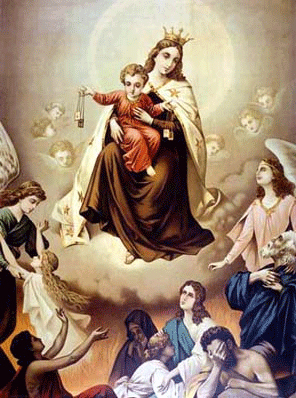
 On June 9, 1895, at the Carmel of Lisieux, Saint Thérèse made the Act of Oblation to Merciful Love. In her autobiography she said: "I received the grace to understand, more than ever, how much Jesus desires to be loved." Instead of offering herself as victim to the justice of God, as did other religious, taking upon themselves the "punishment reserved for sinners," Saint Thérèse decided to offer herself as a victim to the Merciful Love of God. She asked to be consumed as a holocaust in the fire of the Sacred Heart, in order to console that Heart and save souls. "Fire transforms all things into itself, " the saint wrote in her Act of Oblation. "I know that the fire of love is more sanctifying than the fire of Purgatory."
 

 From Help the Holy Souls:

The common teaching within the Church is that Purgatory can hardly be avoided. While still only a novice, the saint commented about this with one of the sisters,  Sr. Maria Philomena, who believed in the near impossibility of going to heaven without passing through purgatory:

You do not have enough trust. You have too much fear before the good God. I can assure you that He is grieved over this. You should not fear Purgatory because of the suffering there, but should instead ask that you not deserve to go there in order to please God, Who so reluctantly imposes this punishment. As soon as you try to please Him in everything and have an unshakable trust He purifies you every moment in His love and He lets no sin remain. And then you can be sure that you will not have to go to Purgatory.5

She even said that we would offend God if we didn’t trust enough that we would get to heaven right after dying. When she found out that her novices talked occasionally that they would probably have to expect to be in Purgatory, she corrected them saying: “Oh! How you grieve me! You do a great injury to God in believing you’re going to Purgatory. When we love, we can’t go there.”6 Now, this is a new doctrine, but only for those who don’t know God, who are not childlike, who don’t trust. It is so correct to see things this way. It is true that God will judge us at one point, but He is always and first our Father Who… suffers when He has to punish His child and sees its suffering. The child should do His will just out of love, and not to avoid punishment. And this really means that God does not want Purgatory! He allows that His children suffer, but only as if He had to look away.7 (Read more.)


It has come to my attention from perusing Facebook that there is a great deal of confusion about purgatory, especially among Catholics. The EWTN website offers excellent catechesis. To quote St. John Paul II:

According to Old Testament religious law, what is destined for God must be perfect. As a result, physical integrity is also specifically required for the realities which come into contact with God at the sacrificial level such as, for example, sacrificial animals (cf. Lv 22: 22) or at the institutional level, as in the case of priests or ministers of worship (cf. Lv 21: 17-23). Total dedication to the God of the Covenant, along the lines of the great teachings found in Deuteronomy (cf. 6: 5), and which must correspond to this physical integrity, is required of individuals and society as a whole (cf. 1 Kgs 8: 61). It is a matter of loving God with all one's being, with purity of heart and the witness of deeds (cf. ibid., 10: 12f.)

The need for integrity obviously becomes necessary after death, for entering into perfect and complete communion with God. Those who do not possess this integrity must undergo purification. This is suggested by a text of St Paul. The Apostle speaks of the value of each person's work which will be revealed on the day of judgement and says:  "If the work which any man has built on the foundation [which is Christ] survives, he will receive a reward. If any man's work is burned up, he will suffer loss, though he himself will be saved, but only as through fire" (1 Cor 3: 14-15).

3. At times, to reach a state of perfect integrity a person's intercession or mediation is needed. For example, Moses obtains pardon for the people with a prayer in which he recalls the saving work done by God in the past, and prays for God's fidelity to the oath made to his ancestors (cf. Ex 32: 30, 11-13). The figure of the Servant of the Lord, outlined in the Book of Isaiah, is also portrayed by his role of intercession and expiation for many; at the end of his suffering he "will see the light" and "will justify many", bearing their iniquities (cf. Is 52: 13-53, 12, especially vv. 53: 11).

Psalm 51 can be considered, according to the perspective of the Old Testament, as a synthesis of the process of reintegration:  the sinner confesses and recognizes his guilt (v. 3), asking insistently to be purified or "cleansed" (vv. 2, 9, 10, 17) so as to proclaim the divine praise (v. 15).

Purgatory is not a place but a condition of existence

4. In the New Testament Christ is presented as the intercessor who assumes the functions of high priest on the day of expiation (cf. Heb 5: 7; 7: 25). But in him the priesthood is presented in a new and definitive form. He enters the heavenly shrine once and for all, to intercede with God on our behalf (cf. Heb 9: 23-26, especially, v. 24). He is both priest and "victim of expiation" for the sins of the whole world (cf. 1 Jn 2: 2).

Jesus, as the great intercessor who atones for us, will fully reveal himself at the end of our life when he will express himself with the offer of mercy, but also with the inevitable judgement for those who refuse the Father's love and forgiveness.

This offer of mercy does not exclude the duty to present ourselves to God, pure and whole, rich in that love which Paul calls a "[bond] of perfect harmony" (Col 3: 14).

5. In following the Gospel exhortation to be perfect like the heavenly Father (cf. Mt 5: 48) during our earthly life, we are called to grow in love, to be sound and flawless before God the Father "at the coming of our Lord Jesus with all his saints" (1 Thes 3: 12f.). Moreover, we are invited to "cleanse ourselves from every defilement of body and spirit" (2 Cor 7: 1; cf. 1 Jn 3: 3), because the encounter with God requires absolute purity.

Every trace of attachment to evil must be eliminated, every imperfection of the soul corrected. Purification must be complete, and indeed this is precisely what is meant by the Church's teaching on purgatory. The term does not indicate a place, but a condition of existence. Those who, after death, exist in a state of purification, are already in the love of Christ who removes from them the remnants of imperfection (cf. Ecumenical Council of Florence, Decretum pro Graecis:  DS 1304; Ecumenical Council of Trent, Decretum de iustificatione:  DS 1580; Decretum de purgatorio:  DS 1820).

It is necessary to explain that the state of purification is not a prolongation of the earthly condition, almost as if after death one were given another possibility to change one's destiny. The Church's teaching in this regard is unequivocal and was reaffirmed by the Second Vatican Council which teaches:  "Since we know neither the day nor the hour, we should follow the advice of the Lord and watch constantly so that, when the single course of our earthly life is completed (cf. Heb 9: 27), we may merit to enter with him into the marriage feast and be numbered among the blessed, and not, like the wicked and slothful servants, be ordered to depart into the eternal fire, into the outer darkness where "men will weep and gnash their teeth' (Mt 22: 13 and 25: 30)" (Lumen gentium, n. 48).

6. One last important aspect which the Church's tradition has always pointed out should be reproposed today:  the dimension of "communio". Those, in fact, who find themselves in the state of purification are united both with the blessed who already enjoy the fullness of eternal life, and with us on this earth on our way towards the Father's house (cf. CCC, n. 1032).

Just as in their earthly life believers are united in the one Mystical Body, so after death those who live in a state of purification experience the same ecclesial solidarity which works through prayer, prayers for suffrage and love for their other brothers and sisters in the faith. Purification is lived in the essential bond created between those who live in this world and those who enjoy eternal beatitude. (Read more.)


There can be children in purgatory, if they have committed any actual sins after reaching the age of reason and not expiated them on earth. From The New Theological Movement:
Is purgatory in the Bible?
While the word “purgatory” never appears in the Bible, the concept is present both implicitly and explicitly. Implicitly, the idea of praying for the dead – as when Job prays for his sons and daughters, or in Maccabees, or when St. Paul encourages the Corinthians to pray for the dead (cf. 1 Corinthians 15) – necessitates belief in purgatory. If the dead are in hell, our prayers could do no good; if they are in heaven, then they have no need of prayer. Therefore, there must be some third place (neither in heaven nor in hell) where the souls of the dead can benefit from our prayers.
The concept of purgatory is also explicitly presented in the Bible. Consider when Jesus says that the sin of blasphemy against the Holy Spirit cannot be forgiven in this life or in the next (cf. Matthew 12:31) – thus, it is clear that some sins can be forgiven in the next life (we mean the punishment of sin, not the guilt of sin). Likewise, St. Paul states that some who have died will be purified as by fire: If any man's work burn, he shall suffer loss; but he himself shall be saved, yet so as by fire. (1 Corinthians 3:15)
Must I believe in purgatory in order to be saved?
Yes, purgatory has been taught by the Catholic Church as de fide. To deny the existence of purgatory is to deny the authority of Christ Jesus who has revealed this doctrine to us through the Church. Hence, belief in purgatory is as necessary for salvation as the other truths of the Faith.
What is purgatory?
Purgatory is that purification which they must undergo who have died in God’s grace and friendship, but are still imperfect. Purgatory is “this final purification of the elect, which is entirely different from the punishment of the damned.” (CCC 1031) Purgatory is a great and most generous gift from the Lord.
How is purgatory different from hell?
Purgatory is essentially different from hell insofar as the souls there still possess grace. The souls in purgatory have faith, hope and love. Their punishment and suffering is of a purifying nature and prepares them for heaven. Moreover, purgatory is only a temporary purgation and all the souls in purgatory will eventually gain entrance to heaven.
Hell, on the other hand, is eternal. The sufferings of hell do not purify but only torture and punish. The souls in hell have no grace, neither have they any (true) faith, hope or love. The souls in hell will never attain to salvation.
How is purgatory different from heaven?
Purgatory is a sort of ante-chamber to heaven, a preparatory purgation for heaven. The souls in purgatory suffer intensely and are not yet perfectly happy. The souls in purgatory still have hope (rather than the fulfillment of hope in heaven), since they are not yet perfectly possessed by God. Likewise they still have faith, since they do not yet see God.
Do the souls in purgatory become holier?
Essentially, the souls in purgatory cannot grow in holiness. They cannot merit more grace or glory. Neither can they grow in charity. Rather, purgatory is a cleansing which purifies the holiness that they already possess.
Do the souls in purgatory want to get out?
This is a difficult question. On the one hand, they certainly desire heaven (this desire is cause of their chief pain, since they are not yet where they want to be). On the other hand, they would not want to move ahead without being purified. Hence, they love the sufferings insofar as they are purified by them. None are angry or upset about being in purgatory, but they do very much desire the assistance of our prayers so as to swiftly attain to the joy of heaven.
Are there any young children in purgatory?
No, there are most certainly no children who died before the age of reason in purgatory. Purgatory is a punishment for actual sin (either direct sins or sins of omission). Hence, since a child cannot sin until it has attained to the use of reason, it is not possible for any children to be in purgatory.
If the child has been baptized, it most certainly goes directly to heaven. If the child has not been baptized, it either goes to limbo (which is a state of perfect natural happiness, on the fringe of hell) or to heaven.
In any case, young children who die before gaining the use of reason are very happy, indeed they are perfectly happy. They are either supernaturally happy in heaven, or naturally happy in limbo – but they certainly do not suffer any subjective pains (as do the souls in hell and in purgatory).
Will purgatory go on forever?
No. Purgatory will be completed at the time of the final judgment. All the souls in purgatory at that time will be purified instantaneously and will be caught up with the saints in glory.
Is there really fire in purgatory?
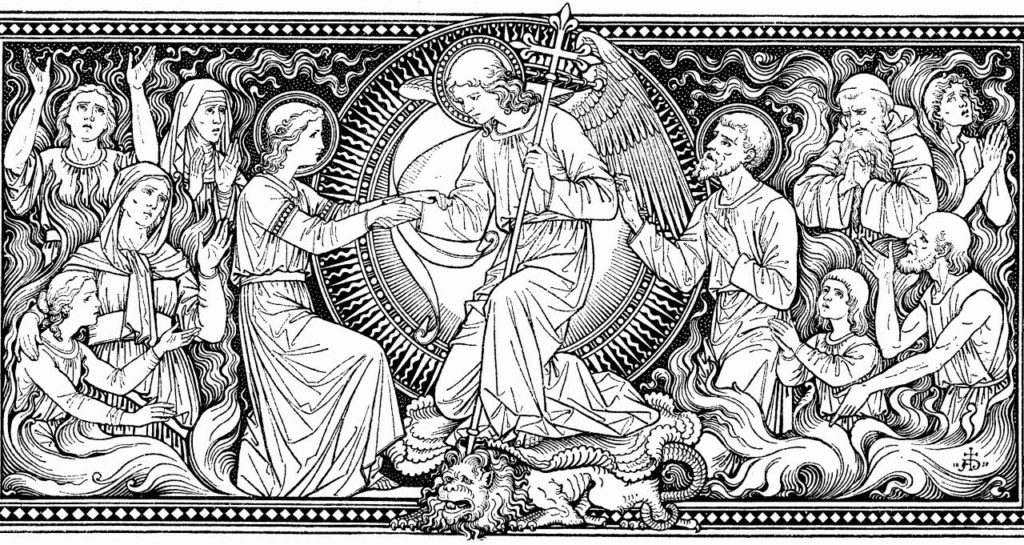
Yes. There is real, physical fire in purgatory. This is the best and safest opinion which is nearly unanimous among the Latin theologians (especially the Fathers and Doctors), also it enjoys the favor of several prominent Eastern Doctors (including St. Basil the Great). Additionally, the mystics of the Church speak of physical fires.
It is in this sense only that purgatory can be called a “place”.
How can I help the souls in purgatory?
You can help the poor souls by praying for them, offering up works of mercy, gaining indulgences for them, mortifying yourself in their behalf, and completing other spiritual works for their sake. [Be sure that no prayer will go to waste; since, if the soul is not in purgatory (for one reason or another), Our Blessed Mother will certainly make good use of the graces for another]
Most especially, we consider the importance of praying for the holy souls when at Mass (especially during the Eucharistic prayer), and having Masses offered for the deceased.
Can the souls in purgatory help me?
This is a very complicated question. Generally we would say, no. The main point of purgatory is that the souls cannot help themselves or anyone else, but are in a passive state of purification. They are powerless, hence they rely greatly upon our prayers.
However, it is possible that God may (in exceptional circumstances) allow those in purgatory to pray for or assist in some manner those who are on earth and who implore their aid. Still, this does not seem to be the norm – however, there are most certainly cases in the lives of the saints (e.g. St. Pio) where this did occur. (Read more.)
Thursday, November 12, 2026

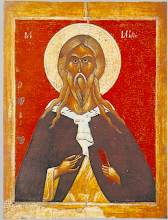
St. Josaphat, Martyr

St Josaphat Saint of Ruthenia.jpg


 It is the feast of St. Josaphat the Martyr. There is a fascinating passage in Dom Gueranger's The Liturgical Year, Vol XV for his feast, dealing with the conversion of the Russian Empire. The Liturgical Year was written long before the apparitions at Fatima in 1917, and so the mention of the "conversion of Russia," that is, the return of Russia and the East to the union with the Holy See, is remarkable. (No offense to my many dear Orthodox friends, but I hope our churches are truly united someday.) Here is what Dom Gueranger said over a hundred and fifty years ago, in the days of the tsars:

Russia becoming Catholic would mean an end to Islamism, and the definitive triumph of the cross on the Bosphorus, without any danger to Europe; the Christian empire in the East restored with a glory and a power hitherto unknown; Asia evangelized, not by a few poor isolated priests, but with the help of an authority greater than Charlemagne; and lastly, the Slavonic race brought into unity of faith and aspirations, for its own greater glory. This transformation will be the greatest event of the century that shall see its accomplishment; it will change the face of the world.
One might say the old monk was dreaming, but I thought it interesting in light of what followed.

More HERE.

Wednesday, November 11, 2026

Martinmas


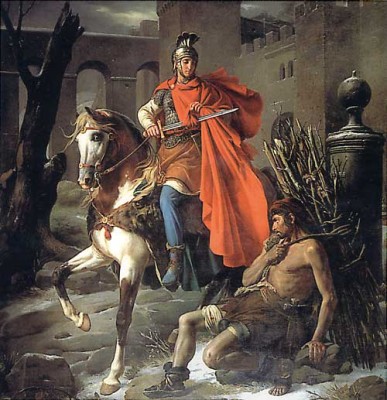
It is the feast of St. Martin of Tours, the great thaumaturgus who converted large parts of France. The cloak of St Martin was one of the most precious relics of France, borne before her armies, hence the word chape gave rise to our English words "chaplain" and "chapel." St. Martin spoke out against capital punishment for heretics. The shrine of St. Martin at Tours was one of the holiest of French pilgrimage sites; he is considered one of the patrons of the Holy Face devotion which also originated there. According to New Advent:
The Church of France has always considered Martin one of her greatest saints, and hagiographers have recorded a great number of miracles due to his intercession while he was living and after his death. His cult was very popular throughout the Middle Ages, a multitude of churches and chapels were dedicated to him, and a great number of places have been called by his name. His body, taken to Tours, was enclosed in a stone sarcophagus, above which his successors, St. Britius and St. Perpetuus, built first a simple chapel, and later a basilica (470). St. Euphronius, Bishop of Autun and a friend of St. Perpetuus, sent a sculptured tablet of marble to cover the tomb. A larger basilica was constructed in 1014 which was burned down in 1230 to be rebuilt soon on a still larger scale This sanctuary was the centre of great national pilgrimages until 1562, the fatal year when the Protestants sacked it from top to bottom, destroying the sepulchre and the relics of the great wonder-worker, the object of their hatred. The ill-fated collegiate church was restored by its canons, but a new and more terrible misfortune awaited it. The revolutionary hammer of 1793 was to subject it to a last devastation. It was entirely demolished with the exception of the two towers which are still standing and, so that its reconstruction might be impossible, the atheistic municipality caused two streets to be opened up on its site. In December, 1860, skilfully executed excavations located the site of St. Martin's tomb, of which some fragments were discovered. These precious remains are at present sheltered in a basilica built by Mgr Meignan, Archbishop of Tours which is unfortunately of very small dimensions and recalls only faintly the ancient and magnificent cloister of St. Martin. On 11 November each year the feast of St. Martin is solemnly celebrated in this church in the presence of a large number of the faithful of Tours and other cities and villages of the diocese.

Tuesday, November 10, 2026

St. Leo the Great

From Nobility:
Leo’s pontificate, next to that of St. Gregory I, is the most significant and important in Christian antiquity. At a time when the Church was experiencing the greatest obstacles to her progress in consequence of the hastening disintegration of the Western Empire, while the Orient was profoundly agitated over dogmatic controversies, this great pope, with far-seeing sagacity and powerful hand, guided the destiny of the Roman and Universal Church.

Leo was descended of a noble Tuscan family, but born at Rome. His father’s name was Quintianus. Our earliest certain historical information about Leo reveals him a deacon of the Roman Church under Pope Celestine I (422-32). Even during this period he was known outside of Rome, and had some relations with Gaul, since Cassianus in 430 or 431 wrote at Leo’s suggestion his work “De Incarnatione Domini contra Nestorium” (Migne, P.L., L, 9 sqq.), prefacing it with a letter of dedication to Leo.

During the pontificate of Sixtus III (422-40), Leo was sent to Gaul by Emperor Valentinian III to settle a dispute and bring about a reconciliation between Aëtius, the chief military commander of the province, and the chief magistrate, Albinus. This commission is a proof of the great confidence placed in the clever and able deacon by the Imperial Court. Sixtus III died on 19 August, 440, while Leo was in Gaul, and the latter was chosen his successor. Returning to Rome, Leo was consecrated on 29 September of the same year, and governed the Roman Church for the next twenty-one years.

Whilst the Eastern empire was distracted by heretical factions, the Western was harassed by barbarians. Attila the Hun, enriched with the plunder of many nations and cities, marched against Rome. The Huns, a savage nation from that part of Scythia which now lies in Muscovy, had passed the Palus Mæotis, in 276, and made their first inroads upon the coasts of the Caspian Sea, and as far as Mount Taurus in the East. Almost two hundred years after this, Attila, the most powerful and barbarous of all the kings of that nation, in 433, had marched first into the East, then subject to Theodosius the Younger, and having amassed a vast booty in Asia, returned into Pannonia, where he was already master of a large territory. (Read entire article.)

Monday, November 9, 2026

Dedication of the Lateran Basilica

"How awesome is this place! This is none other than the house of God and the gate of heaven."
~Gen. xxviii. 17

Today the Roman Catholic Church celebrates the feast of the Dedication of St John Lateran, also called the Basilica of the Savior. As the Pope's official church, it is known as the "Mother Church of the World." Every Christian is called to be a Temple of the Lord, a tabernacle for the Divine Indwelling. This feast celebrates the holiness of the house of God, of every church building consecrated to His glory, of every Christian who through baptism becomes a sanctuary of the Most High. We look beyond the scandals of this world to the Bride of Christ, coming down out of Heaven from God, to the nuptial banquet at the end of time, of which we have already partaken. For every church is a miniature heaven, and every Mass is the marriage supper of the Lamb.

The purpose of the feast is here described:
By making the dedication of the papal church a feast throughout the world, the Church intends to stress Catholic unity without detracting from the glories of lesser churches. Other churches also have feasts, and each diocese celebrates the anniversary of its cathedral's dedication. Every church consecrated with chrism and marked on its stone-work with twelve crosses has its anniversary. But today, all churches everywhere, even bare rooms in poor towns, or huts in tropical missionary lands, align themselves in prayer with the Church's church: "Grant that whosoever enters this temple to ask good things from thee may rejoice in the obtaining of all his petitions" (Collect).
While we have one great High Priest, Jesus Christ, one Sacrifice in the holy Mass, one Faith, one Baptism, still it is for our convenience that in thousands of places we have God's temple, with thousands of human priests through whom Christ acts. The underlying unity of the Catholic Church compares with Christ's seamless robe: it is a mark of true Christianity.
For more than a thousand years successive popes ruled the true Church from their home near the Lateran basilica. Now, basilica means "house of a king," and you will recall that Pilate styled Jesus "King of the Jews" in mockery. Today the Lateran basilica is home of the King of Kings, and occasions a feast of praise. But the feast's special significance is that the Vicar of Christ the King maintains this church as his cathedral. The Pope lives now on the Vatican hill, near St. Peter's church, but he keeps the tradition of St. Sylvester: "This is that holy place in which the priest prays for the offenses and sins of the people" (Breviary).
Here is a beautiful quotation from Butler's Lives for November 9:
Hence churches have been usually consecrated by solemn rites and prayers, and it is a grievous sacrilege to profane them, or do in them anything but what has an immediate relation to the divine service: the church being the house of God. Though he be everywhere, he is said to reside particularly in heaven, because he there displays his presence by his glory and gifts. In like manner he honours the church with his special presence, being there in a particular manner ready to receive our public homages, listen to our petitions, and bestow on us his choicest graces.

Saturday, November 7, 2026

Blessed Francisco Palau y Quer

A saint with a passion for the Church.
In 1860-61 he (Bl. Francisco Palau) founded the Congregations of the Carmelite Brothers and Sisters in Balearic Islands. In 1867 the Apostolic Commissary of the Discalced Carmelites of Spain appointed Fr. Francisco to be the Director of the Tertiaries of the Order and in 1872 he wrote the Rules and Constitutions of the Tertiary Order.

His spiritual life centered on the Church as a "loved person", a Mystical Body, but also a Mystical Person with whom he could relate. No where in Christian history do we have anyone else with this Church-centered mysticism. He sees the personality of the Church is mystical and the living reality of the Church is an unfathomable mystery. One of the aspects of this mystery is the joining of Her visible structures with the supreme reality of love among men and their love of Christ in the Holy Spirit, Who gives Her life and gathers Her into unity. He teaches that Christ and mankind cannot be separated from each other and he sees the Church as The Whole Christ, The Mystical Christ. This is a bountiful topic for meditation that can bring us a deeper love of, and Obedience to, the Church.

His second original intuition for the spiritual life, and later corresponded with Vatican II, is that to think of Our Blessed Mother independently of the framework of the Church would distort her person and her mission. Mary is the perfect model of the Church's holiness and purity and the mirror in which all the perfections of the Church are reflected.

Our beloved brother in Carmel left us with an indispensable condition for keeping our apostolic service free from purely human interest and professional attitudes. He taught that supernatural motivation nourished by prayer is required. And he stressed that prayer and the theological virtues are the double cornerstone of the spiritual life, but it cannot endure without a constant attitude of self-denial. This is shared from his personal experiences.

Bl. Palau enlarged the spirituality of the Teresian Carmel. He challenges us to press on tirelessly whenever love may call us in the service of our brothers and sisters and of the Church. He says, "I live and will live for the Church; I live and will die for her." 
(Read more.)

More HERE.

Thursday, November 5, 2026

Blessed Frances of Amboise, Duchess of Brittany


Here is the life of Blessed Frances d'Amboise, the duchess who became a Carmelite nun:

Bl. Frances D'Amboise was born in 1427, probably at Thouars, France. At fifteen years of age, she was married to Peter II, Duke of Brittany and crowned with him in the cathedral at Rennes in 1450. She was widowed in 1457 and, not wanting a second marriage, she turned towards religious life. For this purpose, she built a Carmel for sisters at Bondon in 1463 following the advice of Blessed John Soreth, Prior General of the Carmelites. However, she herself only entered the monastery in 1468. In 1477 she transferred to the monastery at Nantes, another of her foundations. The records show that, as prioress, she had a strong personality but coupled with a motherly understanding and considerable psychological awareness. Some of the inspired spiritual direction which she gave to her sisters has been preserved. To her is due the introduction of frequent communion (daily for those who were sick) and the fourth vow of strict enclosure. She died on 4th November 1485 and her last testament was the phrase which she had said most often during her life: "In everything, do that which will make God loved the more!" Her cult was approved in 1863 by Pope Pius IX, as a recognition of the faithfulness of the Bretons to the Catholic Church and to their duchess. She is considered the foundress of the Carmelite nuns of France. She was beatified by Pope Pius IX in 1866.(Read more.)


A quote from the writings of Blessed Frances:

Whatever the troubles and difficulties that weigh you down, bear them all patiently and keep in mind that these are the things which constitute your cross. Offer your help to the Lord and carry the cross with Him in gladness of heart. There is always something to be endured, and if you refuse one cross, be sure that you will meet with another, and maybe a heavier one. If we trust in God and rely on His help, we shall overcome the allurements of vice. We must never let our efforts flag nor our steps grow weary, but must keep our hearts under steady discipline.

Consider the afflictions and great trials which the holy Fathers endured in the desert. And yet the interior trials they suffered were far more intense than the physical penances they inflicted on their own bodies. One who is never tried acquires little virtue. Accept then whatever God wills to send, for any suffering He permits is entirely for our good.


More HERE.

Tuesday, November 3, 2026

A Prayer for America on Election Day

A psalm for David. Judge me, O God, and distinguish my cause from the nation that is not holy: deliver me from the unjust and deceitful man. For thou art God my strength: why hast thou cast me off? and why do I go sorrowful whilst the enemy afflicteth me? Send forth thy light and thy truth: they have conducted me, and brought me unto thy holy hill, and into thy tabernacles. And I will go in to the altar of God: to God who giveth joy to my youth. To thee, O God my God, I will give praise upon the harp: why art thou sad, O my soul? and why dost thou disquiet me? Hope in God, for I will still give praise to him: the salvation of my countenance, and my God. —Psalm 42 (The Vulgate)

Monday, November 2, 2026

The Powerful Friendship of the Holy Souls

 From Catholic Exchange:

It’s an unusual place for friendship, the cemetery. In life, we usually make friends who were born a few years, or maybe a few decades, apart from us. In this cemetery, built in the 1800s, people born in different centuries, who never could have known one another on earth, are buried side by side. Nowhere in society is there a greater variety of people spanning all walks of life than in the cemetery.

Coming here is not only a reminder of death; it is a reminder of life. For these people, though dead, once lived. Their headstones are a testament to their births as well as their deaths. They were babies once; then children, mothers, fathers, sisters, brothers, grandparents, friends. They woke in the morning and read the paper over breakfast; they agonized over bills and rejoiced over homecomings and sat with coffee mugs at the kitchen table and opened their front doors to friends. And in their dying, they entered a new phase of living; for just as I entered the stone gate to this long driveway lined with trees and graves, so these souls entered the celestial gate after a long journey on earth, and their eternal life lay before them.

Were they ready? Were they prepared to meet the Lord when they died? I don’t know, and so I walk, and read the headstones, and pray.

No, these souls don’t live here. Their eternity is elsewhere, but this hallowed ground is a place to honor their memories, and I can’t think of a better way of doing that than praying for them. Our faith assures us that our prayers for the dead can help their souls reach heaven sooner; and not only can we help free souls from Purgatory, but we can also help them at the moment of their death. For, as Padre Pio said, “For God, everything is an eternal present, …so that even now, I can pray for the happy death of my great-grandfather!” (Read more.)


All Souls

The day following All Saints is the Commemoration of the Faithful Departed, All Souls Day. "It is a holy and wholesome thought to pray for the dead, that they might be loosed from their sins." (2 Maccabees 12: 46) These words reflect the Jewish origins of the practice of praying for the dead, a practice continued by the Church. On All Souls Day, every priest has the privilege of celebrating three Masses. A full plenary indulgence can be gained for a soul of the faithful departed on November 2 and on everyday of the week that follows, by fulfilling the usual conditions. As The Catechism of the Catholic Church says:
An indulgence is a remission before God of the temporal punishment due to sins whose guilt has already been forgiven, which the faithful Christian who is duly disposed gains under certain prescribed conditions through the action of the Church which, as the minister of redemption, dispenses and applies with authority the treasury of the satisfactions of Christ and the saints.

An indulgence is partial or plenary according as it removes either part or all of the temporal punishment due to sin.The faithful can gain indulgences for themselves or apply them to the dead.” (CCC, 1471)
The custom of gaining indulgences for the living and the dead goes back to the early Church. As explained by Fr. William Saunders:
From the earliest days of the Church, individuals have offered prayers and good works for the salvation of sinners. In those times, absolution was not granted until both confession and penance had been performed (and the penances were very lengthy in duration, even lasting months). Penitents oftentimes asked martyrs facing death for aid (to offer their sufferings for the atonement of the penitents’ sins) so that full reconciliation with the Church and re-admission to the sacraments could be obtained more speedily. When a martyr offered his sufferings to expiate the sins of a penitent, the Church recognized this charitable act and granted absolution. For example, St. Cyprian (d. 258) stated, "Those who have received certificates from the martyrs and are able to be assisted by their privileged position before God" may be absolved and "come to the Lord with the peace which the martyrs, as indicated in letters sent to us, desired to be given them" ("Letter to the Clergy," 18 (12), 1). In such cases, the penitents received an indulgence which satisfied their penance. Herein lies part of the basis for our belief. (Fr. William Saunders, The Catholic Herald, January 27, 2005)
However, it is not only on All Souls Day but on every day of the year that Holy Mother Church prays for her departed children. Every Mass is offered for both the living and the dead. According to the Council of Trent, the Holy Sacrifice of the Mass is the chief means of bringing succor to the souls in Purgatory. The prayers and good works of the faithful can also benefit the dead.

St. Teresa of Avila had a great love for the suffering souls, a love that was willing to bear the vicissitudes of life in order to aid them. We, too, can bear the pin pricks of inconveniences, of gossip, of calumny and misunderstanding, to gain deliverance from the chastisements of the netherworld those whom we have loved, family members, and even our enemies.

Purgatory is not inevitable, but we can undergo our purgation here on earth by our patient endurance of trials. It is not the intensity of the trial itself that expiates sin; rather it is the intensity of the love for God with which the trial is accepted. Love is what matters most.

Sunday, November 1, 2026

Solemnity of All Saints


On November 1 the Church commemorates the "cloud of witnesses" (Hebrews 12:1), both hidden and renowned, who have ascended the mountain of perfection to their heavenly home. As the nineteenth century French liturgist Dom Gueranger expressed it:
Blessed are they who are called to the marriage-supper of the Lamb! Blessed are we all, who have received in baptism the nuptial robe of holy charity, which entitles us to a seat at the heavenly banquet! Let us prepare ourselves for the unspeakable destiny reserved for us by love. To this end are directed all the labors of this life; toils, sufferings, struggles for God's sake, all adorn with priceless jewels the garment of grace, the clothing of the elect....Let us sing, then, with the psalmist: "I rejoiced at the things that were said to me: We shall go into the house of the Lord...." (Dom Gueranger's The Liturgical Year, Vol XV, p.58)
The Little Flower greatly relied upon the intercession of the saints. In her autobiography, St Thérèse wrote:
Remembering the prayer of Eliseus to his Father Elias when he dared to ask him for his double spirit, I presented myself before the angels and saints and I said to them: 'I am the smallest of creatures; I know my misery and feebleness, but I know also how much noble and generous hearts love to do good. I beg you then, O Blessed Inhabitants of Heaven, I beg you to adopt me as your child. To you alone will be the glory which you will make me merit, but deign to answer my prayer. It is bold, I know; however, I dare to ask you to obtain for me your twofold spirit.' (The Story of a Soul, pp.195-196)
Shortly before her death, St. Thérèse had a dream in which the Venerable Mother Anne of Jesus, one of the foundresses of the Carmelite reform in the sixteenth century, assured her that she would soon possess eternal beatitude. The saint of Lisieux was surprised because, as she penned:
I was, up until then, absolutely indifferent to Venerable Mother Anne of Jesus. I never invoked her in prayer and the thought of her never came to mind....And when I understood to what a degree she loved me, how indifferent I had been towards her, my heart was filled with love and gratitude, not only for the saint who visited me, but for all the blessed inhabitants of heaven. (The Story of a Soul, pp.191-192)
We will never know in this life how individual saints, perhaps ones we have never heard of, have interceded for us. Through prayer and the Eucharist, we can draw upon the merits of our brothers and sisters in Paradise. Such richness is ours in the Communion of Saints, for all belong to Christ.

(Published in the November-December 2008 issue of Canticle Magazine.)


Related Posts with Thumbnails