Wednesday, January 20, 2010

The Faithful, Wounded Heart

Author Heidi Hess Saxton shares her reaction to The Night's Dark Shade in a poignant review, a meditation in itself. To quote:
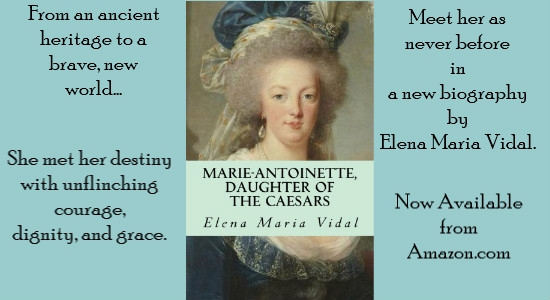
It’s an unfortunate fact that each generation must uncover for itself: Love is a battlefield. Except for those who marry their first love, and early in life, most of us carry on our hearts the scars of broken, often ill-advised, romantic entanglements. Each friendship leaves its mark; those characterized by authentic Christian charity and fidelity touch our souls lightly and for the better. Those that are not, do not. Either way, when the friendship ends, some pain is inevitable.

Frankly, by the time I met my husband at the age of 34, my heart had so many battle scars, it was a wonder that I had anything left to offer him. Each of us had memories and habits to overcome. And by the grace of God, through the sacrament of matrimony, we built a life together, choosing each day to trust in the fidelity we had promised to one another. A decade has passed, and we are still learning what it means to give of ourselves completely in authentic, life-long love. Some days I wonder if I will ever catch up to my husband, who exhibits heroic virtue in the areas I am weakest, such as patience and compassion and gentleness and self-control. It really can be trying … then again, I’m sure I’m no picnic.

Because of our respective pasts, some scars run so deep that there is really no getting rid of them entirely, though marriage has in a very real way been a sacrament of healing as well as vocation. Every once in a while a twinge resurfaces. Which raises an important question: When such memories resurface, what is a faithful soul to do? What does fidelity demand?

Have you ever wondered this? If so, pick up a copy of Elena Maria Vidal’s The Night’s Dark Shade. (Read entire review.)
The Night's Dark Shade is available HERE.

Tuesday, January 19, 2010

Praying and Motherhood

Donna-Marie Cooper O'Boyle gives some helpful advice, quoting St. Francis de Sales: "Do not distress yourself about your prayers. It is not always necessary to employ words, even inwardly, it is enough to raise your heart and let it rest on our Lord, to look lovingly up toward this divine Lover of our souls for between lovers the eyes speak more eloquently than the tongue."

Monday, January 18, 2010

Wedding at Cana

A meditation from A Capuchin Journey. To quote:
The wedding at Cana shows us God’s love is the real wine that lasts! It has the power to transform not only water into wine, but a cold heart into a warm one. The wine of God’s love is inexhaustible, freely given and poured out for us in the blood of Christ. Most importantly, we can trust in God’s love because it's never ending.

The wedding at Cana is an important story because it helps us to understand where our ultimate trust needs to be. Mary, realizing she is getting know where by her own efforts falls back on her faith and trust by saying to the servants, “Do whatever He tells you.” She has to let go of control and places all her trust in the Lord. She knows that such a trust will never end in disappoint. Not doing what we know Christ calls us to do does lead to disappointment and often inner impoverishment.


As we watch events unfold in Haiti, we see the need for so much help and assistance. The circumstances may not be as trivial as having a wine shortage, but a miracle is needed never-the-less. We may wonder what we can do when what to do is not clear. Being open to the gospel challenges to do what ever He tells us might be a good starting point.


Thursday, January 14, 2010

A Monastic Diet

From the Kitchen Madonna:
Hundreds of years ago, monastic communities thrived on one hearty, main meal a day centered on high protein rustic bread. Vegetables, legumes, and fruits and smaller portions of dairy and eggs rounded out the main meal. Perhaps a little animal protein was cooked with other ingredients to stretch farther. Renowned for their soups, frugal monastic cooks made stock from boiled beef or chicken bones and scrap cuts; vegetables, legumes, and herbs grown in the kitchen garden completed a hearty stew. And of course, steaming bowls of goodness were served with generous slices of bread.

On feast days, generous portions of meat, chicken or fish were added to the menu. Maybe a festive dessert. Naturally, monasteries produced as much of their own food as possible, eating locally and seasonally as most experts recommend today. In a monastery, fresh meant going out into the garden, the barn or chicken coup, not to mention the orchard. Or an abundance of something produced within the monastery was traded for someone else’s surplus.

How does this diet differ from the Mediterranean Diet? It doesn’t because it includes a diet rich in vegetables, fruits, nuts, whole grains, diary, eggs, olive oil and fish with low consumption of meat, chicken, and other meat products. But the Cistercian Diet emphasis is on whole grains ground and baked at home which saves a lot of money and dramatically boosts nutrition. The Cistercian Diet also encourages as much food production at home as possible (vegetable gardens are stylish now as well!), something that was part of the traditional Mediterranean lifestyle. Additionally, there is a change of perspective, from passive, individualistic restaurant-menu driven consumption to a communal effort to grow and produce for the common good. And it never hurts to add some prayer to the mix.

Not surprisingly, Spanish researchers just released the results of their study of 11,000 people, and found that those who followed the Mediterranean Diet had a 30% reduction in the risk of depression than those whose diet had few of the crucial Mediterranean foodstuffs.

The Cistercian diet dovetails perfectly with the latest science-based diet weapon: high satiety foods that make you feel full longer, ignoring calories and focusing on the energy density and volumetrics of certain foods. Whole grains, soups, fruit and vegetables, all have a high satiety index.

Wednesday, January 13, 2010

Indiscreet Zeal

Terry Nelson quotes some thoughts from Father de Caussade:
"Remember that God, to punish those who have practised [this] indiscreet zeal, and to correct them, has often allowed them to fall into much graver faults than those which has scandalised them in others.
.
[Therefore] I command you never to speak of God, or of anything good, unless in a spirit of humility and meekness, in an amiable and gracious manner, with moderation and encouragement, and never with bitterness and severity, or in a way to wound and repel those who hear you, because, although you may only say what is in the Gospel and in the best books, I believe that in your present state of mind you might say it very badly and in such a way as only to do harm. Did not Satan make use of the words of Holy Scripture to tempt our Lord?
.
Truth is the proper relation of things. It is changed when pushed to extremes, or wrongly applied. Your peevish temper is like a smoked glass, which, if you do not take care will prevent you seeing things in their true light, or showing them to others. Keep always on your guard against this fatal influence, and feed your mind on thoughts and feelings that are contrary to those inspired by temper. Entertain yourself and others with conversations on the infinite goodness of God, and on the confidence we ought to have in Him.
.
Compel yourself to offer an example in your whole conduct, of a virtue that has no bounds, and which imposes no restraint on others. If you have nothing kind to say keep silent, and leave the care of deciding to others. They can avoid better than you too much laxness, and will be exact without being severe. If exactitude be praiseworthy, severity is blamable, it does nothing but revolt people instead of convincing them, and embitter their souls instead of gaining them. As much as true meekness, with the help of God, has power to repel evil and to win to good, so much has an excessive harshness power to make goodness difficult and evil incurable. The first is edifying, the latter, destructive." - Letter XI, Intemperate Zeal, De Cassaude, Letters

Monday, January 4, 2010

Blessed Angela

Terry Nelson discusses the nature of penitence as lived by Blessed Angela of Foligno.
Her conversion did not happen overnight of course, it was indeed a process. There was no "born again" mentality existent in those days. People today imagine they are propelled into the state of perfection simply by a return to the Church or the sacraments, yet one's conversion is ordinarily a long, at times arduous process. Angela speaks of a penance as "long and as hard as life itself". One overcomes a fault or sin, only to discover another more spiritual sin, hence the need for ongoing purgation and purification, willingly or unwillingly undergone - in this life or in the next. Angela did it in this life. If you can, try to read her writings - not so much of what people write about her - go to the source.

Sunday, January 3, 2010

Abbot Gueranger on the Epiphany

The great manifestation. (Via The Divine Lamp)
Related Posts with Thumbnails