Tuesday, July 16, 2024

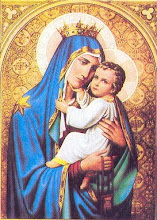
Our Lady and the Carmelites

A History.
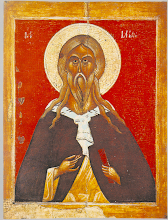
For many centuries before Christ, men communicated with God living in caves on the slopes of Mount Carmel in the Holy Land where Jesus was to be born.  These men were hermits devoted to the one true God of Israel.  They lived a life of solitude and service inspired by the great prophet Elijah whom they looked on as their spiritual father.  In later centuries after Christianity had spread far and wide, came the desire to follow Christ in his homeland in solitude and prayer. Pilgrims to the Holy Land joined the hermits on Mount Carmel and became known as Carmelites.  In the 12 and 13thcenturies war in the Holy Land forced these men of prayer to spread abroad.  The Church asked this group, now officially known as "the Brothers of Our Lady of Mount Carmel" to serve the people by bringing their contemplation and love of prayer into communties in the busy streets of cities, in quiet rural areas, wherever they were needed.  They served the needs of the people by preaching , by teaching, by bringing the knowledge and love of Jesus into the market place.  Always and everywhere they remained true to the ancient heritage which they brought with them from Mount Carmel.  And in everything they did, they were inspired by the Old Testament prophet Elijah and Mary the Mother of Jesus.

Elijah embodied the ideal of the contemplative man of prayer and the active apostle of God.  Mary called them to selfless service and closeness to Christ.  The Scapular of Our Lady of Mount Carmel is a garment and the Order of Carmel.  This sacramental is a sign of affiliation to the Carmelite Order and a symbol of our Lady's desire to bring us all to Jesus.  The message of the Scapular is the same advice she gave the servants at the Cana wedding: "Do whatever he tells you."  When we wear the Scapular, it is a sign of our loving response to the Mother of God.  So, in our special devotion to Our Lady of Mount Carmel, Carmelites celebrate our unique relationship with Mary as an intrinsic part of our spirituality.  We love her, venerate her and, with our bothers and sisters in Christ, we are called forever to be her children.  We invite you to share this spirituality with us, particularly in our devotion to Mary as Our Lady of Mount Carmel. (Read more.)

(Article taken from "Special Devotions to Our Lady of Mount Carmel" by National Shrine of Our Lady of Mount Carmel). 

Saturday, July 6, 2024

In Defense of the Martyrdom of Saint Maria Goretti

Only known photo of St. Maria Goretti

A couple years ago, around the feast of St. Maria Goretti, I came upon an article and had a debate on Facebook with fellow Catholics, all ladies of deep faith. I think there are major misunderstandings about why the Church has from the earliest times held up virgin martyrs for our veneration.
From Our Sunday Visitor:

It’s worth repeating: It is not a sin to be raped, but the Dicastery for the Causes of Saints continues to behave as if it is....If women who die at the hands of a would-be rapist are martyrs, why are we only celebrating the ones who died “intact”?...If we keep holding these assault victims up as models of chastity rather than victims of crimes, we impress upon faithful young women that keeping the Sixth Commandment is fundamentally about keeping men from breaking it....The girls who answered “yes” to the CDC survey are in our pews, in our confirmation classes and in our own homes. They are listening to how we talk about Maria Goretti and Isabel Cristina and all those who came between. They deserve better than to be told their value lies in their virginity. They deserve better than the suggestion that they would be better off dead. (Read more.)

True, girls and young women, virgins or not, from a human point of view, are definitely better off alive. Similarly, those Christians who were tortured to death because they refused to offer incense to pagan gods, would have been better off alive. St. Joan of Arc would have been better off staying home and embroidering with her mother than being burned alive at the stake. St. Isaac Jogues would have been better off teaching theology at the Sorbonne rather than being scalded alive and sodomized by the Iroquois. But sometimes, people need to take a stand, especially when called to do so for the love of God. Because martyrdom is a gift.

I think many young women today surrender their virginity not to a rapist but to a boyfriend or lover, out of infatuation or out of peer pressure. It was that way during the Roman Empire and it is that way now. Even in Roman times, they were not always threatened with rape; their attackers could have raped them at any time. Rather, the attackers wanted them to happily go along with it; they wanted to seduce them. The fact that some women have preferred death to giving into seduction and the ways of the world is a charismatic gift. Martyrdom is a gift. Virgin martyrdom is a gift. Just being a perpetual virgin, or a celibate of any kind, is a gift. Not everyone is called to it but when someone is, they know it is beyond their strength and a gift from God. When someone is called by God to be a martyr it means they refuse to cooperate with evil on any level, even to save themselves. They are saying to the evil person: you may kill me, you may rape me, you may kill and rape me, but you are not getting even a moment of my cooperation. We all have moments when our safety or well-being is secondary, when someone or something more precious than our lives is in danger. That is where grace builds on nature. But only God can give someone the grace to give up their lives for Him. It is a charismatic gift.

The article criticizes the Dicastery's mention of the intact hymens of St. Maria and another modern virgin martyr Blessed Isabel Cristina, insisting that the hymen should not even come into the investigation. Such intimate examination has long been a part of police procedure when a woman or girl is murdered, to see if the perpetrator should be charged with rape as well as with murder. When the Dicastery records the physical virginity of a victim it is as possible proof that the person lived a chaste lifestyle. It is certainly not complete proof since a pure and innocent girl might lose her virginity through being molested or even in an accident, through no fault of her own. Also, someone with an intact hymen might have impure habits and a filthy mind and not be holy at all. But along with the accumulated evidence of the young lady's piety, such as witness testimonies of her outward acts of faith, hope and charity, evidence of physical virginity plays a part in proving the sanctity of the victim. 

However, the value of the virgin martyr is not on the hymen but on a soul saying "no" and taking a stand against evil  no matter what the consequences. To do so requires supernatural strength. But yes, the Church has canonized saints who were slaves and who were probably raped such as St Felicity and St Josephine Bahkita. In the great Roman persecutions, it was against Roman law to put a virgin to death. Young Christian girls were regularly raped before being executed. We do not know how many of the virgin-martyrs had to suffer such brutality before being martyred. The surviving historical records do not tell us.

Someone said to me that St. Maria Goretti resisted her attacker because she knew if she was raped that she would be "trash" in her town. Well, sorry, but St. Maria was already regarded as "trash" in her community, which is why Alessandro saw her as an easy target. Some people theorize he may already have have been molesting her in some way. After all, they lived in the same house. We know he was making lewd suggestions. After her First Communion St. Maria was determined to say no. Because Alessandro did not just went to rape her. If he wanted to rape her he could have done so at any time, but he never did. He never did, even when she was lying there helpless. 
 
What Alessandro wanted was a cooperative little plaything. He wanted someone to willingly act out his favorite porn images which he had upstairs in this room. That is where his rage and frustration came from. If Maria had capitulated, we know she would have been acting out of terror. But that brave little girl, who had nothing and was nothing in her community, refused to comply with his demands. She asserted her personhood and her dignity over Alessandro's dehumanizing lust. Maria knew that through her baptism she was a child of God; she had been bound to Christ through the Sacraments of the Church, including Confession and the Holy Eucharist. Those sacraments meant everything to her, more than fear of death. 
 
So ultimately, it was not about resisting rape. It was resisting being his long term sex toy which is what Alessandro really wanted. Maria knew if she gave in once there would be no end to it. He wanted her  cooperation, like the master of anyone in sexual servitude. Alessandro wanted her complete submission and willing participation. She did not give it. Looking back, we can say it would not have been a sin for her, since she was a frightened child, and would have been acting under duress. But Maria refused to cooperate, even when threatened. Because in Maria's mind she would have been committing a sin, as she said after it happened: "He did it because I would not sin." That is why she is a martyr.

Friday, June 21, 2024

The Test of Love

Light of the World by William Holman Hunt

I begged Our Lord to teach you the secret of sanctity and happiness in the
sanctification of the present moment--peacefully. The present moment contains all grace for our sanctification, and it is the only thing that matters.

Keep your eyes ever on the Divine Guest within, Whose love is directing all that concerns you every moment, even the annoying little things that cause irritation. Be generous with Him, and let your joy be in sacrifice. It was His joy. He came from Heaven to prove it to us, and love can find no other real test....

Sweet and peaceful conformity to God's Will is the test of love. It is often crucifying to self-love and self-will, but suffering was the chosen portion of Our Lord, and the faithful lover should want no other.

~Fragrance from Alabaster
by Mother Aloysius of the Blessed Sacrament, OCD

Thursday, May 30, 2024

Sainte Jehanne la Pucelle


"O how beautiful is the chaste generation with glory: for the memory thereof is immortal...." Wisdom 4:1

In 1431, May 30 fell upon a Wednesday, the Vigil of Corpus Christi. It was around noon when Jehanne Darc, or Jehanne la Pucelle, "the Maid," as she called herself, was led into the public square of Rouen by enemy soldiers to where the stake awaited her. Nineteen years old, her head shaven, surrounded by placards branding her a witch, idolatress, and abjured heretic, she invoked the Holy Names of Jesus and Mary, and St Michael the Archangel. She had been calumniated and condemned by those whose holy office it was to guide and protect her soul; she had been exposed to lewdness and impurity by those whose sacred duty it was to shelter her innocence and virginity. She was abandoned by the king whose crown her victories had won. She was in great interior darkness; the voices of her saints were silent.

Although she conversed with angels and saints, Joan the Maid was known to be practical and blunt. Very feminine, she missed her embroidery and her mother, yet she emerges on the pages of late medieval history like someone from the Acts of the Apostles. Surrounded by miracles, she was herself a Miracle; she led an army to victory at the age of 17, an illiterate peasant girl, who knew nothing of war or politics. She saved France as a nation, for it had all but ceased to exist when she came on the scene.

Such was her Faith that she confounded her judges, while exhausted, frightened and pushed to the breaking point of her mental and physical strength. Denied the Sacraments by her persecutors, she gazed upon the upheld crucifix, calling out, "Jesus! Jesus!" as the flames consumed her. When Joan's ashes were scattered in the river, her heart was found, untouched by the flames, and still bleeding.

"If I walk in the midst of the shadow of death, I shall fear no evil, for Thou art with me, O Lord Jesus." Communion Antiphon for the Feast of St Joan

St. Joan, pray for us!

Thursday, May 23, 2024

ATTENTION Catholics!


ATTENTION Catholics! It is almost June, Month of the Sacred Heart of Jesus! Let us all fly Sacred Heart banners from our homes as a Christian witness and in thanksgiving for the religious freedoms we enjoy, when freedom for Catholics has not always been the case. Banners available here and here.

Friday, May 3, 2024

By His Holy and Glorious Wounds

The Cross triumphant. To quote:
Although the Feast of the Finding (or Invention) of the Holy Cross on 3 May was removed from more recent liturgical books, it remains in the 1934 edition of the Benedictine Antiphonale that is still widely used, and continues to be celebrated in not a few Benedictine monasteries. While the Office is substantially the same as on 14 September (The Exaltation of the Holy Cross), on 3 May it is shot through and through with alleluias. It presents a vision of the Passion and Cross of the Lord in the light of the Resurrection. Theologically, mystically, and catechetically the Feast of the Finding of the Holy Cross on 3 May is a liturgical piece of genius.

The feast commemorates Saint Helena's finding of the Cross in Jerusalem, and the signs and wonders that accompanied it and verified its authenticity. Saint Helena, the mother of the Emperor Constantine, carried part of the Cross back to Rome, where it was enshrined in the Basilica of Santa Croce in Gerusalemme, on the site of the Sessorian palace.

The entire Mass and Office of the Finding of the Holy Cross deserve to be meditated and held in the heart. The liturgical texts of the feast demonstrate and support that, far from being inappropriate during Paschaltide, the contemplation and celebration of the mysteries of the Lord's Passion and Cross emerge, in the light of these fifty days of jubilation, as an inexhaustible wellspring of healing and of hope. 

Saturday, April 6, 2024

Fatima and the Mysteries of the Ark of the Covenant

 From Marianna Bartold.

Related Posts with Thumbnails