

Saturday, September 28, 2024

Good King Wenceslaus


Actually, he was a duke, not a king. The saintly Wenceslaus, Duke of Bohemia, held fast to the faith in the face of intransigent paganism. He was killed at the instigation of a family member while going to church to assist at the matins of Michaelmas. He is the patron saint of the Czech people. According to an old Slavic legend:
At the death of Vratislaus, the people of Bohemia made his son Wencelsaus their king. He was by God's grace a man of utmost faith. He was charitable to the poor, and he would clothe the naked, feed the hungry, and offer hospitality to travelers according to the summons of the Gospel. He would not allow widows to be treated unjustly; he loved all his people, both rich and poor; he also provided for the servants of God, and he adorned many churches. The men of Bohemia, however, became arrogant and prevailed upon Boleslaus, his younger brother. They told him, "Your brother Wenceslaus is conspiring with his mother and his men to kill you." On the feasts of the dedication of the churches in various cities, Wenceslaus was in the habit of paying them a visit. One Sunday he entered the city of Boleslaus, on the feast of Saints Cosmas and Damian, and after hearing Mass, he planned to return to Prague. But Boleslaus, with his wicked plan in mind, detained him with the words, "Why are you leaving brother?"

The next morning when they rang the
bell for matins, Wencelaus, on hearing the sound, said, "Praise to you, Lord; you have allowed me to live to this morning." And so he rose and went to matins. Immediately Boleslaus followed him to the church door. Wenceslaus looked back at him and said, "Brother, you were a good subject to me yesterday." But the devil had already blocked the ears of Boleslaus, and perverted his heart. Drawing his sword, Boleslaus replied, "And now I intend to be a better one!" With these words, he struck his brother's head with his sword. But Wenceslaus turned and said, "Brother, what are you trying to do?" And with that he seized Boleslaus and threw him to the ground. But one of Boleslaus' counselors ran up and stabbed Wenceslaus in the hand. With his hand wounded, he let go of his brother and took refuge in the church. But two evil men struck him down at the church door; and then another rushed up and ran him through with a sword. Thereupon, Wenceslaus died with the words, "Into your hands, O Lord, I commend my spirit."
An old English Christmas carol celebrates "King Wenceslaus," as the following describes:

The carol tells about a miracle said to have happened on December 26 wherein the good king sees a poor man gathering wood for his fire. Learning from his page where the man lives, he bids the page:

Bring me flesh and bring me wine; Bring me pine logs hither; Thou and I shall see him dine When we bear them thither.

And without ado he tucked his royal robes into his boots and trudged through the cold to the hut underneath the mountain.

This spirit of serving is one of the things that needs to be restored to our society. Money is needed, and the needy are thankful for it; but the givers of the money need to do more for their own spirits than sign checks. Like King Wenceslaus, they would refresh their vision of Christ by the experience of serving, by the experience of looking into Christ's face in His poor and feeding Him, changing His sheets, bathing His sick body, shopping at the grocer's for His food. And for every act done with love for Him, He repays a hundredfold.

So this day the children may imitate both St. Stephen the deacon, who served, and St. Wenceslaus the king, who served, and set aside some of their Christmas toys or dollars to take to other little Christs less fortunate than themselves. This is hard, but there is an inner joy that children as well need to experience if they would know what we mean when we talk of serving. It is one thing to hear your parents talk about the blessedness of giving. It is quite another to part with something you do not very much want to part with, and then taste the peace and joy and contentment that come to the souls who have given up their own will for love of Christ.

This act of serving was hard for the little page too, but the carol tells what a marvelous reward was his:

In his master's steps he trod, Where the snow lay dinted. Heat was in the very sod That the saint had printed.

Children love especially to sing this carol while walking outdoors in the snow. If there are enough who know it (do help them learn all the verses: it makes no sense otherwise) they can take parts, one being king, one page, one the poor man, the rest "voices." And afterward bid them remember, whenever they see footprints in the snow, the saint-king who journeyed to the poor man on the feast of St. Stephen, and bid them help someone that day in imitation of him.

Monday, September 23, 2024

St. Pio

It is his feast. Here is a biography of our modern thaumaturge. To quote:
From his early childhood, it was evident that Padre Pio had a deep piety. When he was five years old, he solemnly consecrated himself to Jesus. He liked to sing hymns, play church and preferred to be by himself where he could read and pray. As an adult, Padre Pio commented that in his younger years he had conversed with Jesus, the Madonna, his guardian angel, and had suffered attacks by the devil. (Read more.)

Saturday, September 14, 2024

Novena to St. Pio


Here is a novena in preparation for St. Pio's feast on September 23.

"I want to be only a poor Friar who prays... Pray, hope and don't worry. Worry is useless. God is merciful and will hear your prayer... Prayer is the best weapon we have; it is the key to God's heart. You must speak to Jesus not only with your lips but with your heart. In fact on certain occasions you should speak to Him only with your heart...." ~Saint Pio of Pietrelcina

Wednesday, September 11, 2024

The Seven Archangels

The month of September is traditionally dedicated to honoring the Holy Angels. Here is an interesting post about the seven archangels. From Faith Warriors:
There were seven angels from the second lowest choir who were so outraged by the terrible offense to the dignity of the Most High that, though inferior to Lucifer and his legions, positioned themselves between the Throne of God and the offenders, prepared to defend the honor and dignity of God. On seeing this, God was so moved by their heroic love that he elevated them to the position of highest heaven, standing eternally before the Throne of God to carry out God’s Will. God granted them new gifts and graces.

“And from the throne, lightnings and voices and thunders went forth. And there were seven burning lamps before the throne, which are the seven spirits of God.” Revelation 4:5

“Bless [God], all his angels, mighty warriors who fulfill his commands, attentive to the sound of his words.” Psalm 103:20

The good angels who resisted Satan’s temptations were admitted into the immediate vision of God and became firmly rooted in virtue. For this reason, the angels who resisted the first sin are no longer capable of sinning; they have made a permanent and indelible choice to submit to the love of God. The fallen angels, or devils as we now call them, are likewise permanently rooted in sin. It is not possible for a devil to repent of his sins.
http://www.saintaquinas.com/angels.html


SS. Michael, Raphael and Gabriel, Archangels

There are three Archangels who are better known as they are mentioned Sacred Scripture they are are Michael, Gabriel and Raphael…In the year 1040, St. Celias made an exhaustive study of the approved writings of the Early Church Fathers up to the 4th Century. Through his studies we have come to know seven of the names of the Archangels, the meaning of their names and the sacrament each is the patron of. The names of the Seven Archangels [are] Michael, Gabriel, Raphael, Uriel, Jehudiel, Sealtiel and Barachiel.

Pope Pius V said in his Bull to the Spanish Clergy, permitting and encouraging the worship of the seven archangels: “One cannot exalt too much these seven rectors of the world, figured by the seven planets, as it is consoling to our century to witness by the grace of God the cult of these seven ardent lights, and of these seven stars reassuming all it’s luster in the Christian republic.” (Les Sept Esprits et l'Histoire de leur Culte; De Mirville's 2nd memoir addressed to the academy. Vol. II. p. 358.) In the 16th Century, Michelangelo was ordered to adorn the church of St. Maria Degli, dedicated to Mary and the Seven Archangels with a fresco of seven Archangels on the altar. During the reign of Pope Gregory XIII it was intended to build seven separate chapels there, one for each of the Seven Archangels.
http://www.santamariadelgiangliroma.it.  (Read more)

Tuesday, July 16, 2024

Our Lady and the Carmelites

A History.
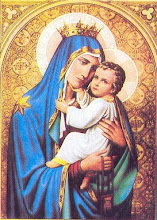
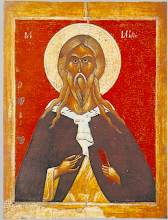
For many centuries before Christ, men communicated with God living in caves on the slopes of Mount Carmel in the Holy Land where Jesus was to be born.  These men were hermits devoted to the one true God of Israel.  They lived a life of solitude and service inspired by the great prophet Elijah whom they looked on as their spiritual father.  In later centuries after Christianity had spread far and wide, came the desire to follow Christ in his homeland in solitude and prayer. Pilgrims to the Holy Land joined the hermits on Mount Carmel and became known as Carmelites.  In the 12 and 13thcenturies war in the Holy Land forced these men of prayer to spread abroad.  The Church asked this group, now officially known as "the Brothers of Our Lady of Mount Carmel" to serve the people by bringing their contemplation and love of prayer into communties in the busy streets of cities, in quiet rural areas, wherever they were needed.  They served the needs of the people by preaching , by teaching, by bringing the knowledge and love of Jesus into the market place.  Always and everywhere they remained true to the ancient heritage which they brought with them from Mount Carmel.  And in everything they did, they were inspired by the Old Testament prophet Elijah and Mary the Mother of Jesus.

Elijah embodied the ideal of the contemplative man of prayer and the active apostle of God.  Mary called them to selfless service and closeness to Christ.  The Scapular of Our Lady of Mount Carmel is a garment and the Order of Carmel.  This sacramental is a sign of affiliation to the Carmelite Order and a symbol of our Lady's desire to bring us all to Jesus.  The message of the Scapular is the same advice she gave the servants at the Cana wedding: "Do whatever he tells you."  When we wear the Scapular, it is a sign of our loving response to the Mother of God.  So, in our special devotion to Our Lady of Mount Carmel, Carmelites celebrate our unique relationship with Mary as an intrinsic part of our spirituality.  We love her, venerate her and, with our bothers and sisters in Christ, we are called forever to be her children.  We invite you to share this spirituality with us, particularly in our devotion to Mary as Our Lady of Mount Carmel. (Read more.)

(Article taken from "Special Devotions to Our Lady of Mount Carmel" by National Shrine of Our Lady of Mount Carmel). 

Saturday, July 6, 2024

In Defense of the Martyrdom of Saint Maria Goretti

Only known photo of St. Maria Goretti

A couple years ago, around the feast of St. Maria Goretti, I came upon an article and had a debate on Facebook with fellow Catholics, all ladies of deep faith. I think there are major misunderstandings about why the Church has from the earliest times held up virgin martyrs for our veneration.
From Our Sunday Visitor:

It’s worth repeating: It is not a sin to be raped, but the Dicastery for the Causes of Saints continues to behave as if it is....If women who die at the hands of a would-be rapist are martyrs, why are we only celebrating the ones who died “intact”?...If we keep holding these assault victims up as models of chastity rather than victims of crimes, we impress upon faithful young women that keeping the Sixth Commandment is fundamentally about keeping men from breaking it....The girls who answered “yes” to the CDC survey are in our pews, in our confirmation classes and in our own homes. They are listening to how we talk about Maria Goretti and Isabel Cristina and all those who came between. They deserve better than to be told their value lies in their virginity. They deserve better than the suggestion that they would be better off dead. (Read more.)

True, girls and young women, virgins or not, from a human point of view, are definitely better off alive. Similarly, those Christians who were tortured to death because they refused to offer incense to pagan gods, would have been better off alive. St. Joan of Arc would have been better off staying home and embroidering with her mother than being burned alive at the stake. St. Isaac Jogues would have been better off teaching theology at the Sorbonne rather than being scalded alive and sodomized by the Iroquois. But sometimes, people need to take a stand, especially when called to do so for the love of God. Because martyrdom is a gift.

I think many young women today surrender their virginity not to a rapist but to a boyfriend or lover, out of infatuation or out of peer pressure. It was that way during the Roman Empire and it is that way now. Even in Roman times, they were not always threatened with rape; their attackers could have raped them at any time. Rather, the attackers wanted them to happily go along with it; they wanted to seduce them. The fact that some women have preferred death to giving into seduction and the ways of the world is a charismatic gift. Martyrdom is a gift. Virgin martyrdom is a gift. Just being a perpetual virgin, or a celibate of any kind, is a gift. Not everyone is called to it but when someone is, they know it is beyond their strength and a gift from God. When someone is called by God to be a martyr it means they refuse to cooperate with evil on any level, even to save themselves. They are saying to the evil person: you may kill me, you may rape me, you may kill and rape me, but you are not getting even a moment of my cooperation. We all have moments when our safety or well-being is secondary, when someone or something more precious than our lives is in danger. That is where grace builds on nature. But only God can give someone the grace to give up their lives for Him. It is a charismatic gift.

The article criticizes the Dicastery's mention of the intact hymens of St. Maria and another modern virgin martyr Blessed Isabel Cristina, insisting that the hymen should not even come into the investigation. Such intimate examination has long been a part of police procedure when a woman or girl is murdered, to see if the perpetrator should be charged with rape as well as with murder. When the Dicastery records the physical virginity of a victim it is as possible proof that the person lived a chaste lifestyle. It is certainly not complete proof since a pure and innocent girl might lose her virginity through being molested or even in an accident, through no fault of her own. Also, someone with an intact hymen might have impure habits and a filthy mind and not be holy at all. But along with the accumulated evidence of the young lady's piety, such as witness testimonies of her outward acts of faith, hope and charity, evidence of physical virginity plays a part in proving the sanctity of the victim. 

However, the value of the virgin martyr is not on the hymen but on a soul saying "no" and taking a stand against evil  no matter what the consequences. To do so requires supernatural strength. But yes, the Church has canonized saints who were slaves and who were probably raped such as St Felicity and St Josephine Bahkita. In the great Roman persecutions, it was against Roman law to put a virgin to death. Young Christian girls were regularly raped before being executed. We do not know how many of the virgin-martyrs had to suffer such brutality before being martyred. The surviving historical records do not tell us.

Someone said to me that St. Maria Goretti resisted her attacker because she knew if she was raped that she would be "trash" in her town. Well, sorry, but St. Maria was already regarded as "trash" in her community, which is why Alessandro saw her as an easy target. Some people theorize he may already have have been molesting her in some way. After all, they lived in the same house. We know he was making lewd suggestions. After her First Communion St. Maria was determined to say no. Because Alessandro did not just went to rape her. If he wanted to rape her he could have done so at any time, but he never did. He never did, even when she was lying there helpless. 
 
What Alessandro wanted was a cooperative little plaything. He wanted someone to willingly act out his favorite porn images which he had upstairs in this room. That is where his rage and frustration came from. If Maria had capitulated, we know she would have been acting out of terror. But that brave little girl, who had nothing and was nothing in her community, refused to comply with his demands. She asserted her personhood and her dignity over Alessandro's dehumanizing lust. Maria knew that through her baptism she was a child of God; she had been bound to Christ through the Sacraments of the Church, including Confession and the Holy Eucharist. Those sacraments meant everything to her, more than fear of death. 
 
So ultimately, it was not about resisting rape. It was resisting being his long term sex toy which is what Alessandro really wanted. Maria knew if she gave in once there would be no end to it. He wanted her  cooperation, like the master of anyone in sexual servitude. Alessandro wanted her complete submission and willing participation. She did not give it. Looking back, we can say it would not have been a sin for her, since she was a frightened child, and would have been acting under duress. But Maria refused to cooperate, even when threatened. Because in Maria's mind she would have been committing a sin, as she said after it happened: "He did it because I would not sin." That is why she is a martyr.

Friday, June 21, 2024

The Test of Love

Light of the World by William Holman Hunt

I begged Our Lord to teach you the secret of sanctity and happiness in the
sanctification of the present moment--peacefully. The present moment contains all grace for our sanctification, and it is the only thing that matters.

Keep your eyes ever on the Divine Guest within, Whose love is directing all that concerns you every moment, even the annoying little things that cause irritation. Be generous with Him, and let your joy be in sacrifice. It was His joy. He came from Heaven to prove it to us, and love can find no other real test....

Sweet and peaceful conformity to God's Will is the test of love. It is often crucifying to self-love and self-will, but suffering was the chosen portion of Our Lord, and the faithful lover should want no other.

~Fragrance from Alabaster
by Mother Aloysius of the Blessed Sacrament, OCD
Related Posts with Thumbnails